SKU: IOWC-1393
📋 GST Invoice Available

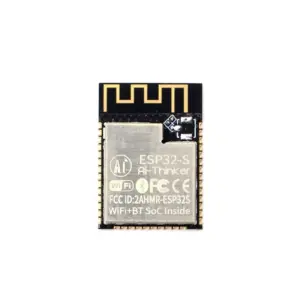
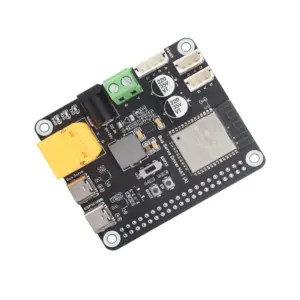
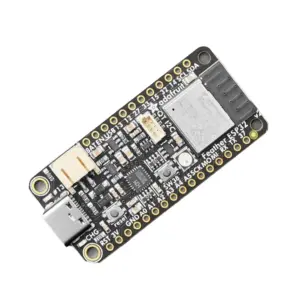
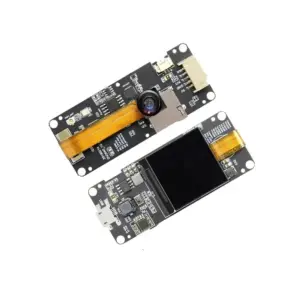
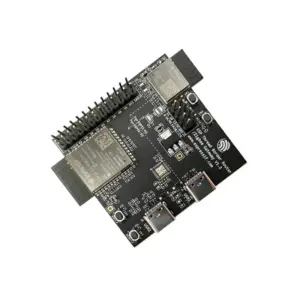
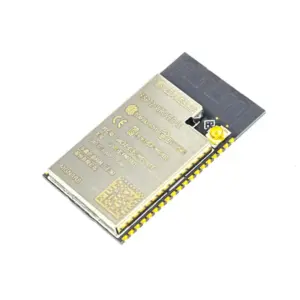
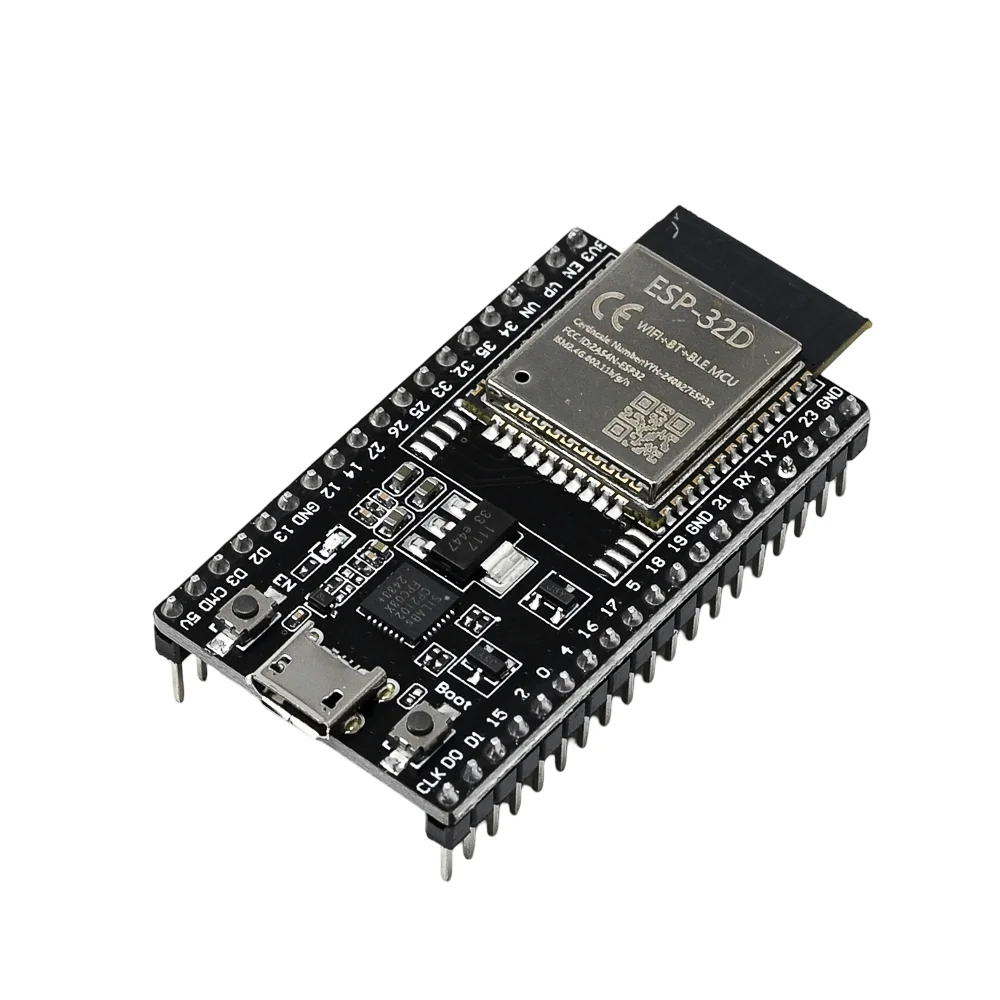
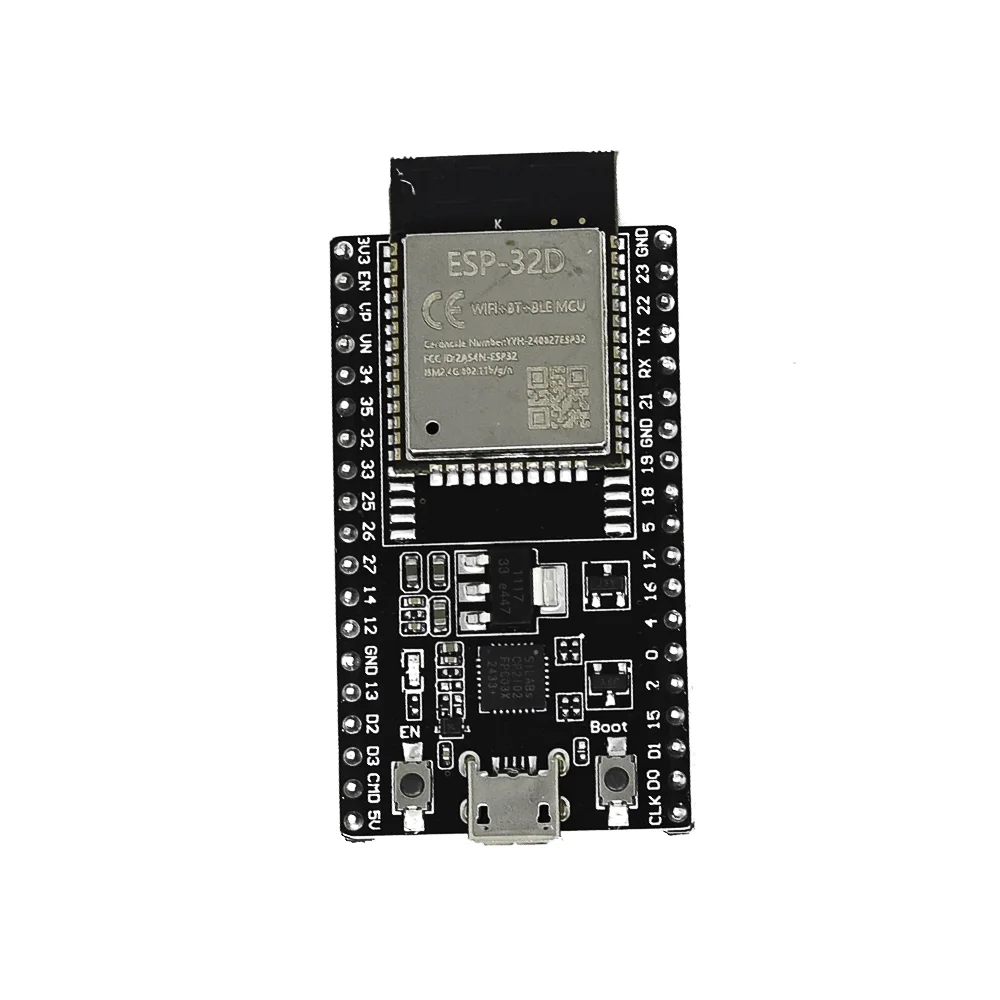
ESP32-WROOM-32D IoT Development Board Module w/ Onboard Antenna

₹639.00 (Inclusive of all taxes)
Out of Stock

The ESP32-WROOM-32D is a dual-core Wi-Fi + Bluetooth/BLE development module with an integrated PCB antenna, designed for rapid IoT prototyping and compatible with Arduino IDE, ESP-IDF, and MicroPython frameworks.

Features

  • Dual-core Xtensa LX6 processor (up to 240 MHz) for demanding IoT applications like voice encoding and sensor networks.
  • Integrated Wi-Fi 802.11 b/g/n and dual-mode Bluetooth 4.2 (Classic & BLE) connectivity on a single chip.
  • Features an onboard PCB antenna, eliminating the need for an external antenna for simplified deployment.
  • Rich peripheral set with SPI, I2C, UART, ADC, and GPIOs for flexible sensor and actuator integration.
  • Low-power operating modes and a wide voltage range (3.0V – 3.6V) suitable for battery-powered edge devices.

Out of stock

Description

The ESP32-WROOM-32D module is a feature-rich, entry-level development board centered on the Espressif ESP32-D0WD chip. It combines a high-performance dual-core microcontroller with integrated 2.4 GHz RF, making it a versatile foundation for a wide range of wireless projects. The module includes 448 KB ROM and 520 KB SRAM, supporting complex application logic and network protocol stacks.

Its integrated PCB antenna provides a compact, ready-to-use solution, distinguishing it from the U-variant which requires an external antenna connector. The board operates from 3.0V to 3.6V with deep sleep capabilities, making it suitable for always-on, power-sensitive deployments. It serves as a complete standalone system or can act as a wireless co-processor via its UART or SPI interfaces, offloading connectivity tasks from a host MCU.

Key Features

  • Dual-core 32-bit LX6 microprocessor with clock speeds configurable from 80 MHz to 240 MHz.
  • Integrated 802.11b/g/n Wi-Fi station/soft-AP and Bluetooth v4.2 BR/EDR/BLE support.
  • Onboard PCB antenna for simplified design and reduced BOM cost.
  • Comprehensive development support via Arduino core, ESP-IDF, MicroPython, and PlatformIO.
  • Rich I/O including SPI, I2C, UART, ADC, DAC, PWM, and capacitive touch GPIOs.
  • Advanced power management with multiple low-power modes for battery operation.
  • Robust memory configuration with 448 KB ROM, 520 KB SRAM, and external flash support.
  • Industrial-grade operating temperature range from -40°C to +85°C.

Applications

  • Smart home automation hubs, sensors, and smart switches.
  • Industrial IoT (IIoT) telemetry, PLCs, and equipment monitoring.
  • Wearable health monitors and smart medical devices.
  • HVAC controllers, smart thermostats, and energy management.
  • Prototyping for voice control, music streaming, and MP3 decoding applications.

Technical Specifications

Microcontroller / SoCEspressif ESP32-D0WD (Xtensa LX6 Dual-Core)
Wireless ProtocolsWi-Fi 802.11 b/g/n, Bluetooth 4.2 BR/EDR & BLE
Frequency Range2.4 GHz ISM Band
RF Transmit PowerUp to +20 dBm (typical)
Supply Voltage3.0V - 3.6V (3.3V typical)
Operating Current~500 mA (peak during RF transmission)
InterfacesSPI, I2C, UART, ADC, DAC, PWM, GPIO, Touch Sensor
Antenna ConnectorIntegrated PCB Antenna
Operating Temperature-40°C to +85°C
DimensionsApprox. 18mm x 25.5mm x 3.1mm (Module)

Frequently Asked Questions

How do I program the ESP32-WROOM-32D using the Arduino IDE?

First, install the ESP32 board support via the Arduino Boards Manager. Add the ESP32 board URL to preferences, then search for and install 'esp32 by Espressif Systems'. Select 'ESP32 Dev Module' as your board. Connect the module via a USB-to-Serial adapter, choose the correct COM port, and upload your sketch. Ensure you provide stable 3.3V power, as the board does not have a built-in USB regulator.

What is the difference between the ESP32-WROOM-32D and ESP32-WROOM-32U modules?

The key difference is the antenna implementation. The ESP32-WROOM-32D features an integrated PCB antenna, making it ready to use without external components. The ESP32-WROOM-32U variant has an IPEX (U.FL) connector for an external antenna, which can provide greater range or directional gain. The RF performance and core functionality of the ESP32 chip itself are identical between the two module variants.

What are the power requirements and sleep current for battery-powered projects?

The module requires a stable 3.3V power supply within a 3.0V to 3.6V range. Peak current can reach 500mA during Wi-Fi transmission. For battery operation, utilize the ESP32's deep sleep modes. In deep sleep with RTC memory preserved, current consumption can drop to approximately 10µA. Wake-up can be triggered by timer, external GPIO pin, or touch sensor, enabling years of operation on a single battery charge.

Package Includes

  • 1 x ESP32-WROOM-32D Development Board Module

Additional Information

Weight 0.01 kg
Dimensions 5 × 8 × 2 cm