SKU: IOWC-1382
📋 GST Invoice Available

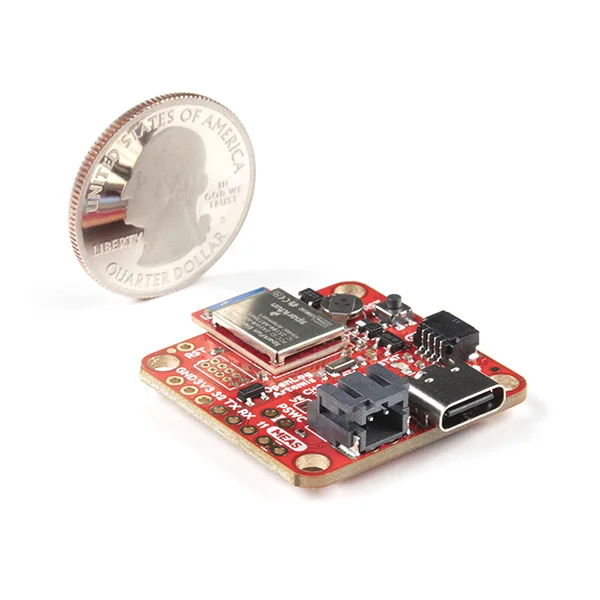
SparkFun OpenLog Artemis Data Logger (without IMU)

₹2,729.00 (Inclusive of all taxes)
Out of Stock

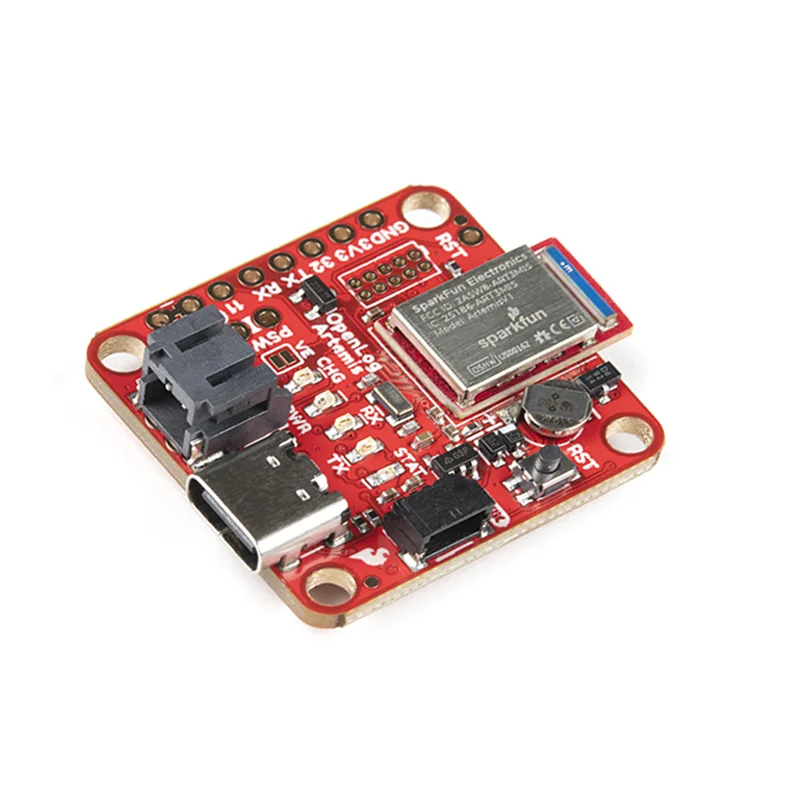
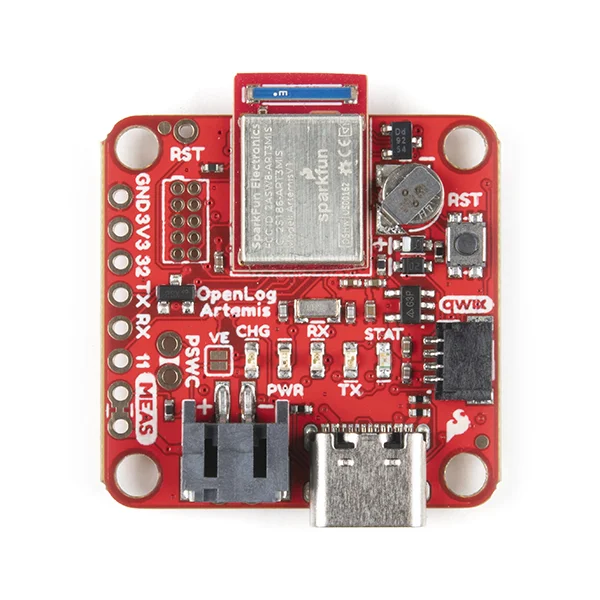
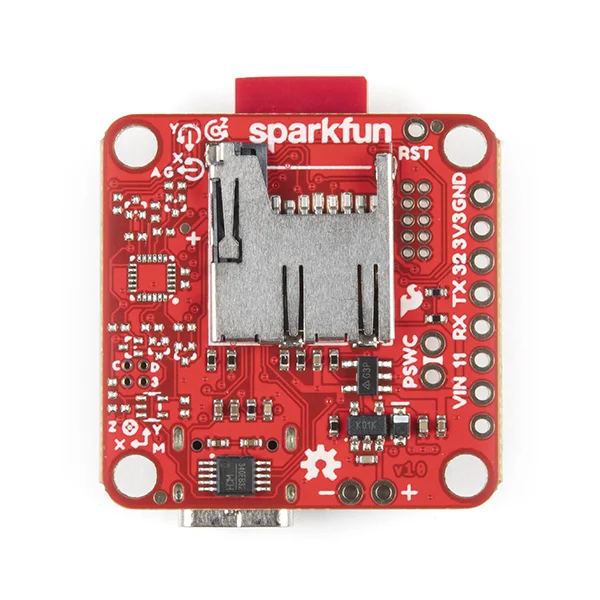
The SparkFun OpenLog Artemis is a Cortex-M4F-based data logger board designed for automatic, code-free logging of serial data, GPS, and Qwiic sensors to a microSD card, featuring a built-in LiPo charger and configurable RTC.

Features

  • Powered by the Artemis module featuring an Apollo3 ARM Cortex-M4F microcontroller for efficient data processing.
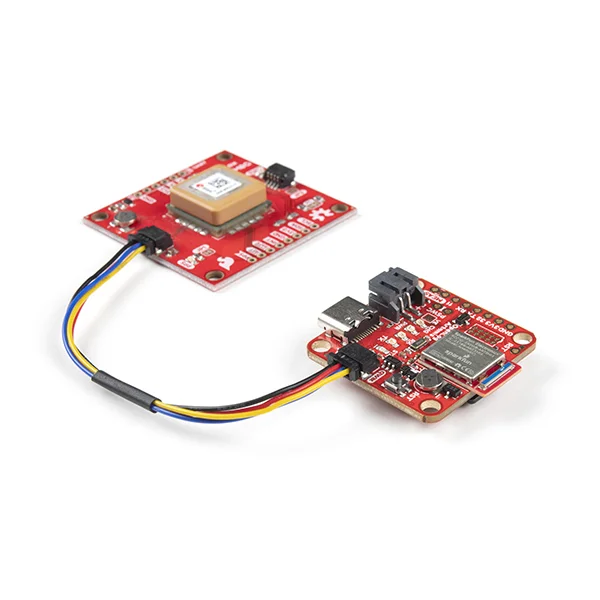
  • Automatically logs serial data, GPS, and Qwiic sensor inputs to a microSD card without requiring any programming.
  • Integrates a built-in MCP73831 single-cell LiPo battery charger and a Real-Time Clock (RTC) with battery backup for timestamped logging.
  • Features four 14-bit ADC channels capable of sampling up to 1900Hz for single-channel or 1000Hz for all channels simultaneously.
  • Offers a simple USB-C serial interface for configuration and supports high baud rates up to 500000bps for fast data streaming.

Out of stock

Description

The SparkFun OpenLog Artemis (OLA) is an autonomous data logging platform centered on the powerful Artemis module, which houses an Ambiq Micro Apollo3 ARM Cortex-M4F microcontroller. This board is engineered for plug-and-play data acquisition, automatically detecting and logging data from connected Qwiic I2C sensors, serial UART devices, and GPS modules directly to a FAT32-formatted microSD card. Its primary design philosophy eliminates firmware development overhead for users who need reliable, timestamped environmental or telemetry data capture.

Power management is a core feature, with an operating voltage range of 3.3V to 6.5V supporting direct USB-C or LiPo battery input. The integrated charging circuit and multiple low-power sleep modes (down to ~18µA) enable long-term field deployments. Configuration and real-time monitoring are handled through a straightforward serial terminal interface, making the OLA a versatile tool for industrial sensing, research data collection, and remote IoT node applications.

Key Features

  • Artemis Module with Apollo3 ARM Cortex-M4F microcontroller offering high efficiency and processing power.
  • Automatic, code-free logging of serial data, GPS, and Qwiic I2C sensors to microSD card.
  • Built-in MCP73831 LiPo battery charger for portable and off-grid operation.
  • On-board Real-Time Clock (RTC) with coin cell backup for precise data timestamping.
  • Four-channel 14-bit Analog-to-Digital Converter (ADC) supporting high-speed sampling up to 1900Hz.
  • USB-C serial interface for easy configuration and firmware updates via CH340E.
  • Supports high serial baud rates up to 500000bps for rapid data transfer.
  • Standard 2x5-pin SWD header for advanced debugging and custom firmware programming.

Applications

  • Environmental monitoring and remote data logging for research projects.
  • Industrial telemetry and condition monitoring of machinery via serial sensors.
  • Asset tracking and fleet management with integrated GPS logging.
  • Agricultural sensing for soil moisture, humidity, and temperature data collection.
  • Prototyping and testing sensor networks using the Qwiic ecosystem without coding.

Technical Specifications

Microcontroller/SoCArtemis Module (Apollo3 ARM Cortex-M4F)
Operating Voltage3.3V to 6.5V
Current Consumption20mA (Run), ~80µA (Sleep), ~18µA (Deep Sleep)
Data InterfacesUSB-C (Serial), Qwiic (I2C), UART, 4x ADC, SWD Debug
StoragemicroSD Card (FAT16/FAT32, up to 32GB)
ADC Channels4 channels, 14-bit, up to 2V max input
ADC Sampling RateUp to 1900Hz (single channel), 1000Hz (all channels)
Real-Time ClockIntegrated RTC with battery backup
Battery ChargerMCP73831 Single-Cell LiPo Charger
DimensionsApprox. 10 x 5 x 1 cm (from shipping data)

Frequently Asked Questions

How do I configure the OpenLog Artemis and view logged data?

Connect the board via its USB-C port to your computer. Open a serial terminal application (like PuTTY or Arduino IDE Serial Monitor) set to 115200 baud. Upon power-up, data streams to both the terminal and the microSD card. Press any key to interrupt the stream and access the configuration menu, where you can set parameters like log file naming, baud rates, and RTC time.

What is the procedure for updating the firmware on the Artemis module?

Firmware updates are performed using the dedicated Artemis Firmware Uploader GUI tool provided by SparkFun. Connect the board via USB-C, ensure the correct COM port is selected in the tool, and load the new .bin or .hex file. The tool communicates through the onboard CH340E USB-to-serial converter. The standard 2x5-pin SWD header is also available for advanced programming and debugging with compatible JTAG/SWD probes.

What are the power requirements and how does battery charging work?

The board operates from 3.3V to 6.5V, supplied via the USB-C port or the LiPo battery JST connector. The integrated MCP73831 charger manages single-cell LiPo batteries when USB power is present. For long-term deployment, connect a suitable LiPo battery; the board's sleep modes (as low as ~18µA) maximize battery life. The RTC maintains timekeeping via a separate coin cell backup if the main power is disconnected.

Package Includes

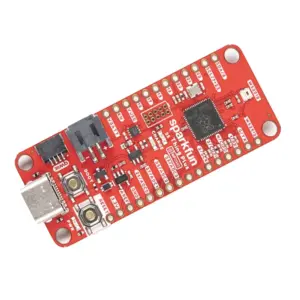
  • 1 x SparkFun OpenLog Artemis Board (without IMU)

Additional Information

Weight 0.005 kg
Dimensions 5 × 10 × 1 cm