SKU: IOWC-1363
📋 GST Invoice Available

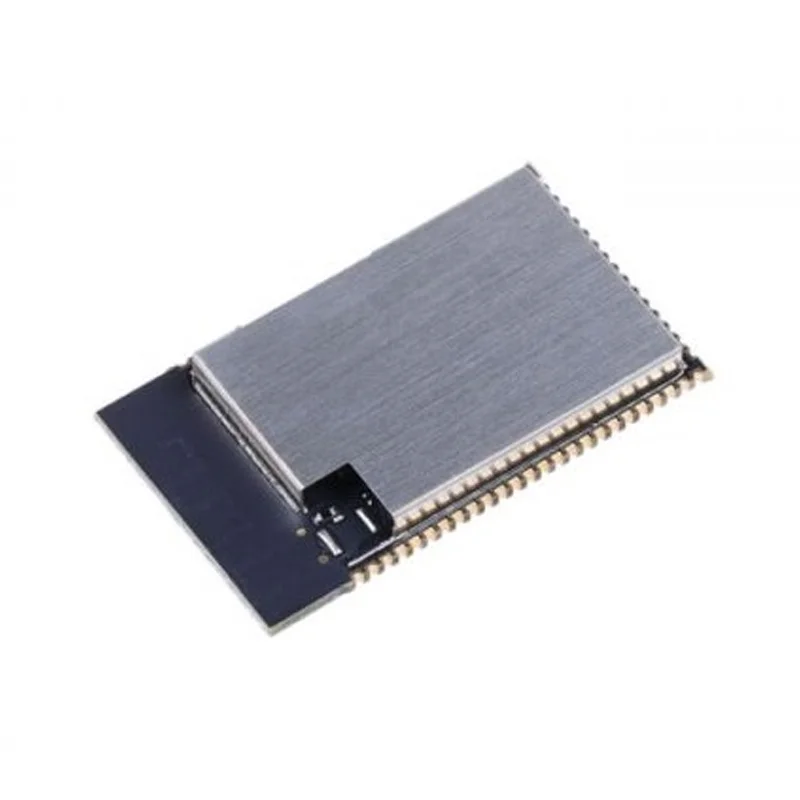
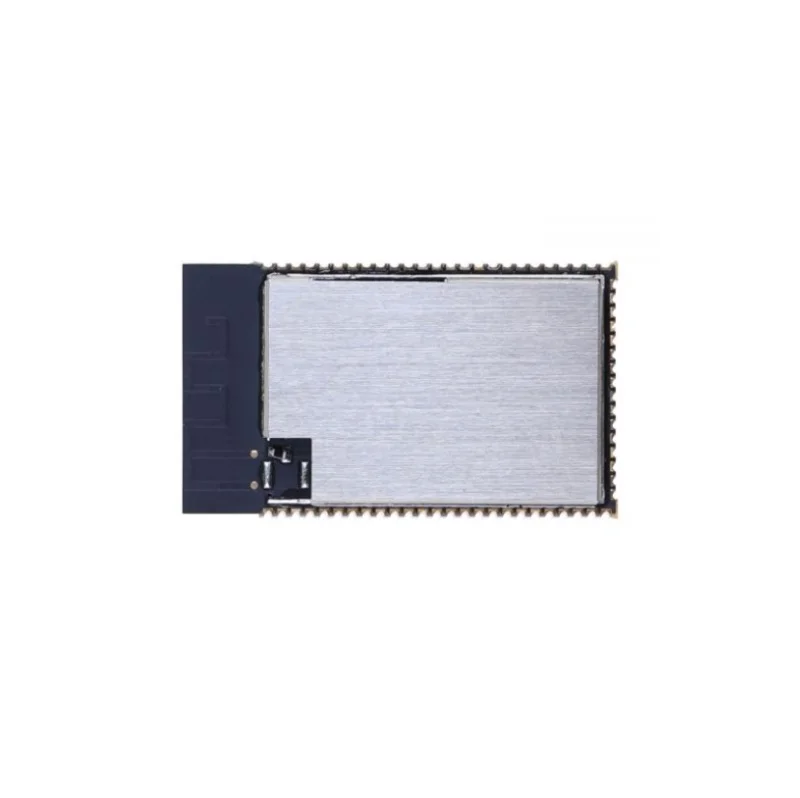
Sipeed M1s BL808 RISC-V AIoT Module w/ Wi-Fi BT BLE

₹1,129.00 (Inclusive of all taxes)
Out of Stock

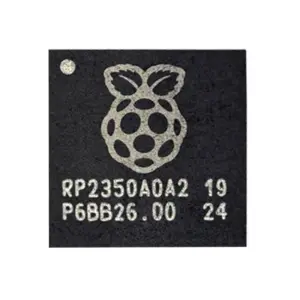
The Sipeed M1s Module is a powerful RISC-V AIoT core board based on the Bouffalo Lab BL808 SoC, integrating tri-core processing, a BLAI-100 NPU, Wi-Fi/BT/BLE, and multimedia codecs for Linux-capable edge AI and smart home applications.

Features

  • Tri-Core RISC-V Architecture: Combines a 480MHz RV64GCV, 320MHz RV32GCP, and 160MHz RV32EMC CPU for heterogeneous task handling and high-performance computing.
  • Integrated AI & Multimedia Engine: Features a BLAI-100 NPU and hardware H.264/MJPEG codec supporting dual-stream encoding (1080p@30fps + 480p@30fps) for vision-based AI applications.
  • Dual Wireless Connectivity: Supports 2.4GHz Wi-Fi 802.11 b/g/n and dual-mode Bluetooth 5.x (BT+BLE) with co-existence for robust IoT networking.
  • Flexible Camera & Display Interfaces: Equipped with both DVP and MIPI-CSI camera inputs and SPI/DBI/DPI (RGB) display outputs for multimedia projects.
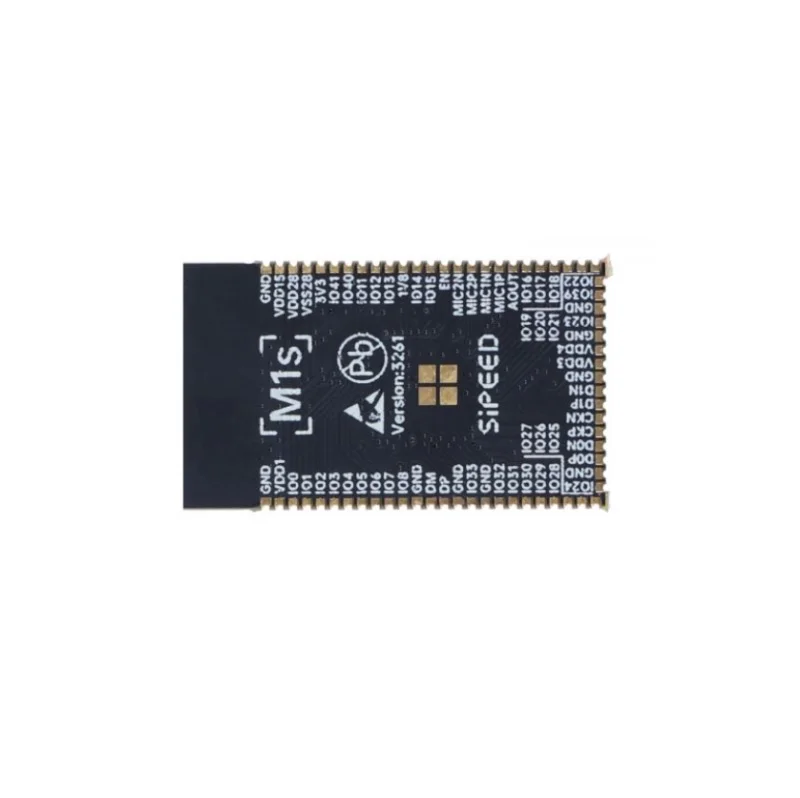
  • Stamp-Hole Module Design: Provides stable mechanical connection to carrier boards and routes all GPIOs for flexible baseboard customization and integration.

Out of stock

Description

The Sipeed M1s Module is a compact, high-performance AIoT system-on-module built around Bouffalo Lab’s BL808 RISC-V SoC. Its heterogeneous architecture dedicates cores to wireless communication, multimedia processing, and general-purpose computing, enabling efficient partitioning of tasks like network management, video encoding, and AI inference. The integrated BLAI-100 neural processing unit accelerates machine learning workloads directly on the edge.

With native support for Linux due to its Memory Management Unit (MMU), the module bypasses the limitations of typical microcontroller-based RTOS environments, offering a familiar development ecosystem. The onboard SPI flash and UHS PSRAM provide ample storage and high-speed memory for application code and frame buffers. Dual antenna options—an IPEX-I connector and an onboard PCB trace—ensure reliable wireless link stability in diverse deployment environments.

Key Features

  • Tri-Core RISC-V Processor: Delivers scalable performance with a 480MHz 64-bit core for heavy compute, a 320MHz 32-bit core for application tasks, and a 160MHz core for low-power control.
  • BLAI-100 NPU Acceleration: Hardware AI engine optimized for video and audio detection/recognition tasks, offloading inference from the main CPUs.
  • Advanced Multimedia Codec: Hardware-accelerated H.264 Baseline/Main Profile and MJPEG encode/decode for dual simultaneous video streams.
  • Comprehensive Wireless Suite: Integrated 2.4GHz Wi-Fi, Bluetooth Classic, and Bluetooth Low Energy 5.x with co-existence for uninterrupted connectivity.
  • Dual Camera Interfaces: Supports both legacy DVP and modern MIPI-CSI camera sensors for flexibility in vision system design.
  • Rich Display Outputs: Features SPI, DBI, and parallel RGB (DPI) interfaces for driving TFT, e-Paper, or other display panels.
  • Stamp-Hole IO Breakout: All GPIOs, power, and interface signals are available via robust stamp-hole pads for reliable soldering to custom carrier boards.
  • Linux-Capable Platform: MMU-enabled BL808 core supports full Linux distributions, simplifying software development for complex applications.

Applications

  • Edge AI & Computer Vision: Local video analytics, object detection, and smart surveillance systems leveraging the NPU and video codec.
  • Smart Home Automation Hubs: Central controller for IoT devices, combining wireless connectivity, local processing, and potential voice/vision interfaces.
  • IoT Wearable & Health Devices: Advanced wearables requiring on-device sensor fusion, wireless connectivity, and low-power operation modes.
  • Multimedia IoT Terminals: Interactive smart displays, digital signage, or video intercom systems with display and camera capabilities.
  • Building Automation Sensors: Intelligent environmental monitors with vision-based occupancy detection or anomaly sensing.

Technical Specifications

Microcontroller/SoCBouffalo Lab BL808 (RV64GCV 480MHz, RV32GCP 320MHz, RV32EMC 160MHz)
AI AcceleratorBLAI-100 NPU
Wireless ProtocolsWi-Fi 802.11 b/g/n (2.4GHz), Bluetooth 5.x Dual-Mode (BT+BLE)
Memory768KB SRAM + 64MB UHS PSRAM, Onboard SPI Flash (16MB default)
Video CodecH.264 (Baseline/Main) & MJPEG Encode/Decode: 1080p@30fps + 480p@30fps
Camera InterfaceDVP, MIPI-CSI
Display InterfaceSPI, DBI, DPI (RGB)
USBUSB 2.0 HS OTG (Type-C port)
Antenna OptionsIPEX-I Connector & Onboard PCB Antenna
Supply VoltageRequires VDDIO4, VDDIO3, VDDIO1, and 3.3V rails
Operating Temperature-10°C to 65°C
Dimensions (L x W)31mm x 18mm

Frequently Asked Questions

What operating systems are supported by the Sipeed M1s BL808 module?

The BL808 SoC includes a Memory Management Unit (MMU), enabling it to run full Linux distributions, which simplifies application development compared to microcontroller RTOS. It also supports bare-metal and RTOS environments like FreeRTOS for low-level control. The official Bouffalo Lab SDK provides the necessary toolchains and bootloaders to build and flash firmware for both Linux and real-time operating systems onto the onboard SPI flash.

How do I connect a camera and what resolutions are supported?

The module supports cameras via both DVP (Digital Video Port) and MIPI-CSI interfaces. The integrated hardware video encoder can simultaneously encode two streams: one up to 1920x1080 (1080p) at 30 frames per second and another up to 640x480 (480p) at 30 fps in H.264 or MJPEG formats. You will need to design or use a carrier board that breaks out the required camera interface pins and provides appropriate power to your chosen camera sensor module.

What is the power supply requirement for the M1s module?

The module requires multiple voltage rails for proper operation: VDDIO4, VDDIO3, VDDIO1 (likely for different IO bank voltages), and a main 3.3V supply. A typical carrier board must include a power management circuit that generates these stable voltages. The exact current requirements depend on active cores, wireless radio usage, and peripheral load, so consult the BL808 datasheet for detailed power planning when designing your baseboard.

Can I use both the IPEX antenna and the onboard PCB antenna simultaneously?

No, the wireless subsystem is designed to use one antenna at a time. The module provides both an IPEX-I connector for an external antenna and an integrated PCB trace antenna. You must configure the software or hardware settings (often via a GPIO or register) to select the desired antenna path. Using an external antenna via the IPEX connector typically provides better range and signal stability by distancing the radiator from board noise.

Package Includes

  • 1 x Sipeed BL808 M1s RISC-V Module

Additional Information

Weight 0.005 kg
Dimensions 3.1 × 1.8 cm