SKU: IOWC-1302
📋 GST Invoice Available

Waveshare ESP32-S3 SIM7670G 4G LTE & GNSS Development Board w/ Camera

₹5,769.00 (Inclusive of all taxes)
Out of Stock

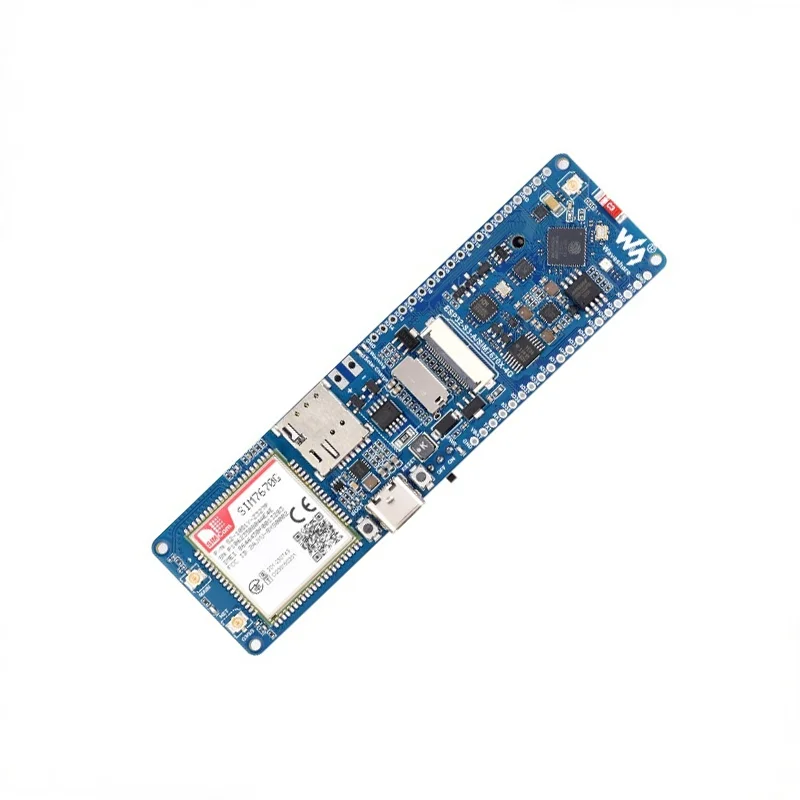
The Waveshare ESP32-S3 SIM7670G is a feature-rich IoT development board integrating dual-core ESP32-S3 Wi-Fi/BLE 5.0 with a Cat-1 4G LTE cellular module (SIM7670G) and multi-GNSS positioning. It includes an OV2640 camera interface, TF card slot, and comprehensive power management for solar/USB charging with an 18650 battery holder, ideal for remote, battery-powered IoT applications.

Features

  • Dual-Core ESP32-S3 & 4G LTE: Combines a 240MHz ESP32-S3R2 (Wi-Fi/BLE 5.0, 16MB Flash, 2MB PSRAM) with a SIM7670G Cat-1 4G module for robust dual-network connectivity.
  • Multi-GNSS Positioning & Camera: Features integrated GPS, BeiDou, GLONASS, Galileo support via ceramic antenna and includes an OV2640 camera module for vision-based IoT.
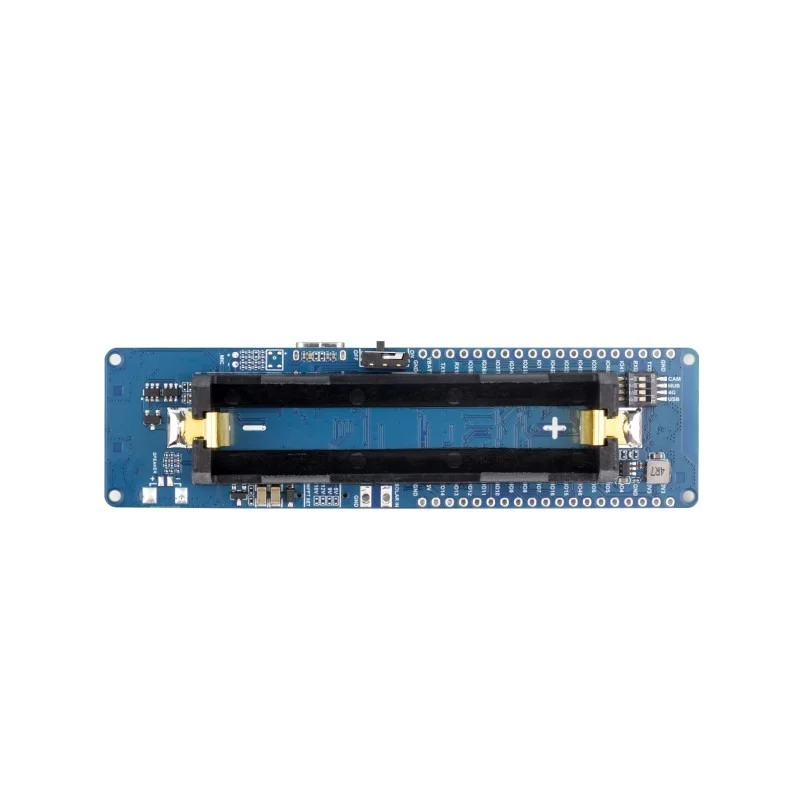
  • Advanced Power Management: Onboard charging circuits for USB and solar input, 18650 battery holder (battery not included), and battery voltage measurement with low-power DIP switches.
  • Rich Peripheral Expansion: Offers camera interface, TF card slot, USB Type-C, 38-pin GPIO header, and an FPC antenna for flexible hardware integration.
  • Complete Development Kit: Comes with acrylic case, GNSS antenna, OV2640 camera, headers, cables, and extensive online tutorials for rapid prototyping.

Out of stock

Description

The Waveshare ESP32-S3 SIM7670G 4G Development Board is engineered for professional IoT deployments requiring reliable cellular backhaul alongside local wireless connectivity. At its core, the ESP32-S3R2 delivers a dual-core Xtensa LX7 processor running at 240 MHz, coupled with 2.4 GHz Wi-Fi and Bluetooth Low Energy 5.0, providing a powerful edge computing platform. The integrated SIM7670G cellular module establishes Cat-1 LTE connections across a wide range of global bands, ensuring network coverage in remote areas where Wi-Fi is unavailable.

Power architecture is designed for field deployment, supporting operation from a 3.7V-4.2V 18650 lithium cell, USB 5V input, or solar panels via a dedicated charging interface. Onboard management circuits handle charging, protection, and real-time battery capacity monitoring. A suite of DIP switches allows developers to disable peripherals like the camera or switch USB channels to minimize idle power consumption, extending operational life in battery-only scenarios. The board’s extensive I/O, including a camera interface and microSD slot, facilitates data logging, image capture, and sensor aggregation for telemetry transmission over 4G or Wi-Fi.

Key Features

  • Dual-Network IoT Core: Leverage the ESP32-S3 for local BLE/Wi-Fi sensor networks and the SIM7670G for wide-area 4G LTE data uplink to cloud platforms.
  • Precision Location Services: Integrated multi-constellation GNSS (GPS, GLONASS, BeiDou, Galileo) with a high-sensitivity ceramic antenna for accurate outdoor asset tracking.
  • Flexible Power Sourcing: Operate from USB 5V, a single 18650 Li-ion cell (not included), or solar panels with integrated MPPT-based charging and battery fuel gauge.
  • Imaging & Storage Capability: Direct interface for OV-series cameras (OV2640 included) and a onboard TF card slot for high-resolution image or data logging storage.
  • Hardware Security Acceleration: ESP32-S3 provides built-in hardware encryption, HMAC, RNG, and digital signature modules for secure device identity and data transmission.
  • Developer-Centric Design: Includes USB channel switch for direct AT command debugging of the SIM7670G module and 38-pin breakout for rapid peripheral prototyping.
  • Low-Power Optimization: Configurable DIP switches to power down camera circuit and non-essential components, enabling deep sleep modes for years of battery life.
  • Comprehensive Prototyping Kit: Ships with acrylic enclosure, assembled camera, all necessary antennas, connectors, and a USB Type-C cable for immediate development.

Applications

  • Remote Environmental Monitoring: Deploy in fields for soil moisture, weather, or air quality sensing with 4G data backhaul and solar power.
  • Mobile Asset & Fleet Tracking: Build GPS/4G trackers for vehicles, cargo containers, or equipment with real-time location and telemetry reporting.
  • Off-Grid Security & Surveillance: Create battery/solar-powered wildlife cameras or perimeter monitoring systems with image capture and cellular alerting.
  • Industrial IoT (IIoT) Gateways: Aggregate sensor data from BLE/Wi-Fi nodes and transmit securely to cloud dashboards over LTE networks.
  • Smart Agriculture & Aquaculture: Monitor water levels, climate conditions, or livestock location in areas without Wi-Fi infrastructure.

Technical Specifications

Microcontroller / SoCESP32-S3R2 (Xtensa® 32-bit LX7 Dual-Core, up to 240 MHz)
Wireless Protocols2.4 GHz Wi-Fi 4, Bluetooth 5.0 (BLE), 4G LTE Cat-1 (SIM7670G)
Cellular Frequency BandsLTE-FDD: B1/B2/B3/B4/B5/B7/B8/B12/B13/B18/B19/B20/B25/B26/B28/B66; LTE-TDD: B34/B38/B39/B40/B41
GNSS SupportGPS, GLONASS, BeiDou, Galileo
Supply Voltage5V (USB/5V Pin), 3.7V–4.2V (18650 Battery Holder/VBAT Pin)
Operating CurrentDependent on active radios; deep sleep current optimized via power switches
Memory512KB SRAM, 384KB ROM, 2MB PSRAM, 16MB External Flash
InterfacesUSB Type-C, Camera (OV Series), TF Card Slot, 38-pin GPIO Header, Solar Charging Input
Antenna ConnectorsGNSS Ceramic Antenna (onboard), FPC Connector for 4G/LTE external antenna
DimensionsApprox. 170mm x 120mm x 50mm (with components)

Frequently Asked Questions

How do I switch the USB port to debug the SIM7670G 4G module directly?

Use the onboard DIP switch labeled 'USB_SEL' to change the USB Type-C connection from the ESP32-S3 to the SIM7670G. Install the SIMCom AT command driver on your PC, then open a serial terminal at the appropriate COM port (baud rate 115200) to send AT commands for network registration, signal strength checks, or data connection setup. Remember to switch back for normal ESP32 programming.

What is the procedure for programming the ESP32-S3 core using the Arduino IDE?

Install the ESP32 board support via Arduino IDE's Board Manager. Select 'ESP32S3 Dev Module' as the target. Configure the following settings: USB CDC On Boot: Enabled, USB DFU On Boot: Disabled, Flash Size: 16MB, PSRAM: OPI PSRAM. Connect via USB-C, ensure the USB_SEL switch is set to ESP32, and upload your sketch. The board includes the necessary USB-to-serial bridge, so no external programmer is required.

Can I power the board solely from a solar panel, and what are the specifications?

Yes, connect the solar panel's positive and negative wires to the dedicated 'SOLAR' screw terminal. The onboard charging circuit supports a wide input voltage range (approximately 5V to 12V recommended) and includes Maximum Power Point Tracking (MPPT) for efficient energy harvesting. It will charge an attached 18650 battery and power the system simultaneously. Ensure the battery is installed for operation when sunlight is insufficient.

How do I minimize power consumption for long-term battery operation?

Utilize the DIP switches to disable the camera circuit ('CAM_PWR') when not in use. In firmware, put the ESP32-S3 into Deep Sleep mode between readings, which drastically reduces current. The SIM7670G module also supports power-down modes via AT commands (e.g., AT+CFUN=0). Power the board via the VBAT pins from the 18650 battery, as the onboard LDO is more efficient than the USB 5V regulator for battery sources.

What antennas are required for optimal 4G and GNSS performance outdoors?

The kit includes a GNSS ceramic patch antenna for satellite positioning and an FPC antenna for 4G/LTE. For extended range, replace the FPC antenna with an external LTE antenna (e.g., 3dBi-5dBi gain) connected via the IPEX-to-SMA pigtail. Ensure the GNSS antenna has a clear view of the sky. For simultaneous operation, position the antennas at least 5-10 cm apart to reduce potential interference.

Package Includes

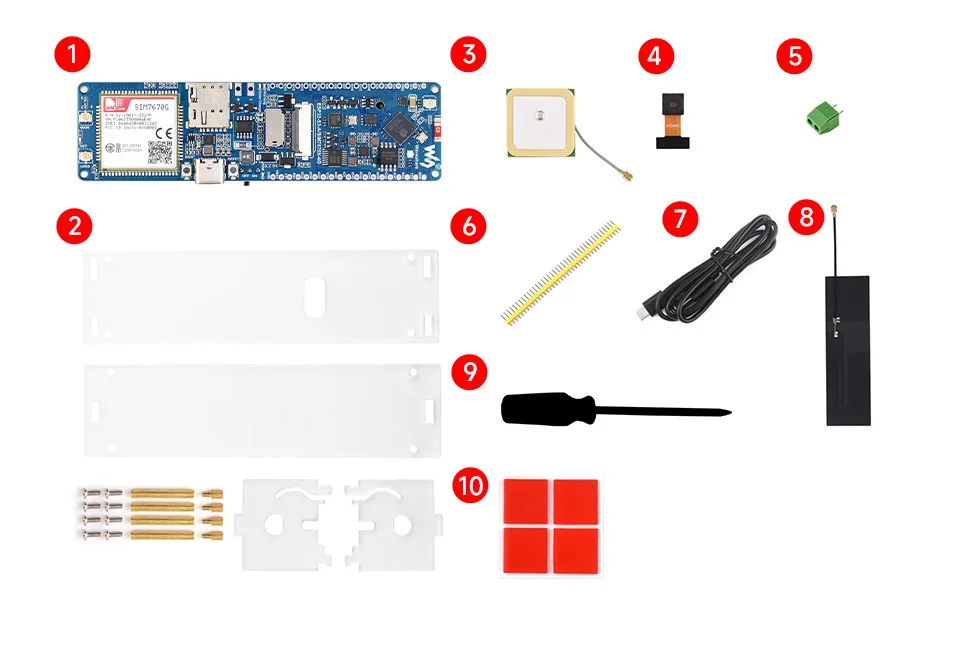
  • 1 x ESP32-S3-SIM7670G-4G Development Board
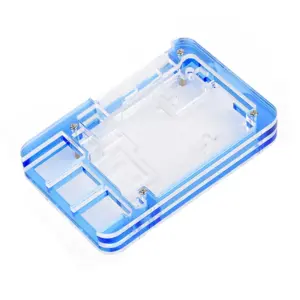
  • 1 x Transparent Acrylic Case with Screws
  • 1 x GNSS Ceramic Antenna
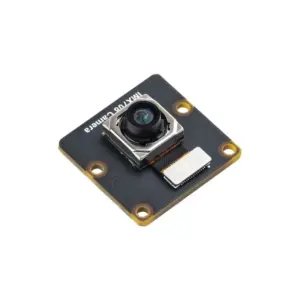
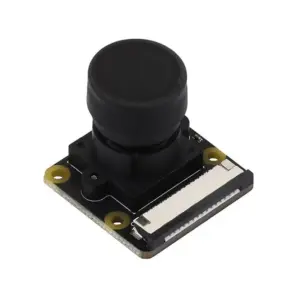
  • 1 x OV2640 Camera Module
  • 1 x 2-Pin Screw Terminal
  • 1 x 40-Pin Straight Pin Header
  • 1 x USB Type-A to Type-C Cable (1m)
  • 1 x FPC Antenna
  • 1 x Screwdriver
  • 1 x Double-Sided Tape (4 pieces)

Additional Information

Weight 0.19 kg
Dimensions 12 × 17 × 5 cm