SKU: IOWC-1211
📋 GST Invoice Available

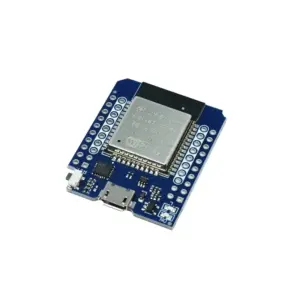
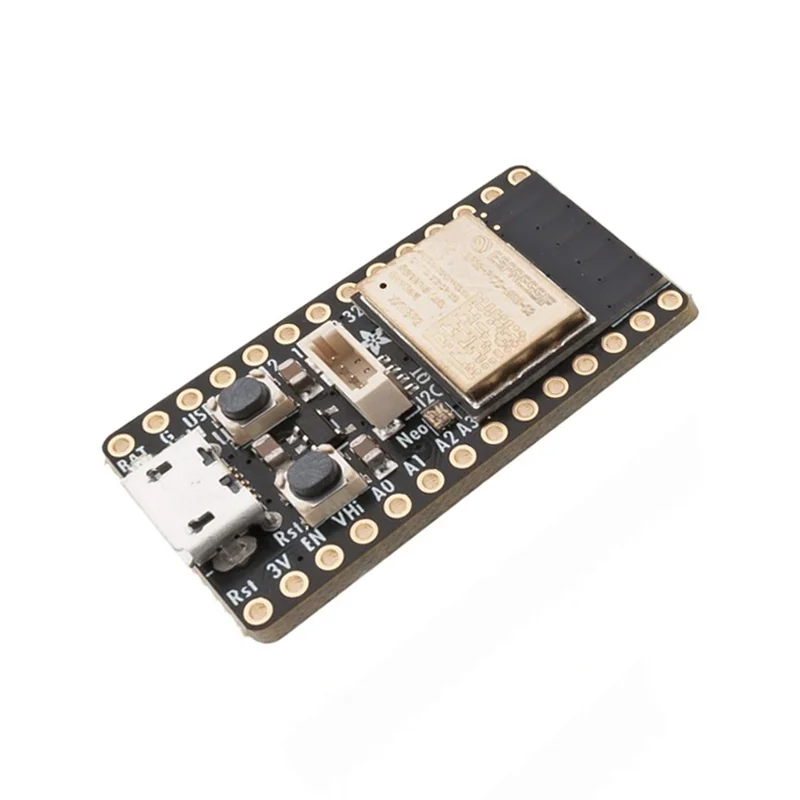
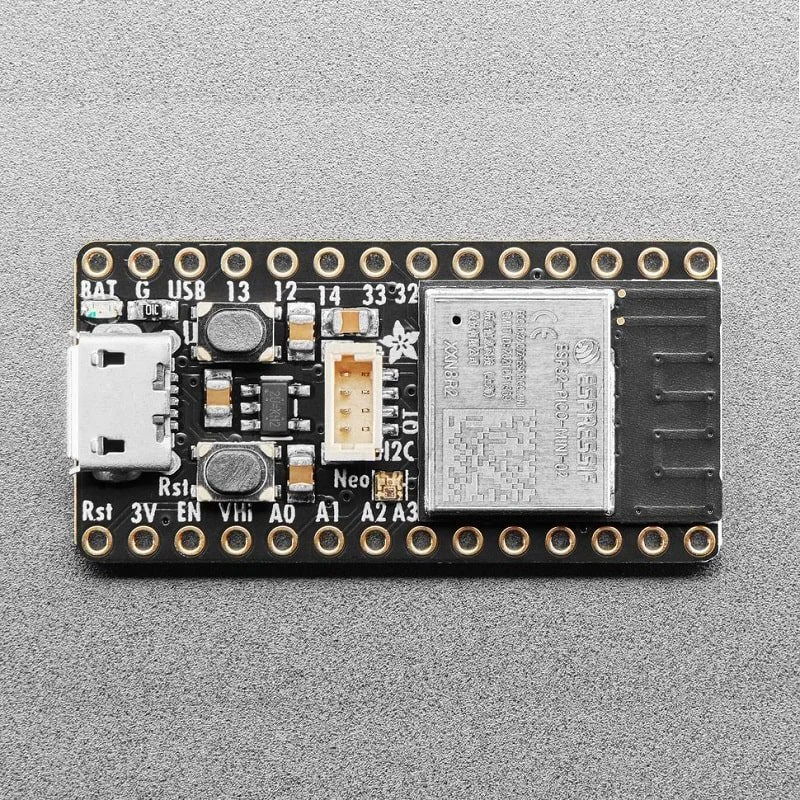
Adafruit ItsyBitsy ESP32 - PCB Antenna, 8 MB Flash / 2 MB PSRAM

₹1,769.00 (Inclusive of all taxes)
Out of Stock

The Adafruit ItsyBitsy ESP32 is a compact development board featuring a dual-core 240MHz ESP32 with WiFi, Bluetooth Classic/BLE, 8MB Flash, and 2MB PSRAM, ideal for Arduino IDE, CircuitPython, or MicroPython IoT projects.

Features

  • Powered by the ESP32 V2 03 dual-core 240MHz Xtensa processor with integrated WiFi, Bluetooth LE, and Bluetooth Classic connectivity.
  • Features 8 MB of Flash memory and 2 MB of PSRAM for handling complex applications and large data buffers.
  • Ultra-low power design with a deep sleep current as low as 10µA, extending battery life in remote sensing applications.
  • Includes built-in USB-to-serial converter, RGB NeoPixel LED, and a Stemma QT I2C connector for rapid sensor and display interfacing.
  • Provides a 5V level-shifted output on pin D5, perfect for driving NeoPixel strips or other 5V logic peripherals directly.

Out of stock

Description

The Adafruit ItsyBitsy ESP32 packs the full capabilities of the ESP32 Pico module into a form factor smaller than a Feather. It integrates a dual-core 240MHz Tensilica processor alongside robust wireless transceivers for WiFi 802.11 b/g/n and dual-mode Bluetooth (Classic & BLE 4.2), making it a versatile core for connected devices. The board’s 8MB Flash and 2MB PSRAM provide ample space for application code and dynamic data, supporting advanced IoT firmware.

Engineered for low-power operation, the board features optimized power regulation and a deep sleep mode drawing just 10µA, crucial for battery-powered sensor nodes. The integrated USB Micro B port connects to a built-in serial converter, enabling seamless code upload and serial debugging. Its compact layout includes accessible GPIO, a programmable RGB NeoPixel, and a Qwiic/Stemma QT connector for plug-and-play I2C expansion, streamlining prototype development for makers and engineers.

Key Features

  • Compact ESP32 development board with FCC-certified ESP32-PICO module.
  • Dual-core 240MHz Xtensa LX6 processor for multitasking and real-time performance.
  • Integrated 802.11 b/g/n WiFi and dual-mode Bluetooth (Classic & BLE 4.2).
  • 8 MB SPI Flash and 2 MB PSRAM for extensive program storage and memory-intensive operations.
  • Ultra-low deep sleep current of ~10µA for long-term battery-powered deployments.
  • Built-in USB-to-serial converter with auto-reset for reliable firmware flashing via Arduino IDE, ESP-IDF, or MicroPython.
  • Onboard RGB NeoPixel LED and red user LED for status indication and debugging.
  • Stemma QT / Qwiic-compatible 4-pin JST SH I2C connector for rapid sensor and display attachment.

Applications

  • Compact IoT sensor nodes for environmental monitoring (temperature, humidity, air quality).
  • Wearable electronics and Bluetooth LE (BLE) beacon projects.
  • Smart home automation controllers and WiFi-connected gadgets.
  • Battery-powered data loggers and remote telemetry units.
  • Prototyping platform for embedded systems using Arduino, CircuitPython, or MicroPython.

Technical Specifications

Microcontroller / SoCESP32 V2 03 Dual-Core 240MHz Xtensa LX6
Wireless ProtocolsWiFi 802.11 b/g/n, Bluetooth Classic, Bluetooth Low Energy (BLE 4.2)
Memory8 MB Flash, 2 MB PSRAM
Supply Voltage3.3V (regulated from USB 5V)
Operating Current (Active)Approx. 100-300 mA (varies with RF activity)
Deep Sleep Current~10 µA
USB InterfaceMicro B with CP2104 USB-to-Serial Converter
GPIO & InterfacesMultiple digital I/O, ADC, DAC, I2C, SPI, UART, capacitive touch
Special Outputs5V Level-Shifted Output on Pin D5
Onboard IndicatorsRGB NeoPixel LED, Red LED on Pin D13
Expansion ConnectorStemma QT (Qwiic) 4-pin JST SH I2C Port
AntennaIntegrated PCB Trace Antenna
Dimensions (approx.)45.7 mm x 20.3 mm (1.8" x 0.8")

Frequently Asked Questions

How do I program the Adafruit ItsyBitsy ESP32 using the Arduino IDE?

Install the ESP32 board support via Arduino's Board Manager using the ESP32 by Espressif Systems URL. Select 'Adafruit ItsyBitsy ESP32' as your target board. Connect via USB Micro B, and the built-in CP2104 converter will appear as a serial port for uploading code and serial monitoring.

What is the purpose of the 5V level-shifted output on pin D5?

The 5V level-shifted output allows you to directly drive peripherals requiring 5V logic, such as NeoPixel LED strips or certain sensors, without needing an external logic level converter. This pin outputs a clean 5V signal when the board is powered via USB.

How can I achieve the lowest power consumption for battery operation?

To minimize power, use the ESP32's deep sleep mode via `esp_deep_sleep_start()` in Arduino or `machine.deepsleep()` in MicroPython. Ensure unused pins are set to INPUT_PULLUP or LOW. The board's regulator and circuitry enable a sleep current as low as 10 microamps, drastically extending battery life.

Can I use CircuitPython or MicroPython on this ItsyBitsy ESP32?

Yes, the board is fully compatible with both CircuitPython and MicroPython. Download the appropriate UF2 firmware file for the ESP32-S2/S3 (ensure it matches the chip variant), then enter bootloader mode by double-pressing the reset button to mount a drive for dragging the firmware file.

What sensors can I connect via the Stemma QT connector?

The Stemma QT 4-pin JST SH connector provides easy plug-and-play connection to hundreds of I2C sensors, displays, and actuators from Adafruit and SparkFun. Simply connect any compatible sensor (e.g., BME280, OLED display, VEML7700) using a cable; no soldering is required for I2C communication.

Package Includes

  • 1 x Adafruit ItsyBitsy ESP32 Development Board (with PCB Antenna)

Additional Information

Weight 0.05 kg
Dimensions 12 × 9 × 4 cm