SKU: IOWC-1175
📋 GST Invoice Available

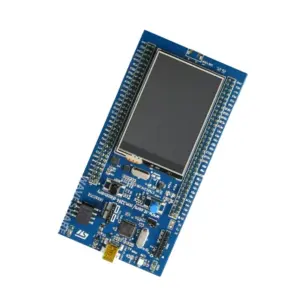
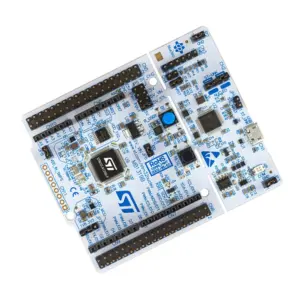
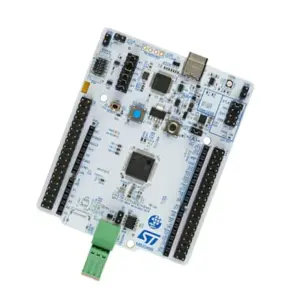
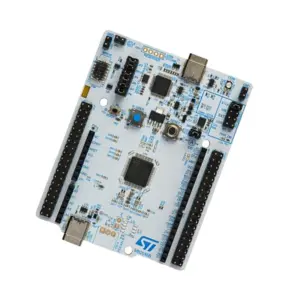
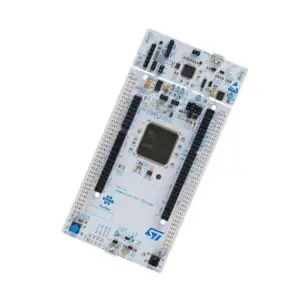
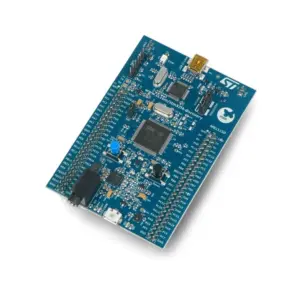
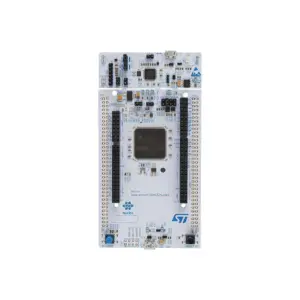
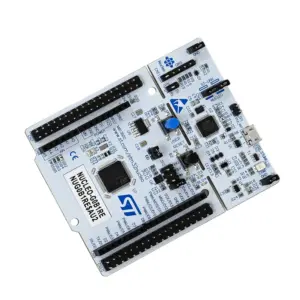
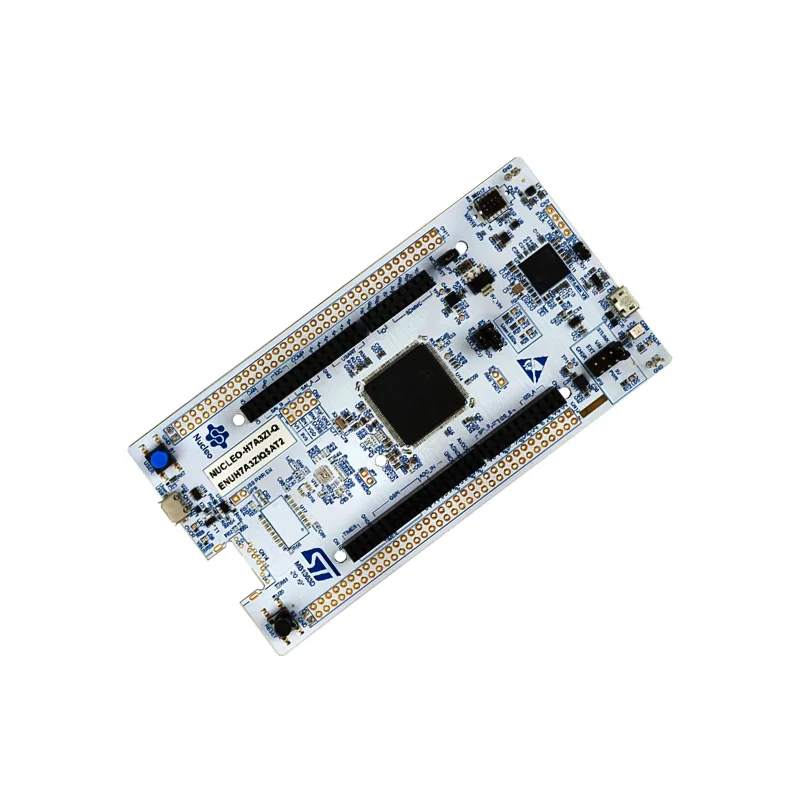
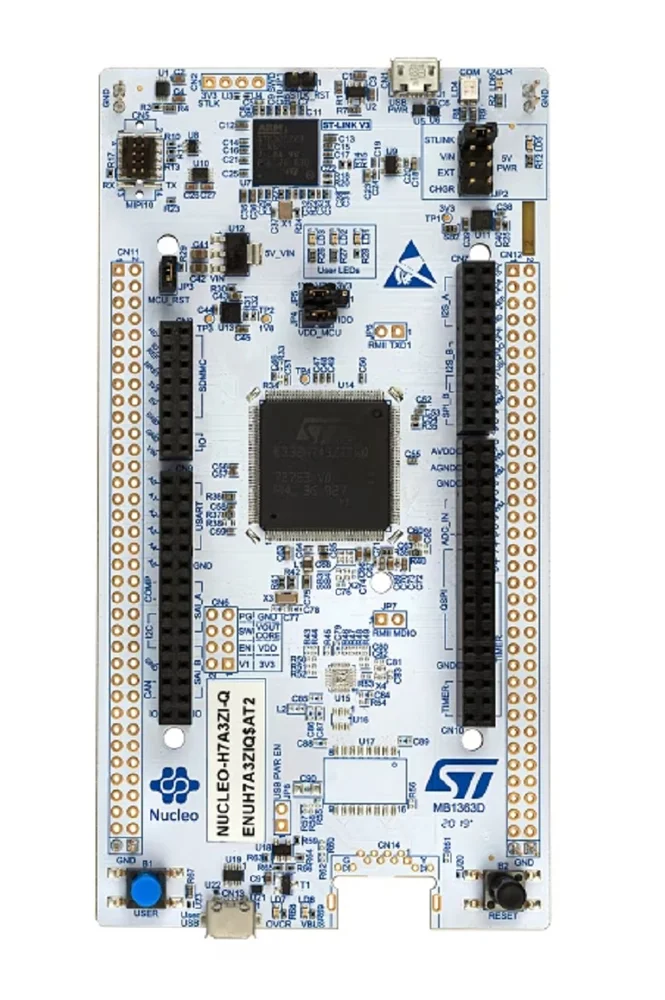
STMicroelectronics NUCLEO-H7A3ZI-Q Development Board, STM32 Nucleo-144

₹4,889.00 (Inclusive of all taxes)
Out of Stock

The STMicroelectronics NUCLEO-H7A3ZI-Q is a high-performance Nucleo-144 development board featuring the STM32H7A3ZIT6Q microcontroller. It integrates an ST-LINK debugger and supports Arduino Uno V3 (ST Zio) and full I/O (ST Morpho) expansion for rapid prototyping with STM32Cube libraries and IDEs.

Features

  • Features the high-performance STM32H7A3ZIT6Q microcontroller in LQFP144/TFBGA225 packages for demanding embedded applications.
  • Integrated onboard ST-LINK debugger/programmer eliminates the need for an external probe, supporting mass storage, Virtual COM port, and debugging.
  • Dual expansion via ST Zio (Arduino Uno V3 compatible) and ST Morpho headers for extensive shield and peripheral connectivity.
  • Flexible power architecture includes USB VBUS, external sources, and an internal SMPS to optimize power consumption in Run mode.
  • Comprehensive software support with free STM32Cube MCU Package libraries and compatibility with IAR, MDK-ARM, and STM32CubeIDE.

Out of stock

Description

The NUCLEO-H7A3ZI-Q is a member of the STM32 Nucleo-144 open development platform, designed to provide a flexible and cost-effective entry point for evaluating the high-performance capabilities of the STM32H7 series. Its core is the STM32H7A3ZIT6Q microcontroller, offering a balance of processing power and energy efficiency for advanced IoT and embedded systems.

The board’s architecture simplifies system integration by including an onboard ST-LINK debugger, which supports programming and real-time debugging via USB. Power management is enhanced by an internal switching mode power supply (SMPS), which significantly reduces operational current draw. The combination of ST Zio and ST Morpho connectors provides developers with unmatched flexibility, allowing seamless connection to a vast ecosystem of Arduino-compatible shields and custom-designed expansion boards for full access to the microcontroller’s I/O pins.

Key Features

  • High-performance STM32H7A3ZI Arm® Cortex®-M7 core microcontroller for compute-intensive tasks.
  • Integrated ST-LINK/V2-1 debugger and programmer with Virtual COM port and mass storage device interface.
  • Dual expansion interface: ST Zio for Arduino Uno V3 shield compatibility and ST Morpho for full STM32 GPIO access.
  • Advanced power system with internal SMPS to minimize power consumption in active operating modes.
  • Comprehensive free software framework via the STM32Cube MCU Package, including HAL libraries, middleware, and code examples.
  • Direct support for major development environments: IAR Embedded Workbench®, MDK-ARM, and STM32CubeIDE.
  • User interface includes three user LEDs and two tactile buttons (one user, one reset) for basic interaction.
  • Equipped with a 32.768 kHz crystal oscillator for accurate RTC and low-power timing functions.

Applications

  • Prototyping high-performance IoT gateways and edge computing devices.
  • Developing advanced human-machine interfaces (HMI) and graphical display applications.
  • Industrial control systems, motor drives, and real-time signal processing.
  • Academic research and embedded systems education for Arm Cortex-M7 architecture.
  • Building test platforms for audio processing, machine learning at the edge, and complex sensor fusion.

Technical Specifications

Microcontroller/SoCSTM32H7A3ZIT6Q (Arm Cortex-M7)
PackageLQFP144 or TFBGA225
User Interface3 User LEDs, 2 Buttons (1 Reset)
Expansion ConnectorsST Zio (Arduino Uno V3), ST Morpho Headers
Debugger/ProgrammerIntegrated Onboard ST-LINK (V2-1)
Power SupplyST-LINK USB VBUS, External Sources, Internal SMPS
Oscillator32.768 kHz Crystal
Software SupportSTM32Cube MCU Package
IDE CompatibilityIAR EWARM, MDK-ARM, STM32CubeIDE
Dimensions (approx.)Nucleo-144 Standard Form Factor

Frequently Asked Questions

How do I program the NUCLEO-H7A3ZI-Q board?

The board is programmed via the integrated ST-LINK/V2-1 debugger. Connect the board to your PC via the USB Type-C or Micro-AB connector. Use STM32CubeIDE, IAR, or Keil MDK-ARM to compile and flash your code. The ST-LINK appears as a mass storage device for drag-and-drop programming of binary files. For advanced debugging, configure your IDE to use the onboard ST-LINK for SWD interface access.

What is the purpose of the ST Zio and ST Morpho connectors?

The ST Zio connector provides pinout compatibility with Arduino Uno V3 shields, allowing you to leverage a vast ecosystem of sensors and actuators. The ST Morpho headers expose all available GPIOs and peripheral pins of the STM32H7A3ZI microcontroller, enabling direct access for custom circuitry or specialized expansion boards. This dual-connector system offers maximum flexibility for both rapid prototyping with off-the-shelf modules and full custom hardware integration.

How does the internal SMPS affect power consumption?

The internal Switching Mode Power Supply (SMPS) significantly reduces the board's operating current in Run mode compared to using a linear regulator. It efficiently steps down the input voltage (e.g., from USB VBUS) to the core voltage required by the microcontroller. To utilize it, ensure your power source meets the SMPS input requirements as specified in the board's user manual. This feature is crucial for battery-powered or energy-sensitive applications where minimizing active current draw is a priority.

Package Includes

  • 1 x STMicroelectronics NUCLEO-H7A3ZI-Q Development Board

Additional Information

Weight 0.105 kg
Dimensions 10 × 18 × 5 cm