SKU: IOWC-1112
📋 GST Invoice Available

Waveshare RP2350 Dev Board w/ 1.69-Inch Touch LCD, Accelerometer & Gyroscope

₹2,289.00 (Inclusive of all taxes)
Out of Stock

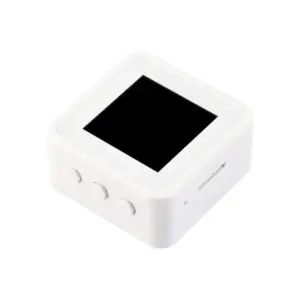
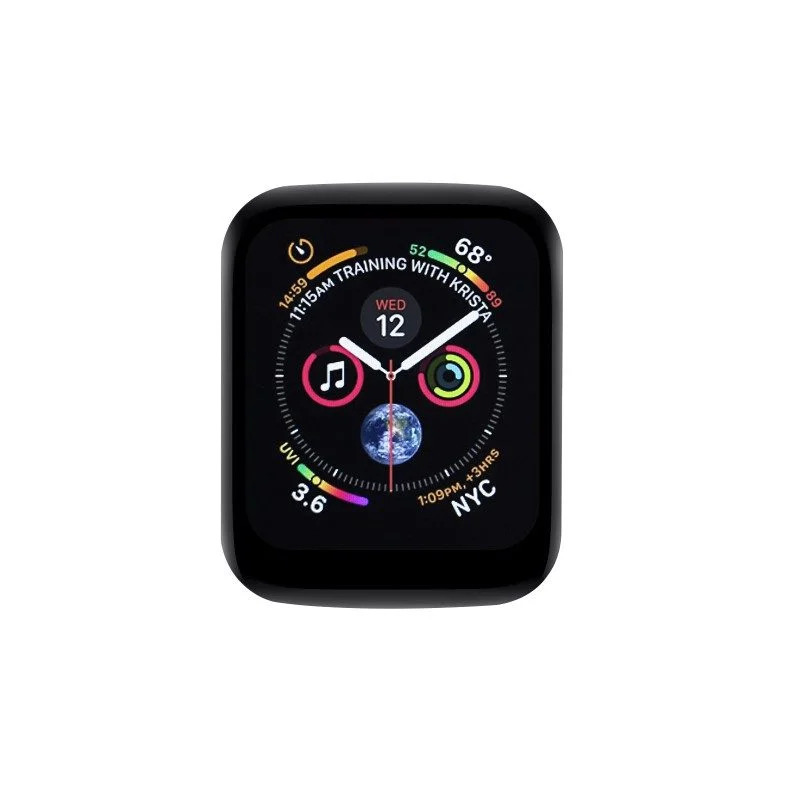
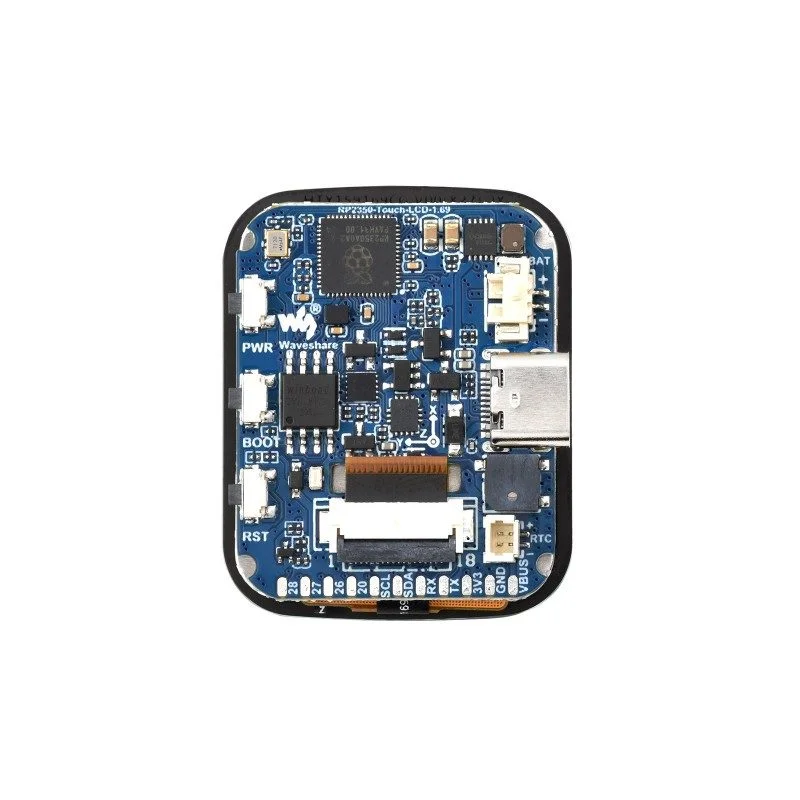
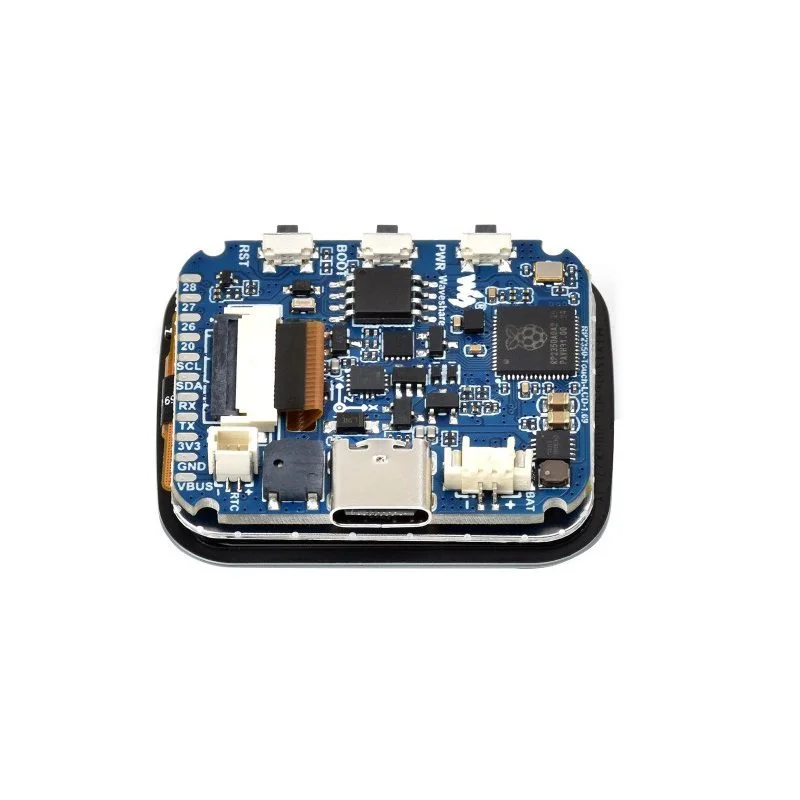
The Waveshare RP2350 Microcontroller Development Board integrates a dual-core Arm/RISC-V RP2350 chip with a 1.69-inch capacitive touch LCD, 6-axis IMU sensor, and USB-C programming, ideal for embedded GUI and portable IoT device prototyping.

Features

  • Dual-Core RP2350 MCU: Combines dual Arm Cortex-M33 and dual RISC-V Hazard3 cores, clockable up to 150MHz for flexible, high-performance embedded computing.
  • Integrated 1.69-Inch Touch Display: Features a 240×280 resolution, 65K-color capacitive touchscreen for interactive GUI development without external wiring.
  • Onboard 6-Axis Motion Sensor: Includes a 3-axis accelerometer and 3-axis gyroscope (IMU) for motion detection, gesture control, and orientation sensing applications.
  • Complete Development Features: Equipped with 16MB Flash, 520KB SRAM, USB-C for drag-and-drop programming, Li-ion battery management, RTC, buzzer, and temperature sensor.
  • Low-Power Portable Design: Supports battery operation with dedicated charging circuitry and low-power sleep modes, making it suitable for handheld and mobile IoT devices.

Out of stock

Description

The Waveshare RP2350 Development Board is a feature-rich platform built around the innovative Raspberry Pi-designed RP2350 microcontroller. Its unique dual-core, dual-architecture design pairs Arm Cortex-M33 cores with RISC-V Hazard3 cores, offering developers unparalleled flexibility in task partitioning and real-time performance for complex embedded applications. The board is engineered for rapid product integration, bundling essential peripherals like a crisp capacitive touch display and a precise inertial measurement unit (IMU) directly on the PCB.

Beyond processing, the board provides a full suite of system-level components including a real-time clock (RTC) with backup battery support, an audio buzzer, and a temperature sensor. Its USB-C interface facilitates easy drag-and-drop firmware updates via mass storage mode, streamlining the development workflow. With comprehensive power management supporting Li-ion batteries and low-power operational modes, this board serves as an all-in-one foundation for creating sophisticated, portable, and interactive IoT devices, from smart handheld controllers to advanced sensor nodes.

Key Features

  • Hybrid Processing Architecture: Leverage both Arm and RISC-V cores for optimized performance, running real-time tasks on one architecture and application logic on the other.
  • Interactive Touch Interface: Develop rich graphical user interfaces (GUIs) directly on the integrated high-resolution capacitive touchscreen.
  • Motion & Orientation Sensing: Utilize the onboard 6-axis IMU for advanced features like gesture recognition, activity monitoring, and tilt compensation.
  • Simplified Firmware Deployment: Program the board via USB Mass Storage Class (MSC), allowing firmware updates by simply dragging a UF2 file to the mounted drive.
  • Battery-Powered Operation: Integrated charging circuit and power path management enable the development of truly wireless, portable devices.
  • Real-Time Clock for Scheduling: Maintain accurate timekeeping and schedule timed events even during main power loss with the dedicated RTC and backup battery header.
  • Extensive Memory for Applications: Ample 16MB of Flash and 520KB of SRAM support complex applications, multiple graphics assets, and data logging.
  • Rich Onboard Peripherals: Includes a buzzer for audio feedback, a temperature sensor for environmental monitoring, and USB host/device capabilities.

Applications

  • Portable IoT Data Loggers: Create handheld devices for field data collection with graphical display and motion context.
  • Interactive Smart Home Controllers: Develop touch-based control panels for home automation systems with sensor feedback.
  • Wearable & Fitness Prototypes: Build motion-tracking devices, pedometers, or gesture-controlled interfaces leveraging the IMU and display.
  • Educational & Maker Projects: Ideal for learning embedded systems, real-time operating systems (RTOS), and GUI programming on a multi-core platform.
  • Industrial HMI (Human-Machine Interface): Prototype compact operator interfaces for machinery with touch input and status visualization.

Technical Specifications

Microcontroller / SoCRaspberry Pi RP2350 (Dual-core Arm Cortex-M33 + Dual-core RISC-V Hazard3)
Core FrequencyUp to 150 MHz
SRAM520 KB
Flash Memory16 MB
Display1.69-inch Capacitive Touch LCD
Display Resolution240 x 280 pixels, 65K colors
Onboard Sensors6-axis IMU (3-axis Accelerometer + 3-axis Gyroscope), Temperature Sensor
Additional PeripheralsReal-Time Clock (RTC) with battery header, Buzzer
Programming InterfaceUSB Type-C (Drag-and-drop UF2 programming)
Power SupplyUSB 5V or Li-ion Battery (via onboard charging circuit)
USB SupportUSB 1.1 Device/Host
Operating TemperatureNot Specified
Dimensions (Shipping)Approx. 8 cm x 6 cm x 2 cm

Frequently Asked Questions

How do I program the Waveshare RP2350 Development Board?

The board supports drag-and-drop programming via its USB Type-C port. When connected to a computer, it enumerates as a mass storage device. You simply compile your code into a UF2 firmware file using supported toolchains like the Raspberry Pi Pico SDK or Arduino Core for RP2040/RP2350, then drag and drop the UF2 file onto the board's removable drive to flash it. No external debugger or special software is required for basic programming.

What is the dual-architecture design of the RP2350 chip?

The RP2350 microcontroller features a unique heterogeneous multi-core design. It contains two independent processor clusters: one with dual Arm Cortex-M33 cores and another with dual RISC-V Hazard3 cores. This allows developers to assign specific tasks to the most suitable architecture. For instance, real-time control or DSP tasks can run on the RISC-V cores, while application logic and communication stacks utilize the Arm cores, enabling optimized performance and efficient power management for complex embedded applications.

Can I power the board with a battery, and how is charging managed?

Yes, the board includes a Li-ion battery charging and management circuit. You connect a single-cell 3.7V Li-ion or Li-Po battery to the dedicated "BAT+" and "BAT-" headers. The onboard charger manages charging via the USB-C port. The board can operate seamlessly from battery power, and the power path circuitry ensures stable operation even when USB is connected or disconnected. This makes it ideal for developing portable, untethered devices that require occasional recharging.

How do I access the onboard accelerometer and gyroscope sensor?

The 6-axis IMU (Inertial Measurement Unit) is connected to the RP2350 via an I2C interface. To use it, you need to include the appropriate sensor library in your firmware project. You'll initialize the I2C bus on the designated GPIO pins (specifics are in the board's schematic/pinout diagram), then communicate with the sensor using its I2C address to read raw accelerometer and gyroscope data, which can be converted to meaningful units like g-force and degrees per second for your application logic.

Package Includes

  • 1 x Waveshare RP2350 Microcontroller Development Board with 1.69-inch Touch LCD

Additional Information

Weight 0.022 kg
Dimensions 6 × 8 × 2 cm