SKU: IOWC-1110
📋 GST Invoice Available

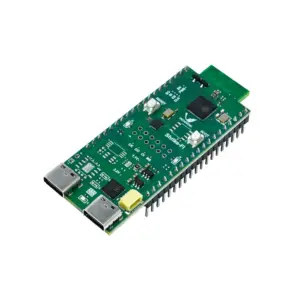
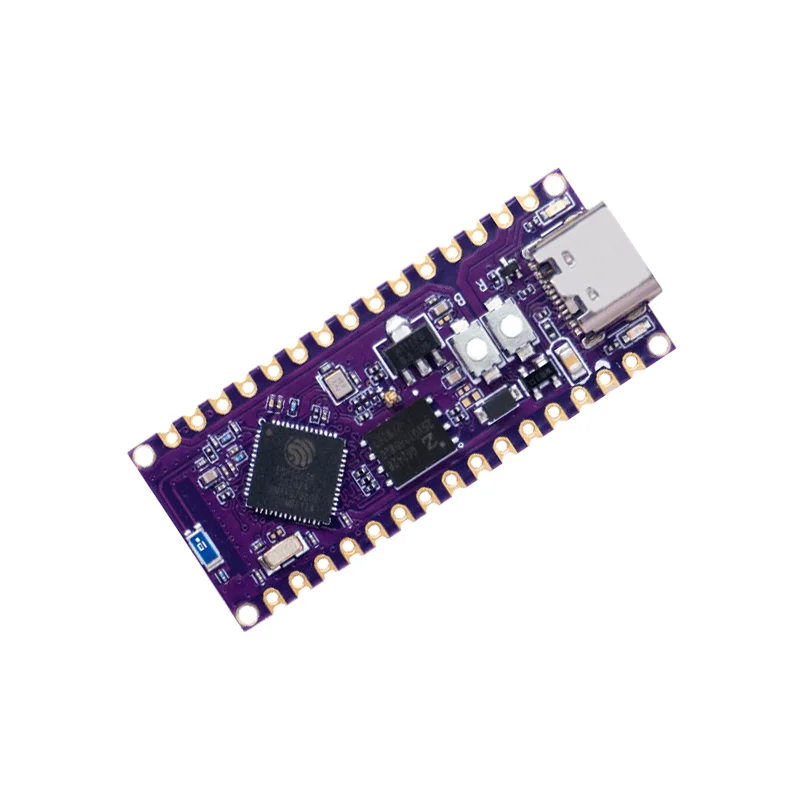
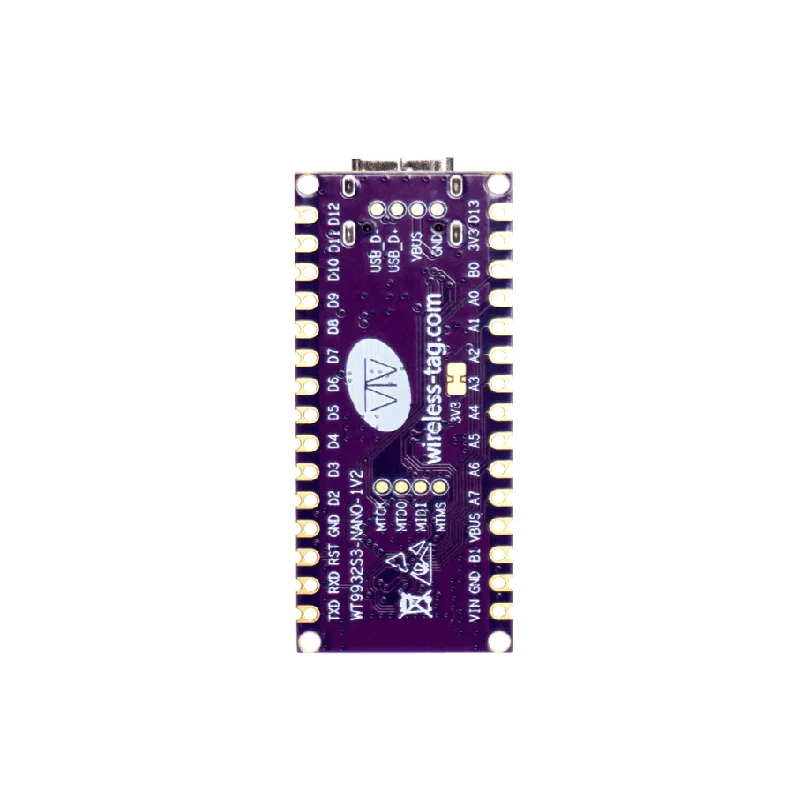
Wireless-Tag ESP32-Nano WT9932S3-NANO ESP32-S3R8 DevKit

₹1,299.00 (Inclusive of all taxes)
Out of Stock

The Wireless-Tag ESP32-Nano (WT9932S3-NANO) is a compact development board based on the ESP32-S3R8 chip, featuring dual-core processing, Wi-Fi 2.4GHz, and Bluetooth LE 5.0 connectivity. It supports Arduino IDE and MicroPython programming and is compatible with Arduino IoT Cloud for remote project management.

Features

  • ESP32-S3R8 Core: Equipped with a dual-core Xtensa LX7 processor running up to 240MHz, 512kB RAM, 8MB PSRAM, and 16MB Flash for robust IoT application performance.
  • Dual Wireless Connectivity: Integrated 2.4GHz Wi-Fi and Bluetooth LE 5.0 (BLE) for reliable local networking and low-power peripheral communication.
  • Multi-Framework Support: Programmable via Arduino IDE with ESP32-S3 core support and MicroPython for rapid scripting and prototyping.
  • Arduino IoT Cloud Ready: Direct compatibility enables remote monitoring, control, and dashboard visualization of sensor data and actuators from anywhere.
  • USB HID Functionality: Can emulate keyboard or mouse inputs via USB, enabling direct human-interface device projects and computer interaction.

Out of stock

Description

The Wireless-Tag ESP32-Nano Development Kit (model WT9932S3-NANO) delivers a high-performance, ultra-compact platform for IoT edge computing and wireless prototyping. At its core is the Espressif ESP32-S3R8 system-on-chip, which combines a dual-core Xtensa LX7 CPU capable of 240MHz operation with substantial onboard memory—512kB SRAM, 8MB pseudo-static RAM (PSRAM), and 16MB flash—enabling complex firmware and data buffering for sensor networks and edge AI tasks.

Its integrated 2.4GHz Wi-Fi 4 (802.11 b/g/n) and Bluetooth Low Energy 5.0 radio provide dual-mode wireless connectivity, suitable for creating Wi-Fi gateways, BLE beacons, or hybrid mesh nodes. The board’s power architecture supports typical active operating currents for wireless transmission while offering deep sleep modes for battery-powered deployments. The nano form factor (44mm x 18mm) and castellated pad design allow for direct soldering into custom carrier boards or use as a standalone module, making it ideal for space-constrained industrial telemetry, smart home controllers, and wearable tech projects.

Key Features

  • High-performance ESP32-S3R8 microcontroller with dual-core Xtensa LX7 processor (up to 240MHz).
  • Generous memory configuration: 512kB SRAM, 8MB PSRAM, and 16MB Flash for data-intensive applications.
  • Integrated 2.4GHz Wi-Fi (802.11 b/g/n) and Bluetooth Low Energy 5.0 with optimized RF performance.
  • Full support for Arduino framework via ESP32-S3 core and MicroPython for flexible firmware development.
  • Seamless integration with Arduino IoT Cloud for remote device management, dashboards, and over-the-air updates.
  • USB Human Interface Device (HID) capability to emulate keyboards or mice for direct PC interaction projects.
  • Ultra-compact, nano-sized PCB with castellated holes for embedding into final product designs.

Applications

  • Compact IoT sensor nodes for environmental monitoring (temperature, humidity, air quality).
  • Wireless smart home automation controllers and BLE-to-Wi-Fi bridges.
  • Portable data loggers and edge computing devices for industrial telemetry.
  • USB HID projects like custom macro keyboards, presentation clickers, or accessibility tools.
  • Prototyping platform for wearable electronics and battery-operated beacons.

Technical Specifications

Microcontroller / SoCEspressif ESP32-S3R8
Processor CoreDual-core Xtensa LX7, up to 240MHz
RAM512kB SRAM, 8MB PSRAM
Flash Memory16MB
Wireless ProtocolsWi-Fi 2.4GHz (802.11 b/g/n), Bluetooth LE 5.0
Programming SupportArduino IDE (ESP32-S3), MicroPython
Cloud PlatformArduino IoT Cloud
USB InterfaceUSB-C for power, programming & HID
Operating Voltage5V via USB
Dimensions44mm (L) x 18mm (W)
WeightApprox. 10g

Frequently Asked Questions

How do I program the WT9932S3-NANO board using the Arduino IDE?

First, install the ESP32 board support via the Arduino Boards Manager using the Espressif repository URL. Select 'ESP32S3 Dev Module' as your target board. Connect the Nano kit via USB-C, choose the correct COM port, and set the Flash Mode to 'QIO' and PSRAM to 'Enabled'. You can then upload standard Arduino sketches that utilize Wi-Fi, BLE, or the extensive GPIOs. Ensure your USB cable supports data transfer, not just power.

What is the power supply requirement and typical operating current?

The board is powered via its USB-C port at 5V. The operating current varies significantly with CPU load and radio activity. With Wi-Fi active and the CPU running at full speed, expect currents in the range of 150-250mA. For battery operation, leverage the ESP32-S3's deep sleep modes, which can reduce current consumption to microamps, making it suitable for long-term, solar-powered sensor nodes.

Can I use this board to emulate a keyboard or mouse (USB HID)?

Yes, the ESP32-S3 chip supports USB OTG, allowing the board to act as a Human Interface Device. Using the Arduino framework, you can utilize libraries like 'USBHID' to send keyboard key presses, mouse movements, or consumer media controls to a connected computer. This enables projects like custom macro pads, presentation remotes, or game controllers without requiring additional host-side drivers.

How do I access and utilize the 8MB of PSRAM on this board?

The PSRAM is automatically enabled in the Arduino IDE when you select the correct board configuration (PSRAM: 'Enabled'). You can allocate memory to the PSRAM heap using functions like heap_caps_malloc() with the MALLOC_CAP_SPIRAM flag. This extra memory is ideal for storing large buffers, image data for computer vision, audio samples, or complex data structures in MicroPython scripts without exhausting the internal SRAM.

Package Includes

  • 1 x Wireless-Tag ESP32-Nano Development Kit (WT9932S3-NANO)
  • 1 x Connector

Additional Information

Weight 0.01 kg
Dimensions 4.4 × 1.8 cm