SKU: IOWC-1011
📋 GST Invoice Available

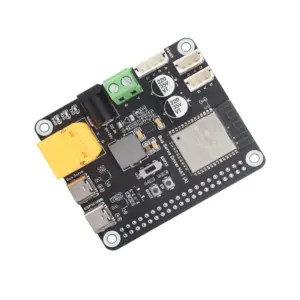
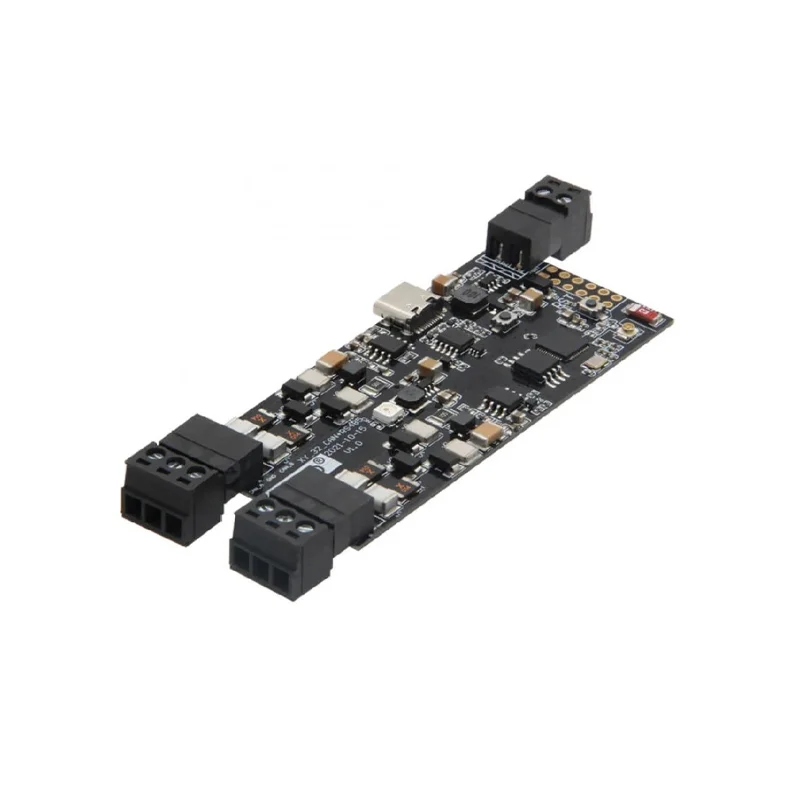
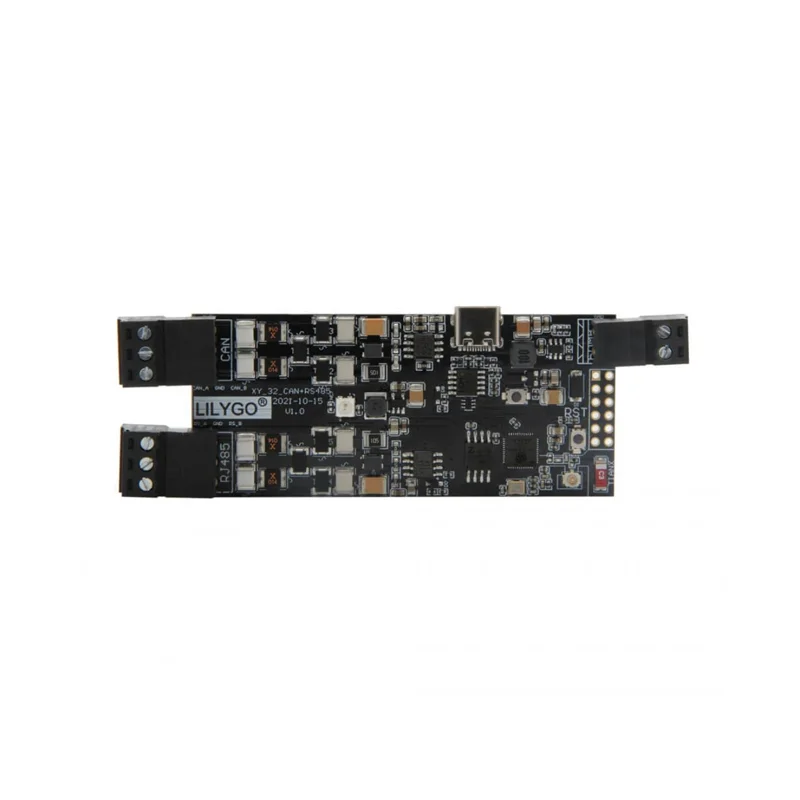
LilyGO T-CAN485 ESP32 CAN RS-485 IoT Control Module

₹2,099.00 (Inclusive of all taxes)
Out of Stock

The LilyGO T-CAN485 is an ESP32-based development board engineered for industrial IoT control, featuring integrated Wi-Fi, BLE, CAN bus, and RS-485 interfaces for robust communication in automation and telemetry systems.

Features

  • ESP32 dual-core MCU with integrated 2.4GHz Wi-Fi and Bluetooth 4.2 BLE for wireless connectivity.
  • Integrated CAN bus and RS-485 (UART) interfaces for reliable industrial communication protocols.
  • Wide 5V to 12V DC input voltage range for flexible and stable field deployment.
  • Onboard microSD (TF) card slot for expanded data logging and storage capabilities.
  • CH9102 USB-to-TTL converter and programmable WS2812 RGB LED simplify programming and status indication.

Out of stock

Description

The T-CAN485 development board leverages the ESP32’s dual-core processing power and wireless capabilities to serve as a communication hub for industrial IoT applications. Its integrated CAN and RS-485 transceivers provide robust, noise-immune data links for connecting sensors, actuators, and controllers in industrial automation, building management, and vehicle telematics systems.

Power management is designed for field deployment, accepting a wide 5V to 12V DC input, making it compatible with common industrial power supplies and battery packs. The board includes a microSD card slot for local data logging, a programmable RGB LED for visual status feedback, and a CH9102 chip for reliable USB serial communication, streamlining firmware development with the Arduino IDE or ESP-IDF.

Key Features

  • ESP32 dual-core microcontroller with 4MB flash memory for application code and wireless stack.
  • Integrated CAN bus controller and transceiver for automotive and industrial network communication.
  • RS-485 serial interface supporting long-distance, multi-drop network topologies.
  • Onboard CH9102 USB-to-TTL converter provides stable serial communication for programming and debugging.
  • MicroSD (TF) card slot enables local data storage for sensor logs and system configuration.
  • Programmable WS2812 addressable RGB LED connected to GPIO4 for customizable status indication.
  • Wide operating voltage range (5V-12V DC) ensures compatibility with various power sources.
  • Exposes multiple standard interfaces: UART, SPI, I2C, I2S, and SDIO for peripheral expansion.

Applications

  • Industrial automation and control systems with CAN or Modbus RTU (RS-485) networks.
  • Vehicle telematics and fleet management data loggers.
  • Building automation for HVAC, lighting, and energy monitoring.
  • Remote environmental sensing stations with wireless data backhaul.
  • Prototyping custom IoT gateways bridging wireless and wired industrial protocols.

Technical Specifications

Microcontroller / SoCESP32 Dual-Core
Wireless ProtocolsWi-Fi 802.11 b/g/n (2.4GHz), Bluetooth 4.2 + BLE
Industrial InterfacesCAN Bus, RS-485 (via UART)
Supply Voltage5V - 12V DC
Flash Memory4MB
Data StorageMicroSD (TF) Card Slot
Programming InterfaceUSB via CH9102 (USB-to-TTL)
User I/OProgrammable WS2812 RGB LED (GPIO4), Reset & Boot Buttons
Additional InterfacesUART, SPI, I2C, I2S, SDIO
Dimensions35mm (Width) - Other dimensions not specified

Frequently Asked Questions

How do I program the T-CAN485 board using the Arduino IDE?

Install the ESP32 board package via the Arduino IDE Board Manager. Connect the board via USB, select 'ESP32 Dev Module' as the target, and choose the correct COM port. Use the onboard CH9102 chip for serial communication; no external FTDI programmer is needed. Ensure the BOOT button is pressed if the board doesn't enter flashing mode automatically.

What is the recommended power supply for the T-CAN485's 5V-12V input?

A stable 5V or 12V DC power supply with sufficient current (recommended 1A minimum) is ideal. For field use, a 12V battery or regulated industrial power source works well. The wide input range accommodates voltage drops in long cable runs. Avoid using unregulated or noisy supplies to ensure reliable CAN and RS-485 communication.

How do I connect and use the CAN bus and RS-485 interfaces?

The CAN interface uses standard CAN_H and CAN_L lines; connect them to a CAN bus network with a 120-ohm termination resistor. The RS-485 uses the A and B lines for differential communication. Both interfaces are accessed via specific GPIO pins; consult the board's pinout diagram. Use libraries like ACAN or ModbusRTU in your ESP32 code to manage protocol communication.

Can I use the microSD card slot for data logging while using Wi-Fi?

Yes, the ESP32 can concurrently manage Wi-Fi connectivity and SPI-based microSD card operations. Use the SD library to write sensor data or system logs to the card. For optimal performance, implement a non-blocking design or use a real-time operating system (RTOS) task to prevent SD card access from blocking network tasks.

Package Includes

  • 1 x LilyGO T-CAN485 ESP32 CAN RS-485 IoT Control Module Development Board

Additional Information

Weight 0.04 kg
Dimensions 3.5 cm