SKU: IOWC-0943
📋 GST Invoice Available

Luckfox Aura Linux Dev Board w/ 1GB RAM, 8GB eMMC, Wi-Fi 6 & PoE

₹9,169.00 (Inclusive of all taxes)
Out of Stock

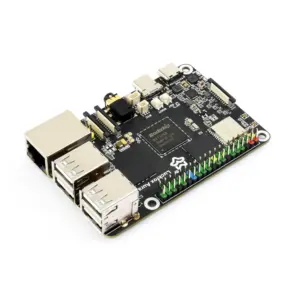
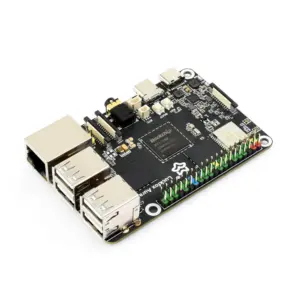
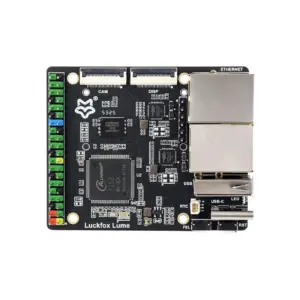
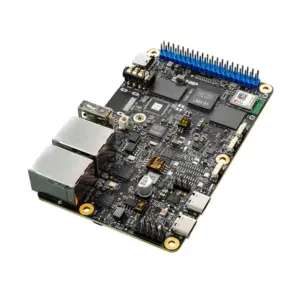
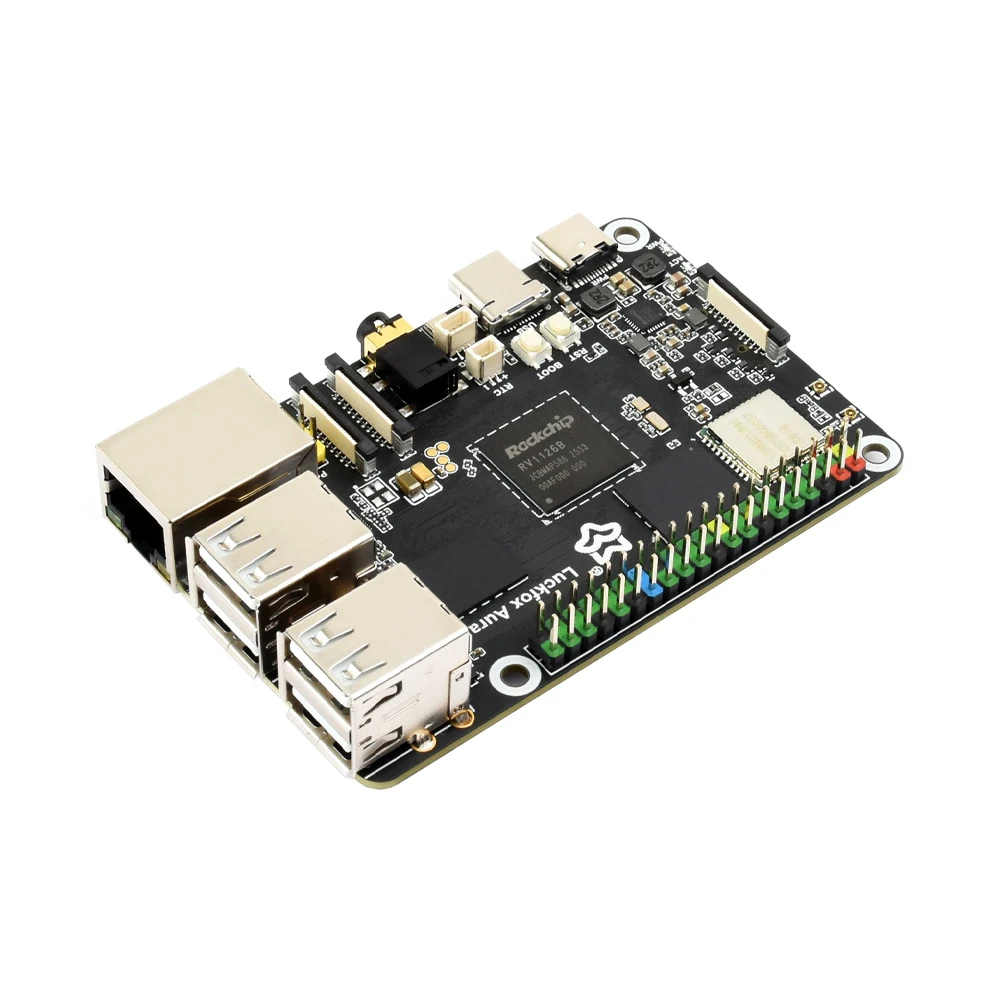
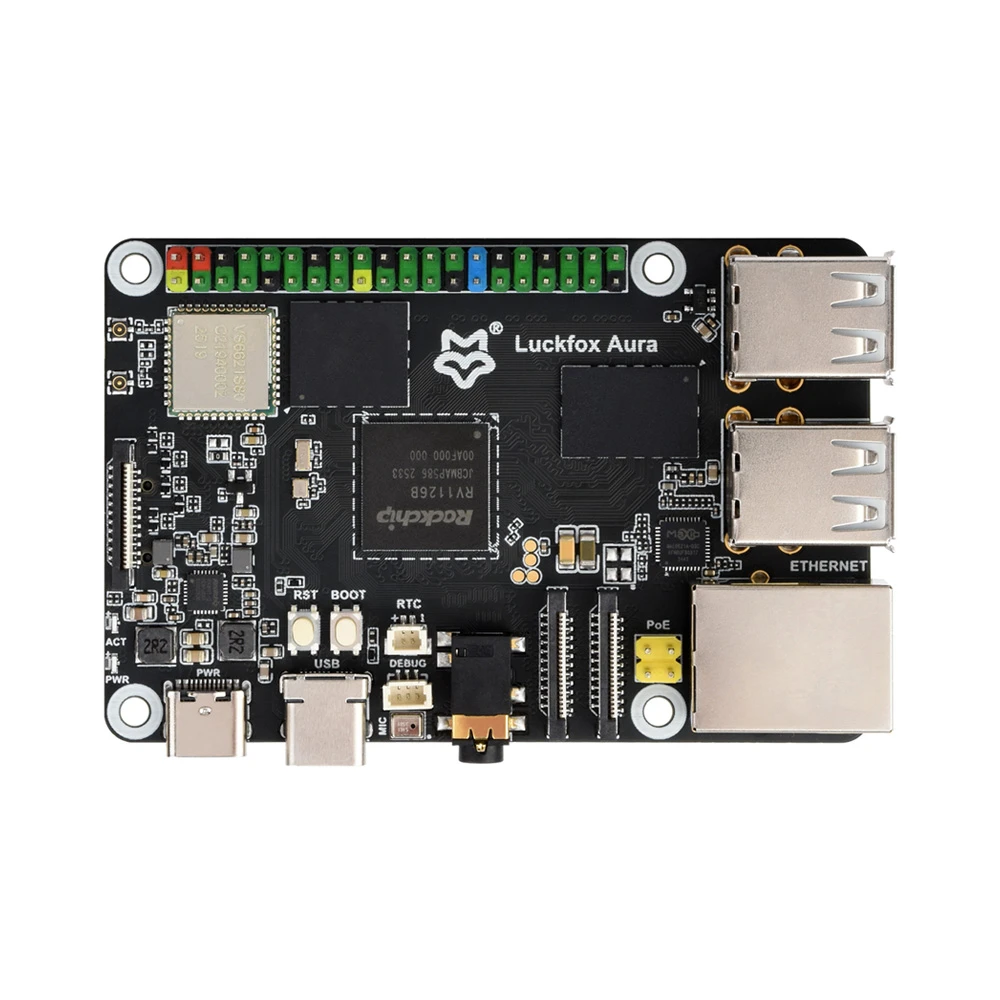
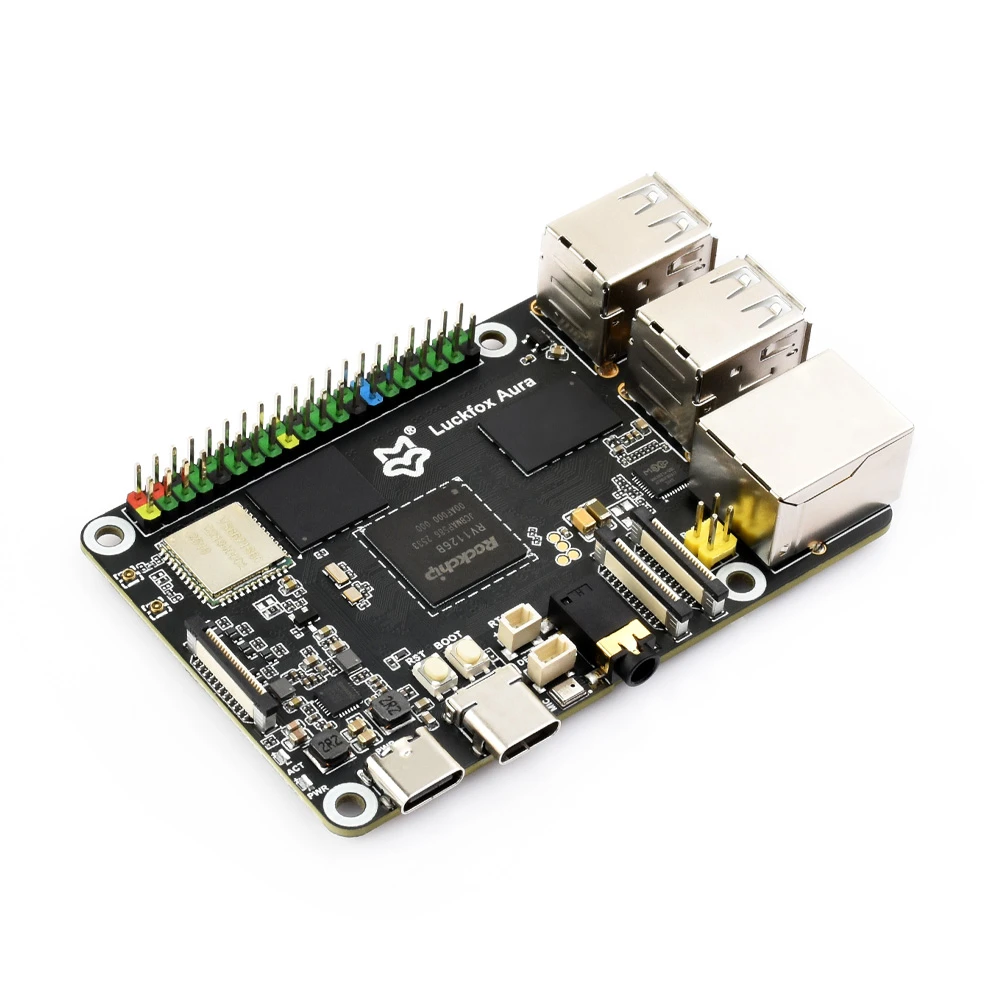
The Luckfox Aura is a high-performance Linux development board powered by a quad-core Arm Cortex-A53 processor, 1GB LPDDR4X RAM, and 8GB eMMC. It integrates Wi-Fi 6, Bluetooth 5.4, Gigabit Ethernet with PoE, and a 3 TOPS NPU for edge AI applications, running Buildroot or Debian.

Features

  • Quad-core Arm Cortex-A53 processor @1.6GHz with 1GB LPDDR4X RAM and 8GB eMMC for robust Linux operations.
  • Integrated 3 TOPS NPU (INT8/FP16) accelerates on-device AI inference for computer vision and edge analytics.
  • Comprehensive connectivity includes Wi-Fi 6, Bluetooth 5.4, Gigabit Ethernet with PoE support, USB 3.0, and four USB 2.0 ports.
  • Dual MIPI CSI interfaces and 4K@30fps video encode/decode support advanced camera processing and multimedia applications.
  • 40-pin GPIO header compatible with Raspberry Pi HATs for easy hardware expansion and sensor integration.

Out of stock

Description

The Luckfox Aura Linux Development Board is engineered for demanding edge computing and AIoT applications. Its quad-core Cortex-A53 SoC, coupled with 1GB of LPDDR4X RAM and 8GB of onboard eMMC, provides a stable platform for running full Linux distributions like Debian or Buildroot, enabling complex multitasking and data processing.

Beyond general-purpose computing, the board features a dedicated Neural Processing Unit (NPU) delivering 3 TOPS for efficient INT8 and FP16 inference, ideal for real-time object detection, image classification, and other machine learning workloads. Its rich I/O set, including dual MIPI CSI camera inputs, a MIPI DSI display output, Gigabit Ethernet with Power-over-Ethernet (PoE) capability, and a Raspberry Pi-compatible 40-pin header, offers unparalleled flexibility for industrial prototyping, robotics, and smart vision systems.

Key Features

  • High-performance edge computing platform with a 1.6GHz quad-core Arm Cortex-A53 CPU and 1GB LPDDR4X RAM.
  • Onboard 3 TOPS NPU accelerates AI model inference, supporting INT4, INT8, INT16, and FP16 data types for efficient edge AI.
  • Advanced ISP supports dual-camera setups up to 12MP with features like HDR, 3A, and noise reduction for computer vision projects.
  • Comprehensive wireless and wired connectivity suite: Wi-Fi 6 (802.11ax), Bluetooth 5.4, and Gigabit Ethernet with PoE support.
  • Extensive expansion via 40-pin GPIO header (Raspberry Pi HAT compatible), USB 3.0 Type-C, four USB 2.0 ports, and a TF card slot.
  • Professional multimedia capabilities with 4K@30fps H.264/H.265 video encode and decode, plus MIPI DSI display output.
  • Runs full-featured Linux OS (Buildroot or Debian) for flexible software development and system integration.
  • Compact form factor (87x56mm) integrates substantial processing power, storage, and I/O for space-constrained deployments.

Applications

  • Edge AI and computer vision systems for object detection, facial recognition, and quality inspection.
  • Industrial IoT (IIoT) gateways for data aggregation, protocol conversion, and network bridging with PoE.
  • Multimedia hubs and digital signage with 4K video playback and MIPI display output capabilities.
  • Robotics and automation control platforms requiring real-time processing and multiple sensor inputs.
  • Smart home and building automation servers integrating Wi-Fi 6, Bluetooth, and wired connectivity.
  • Prototyping and development platform for Linux-based embedded applications with Raspberry Pi HAT ecosystem compatibility.

Technical Specifications

ProcessorQuad-core Arm Cortex-A53 @1.6GHz
RAM1GB LPDDR4X
Flash Memory8GB eMMC
NPU Performance3 TOPS @ INT8 (supports INT4/INT8/INT16/FP16)
Wireless ProtocolsWi-Fi 6 (802.11ax), Bluetooth 5.4
EthernetRJ45 10/100/1000Mbps Gigabit Ethernet (PoE supported)
Video Processing4K@30fps encode/decode (H.264/H.265)
Camera InterfacesDual MIPI CSI
Display InterfaceMIPI DSI (1920×1080@60fps)
USB Ports1x USB 3.0 Type-C, 4x USB 2.0 Type-A
GPIO40-pin header (Raspberry Pi HAT compatible)
Storage ExpansionTF card slot
Operating SystemBuildroot, Debian
Supply Voltage5V DC
Dimensions87 x 56 mm
Weight115 g

Frequently Asked Questions

What operating systems are supported by the Luckfox Aura board?

The Luckfox Aura development board officially supports Buildroot and Debian Linux distributions. These provide a full Linux environment for application development. You can flash the pre-built images via a TF card or the USB Type-C port. The board's bootloader and kernel are maintained by Luckfox, with documentation and sample code available on their GitHub repository for getting started with custom application deployment.

How do I power the board and can I use Power-over-Ethernet (PoE)?

The board requires a stable 5V DC power supply, typically provided via the USB Type-C port. For PoE operation, you must use a compatible IEEE 802.3af/at PoE injector or switch connected to the RJ45 Gigabit Ethernet port. The board integrates the necessary PoE circuitry to receive power directly from the Ethernet cable, eliminating the need for a separate power adapter in deployed scenarios, which is ideal for ceiling-mounted or remote installations.

What is the procedure for connecting cameras via the MIPI CSI interfaces?

To connect cameras, use compatible MIPI CSI-2 ribbon cables to attach camera modules to the two onboard FPC connectors. You must then enable and configure the camera in the Linux device tree (DTB) for your specific sensor model (e.g., OV5647, IMX219). The integrated Image Signal Processor (ISP) handles auto-exposure, white balance, and noise reduction. Driver support and configuration examples are provided in the Luckfox SDK for common sensors to streamline camera integration for vision projects.

How do I access the GPIO pins and what is their voltage level?

The 40-pin GPIO header is physically and electrically compatible with Raspberry Pi HATs, operating at 3.3V logic levels. You can access the pins using standard Linux sysfs interface or libraries like WiringPi, libgpiod, or Python's Raspberry Pi.GPIO (with adaptation). Pin multiplexing and function assignment are managed through the device tree overlay. Always refer to the official Luckfox pinout diagram to identify usable GPIOs, I2C, SPI, UART, and PWM channels for your peripheral connections.

Can I run TensorFlow Lite or PyTorch models on the integrated NPU?

Yes, the 3 TOPS NPU supports running quantized models in INT8/INT4 formats. You need to convert your TensorFlow Lite or PyTorch model using the Luckfox-provided RKNN toolkit, which optimizes the model for the Rockchip NPU architecture. The toolkit includes APIs for C, Python, and command-line tools for model conversion, inference, and profiling. This allows for efficient deployment of AI models for real-time object detection, segmentation, or classification directly on the edge device.

Package Includes

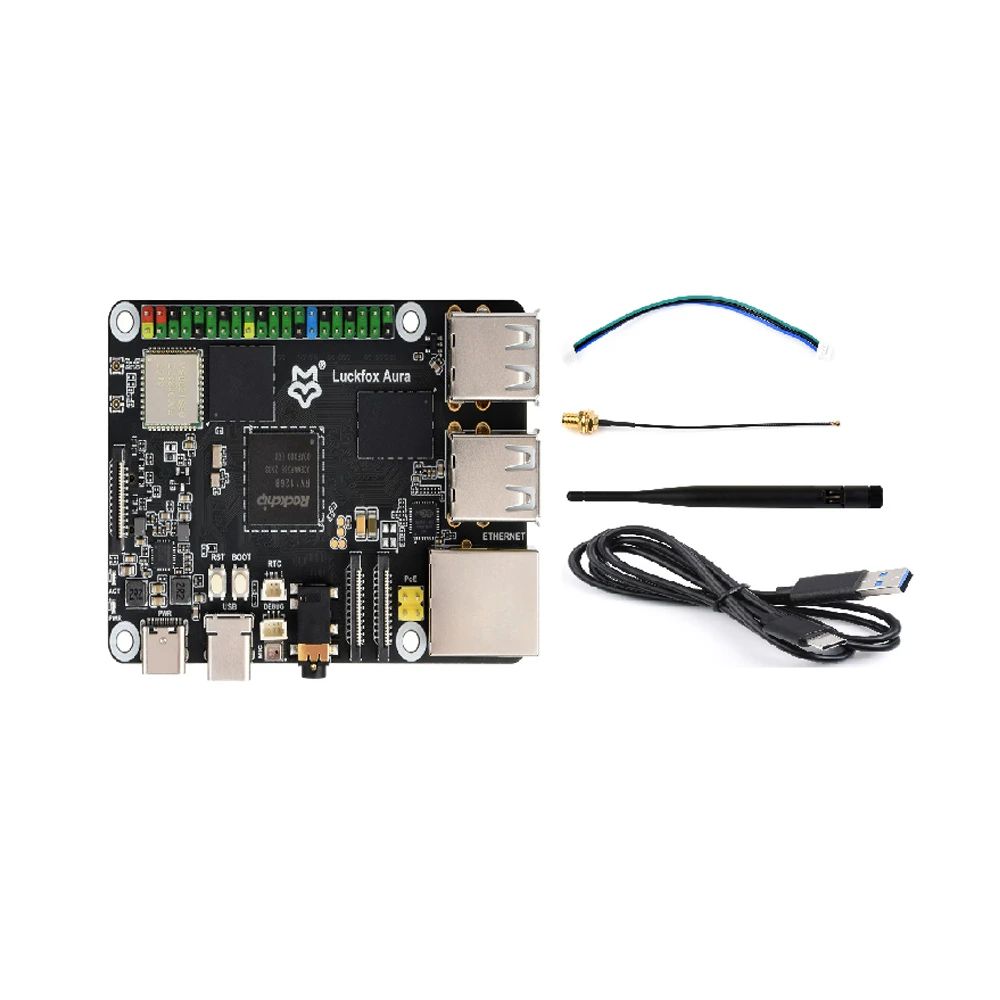
  • 1 x Luckfox Aura High-Performance Linux Development Board
  • 2 x SH1.0 3PIN cable (~100mm)
  • 2 x IPEX 4 to SMA cable
  • 2 x 6dBi antenna (~17cm)
  • 1 x USB Type-A to Type-C cable (~1m)

Additional Information

Weight 0.115 kg
Dimensions 5.6 × 8.7 cm