SKU: IOWC-0882
📋 GST Invoice Available

SIM800C GPRS/GSM Shield with Antenna

₹1,119.00 (Inclusive of all taxes)
Out of Stock

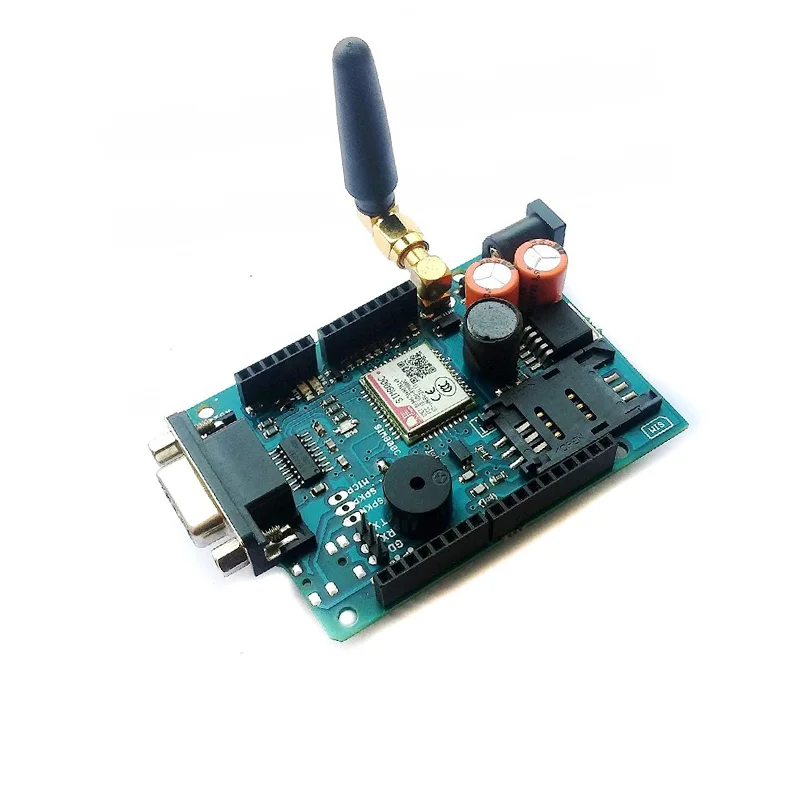
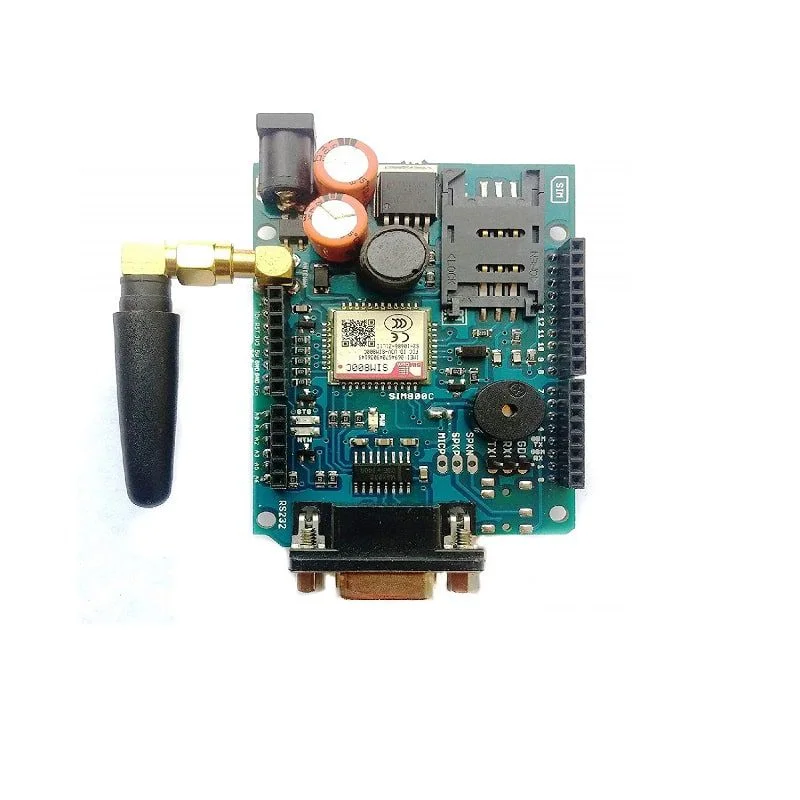
The SIM800C GPRS/GSM Shield provides Arduino-compatible boards with quad-band GSM/GPRS connectivity for SMS, voice calls, and data transmission. It operates on 850/900/1800/1900MHz bands and features a low-power sleep mode of ~0.6mA.

Features

  • Quad-band GSM/GPRS (850/900/1800/1900 MHz) for global coverage.
  • Arduino UNO R3/Mega compatible shield form factor with TTL/RS232 serial output.
  • Low power consumption with ~0.6mA in sleep mode for battery-powered applications.
  • Integrated headset jack, microphone provision, speaker output, and status LEDs (PWR, STS, NTW).
  • Includes both a sensitive external finger antenna and a compact onboard antenna.

Out of stock

Description

The SIM800C GPRS/GSM Shield is a dedicated cellular interface module designed for Arduino and compatible microcontroller platforms. It integrates the robust SIM800C quad-band transceiver, providing reliable GSM phase 2/2+ connectivity for SMS messaging, voice calls, and GPRS data services. The shield communicates via a simple serial TTL or RS232 interface, making it programmable through standard AT commands from your host controller.

Engineered for flexible deployment, the board includes comprehensive audio provisions with a two-in-one headset jack, microphone input, and a speaker driver. Visual status is provided through three dedicated LEDs for power, module status, and network registration. Its low-power architecture supports a sleep current of approximately 0.6mA, making it suitable for remote, solar-powered, or battery-operated IoT telemetry and alerting systems.

Key Features

  • Global quad-band GSM/GPRS coverage on 850, 900, 1800, and 1900 MHz frequencies.
  • GPRS multi-slot class 10/12 and mobile station class B for efficient data transfer.
  • Direct Arduino UNO R3 pinout compatibility with serial communication on digital pins 2 (RX) and 3 (TX).
  • Onboard audio circuitry with headphone jack, microphone, and speaker connections for voice applications.
  • Dual antenna options: includes a high-sensitivity external finger antenna and a compact onboard antenna.
  • Comprehensive status indication via PWR (power), STS (module status), and NTW (network) LEDs.
  • Standard SIM card holder and a buzzer for audible call/SMS alerts.
  • Supports both TTL logic level and RS232 serial output for broader system integration.

Applications

  • Remote sensor data logging and telemetry over GPRS networks.
  • DIY GSM phones, callboxes, and SMS-based alert/notification systems.
  • Asset tracking and fleet management with GPS integration.
  • Smart agriculture and environmental monitoring with remote SMS commands.
  • Basic M2M (Machine-to-Machine) communication and industrial monitoring.

Technical Specifications

Chipset/SoCSIM800C Quad-Band GSM/GPRS
Wireless ProtocolsGSM Phase 2/2+, GPRS
Frequency Range850 / 900 / 1800 / 1900 MHz
RF Transmit PowerClass 4 (2W @ 850/900MHz), Class 1 (1W @ 1800/1900MHz)
Supply Voltage5V via Arduino shield connector
Operating CurrentPeak during transmission; Sleep Current ~0.6mA
InterfacesTTL Serial (RX/TX), RS232, Audio Jack (Headset/Mic/Speaker)
Antenna ConnectorIntegrated for external finger antenna; onboard antenna present
Operating TemperatureStandard commercial range (refer to SIM800C datasheet)
DimensionsApprox. 12cm x 8cm (Arduino shield footprint)

Frequently Asked Questions

How do I communicate with this SIM800C shield from my Arduino?

Connect the shield to your Arduino UNO. Use a software serial library (e.g., SoftwareSerial) to define pins 2 as RX and 3 as TX. Power the board via the Arduino's 5V pin. Send standard AT commands (e.g., AT, AT+CSQ, AT+CMGF=1) through the serial interface to control the module, check network status, send SMS, or initiate GPRS connections. Ensure you have a valid SIM card inserted.

What is the power requirement and how can I minimize current draw?

The shield is powered by 5V from the Arduino's Vin or 5V pin. During active transmission, current draw can be high (up to 2A peak). For battery operation, utilize the module's sleep modes by sending AT+CSCLK=1 to enter slow clock mode, reducing current to approximately 0.6mA. Always provide a stable 5V supply capable of delivering peak current for reliable operation during network registration and call initiation.

Can I use both the external and onboard antenna simultaneously?

No, you should use only one antenna at a time to avoid signal interference and impedance mismatch. The design typically includes a selection mechanism, often a zero-ohm resistor or solder jumper. By default, the external antenna connector is active. To switch to the onboard antenna, you may need to desolder a connection on the PCB. Consult the board's specific documentation for the correct configuration to ensure optimal RF performance.

Package Includes

  • 1 x SIM800C GPRS/GSM Shield with Antenna

Additional Information

Weight 0.07 kg
Dimensions 12 × 8 × 4 cm