SKU: IOWC-0870
📋 GST Invoice Available

Adafruit FONA 808 Mini Cellular GSM + GPS Breakout

₹7,039.00 (Inclusive of all taxes)
Out of Stock

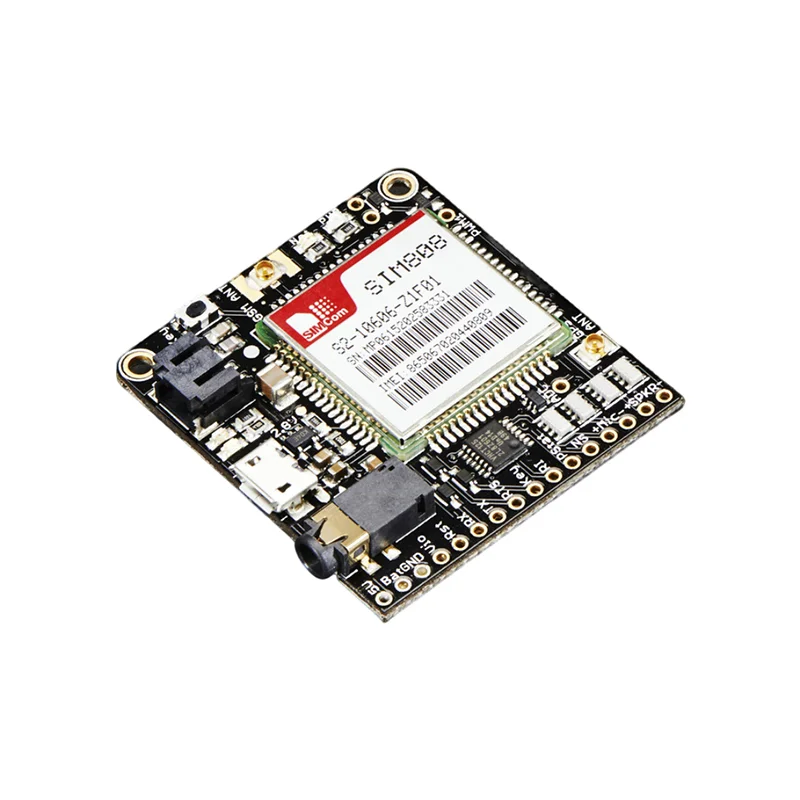
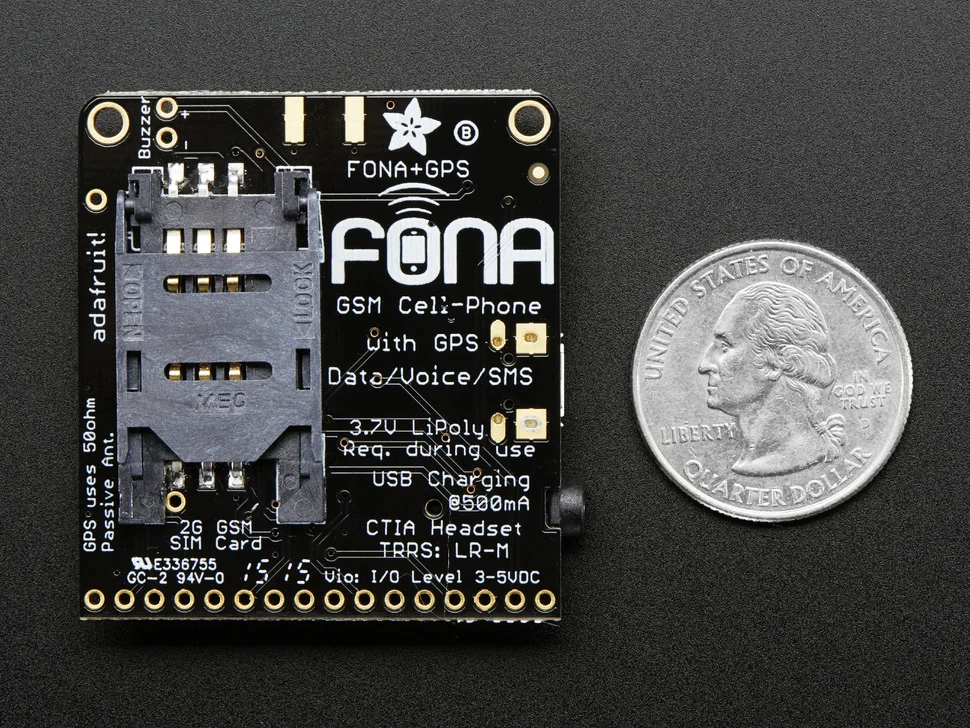
The Adafruit FONA 808 is a compact breakout board integrating a quad-band GSM/GPRS module (SIM808) and a high-sensitivity GPS receiver (MT3337 chipset). It enables voice calls, SMS, data, and location tracking for Arduino, Raspberry Pi, and other microcontroller projects via a simple AT command interface.

Features

  • Integrated SIM808 module for global quad-band GSM (850/900/1800/1900MHz) connectivity supporting voice, SMS, and GPRS data.
  • High-sensitivity MT3337 GPS chipset with -165 dBm tracking for accurate, sub-2.5 meter positioning.
  • Flexible 2.8V to 5V logic level shifting for easy interfacing with 3.3V and 5V microcontrollers.
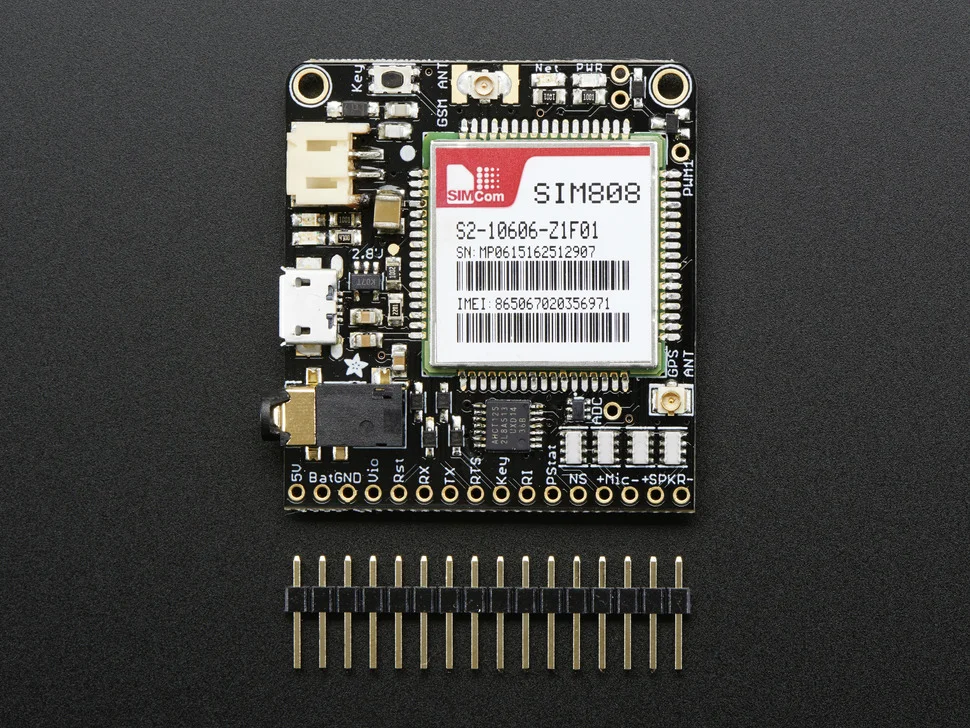
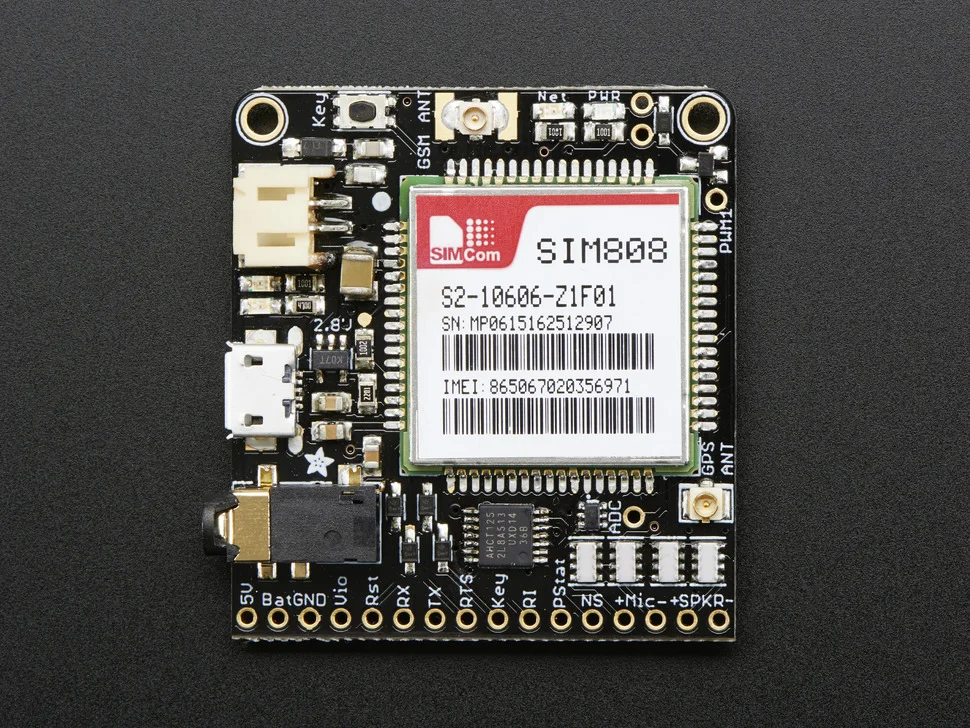
  • Comprehensive I/O includes uFL antenna connectors, headphone jack, external speaker/mic breakouts, and PWM buzzer control.
  • Compact 1.75″x1.6″ form factor with auto-baud AT command interface for rapid prototyping and system integration.

Out of stock

Description

The Adafruit FONA 808 breakout consolidates cellular communication and GPS positioning into a single, developer-friendly module. Its core is the SIM808, a robust GSM/GPRS modem capable of handling voice calls, text messaging, and TCP/IP data connections over standard AT commands. The integrated MT3337 GPS receiver offers 66 acquisition channels and -165 dBm tracking sensitivity, ensuring reliable location fixes even in challenging urban or indoor environments.

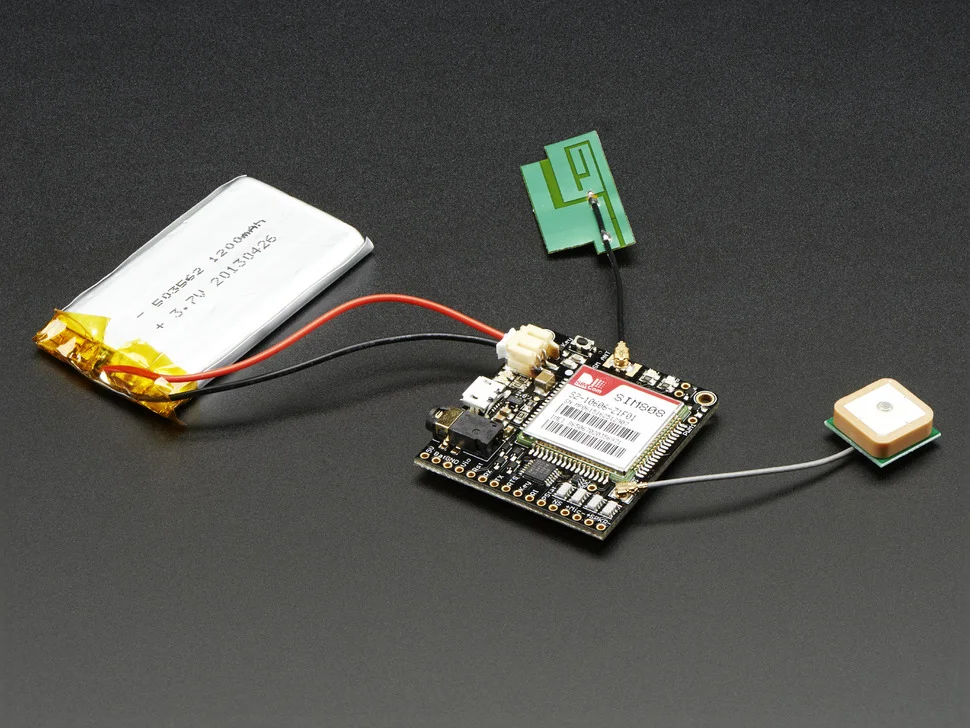
Designed for seamless integration, the board includes logic level shifters for 2.8V to 5V operation, uFL connectors for attaching external GSM and GPS antennas to maximize signal strength, and breakouts for an external speaker, electret microphone, and a vibrational motor. LEDs provide clear status feedback for power and network registration, accelerating development and debugging for IoT tracking, telematics, and remote monitoring applications.

Key Features

  • All-in-one cellular (GSM/GPRS) and GPS tracking solution on a compact breakout board.
  • Make/receive voice calls and SMS messages using a standard TRRS headset or external audio components.
  • Send and receive GPRS data for TCP/IP, HTTP, and MQTT connectivity in remote IoT deployments.
  • High-sensitivity GPS with 66-channel acquisition and 2.5-meter accuracy for precise asset tracking.
  • Onboard logic level conversion allows safe operation with both 3.3V and 5V microcontroller logic.
  • uFL antenna ports enable connection of external active/passive antennas to boost GSM and GPS signal range.
  • Integrated PWM driver for a vibrational motor (buzzer) provides silent haptic feedback notifications.
  • Simple AT command interface with auto-baud detection for quick setup with Arduino, Raspberry Pi, or serial terminals.

Applications

  • Asset tracking and fleet management loggers with real-time GPS location and cellular data reporting.
  • Remote environmental monitoring stations that SMS alert or transmit sensor data via GPRS.
  • Personal safety and emergency notification devices with panic button and location sharing.
  • Telematics and vehicle tracking systems for logistics, insurance, or theft recovery.
  • IoT field equipment requiring both communication and positioning, such as agricultural sensors or wildlife trackers.

Technical Specifications

Microcontroller/SoCSIM808 (GSM/GPRS + GPS)
Wireless ProtocolsGSM/GPRS (2G), GPS
Frequency RangeQuad-band GSM: 850/900/1800/1900MHz
GPS ChipsetMT3337
GPS Tracking Sensitivity-165 dBm
GPS Channels66 acquisition channels
Position AccuracyApprox. 2.5 meters
Supply Voltage3.7V - 4.2V (LiPo via JST), Logic: 2.8V - 5V
Antenna ConnectoruFL (for GSM and GPS)
InterfacesUART (AT Commands), PWM, Audio I/O (Headphone Jack, Speaker/Mic Breakouts)
DimensionsApprox. 44.5 mm x 40.6 mm (1.75" x 1.6")

Frequently Asked Questions

How do I power the FONA 808 module and what is the recommended power supply?

Power the FONA 808 via its JST PH connector using a single-cell 3.7V LiPo battery (3.7V-4.2V range). For stable operation during cellular transmission peaks, ensure your power source can deliver at least 2A. The onboard regulator and logic level shifters allow the serial control pins to interface safely with 3.3V or 5V microcontrollers like Arduino or Raspberry Pi GPIO.

What antennas are required, and how do I connect them for optimal performance?

You need two external antennas: a quad-band GSM antenna and a passive GPS antenna, both with uFL connectors. Screw the uFL pigtails firmly onto the board's labeled ports. For best GPS reception, place the GPS antenna with a clear view of the sky. The GSM antenna's placement affects signal strength; an external magnetic mount antenna on a metal surface often significantly improves network registration and data reliability.

How do I communicate with and configure the FONA 808 using AT commands?

Connect the module's TX and RX pins to your microcontroller's UART, using a logic level converter if needed. Power on the module and open a serial terminal (e.g., 9600 baud). The FONA 808 supports auto-baud detection. Start with basic AT commands like 'AT' to check communication, 'AT+CSQ' for signal strength, and 'AT+CGPS=1' to power the GPS. Refer to the SIM808 AT command manual for detailed instructions on calls, SMS, and GPRS data setup.

Can I use the FONA 808 to send sensor data to a cloud server over the internet?

Yes. After inserting an active SIM card and establishing a network connection (AT+CGATT=1), you can use GPRS to open a TCP or UDP socket. Use commands like 'AT+CIPSTART' to connect to your server's IP and port, then 'AT+CIPSEND' to transmit data. For HTTP, you can send raw HTTP GET/POST requests. Ensure your mobile carrier supports GPRS data and that any APN settings (configured via AT+CSTT) are correctly entered for data access.

What is the typical GPS acquisition time and how can I improve location fix accuracy?

Time-To-First-Fix (TTFF) varies from 30 seconds to a few minutes, depending on satellite visibility and whether a recent almanac is cached. For a 'hot start' with valid ephemeris data, fixes can be under 10 seconds. Ensure the GPS antenna has an unobstructed view. Using the command 'AT+CGPS=1,1' enables assisted GPS (A-GPS) mode if supported by your network, which can dramatically reduce TTFF by downloading ephemeris data via the cellular connection.

Package Includes

  • 1 x Adafruit FONA 808 - Mini Cellular GSM + GPS Breakout

Additional Information

Weight 0.016 kg
Dimensions 10 × 5 × 1 cm