SKU: IOWC-0711
📋 GST Invoice Available

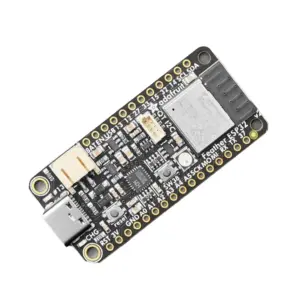
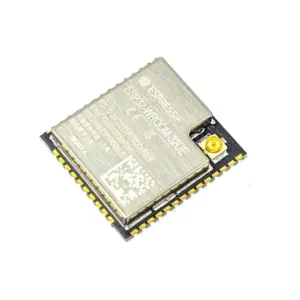
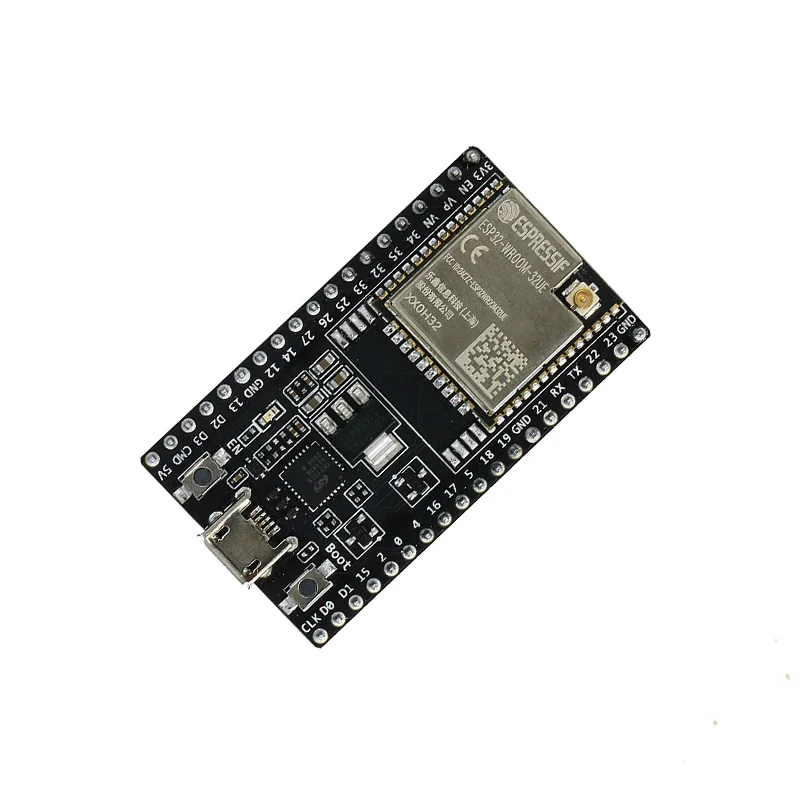
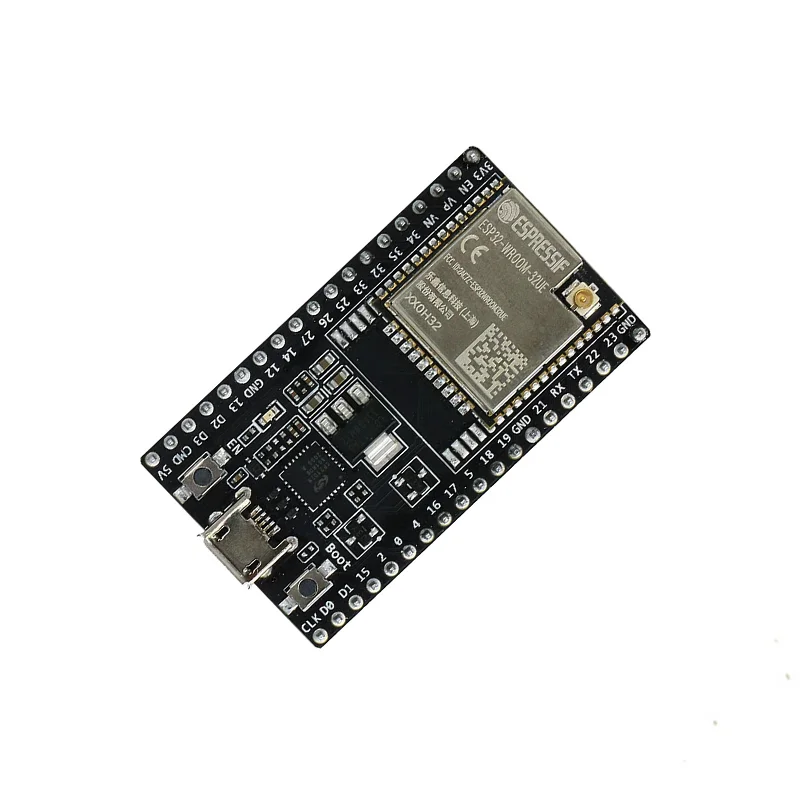
Espressif ESP32-DevKitC-32UE Development Board w/ External Antenna Connector

₹1,119.00 (Inclusive of all taxes)
Out of Stock

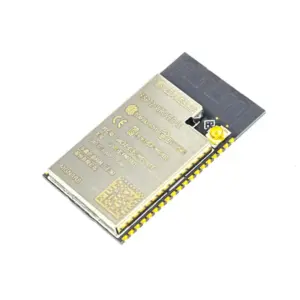
The Espressif ESP32-DevKitC-32UE is a feature-rich development board built around the ESP32-WROOM-32UE module, integrating dual-core processing, Wi-Fi, and Bluetooth/BLE connectivity for IoT applications. It supports a 3.3V to 5V supply via USB and includes a connector for an external antenna to enhance wireless range.

Features

  • Powered by the ESP32-WROOM-32UE module with dual-core Xtensa LX6 processor for demanding tasks like audio streaming and MP3 decoding.
  • Integrated Wi-Fi 802.11 b/g/n and dual-mode Bluetooth 4.2 (Classic & Low Energy) for versatile wireless connectivity.
  • Features an external U.FL/IPEX antenna connector alongside the onboard PCB antenna for improved signal strength and range.
  • Wide operating voltage range from 3.3V to 5V via the onboard USB-C connector, simplifying power and programming.
  • Comprehensive GPIO breakout and robust -40°C to +85°C operating temperature range for industrial and outdoor IoT deployments.

Out of stock

Description

The ESP32-DevKitC-32UE is Espressif’s official development platform for the ESP32-WROOM-32UE module, designed to accelerate prototyping of connected devices. It provides full access to the module’s I/O pins, including ADC, DAC, SPI, I2C, I2S, and UART interfaces, enabling rapid integration of sensors, displays, and actuators.

This board is engineered for reliable performance in diverse environments, featuring a stable power supply circuit and ESD protection. The inclusion of an external antenna connector allows developers to optimize RF performance for specific deployment scenarios, whether for long-range Wi-Fi links or mitigating interference in dense RF environments.

Key Features

  • Development board for the ESP32-WROOM-32UE module with external antenna capability.
  • Dual-core Xtensa® 32-bit LX6 microprocessor, clocked up to 240 MHz.
  • Integrated 802.11b/g/n Wi-Fi and Bluetooth v4.2 BR/EDR/BLE.
  • Onboard USB-to-UART bridge for programming and power via USB-C connector.
  • Comprehensive pin header breakout for all available GPIO, analog, and communication interfaces.
  • Robust power management supporting Deep-sleep mode for ultra-low-power sensor applications.
  • Wide operating temperature range suitable for industrial and outdoor use cases.
  • Compatible with Arduino IDE, ESP-IDF, MicroPython, and PlatformIO development frameworks.

Applications

  • IoT Sensor Hubs and Low-Power Data Loggers
  • Home Automation and Smart Device Controllers
  • Voice-Controlled Assistants and Speech Recognition Devices
  • Wireless Mesh Network Nodes
  • Prototyping for OTT (Over-the-Top) Media Devices
  • Industrial Telemetry and Monitoring Systems

Technical Specifications

Microcontroller/SoCESP32-WROOM-32UE (Dual-core Xtensa LX6)
Wireless ProtocolsWi-Fi 802.11 b/g/n, Bluetooth 4.2 BR/EDR/BLE
Frequency Range2.4 GHz ISM Band
RF Transmit Power / SensitivityUp to 20 dBm (Wi-Fi), Up to 10 dBm (BT), -98 dBm (Wi-Fi 11b)
Supply Voltage3.3V to 5V (via USB)
Operating Current/Sleep Current~80 mA (Wi-Fi active), ~5 μA (Deep-sleep)
InterfacesUSB-C, GPIO, ADC, DAC, SPI, I2C, I2S, UART, PWM, Touch Sensor
Antenna ConnectorU.FL/IPEX (External), PCB Antenna (Onboard)
Operating Temperature-40°C to +85°C
Dimensions54.4 mm x 27.9 mm (Board)

Frequently Asked Questions

How do I program the ESP32-DevKitC-32UE development board?

You can program the board using the Arduino IDE, ESP-IDF, or MicroPython. First, install the ESP32 board package in Arduino via Boards Manager. Connect the board via USB-C, select 'ESP32 Dev Module' as the target, choose the correct COM port, and upload your sketch. For ESP-IDF, set up the toolchain and flash using the `idf.py` command-line tool after placing the board into download mode by holding the BOOT button and pressing ENTER.

What is the purpose of the external antenna connector on this board?

The U.FL/IPEX connector allows you to attach an external 2.4GHz antenna to improve wireless range and signal reliability, especially in environments with interference or physical obstructions. The board automatically switches to the external antenna when one is connected. For optimal performance, use a 50-ohm antenna with a matching connector. This is crucial for long-range Wi-Fi or Bluetooth links in industrial IoT or outdoor sensor network applications.

What is the power supply requirement and how can I minimize power consumption?

The board operates from 3.3V to 5V, typically supplied via the USB-C port. For battery-powered projects, you can supply 3.3V directly to the 3V3 pin. To minimize consumption, utilize the ESP32's deep sleep modes via code. In deep sleep, current draw can drop to around 5-10 μA. Ensure unused peripherals are disabled and Wi-Fi/BT radios are turned off when not needed. Wake-up can be triggered by timer, external GPIO interrupt, or touch sensor.

Package Includes

  • 1 x Espressif ESP32-DevKitC-32UE Development Board

Additional Information

Weight 0.022 kg
Dimensions 10 × 5 × 2 cm