SKU: IOWC-0698
📋 GST Invoice Available

Espressif ESP32-C3-DevKitM-1-N4X Development Board

₹1,149.00 (Inclusive of all taxes)
Out of Stock

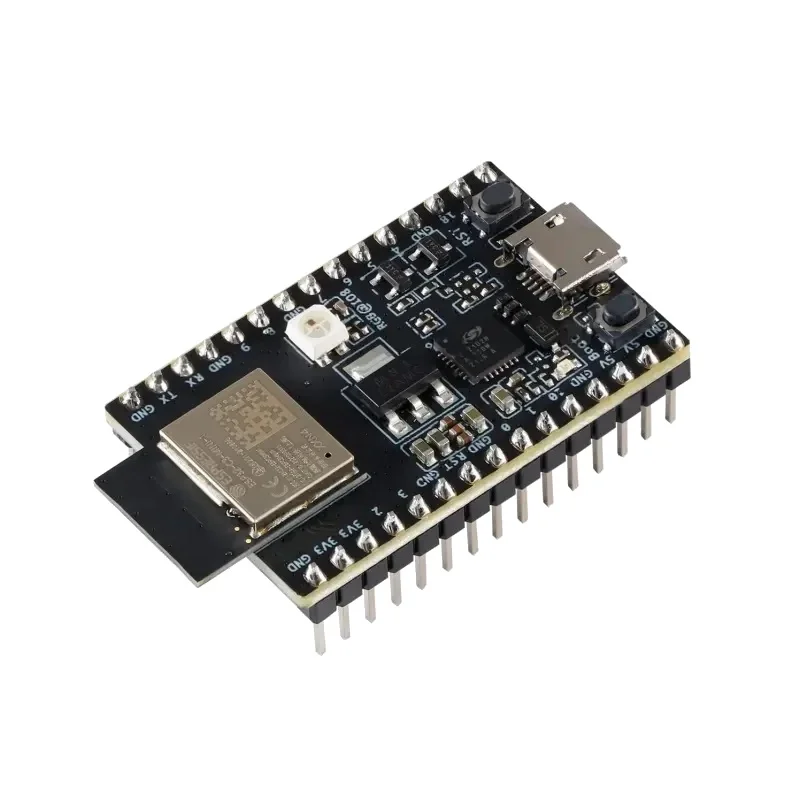
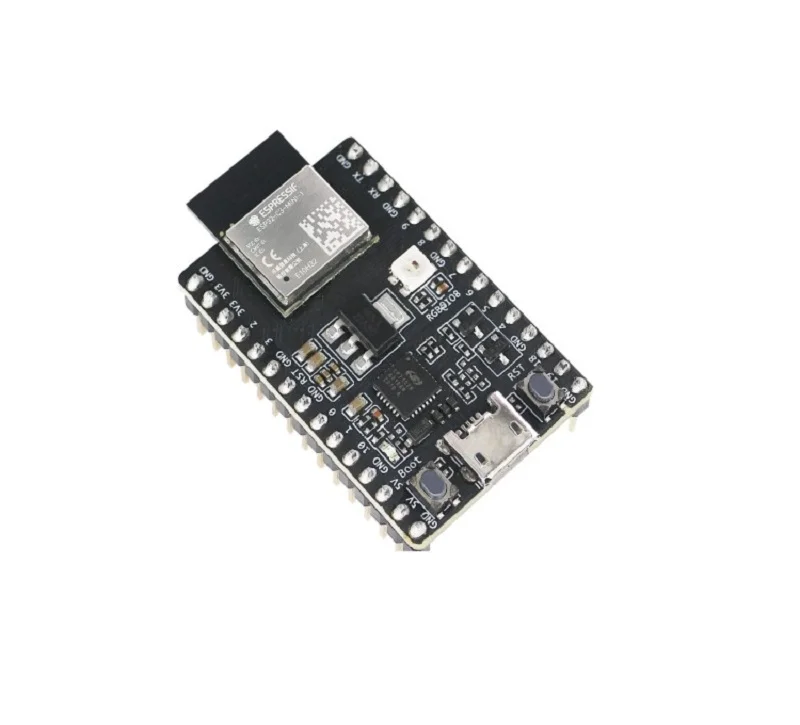
The Espressif ESP32-C3-DevKitM-1-N4X is a compact development board based on the ESP32-C3-MINI-1 module, integrating Wi-Fi and Bluetooth LE 5.0 connectivity for IoT prototyping. Powered and programmed via Micro-USB, it’s compatible with ESP-IDF, Arduino IDE, and MicroPython.

Features

  • Compact ESP32-C3-MINI-1 module with RISC-V core, Wi-Fi 4, and Bluetooth LE 5.0.
  • Micro-USB port for power, programming, and high-speed USB-to-UART bridge communication.
  • Multiple GPIO pins accessible via pin headers for easy peripheral interfacing.
  • Integrated addressable RGB LED (GPIO8) for visual status indication.
  • Onboard 5V-to-3.3V LDO regulator and boot button for simplified firmware updates.

Out of stock

Description

The ESP32-C3-DevKitM-1-N4X development board provides a streamlined platform for building connected IoT devices. Its core is the ESP32-C3-MINI-1 module, which houses a single-core 32-bit RISC-V processor, 400 KB SRAM, and 4 MB of embedded flash memory, delivering robust processing for wireless applications.

Engineered for efficient prototyping, the board features a comprehensive power management system with an LDO regulator, ensuring stable operation from a standard 5V Micro-USB supply. The integrated USB-to-UART bridge supports data transfer rates up to 3 Mbps, facilitating rapid firmware flashing via serial port and seamless debugging. Its breadboard-compatible form factor and accessible pin headers simplify integration with sensors, actuators, and other electronic components.

Key Features

  • Integrated ESP32-C3-MINI-1 module with RISC-V processor, Wi-Fi 4 (802.11 b/g/n), and Bluetooth LE 5.0.
  • High-speed USB-to-UART bridge (up to 3 Mbps) for efficient programming and serial communication.
  • Addressable RGB LED connected to GPIO8 for customizable visual feedback and debugging.
  • Comprehensive power system with 5V-to-3.3V LDO regulator and multiple decoupling capacitors.
  • Boot and Reset buttons for easy entry into firmware download mode and system control.
  • Breadboard-compatible design with 2.54mm pin headers for rapid prototyping.
  • Full support for Espressif's ESP-IDF, Arduino Core, and MicroPython development frameworks.

Applications

  • IoT sensor nodes and smart home automation devices.
  • Prototyping wireless consumer gadgets and wearables.
  • Educational platforms for embedded systems and wireless communication.
  • BLE beacon networks and Wi-Fi-enabled data loggers.
  • Industrial monitoring and control systems with wireless connectivity.

Technical Specifications

Microcontroller/SoCESP32-C3 (RISC-V Single-Core, up to 160 MHz)
Wireless ProtocolsWi-Fi 4 (802.11 b/g/n), Bluetooth 5.0 LE
Frequency Range2.4 GHz ISM Band
Memory400 KB SRAM, 4 MB Embedded Flash (N4 variant)
Supply Voltage5V via Micro-USB
Operating Voltage3.3V
GPIO InterfacesMultiple digital I/O, SPI, I2C, UART, ADC, PWM
Programming InterfaceMicro-USB, USB-to-UART (CP2102N)
AntennaIntegrated PCB Antenna
Operating Temperature-40°C to +85°C (typical)
DimensionsApprox. 53.4mm x 25.4mm (board)

Frequently Asked Questions

How do I program the ESP32-C3-DevKitM-1 board using the Arduino IDE?

First, install the ESP32 board support via the Arduino Boards Manager using the ESP32 Arduino Core repository URL. Select 'ESP32C3 Dev Module' as your board. Connect the board via Micro-USB, choose the correct COM port, and set the upload speed to 921600 baud. Use the onboard Boot button to enter download mode if automatic reset fails. Your sketch will compile and upload via the integrated USB-to-UART bridge.

What is the power supply requirement and typical operating current for this board?

The board requires a 5V DC supply provided through the Micro-USB port. An onboard LDO regulator steps this down to 3.3V for the ESP32-C3 core and peripherals. Typical operating current during Wi-Fi transmission can reach up to 240mA, while deep sleep current can be as low as 10µA. Ensure your USB port or power adapter can deliver at least 500mA for stable operation during RF activity and peripheral use.

Which GPIO pin is the onboard RGB LED connected to, and how do I control it?

The addressable RGB LED is connected to GPIO8. You can control it using the ESP32's RMT peripheral or libraries like FastLED or the NeoPixelBus library for Arduino. In ESP-IDF, use the led_strip driver APIs. Remember that this LED is addressable (WS2812-compatible), requiring precise timing via a dedicated protocol, not simple digital writes. Example code is provided in Espressif's official examples repository.

Package Includes

  • 1 x Espressif ESP32-C3-DevKitM-1-N4X Development Board

Additional Information

Weight 0.022 kg
Dimensions 9 × 5 × 3 cm