SKU: IOWC-0551
📋 GST Invoice Available

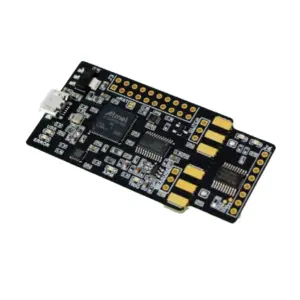
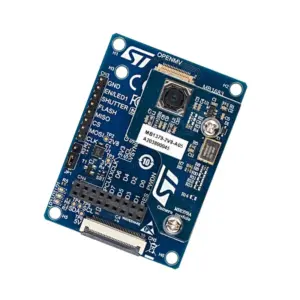
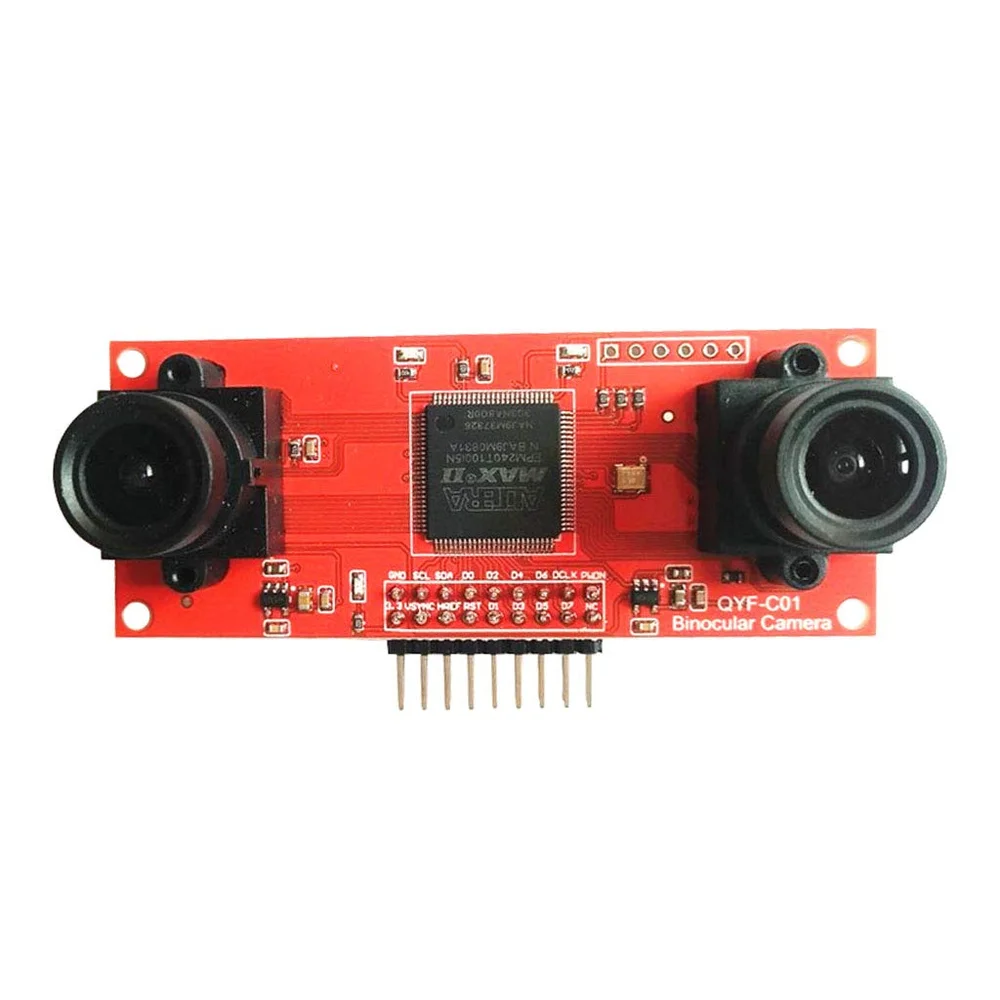
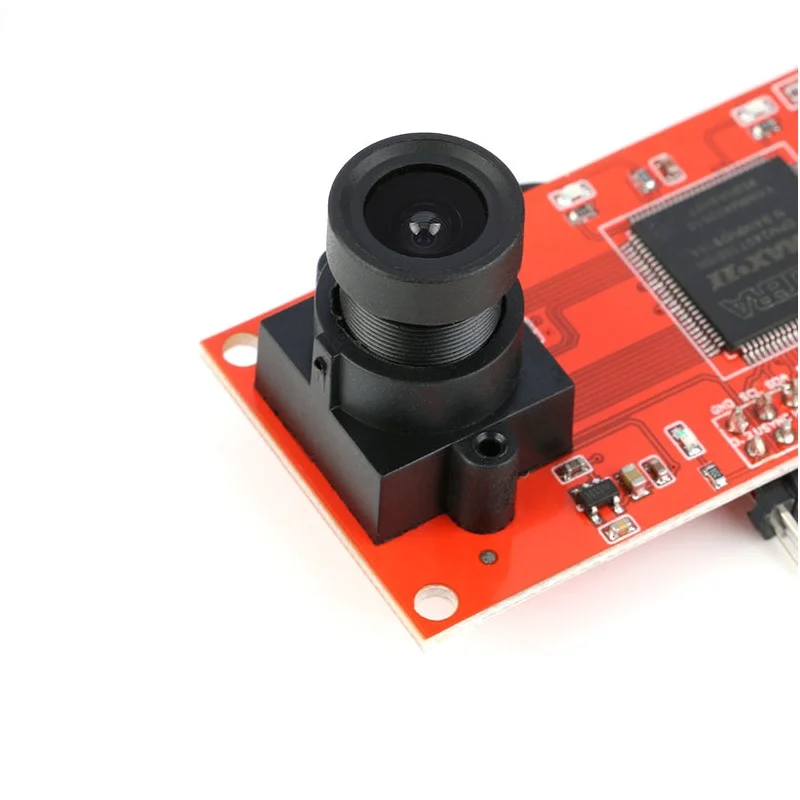
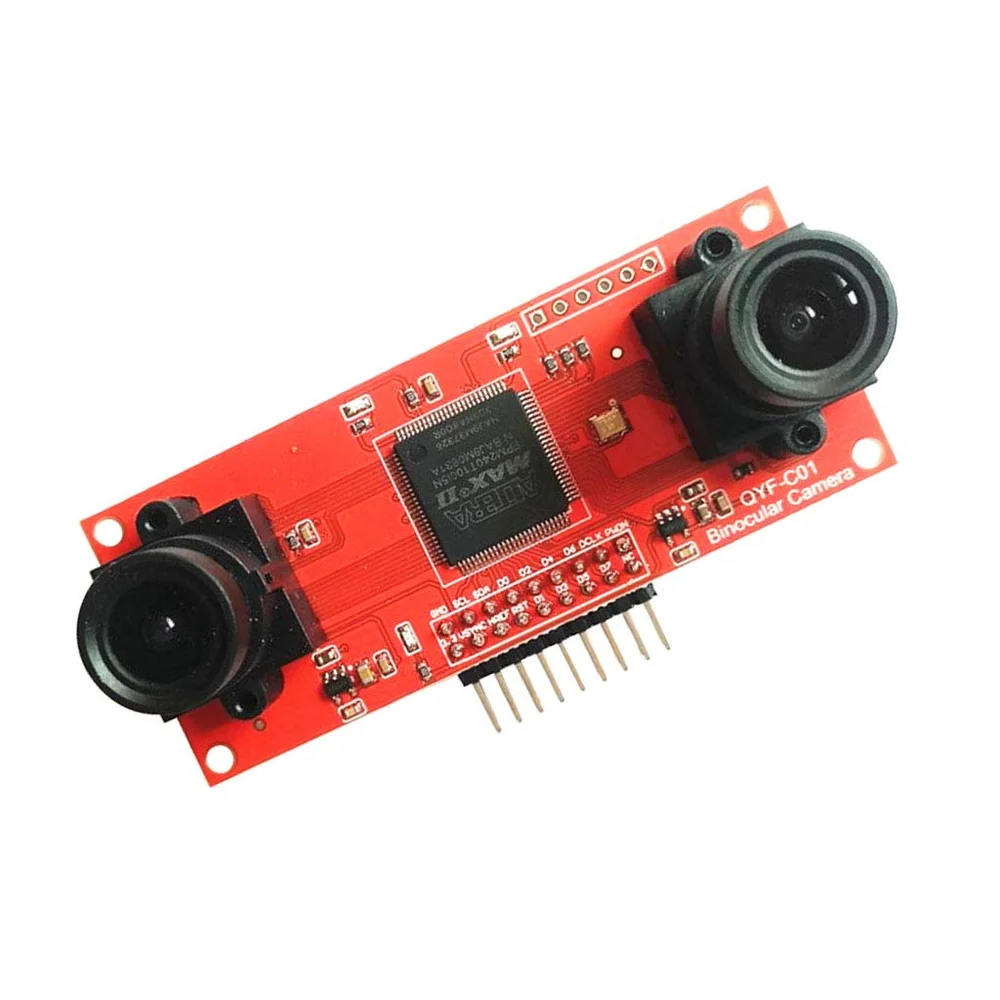
OV2640 Binocular Camera Module for STM32 3D Measurement

₹3,029.00 (Inclusive of all taxes)
Out of Stock

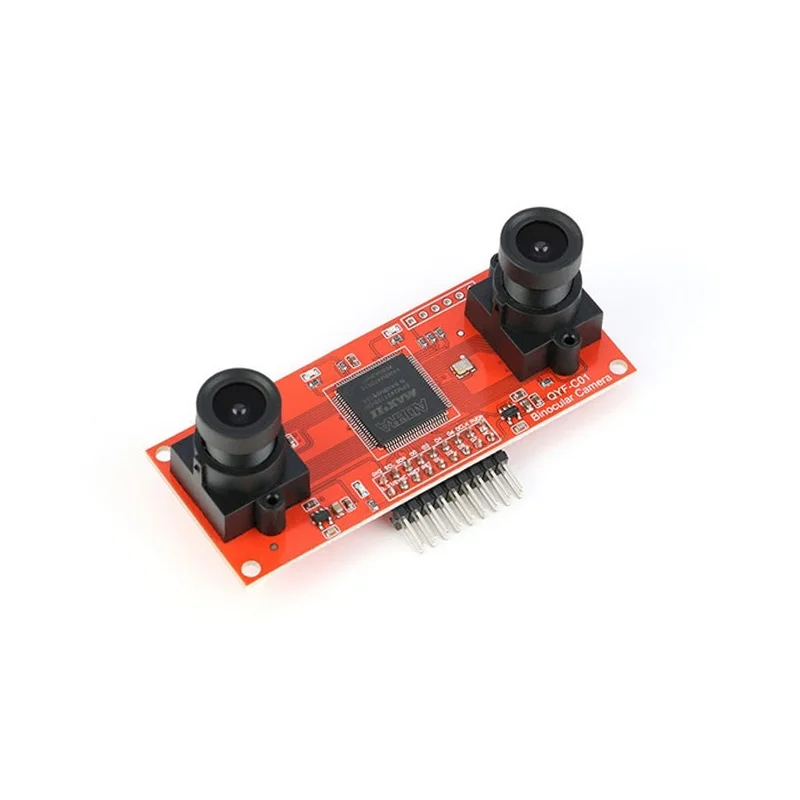
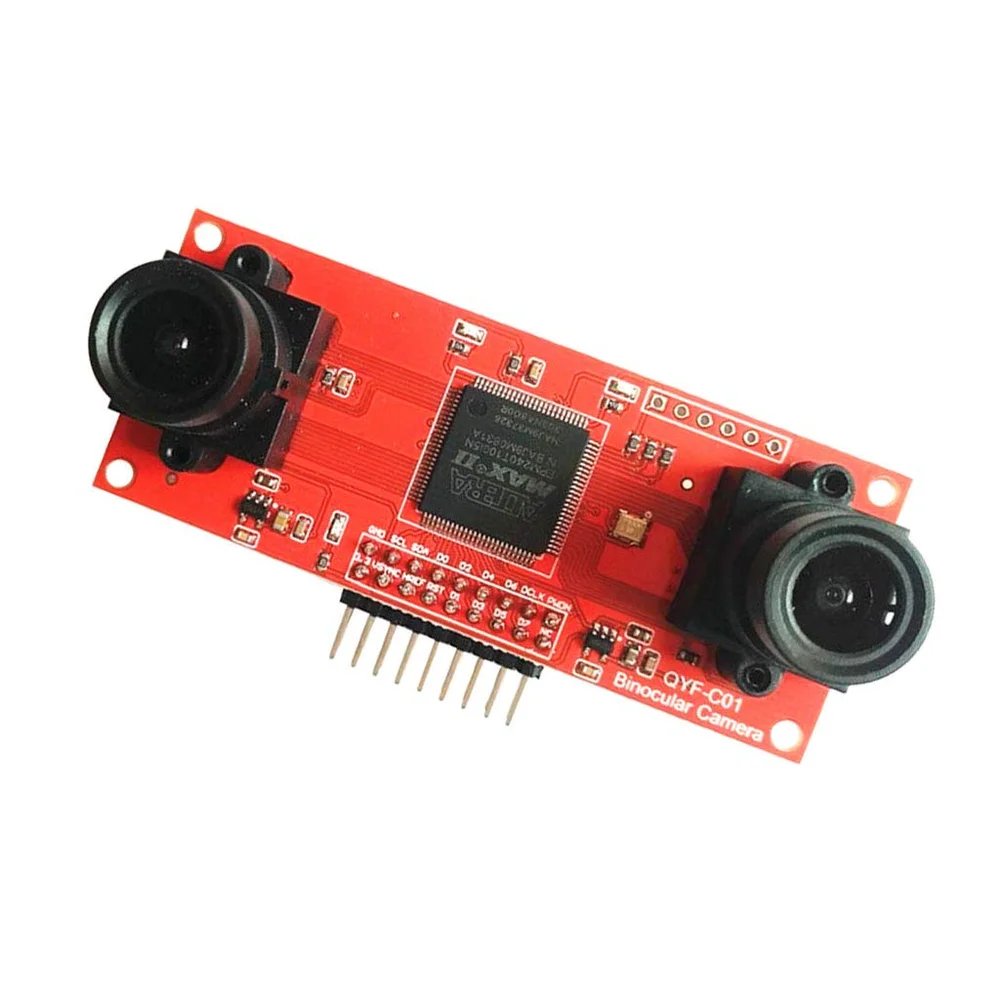
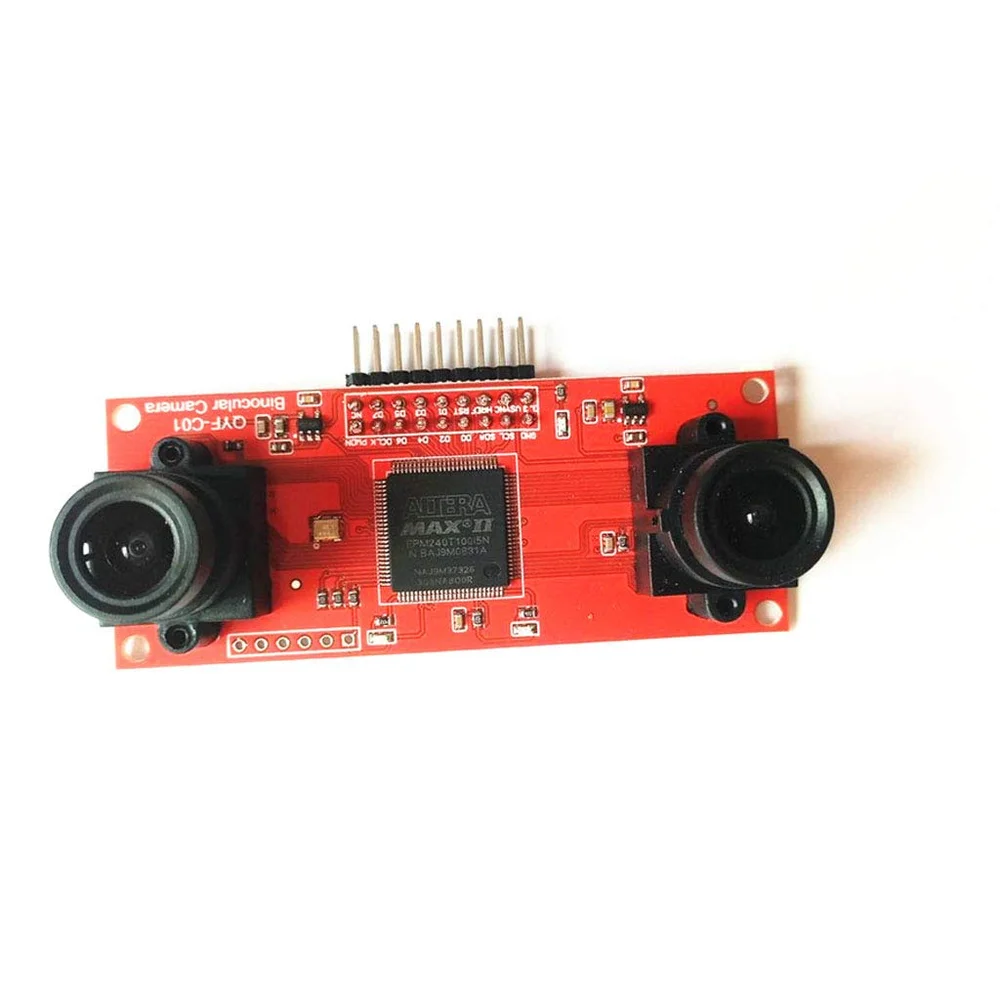
This OV2640 binocular camera module integrates two 1/4-inch CMOS sensors for stereoscopic vision applications, driven via STM32 microcontrollers. Operating at 3.3V, it outputs JPEG or raw data via an SCCB (I2C-compatible) interface for 3D ranging and measurement tasks.

Features

  • Dual OV2640 CMOS sensors enable binocular vision for accurate 3D ranging and spatial measurement applications.
  • Supports JPEG compression output and multiple raw formats (RGB565, YUV422) via standard SCCB (I2C) control interface.
  • Low-power 3.3V operation with integrated LDO and active crystal oscillator simplifies embedded system integration.
  • Wide resolution flexibility from UXGA (1600×1200) down to 40×30, with automatic exposure, gain, and white balance control.
  • Direct STM32 compatibility and 2.8V LVTTL I/O levels ensure easy interfacing for embedded computer vision projects.

Out of stock

Description

The OV2640 Binocular Camera Module is engineered for embedded stereoscopic vision, utilizing two 1/4-inch OV2640 CMOS sensors to capture synchronized image pairs for depth perception and 3D reconstruction. Its integrated processor handles on-the-fly image scaling, windowing, and JPEG compression, reducing bandwidth and processing load on the host microcontroller. The module operates from a single 3.3V supply, drawing approximately 40mA, and includes an internal LDO and 12MHz crystal for stable, standalone operation.

Communication and configuration are managed through a standard SCCB interface, which is protocol-compatible with I2C, allowing for straightforward register-level control from STM32 or other MCU platforms. The sensor’s high sensitivity and advanced image signal processing (ISP) pipeline provide automatic exposure, gain, white balance, and black level calibration, delivering consistent image quality for demanding machine vision applications in varying lighting conditions.

Key Features

  • Dual-sensor binocular design for accurate disparity calculation and 3D depth mapping.
  • On-chip JPEG compression engine outputs compressed image data to reduce host MCU memory and bandwidth requirements.
  • Comprehensive image signal processor with auto-exposure, auto-white balance, auto-gain control, and gamma correction.
  • Flexible output formats include RawRGB, RGB565, YUV422, YCbCr422, and JPEG.
  • Wide resolution support scalable from UXGA (1600x1200) down to 40x30 pixels.
  • Integrated 12MHz active crystal oscillator and 3.3V LDO regulator for simplified power supply design.
  • Standard SCCB (Serial Camera Control Bus) interface, compatible with I2C protocol for easy register configuration.
  • 2.8V LVTTL I/O levels are compatible with 3.3V microcontroller systems like STM32.

Applications

  • Binocular stereo vision for robotics navigation and obstacle avoidance.
  • 3D measurement and dimensioning systems for industrial inspection.
  • Depth sensing and spatial mapping in embedded computer vision projects.
  • Educational platforms for learning stereoscopic imaging and disparity algorithms.
  • Prototyping for drones, autonomous vehicles, and AR/VR devices requiring depth perception.

Technical Specifications

Sensor ModelDual OV2640 CMOS
Maximum Resolution1600 x 1200 (UXGA)
Sensor Size1/4 inch
Supply Voltage3.3V DC
Operating Current~40 mA
Control InterfaceSCCB (I2C compatible)
Data Interface8-bit parallel data bus
Lens Specification3.6mm focal length, F2.0, 78° FOV
Lens Filter850nm infrared filter
Output FormatsJPEG, RGB565, YUV422, RawRGB
Dimensions (LxW)80mm x 40mm
Weight25g

Frequently Asked Questions

How do I interface this binocular camera module with an STM32 microcontroller?

Connect the module's SCCB (SCL, SDA) pins to the STM32's I2C pins for configuration. The 8-bit parallel data bus connects to a GPIO port configured for input. Initialize the OV2640 sensors via SCCB registers to set resolution and output format (e.g., JPEG). Use DMA for efficient image data transfer from the data bus into memory. Ensure your STM32 firmware handles the specific timing for reading the VSYNC and HREF signals to frame capture correctly.

What is the power supply requirement, and how do I minimize noise for clean image capture?

Supply a stable 3.3V DC power source capable of delivering at least 150mA to account for peak current draw. Place a 100µF electrolytic and a 0.1µF ceramic capacitor close to the module's VCC and GND pins to filter high-frequency noise. Use a dedicated voltage regulator if sharing a power rail with digital logic. Keep power traces short and wide on your PCB. For optimal performance, provide a separate, clean ground plane for the analog camera circuitry to isolate it from digital switching noise.

Can I output raw Bayer data for custom image processing, and what formats are supported?

Yes, the OV2640 supports RawRGB (Bayer pattern) output alongside processed formats like RGB565 and YUV422. Configure the sensor's COM7 and COM15 registers via SCCB to select the desired output format. Raw data provides maximum flexibility for custom demosaicing and ISP algorithms but requires significant processing on the host MCU. For bandwidth-constrained systems, enabling the internal JPEG compression engine is recommended, as it outputs a compressed byte stream directly.

How do I calibrate the two cameras for accurate binocular ranging and depth calculation?

Mount both camera sensors on a rigid baseline with parallel optical axes. Capture a checkerboard pattern from multiple positions to perform stereo calibration, calculating intrinsic parameters (focal length, distortion) for each sensor and extrinsic parameters (rotation, translation) between them. Use OpenCV's stereoCalibrate function on a PC with captured images, then embed the resulting calibration matrices (camera Matrix, distortion coefficients, essential Matrix) into your STM32 firmware to rectify images and compute disparity maps for depth calculation.

Package Includes

  • 1 x OV2640 Binocular Camera Module

Additional Information

Weight 0.025 kg
Dimensions 8 × 4 cm