SKU: IOWC-1284
📋 GST Invoice Available

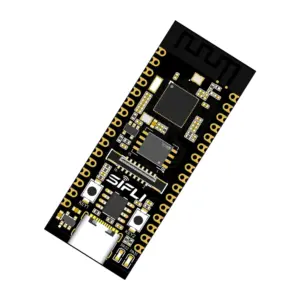
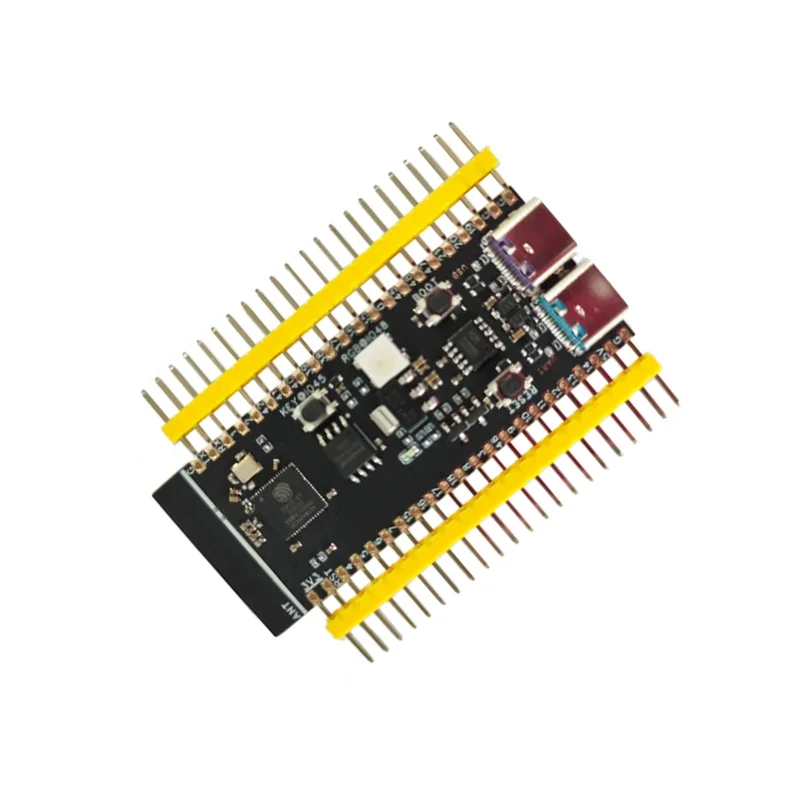
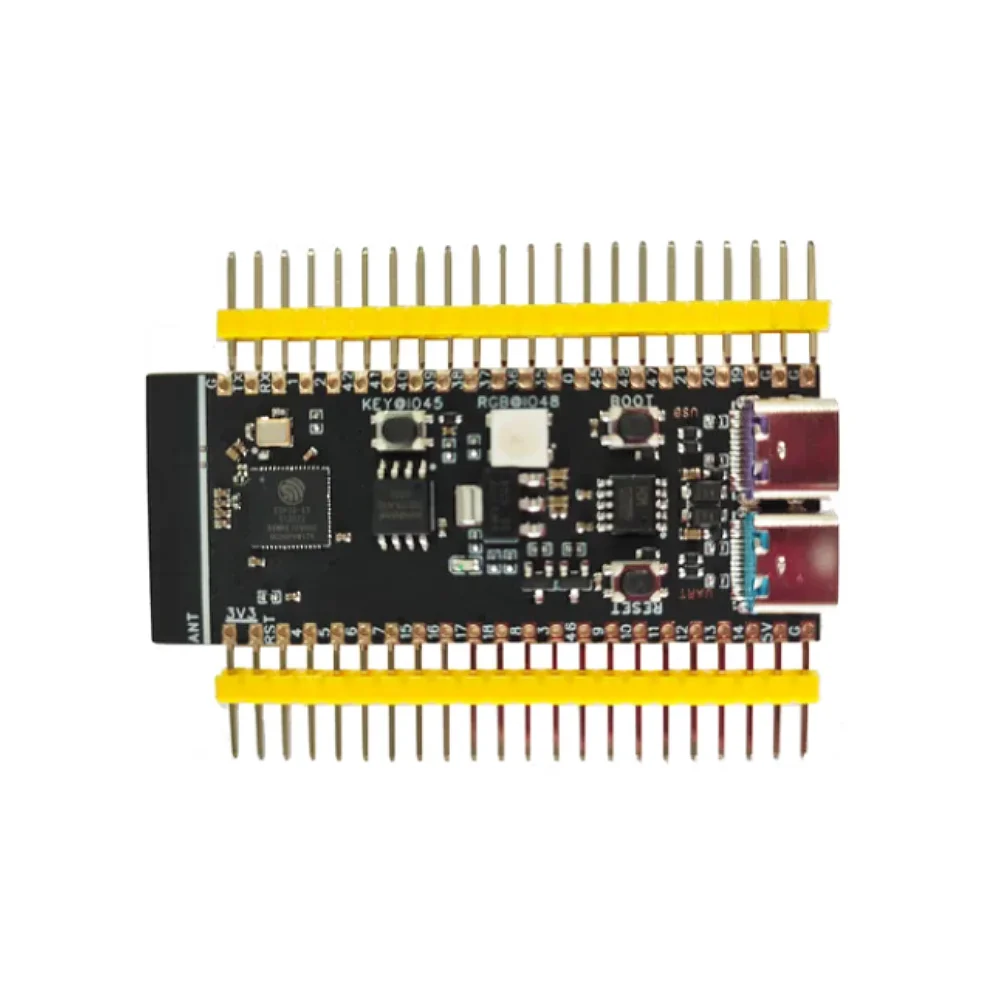
WeAct Studio ESP32-S3-B-N16R8 BLE 5.0 Mesh WiFi Development Board

₹909.00 (Inclusive of all taxes)
Out of Stock

The WeAct Studio ESP32-S3-B-N16R8 is a feature-rich development board built around the Espressif ESP32-S3 SoC, integrating dual-core 240MHz processing with 2.4GHz Wi-Fi and Bluetooth 5.0 Mesh connectivity, ideal for IoT prototyping with Arduino IDE, ESP-IDF, and MicroPython.

Features

  • Dual-Core ESP32-S3 SoC: Features a 240MHz Xtensa LX7 dual-core processor with 512KB SRAM and 384KB ROM for demanding IoT applications.
  • Dual Wireless Connectivity: Combines 2.4GHz Wi-Fi 802.11b/g/n (up to 150Mbps) with Bluetooth 5.0 and BLE Mesh support for versatile network topologies.
  • Rich Peripheral Set: Provides 45 programmable GPIOs supporting UART, SPI, I2C, I2S, ADC, PWM, touch sensors, USB-OTG, and LCD/DVP camera interfaces.
  • Optimized for Low Power: Includes 16KB RTC SRAM and advanced sleep modes for battery-powered edge sensing and control nodes.
  • Developer-Friendly Platform: Fully compatible with Arduino Core, ESP-IDF, MicroPython, and PlatformIO for rapid firmware development and deployment.

Out of stock

Description

The WeAct Studio ESP32-S3-B-N16R8 development board delivers a high-performance platform for next-generation IoT devices. Its core is the Espressif ESP32-S3 microcontroller, which integrates a dual-core Xtensa LX7 CPU running at 240MHz, substantial on-chip memory, and a full suite of wireless MAC/BB/RF/PA/LNA components. This integration simplifies design while providing robust 2.4GHz Wi-Fi and Bluetooth 5.0 with mesh networking capabilities out of the box.

Engineered for extensibility, the board exposes 45 GPIO pins, granting access to multiple high-speed serial interfaces, analog inputs, pulse-width modulation channels, capacitive touch sensors, and dedicated camera/LCD interfaces. This makes it suitable not only for basic sensor nodes but also for smart displays, vision-based AIoT endpoints, and complex industrial controllers. The inclusion of USB-OTG further enables device or host mode operation, streamlining development and deployment workflows for embedded systems engineers and makers.

Key Features

  • High-performance dual-core ESP32-S3 microcontroller with 240MHz clock speed for responsive IoT edge computing.
  • Integrated 2.4GHz Wi-Fi 802.11b/g/n and Bluetooth 5.0 with BLE Mesh support for flexible wireless network design.
  • Comprehensive I/O expansion with 45 GPIOs supporting SPI, I2C, I2S, UART, ADC, PWM, touch, USB, and camera interfaces.
  • Substantial on-chip memory with 512KB SRAM and 384KB ROM for complex application logic and network stacks.
  • Low-power architecture featuring 16KB RTC SRAM and multiple deep sleep modes for extended battery life in field deployments.
  • SMD-40 package footprint ensures compatibility with custom carrier board designs and high-volume manufacturing.
  • Full software support for Espressif's ESP-IDF, Arduino Core, MicroPython, and PlatformIO development ecosystems.

Applications

  • Smart home automation hubs and BLE Mesh sensor nodes for lighting, climate, and security control.
  • Industrial IoT (IIoT) telemetry gateways aggregating sensor data via Wi-Fi or Bluetooth for cloud reporting.
  • Prototyping interactive displays, touch panels, and e-Paper devices using the integrated LCD interface.
  • Edge AI and computer vision projects leveraging the DVP camera interface and substantial processing power.
  • Wireless mesh networks for asset tracking, environmental monitoring, and smart agriculture systems.

Technical Specifications

Microcontroller/SoCEspressif ESP32-S3 (Xtensa LX7 Dual-Core)
CPU FrequencyUp to 240 MHz
Wireless ProtocolsWi-Fi 802.11 b/g/n (2.4GHz), Bluetooth 5.0 & BLE Mesh
SRAM512 KB (16 KB RTC SRAM)
ROM384 KB
GPIO Pins45
Key Interfaces4x SPI, 3x UART, 2x I2C, 2x I2S, 14x Touch, LED PWM, RMT, USB-OTG, 2x 12-bit ADC, LCD, DVP
Operating VoltageTypically 3.3V
Package TypeSMD-40

Frequently Asked Questions

What software frameworks are supported for programming this ESP32-S3 board?

The board is fully compatible with Espressif's official ESP-IDF framework, the Arduino Core for ESP32 via the board manager, MicroPython, and PlatformIO. You can develop in C, C++, or Python. Begin by installing the ESP32-S3 board package in Arduino IDE or setting up the ESP-IDF toolchain. The USB port provides serial communication and firmware flashing capability.

How do I enable and use the Bluetooth Mesh functionality on this module?

Bluetooth Mesh is supported through the ESP-IDF's Bluetooth stack. You must use the ESP-IDF development environment and configure the project with the Bluetooth Mesh component. The board can act as a node, relay, proxy, or friend within a mesh network. Example mesh projects are provided in the ESP-IDF examples directory to demonstrate provisioning, messaging, and group control scenarios.

What is the typical power supply requirement and current consumption for this dev board?

The board operates at a nominal 3.3V supply. Current consumption varies significantly with mode: active Wi-Fi/Bluetooth use can draw hundreds of mA, while deep sleep with RTC memory retention can reduce current to microamps. For battery operation, utilize the ESP32-S3's advanced power management APIs in your firmware to cycle between active and deep sleep states, dramatically extending operational life.

Package Includes

  • 1 x WeAct Studio ESP32-S3-B-N16R8 BLE 5.0 Mesh WiFi Development Board

Additional Information

Weight 0.01 kg
Dimensions 7 × 5 × 2 cm