SKU: IOWC-1281
📋 GST Invoice Available

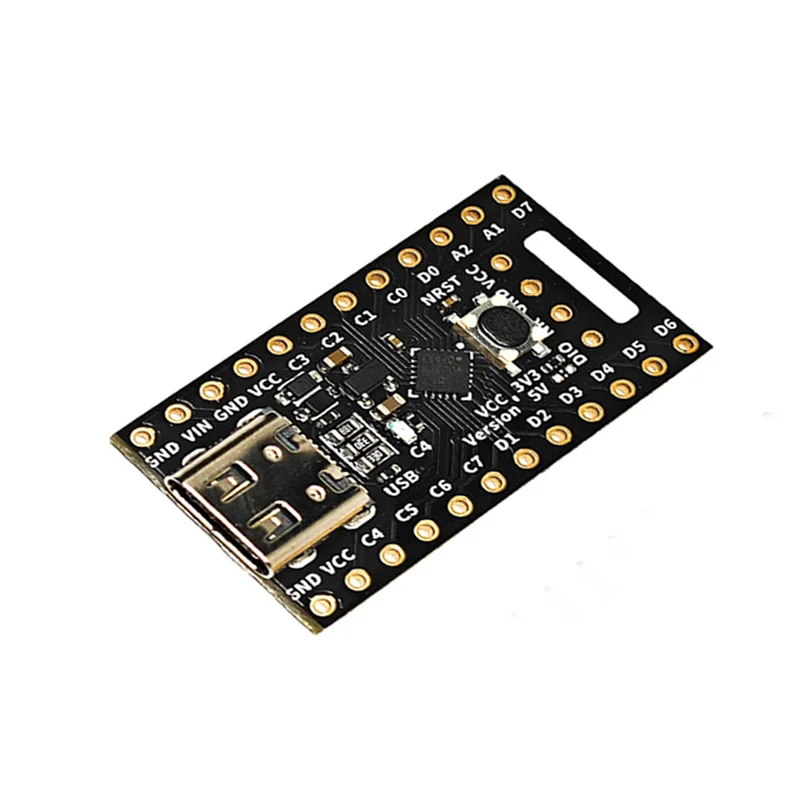
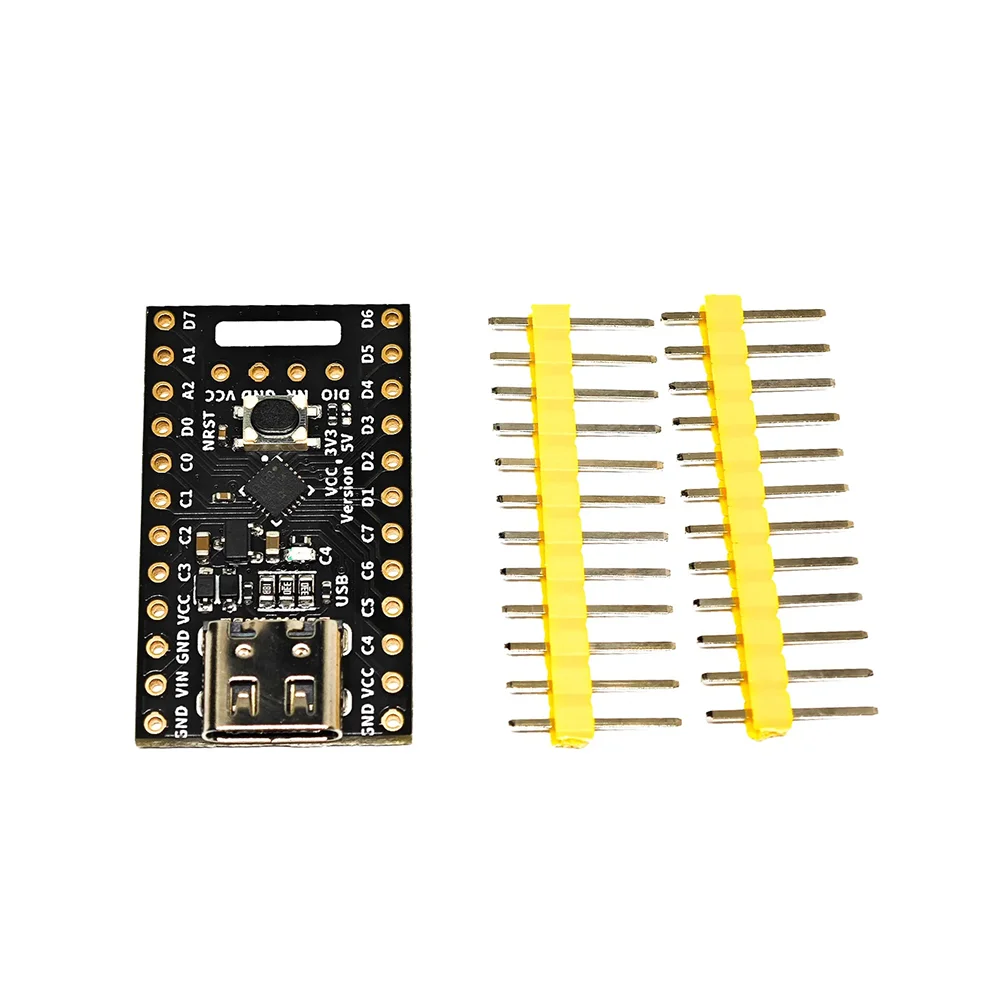
WeAct Studio CH32V003F4U6 RISC-V Low Power Demo Board

₹172.00 (Inclusive of all taxes)
Out of Stock

The WeAct Studio CH32V003F4U6 is a compact RISC-V development board featuring a 48MHz QingKe V2A core, 16KB Flash, 2KB SRAM, and ultra-low-power sleep modes, ideal for cost-sensitive embedded IoT projects.

Features

  • QingKe 32-bit RISC-V2A processor running at up to 48MHz for efficient embedded control.
  • Ultra-low-power operation with Sleep and Standby modes for battery-powered IoT nodes.
  • Flexible 3.3V or 5V power supply input simplifies integration into various systems.
  • Comprehensive peripheral set includes USART, I2C, SPI, 10-bit ADC, and op-amp comparators.
  • Compact form factor with 18 configurable GPIOs for connecting sensors and actuators.

Out of stock

Description

The CH32V003F4U6 demo board provides a hands-on platform for the CH32V003 series of industrial-grade RISC-V microcontrollers. Based on the QingKe V2A core, it delivers a balance of processing performance and power efficiency, making it suitable for embedded control and sensing applications where cost and energy consumption are critical.

Its architecture supports multiple low-power modes, including Sleep and Standby, significantly extending operational life in battery-powered scenarios. The integrated 1-channel DMA controller enhances data throughput for peripherals, while the standard communication interfaces (USART, I2C, SPI) ensure easy connectivity with a wide range of sensors, displays, and wireless modules common in IoT ecosystems.

Key Features

  • Industrial-grade 32-bit RISC-V microcontroller core with 2-level interrupt nesting support.
  • Dual-voltage operation (3.3V/5V) for flexible power supply design and system compatibility.
  • Integrated 10-bit ADC and op-amp comparators for precise analog signal measurement and conditioning.
  • Multiple timer resources including advanced-control, general-purpose, watchdog, and SysTick timers.
  • Standard serial debug interface (SDI) for simplified firmware development and in-circuit debugging.
  • 64-bit unique chip ID provides hardware-level security and device authentication capabilities.
  • 18 multifunctional GPIO pins, all supporting external interrupts, for extensive peripheral interfacing.

Applications

  • Ultra-low-power sensor nodes for environmental monitoring (temperature, humidity, air quality).
  • Battery-operated consumer electronics and smart home automation controllers.
  • Industrial control units for simple motor control, LED drivers, and switch interfaces.
  • Educational platforms for learning RISC-V architecture and embedded C programming.
  • Prototyping core for cost-sensitive IoT gadgets and wearable devices.

Technical Specifications

Microcontroller CoreQingKe 32-bit RISC-V2A
Operating FrequencyUp to 48 MHz
Flash Memory16 KB
SRAM2 KB
Supply Voltage3.3V or 5V
Low-Power ModesSleep, Standby
Communication Interfaces1x USART, 1x I2C, 1x SPI
Analog Peripherals10-bit ADC, Op-Amp Comparators
Timers1x 16-bit Advanced, 1x 16-bit General, 2x Watchdog, 1x 32-bit SysTick
GPIO Pins18
Debug Interface1-wire Serial Debug Interface (SDI)
Unique Identifier64-bit Chip Unique ID

Frequently Asked Questions

What development environment and toolchain are recommended for this CH32V003 board?

You can develop for this board using the official WCH-LinkE debugger/programmer and the MounRiver Studio IDE (RISC-V GCC toolchain). Alternatively, the open-source OpenOCD with a compatible WCH-Link adapter can be used for command-line flashing and debugging. The board uses a standard 1-wire Serial Debug Interface (SDI).

How do I power the board and what are the current consumption figures?

The board accepts a 3.3V or 5V DC input via its designated pins. Current consumption varies by mode: active mode at 48MHz draws several mA, while Sleep mode reduces consumption to microamp levels, and Standby mode can achieve even lower nanoamp-scale currents, making it ideal for long-term battery operation.

Can I use the Arduino IDE to program this RISC-V board?

Yes, but it requires adding a third-party board support package for the CH32V003 series. You would need to install the 'wch32' package via the Arduino Board Manager. After installation, select the correct board variant (e.g., 'CH32V003F4U6') and configure the correct serial port and programmer (WCH-Link) to upload your sketches.

Package Includes

  • 1 x WeAct Studio CH32V003F4U6 RISC-V Low Power Core Demo Board

Additional Information

Weight 0.01 kg
Dimensions 9 × 3 × 2 cm