SKU: IOWC-1156
📋 GST Invoice Available

Waveshare RP2350-Plus Development Board w/ RP2350A Dual-Core MCU

₹669.00 (Inclusive of all taxes)
Out of Stock

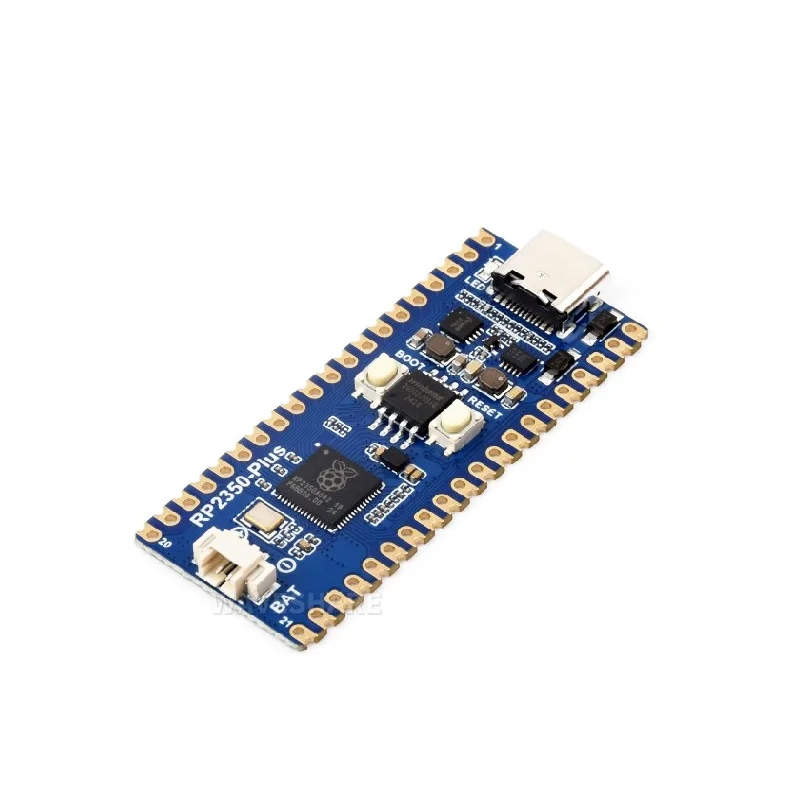
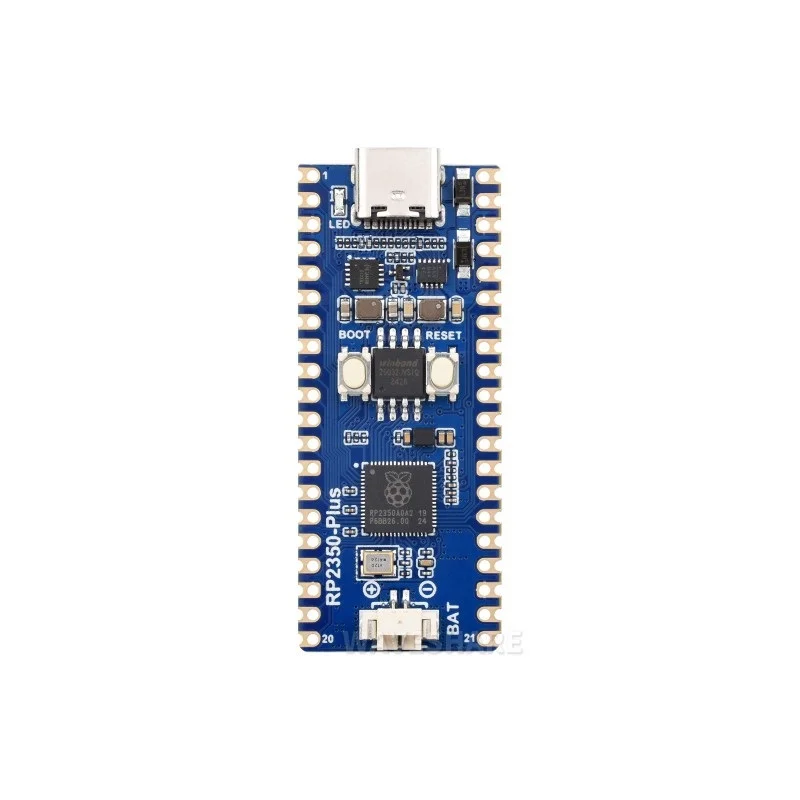
The Waveshare RP2350-Plus is a Pico-like development board built around the Raspberry Pi RP2350A dual-core microcontroller, featuring Arm Cortex-M33 and RISC-V cores. It offers 4MB flash, 520KB SRAM, and comprehensive peripherals for embedded development, powered via USB Type-C with integrated battery management.

Features

  • Dual-Core RP2350A MCU: Combines an Arm Cortex-M33 and a Hazard 3 RISC-V processor, clocked up to 150 MHz for flexible, high-performance computing tasks.
  • Ample Onboard Memory: Features 520KB of SRAM and 4MB of flash storage, providing sufficient space for complex firmware and data logging applications.
  • Robust Power System: Integrates an MP28164 DC-DC buck-boost chip supporting up to 2A load current and includes a header for lithium battery charging and discharging.
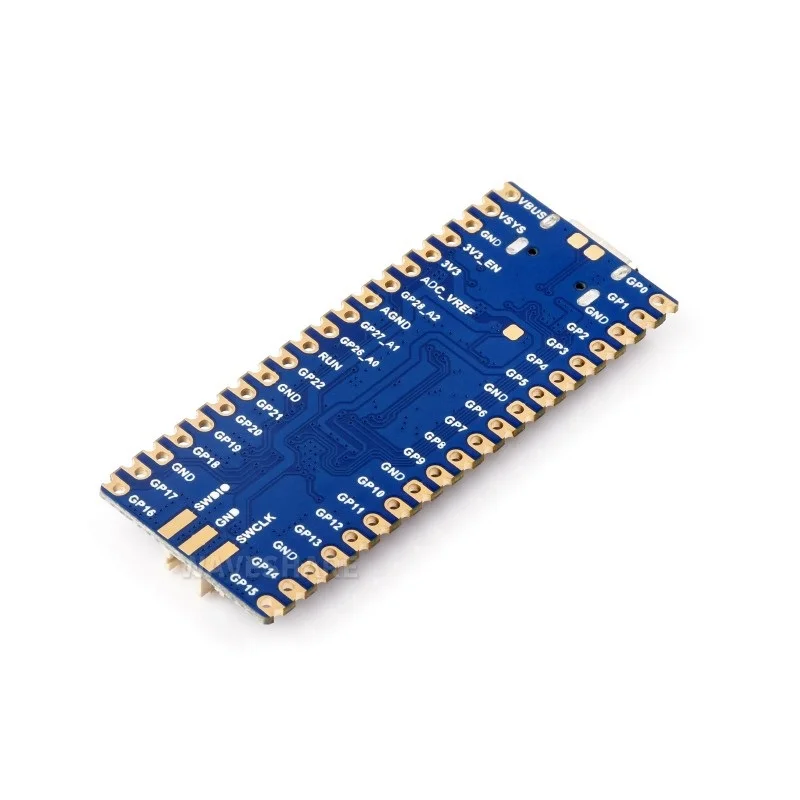
  • Comprehensive Peripheral Set: Offers 26 multi-function GPIOs, 2x SPI, 2x I2C, 2x UART, 4x ADC channels, 16 PWM outputs, and 12 PIO state machines for extensive hardware interfacing.
  • Low-Power Operation: Supports sleep and dormant modes, making it suitable for battery-powered IoT endpoints and energy-efficient embedded designs.

Out of stock

Description

The Waveshare RP2350-Plus Development Board is engineered as a versatile, cost-effective platform for embedded systems development, leveraging the unique architecture of the Raspberry Pi RP2350A microcontroller. This board provides a robust foundation for prototyping IoT devices, robotics controllers, and custom peripherals, thanks to its dual-core processing power and extensive I/O capabilities.

Its integrated MP28164 power management IC ensures stable operation from a wide input voltage range via the USB Type-C port, while the dedicated battery header facilitates the design of portable, rechargeable projects. The inclusion of 12 programmable I/O (PIO) state machines, a temperature sensor, and accelerated floating-point libraries further enhances its utility for real-time signal processing and sensor data acquisition tasks without relying on external wireless modules.

Key Features

  • Heterogeneous Dual-Core Processor: Leverage the Arm Cortex-M33 for main application logic and the RISC-V core for dedicated real-time or control tasks.
  • High-Current Power Delivery: The onboard DC-DC converter supports demanding peripherals and actuators with up to 2A continuous output.
  • Drag-and-Drop Programming: Simplifies firmware updates via USB mass storage mode, requiring no dedicated debugger for basic flashing.
  • Rich GPIO & PIO Resources: 26 configurable pins and 12 PIO state machines enable custom communication protocols and precise timing control.
  • Integrated Development Features: Onboard temperature sensor and accurate clock/timers aid in environmental monitoring and time-critical applications.
  • USB Host/Device Support: The USB 1.1 interface allows the board to act as both a peripheral and a host for connecting other devices.

Applications

  • Embedded Systems Prototyping: Ideal for developing custom controllers, data loggers, and IoT sensor nodes.
  • Educational & Hobbyist Projects: Serves as a powerful platform for learning microcontroller programming and electronics interfacing.
  • Robotics & Motor Control: Utilizes its PWM channels and PIO for precise servo and DC motor driver applications.
  • Battery-Powered Devices: Suitable for portable instruments, environmental monitors, and wearables due to its low-power modes and battery management.
  • Custom Peripheral Development: The PIO state machines enable implementation of non-standard communication protocols like DPI video or custom serial interfaces.

Technical Specifications

Microcontroller/SoCRaspberry Pi RP2350A (Dual-core: Arm Cortex-M33 & Hazard 3 RISC-V)
Clock SpeedUp to 150 MHz
Memory520KB SRAM, 4MB Flash
ConnectivityUSB 1.1 (Host/Device), USB Type-C Connector
GPIO Pins26 Multi-function pins
Peripheral Interfaces2x SPI, 2x I2C, 2x UART, 4x ADC, 16x PWM, 12x PIO State Machines
Power ManagementMP28164 DC-DC Buck-Boost Chip (Up to 2A Load)
Additional FeaturesTemperature Sensor, Battery Charge/Discharge Header
ProgrammingDrag-and-Drop via USB Mass Storage
Operating VoltageVia USB Type-C (5V) or Battery Input
Dimensions (Shipping)11cm x 7cm x 2cm
Weight (Shipping)0.015 kg

Frequently Asked Questions

How do I program the Waveshare RP2350-Plus board?

The board supports drag-and-drop programming via USB mass storage. Connect it to your computer with a USB Type-C cable, and it will appear as a removable drive. Simply copy your compiled UF2 firmware file onto this drive, and the board will automatically reboot and run the new program. For advanced debugging, you can use an SWD probe with the exposed debug header pins.

What is the purpose of the dual-core architecture in the RP2350A?

The RP2350A combines an Arm Cortex-M33 core and a Hazard 3 RISC-V core. This allows developers to partition tasks: the Arm core typically runs the main application and complex libraries, while the RISC-V core can handle real-time, deterministic tasks or custom bit-banged protocols using the PIO blocks. This separation improves performance and responsiveness in multi-tasking embedded applications.

Can I power this board with a battery, and how does charging work?

Yes, you can power it via a single-cell lithium (LiPo/Li-ion) battery connected to the dedicated BAT+ and GND pins on the battery header. The onboard MP28164 chip manages charging when USB power is present. The charging current and other parameters are fixed by the circuit design. Ensure your battery voltage is within the chip's acceptable input range for proper buck-boost operation.

What development frameworks or SDKs are compatible with this board?

You can develop for the RP2350-Plus using the official Raspberry Pi Pico C/C++ SDK, which supports the RP2350 microcontroller. It is also compatible with the Arduino IDE via community-supported board packages. MicroPython support is expected as the ecosystem matures. Start by installing the Raspberry Pi Pico SDK and configuring your toolchain to target the RP2350A's specific memory map and peripherals.

How do the PIO (Programmable I/O) state machines benefit my project?

The 12 PIO state machines are small, independent processors that can execute simple programs to manipulate GPIOs with precise timing. They are perfect for generating or reading non-standard protocols like DPI for displays, WS2812B (NeoPixel) control, precise PWM, or reading sensors without burdening the main CPU cores. You write small assembly programs for the PIOs, freeing the main cores for application logic.

Package Includes

  • 1 x Waveshare RP2350-Plus Development Board

Additional Information

Weight 0.015 kg
Dimensions 7 × 11 × 2 cm