SKU: SBCD-0545
📋 GST Invoice Available

TUL Corporation Corporation PYNQ-Z2 FPGA Development Board Basic Kit

₹29,999.00 (Inclusive of all taxes)
Out of Stock

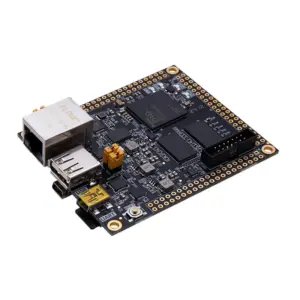
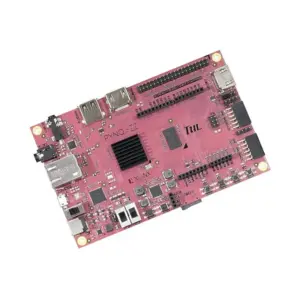
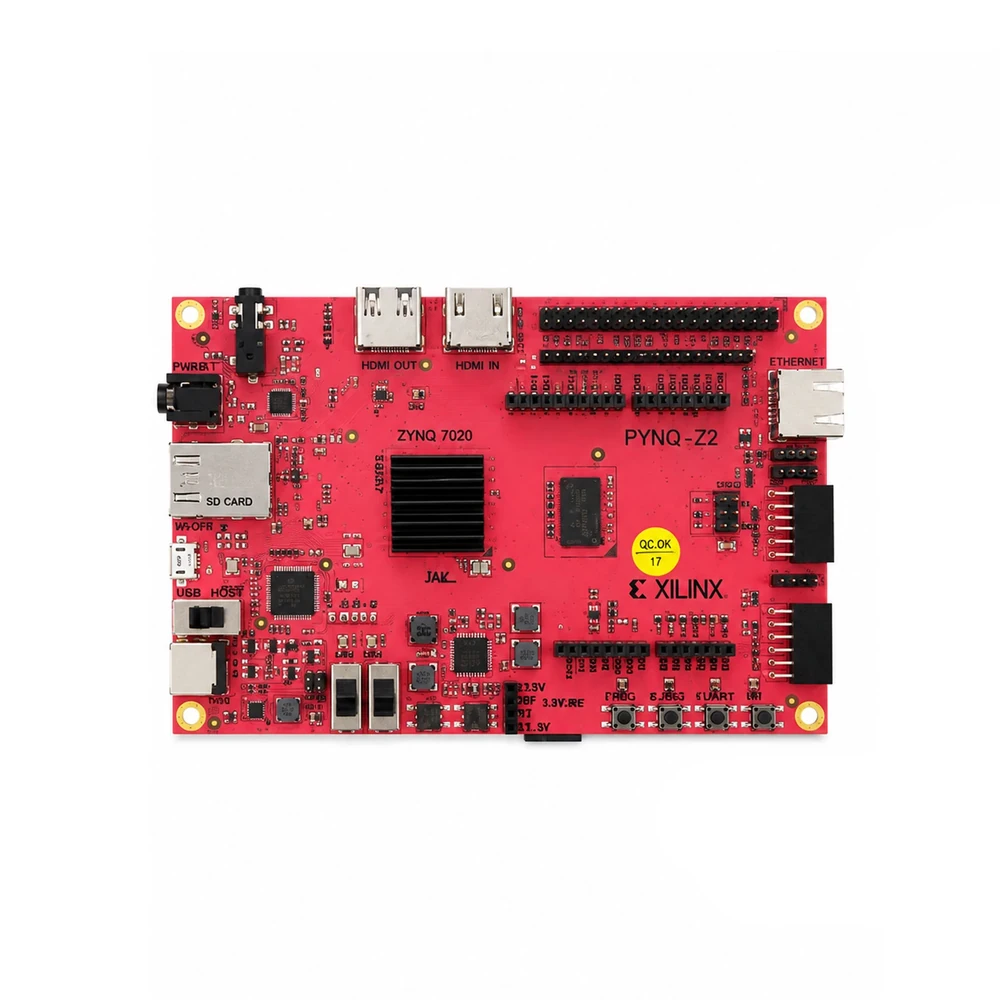
The TUL Corporation PYNQ-Z2 is a versatile Zynq-7000 based FPGA development board, integrating a Dual-Core ARM Cortex-A9 processor with Xilinx XC7Z020 programmable logic. It offers 512MB DDR3, Gigabit Ethernet, HDMI I/O, and extensive expansion via Arduino, Raspberry Pi, and Pmod connectors for embedded systems and hardware acceleration.

Features

  • Xilinx Zynq XC7Z020-1CLG400C SoC with Dual-Core ARM Cortex-A9 at 650MHz.
  • Integrated 512MB DDR3 RAM and 16MB Quad-SPI Flash for robust application support.
  • Features HDMI Input/Output, Gigabit Ethernet, and USB OTG for comprehensive connectivity.
  • Equipped with Arduino, Raspberry Pi, and Pmod headers for broad peripheral expansion.
  • Designed for embedded systems, AI, robotics, and hardware acceleration with flexible programming options.

Out of stock

Description

The TUL Corporation PYNQ-Z2 FPGA Development Board Basic Kit is a versatile Zynq-7000 based development platform designed for embedded systems, FPGA programming, AI, robotics, and hardware acceleration projects. It combines a 650MHz Dual-Core ARM Cortex-A9 processor with Xilinx XC7Z020 programmable logic, enabling software and hardware co-design on a single board.

The board features 512MB DDR3 memory, Gigabit Ethernet, HDMI input/output, USB connectivity, and multiple expansion interfaces including Arduino, Raspberry Pi, and Pmod connectors. With onboard audio, analog inputs, and rich GPIO options, it is suitable for rapid prototyping, academic research, and industrial development. The board supports programming through JTAG, Quad-SPI Flash, and microSD card, making it an excellent solution for FPGA learning and embedded application development.

Key Features

  • Xilinx ZYNQ XC7Z020-1CLG400C SoC with Dual-Core Cortex-A9 CPU
  • 650MHz ARM Cortex-A9 processor for embedded computing
  • 512MB DDR3 memory with 16MB Quad-SPI Flash
  • HDMI Input and HDMI Output for multimedia applications
  • Gigabit Ethernet and USB 2.0 OTG connectivity
  • Arduino, Raspberry Pi, and dual Pmod expansion interfaces
  • 220 DSP slices with 630KB Block RAM for FPGA acceleration
  • Supports programming via JTAG, Quad-SPI Flash, and microSD card

Applications

  • Embedded Systems Development
  • Hardware Acceleration (e.g., DSP, image processing)
  • Edge AI and Machine Learning Inference
  • Robotics Control Systems
  • Academic Research and Education (FPGA & embedded)
  • Multimedia Processing (HDMI-based projects)
  • Industrial Automation Prototyping

Technical Specifications

FPGAZYNQ XC7Z020-1CLG400C
ProcessorDual-Core ARM Cortex-A9, 650MHz
FPGA Gates1.3M Reconfigurable Gates
Memory512MB DDR3
Flash Memory16MB Quad-SPI Flash
StoragemicroSD Card Slot
Ethernet10/100/1000 Gigabit Ethernet
USBUSB 2.0 OTG (Host), Micro USB-JTAG, Micro USB-UART
VideoHDMI Input, HDMI Output
AudioADAU1761 Audio Codec, HP+Mic, Line-In
Expansion InterfacesArduino Shield Connector, Raspberry Pi Connector, 2 Pmod Ports
Analog Inputs6 XADC Inputs (XADC)
Power InputUSB or 7V–15V DC
ProgrammingJTAG, Quad-SPI Flash, microSD Card
Dimensions87 × 140mm
Weight210g

Frequently Asked Questions

What programming environments does the PYNQ-Z2 support?

The PYNQ-Z2 primarily supports the PYNQ framework, which facilitates Python-based development for Zynq FPGAs. It also works with Xilinx Vivado for VHDL/Verilog and C/C++ development for the ARM cores using SDKs like Vitis, enabling comprehensive hardware-software co-design.

What are the main power input options for the PYNQ-Z2 board?

The PYNQ-Z2 can be powered via its micro USB port, typically for development and data transfer, or through a 7V-15V DC barrel jack input for more robust and standalone applications. Ensuring correct voltage is crucial for stable operation.

Can the PYNQ-Z2 connect to standard Raspberry Pi or Arduino shields?

Yes, the PYNQ-Z2 is equipped with both Arduino Shield compatible headers and a Raspberry Pi connector. This allows users to leverage a vast ecosystem of existing peripheral modules and expansion boards, simplifying prototyping and extending functionality.

What types of memory are available on the PYNQ-Z2 for user applications?

The board features 512MB of DDR3 SDRAM, providing ample memory for embedded Linux, data buffering, and complex algorithms. Additionally, it includes 16MB of Quad-SPI Flash for storing boot images and persistent data, and a microSD card slot for expandable storage.

How does the integrated Gigabit Ethernet enhance PYNQ-Z2 projects?

The onboard Gigabit Ethernet port provides high-speed networking capabilities, essential for IoT gateways, network-attached processing, and remote access to the board. It enables efficient data transfer for streaming applications, cloud connectivity, and distributed computing projects.

Package Includes

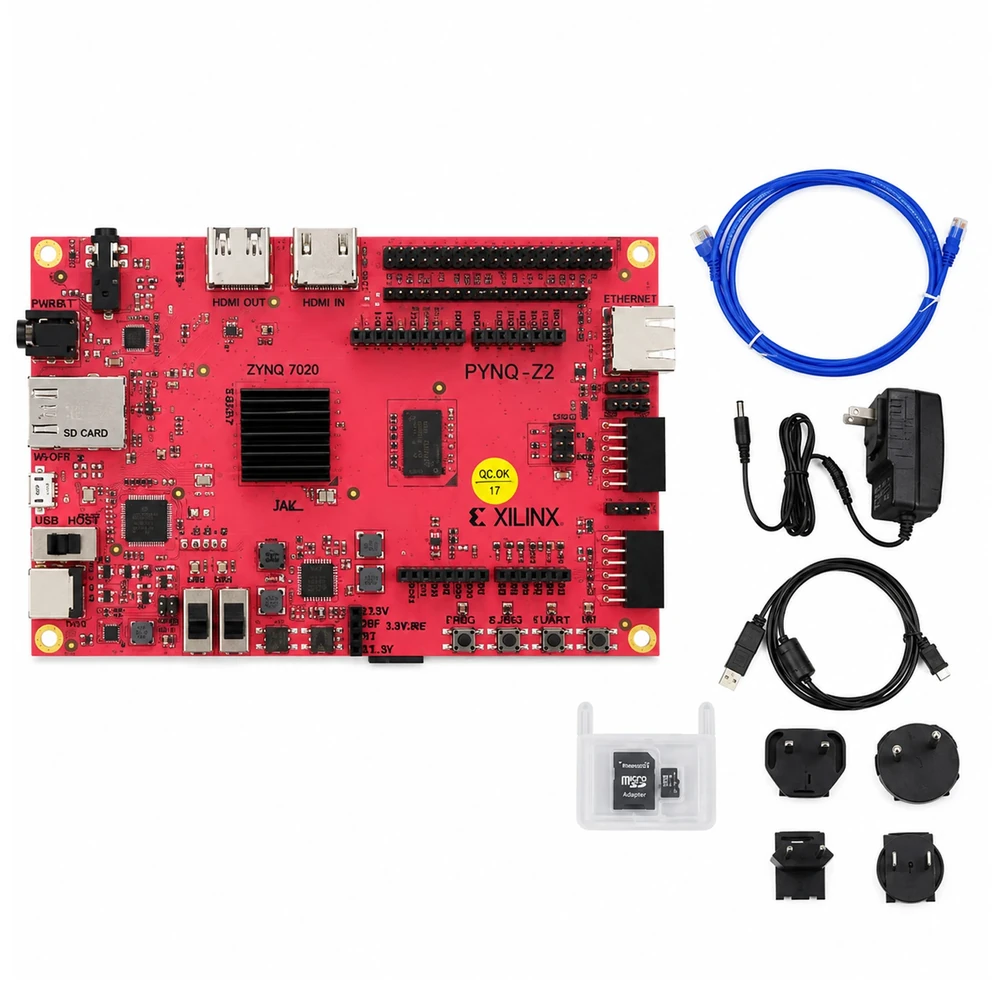
  • 1 x TUL Corporation Corporation PYNQ-Z2 FPGA Development Board Basic Kit

Additional Information

Weight 0.3 kg
Dimensions 15 × 20 × 5 cm