SKU: IOWC-1416
📋 GST Invoice Available

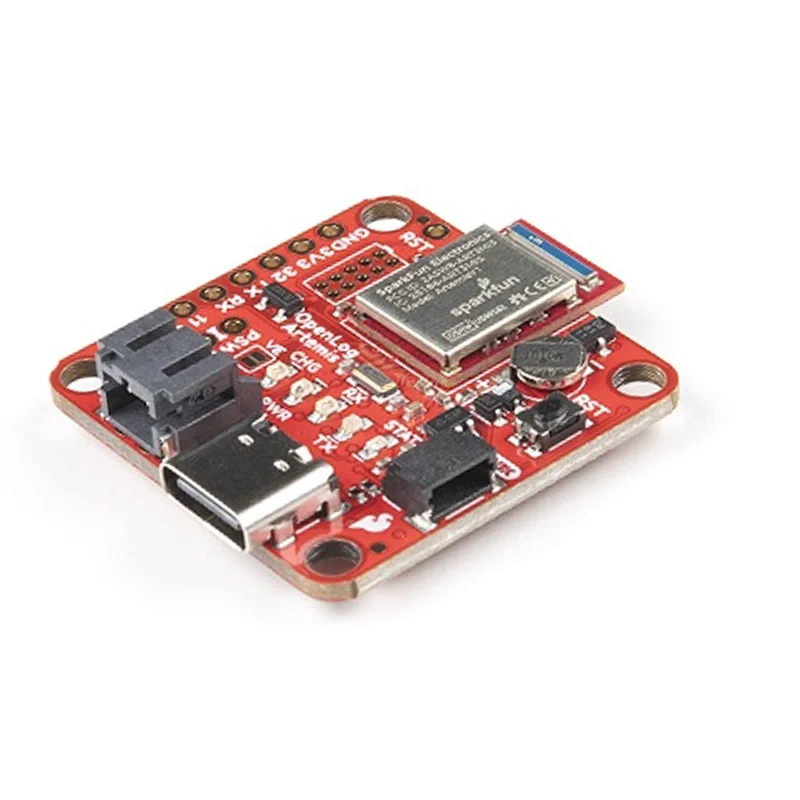
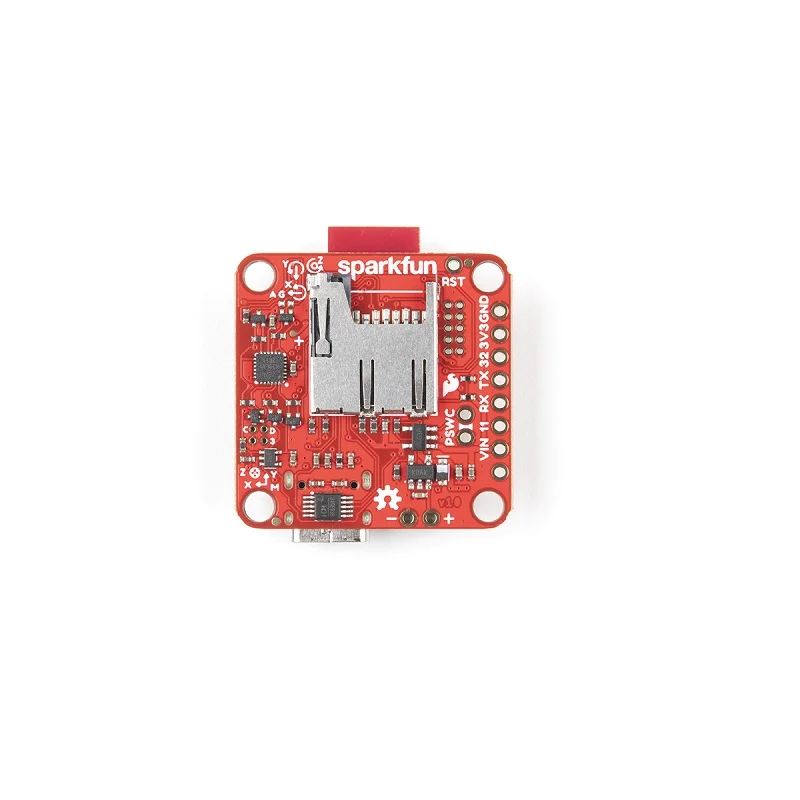
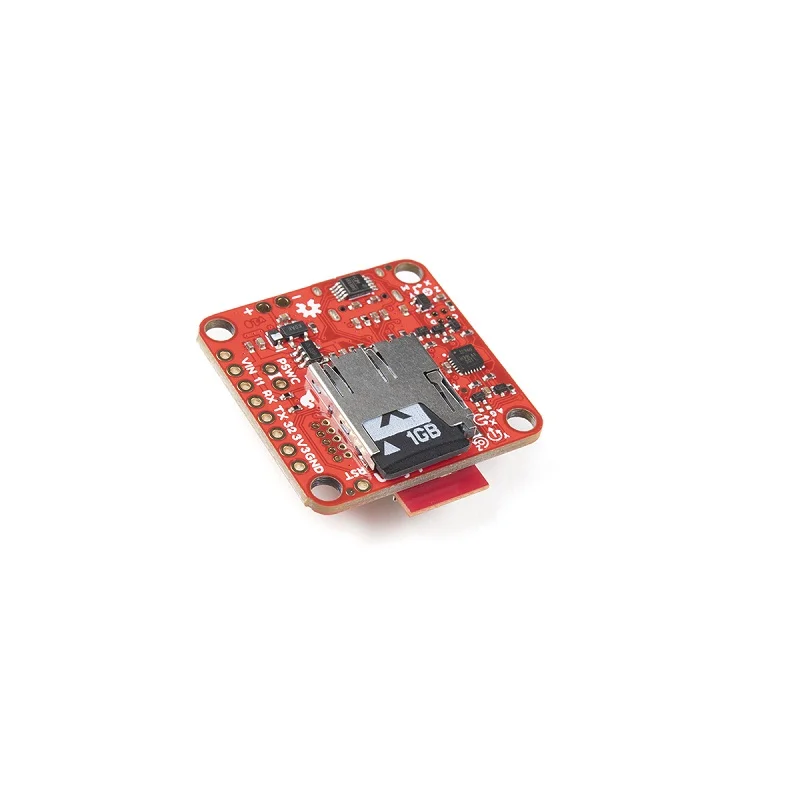
SparkFun OpenLog Artemis Data Logger

₹4,499.00 (Inclusive of all taxes)
Out of Stock

The SparkFun OpenLog Artemis is a low-power, open-source data logger built around the Artemis module, pre-programmed to automatically log data from IMU, GPS, serial, and Qwiic sensors to a microSD card via a configurable USB-C serial interface.

Features

  • Ultra-low power operation with configurable sleep modes (~20mA Run, ~80µA Sleep, ~18µA Deep Sleep) for extended field deployments.
  • Pre-programmed for automatic detection and logging of IMU, GPS, serial data, and Qwiic/I2C sensors without user coding.
  • Features a built-in MCP73831 single-cell LiPo charger and RTC with battery backup for standalone, time-stamped logging.
  • Configurable via simple USB-C serial terminal (115200 bps) with real-time data streaming to both terminal and microSD card.
  • Supports high-speed logging (up to 500 Hz) and flexible microSD storage (FAT16, FAT32, exFAT up to 32GB).

Out of stock

Description

The SparkFun OpenLog Artemis (OLA) is an engineered solution for autonomous, low-power data acquisition in remote IoT and embedded sensing applications. Built on the Artemis module, it provides a robust platform for logging sensor data from IMUs, GPS modules, serial peripherals, and the expansive SparkFun Qwiic ecosystem directly to a microSD card, requiring minimal user configuration.

Its core strength lies in sophisticated power management, enabling operation from a 3.3-6.5V supply or a single-cell LiPo via the integrated charger. The board supports multiple sleep states, with a deep sleep current as low as 18µA when the regulator is shut down, making it ideal for long-term environmental monitoring, asset tracking, and field research where power is constrained.

Key Features

  • Open-source data logger pre-programmed for plug-and-play sensor logging with IMU, GPS, serial, and Qwiic devices.
  • Integrated ultra-low-power management with run, sleep, and deep sleep modes for battery-operated deployments.
  • Onboard MCP73831 LiPo battery charger and RTC with coin cell backup for timestamped logging without external power.
  • Simple configuration and real-time monitoring via USB-C serial interface at 115200 baud.
  • High-speed 14-bit ADC capable of sampling up to 1900 Hz for precise analog sensor measurements.
  • Direct logging to microSD card supporting FAT16, FAT32, and exFAT filesystems up to 32GB capacity.
  • Flexible logging rates configurable from 500 samples per second down to one sample every 24 hours.

Applications

  • Remote environmental monitoring and data logging for temperature, humidity, and pressure.
  • GPS tracking and telemetry for asset management, wildlife research, and vehicle fleets.
  • Inertial measurement unit (IMU) data capture for motion analysis, vibration sensing, and orientation tracking.
  • Long-term, battery-powered field deployments in agriculture, geology, and scientific research.
  • Prototyping and testing platform for autonomous sensor networks and low-power IoT edge nodes.

Technical Specifications

Microcontroller/SoCSparkFun Artemis Module
Operating Voltage3.3 - 6.5 VDC
USB InterfaceType-C
ADC Resolution14-bit, up to 1900Hz, 2V max
Current Consumption (Run)~20 mA
Current Consumption (Sleep)~80 µA
Current Consumption (Deep Sleep)~18 µA (regulator shut down)
Power ManagementIntegrated MCP73831 LiPo Charger
Real-Time ClockYes, with battery backup
Sensor InterfaceQwiic (I2C), Serial UART
StoragemicroSD Card (FAT16/FAT32/exFAT, up to 32GB)
Dimensions (LxW)33 mm (Length)

Frequently Asked Questions

How do I configure the OpenLog Artemis and start logging data?

Connect the board via USB-C to your computer and open a serial terminal at 115200 baud. The pre-loaded firmware provides an interactive menu system. Use simple serial commands to set the logging interval, select which sensors (IMU, GPS, Qwiic) to enable, and start/stop recording. Data is simultaneously streamed to the terminal and saved as CSV files on the inserted microSD card, requiring no additional programming.

What is the power supply requirement and how long can it run on a battery?

The board operates from 3.3V to 6.5V. For battery use, connect a single-cell LiPo (3.7V) to the onboard JST connector; the integrated MCP73831 charger manages charging via USB. Runtime depends heavily on the logging rate and sleep mode. At a slow sampling rate using deep sleep (~18µA), a 2000mAh battery can last for months. For continuous high-speed logging (~20mA), expect a runtime of approximately 100 hours from the same battery.

What microSD card formats and sizes are supported for data storage?

The OpenLog Artemis supports microSD cards formatted as FAT16 or FAT32. With firmware version 1.11 and above, it also supports exFAT format. While it is tested with cards up to 32GB, it should theoretically work with larger capacities if properly formatted. Ensure the card is formatted with a supported filesystem before insertion. The logger creates timestamped CSV files, making data easy to import into analysis software like Excel or Python.

Package Includes

  • 1 x SparkFun OpenLog Artemis Board

Additional Information

Weight 0.03 kg
Dimensions 7 × 5 × 1 cm