SKU: IOWC-1295
📋 GST Invoice Available

Sipeed Maix II M2 Dock AI Linux Vision Dev Board w/ 1.3-Inch IPS Screen

₹5,339.00 (Inclusive of all taxes)
Out of Stock

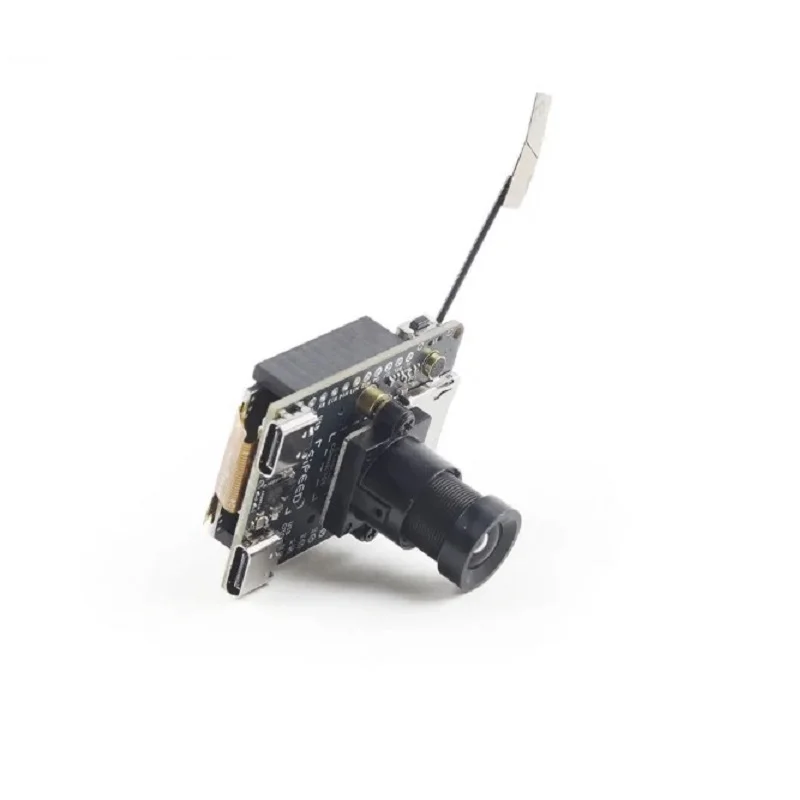
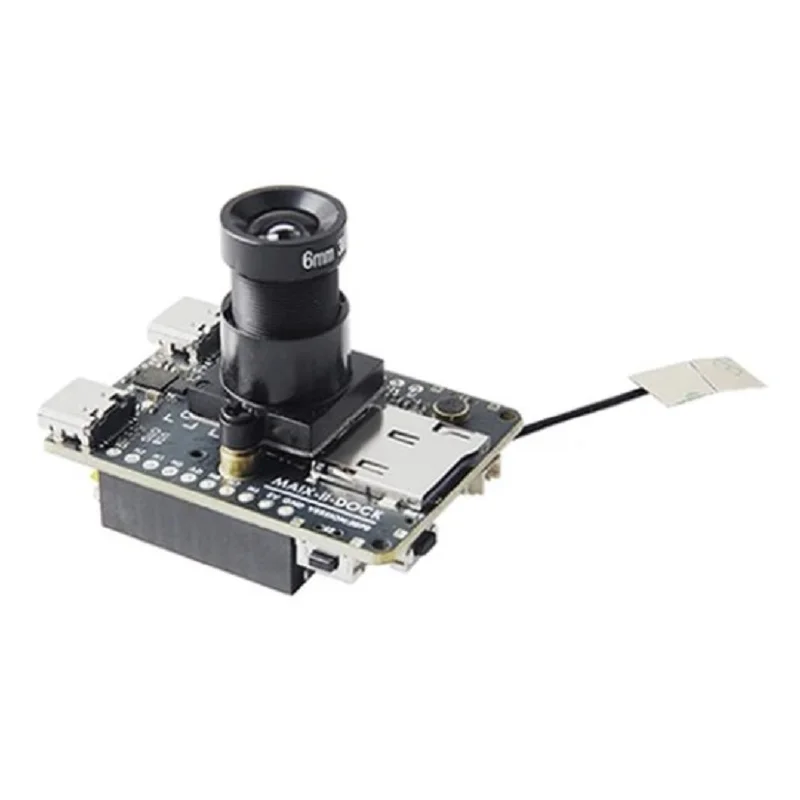
The Sipeed Maix II M2 Dock is an AIoT development board powered by an Allwinner V831 Cortex-A7 processor, featuring hardware AI acceleration (0.2 TOPS) and a 1.3-inch IPS screen for vision-based projects. It runs Linux and supports Python3 and C SDKs for edge AI and computer vision applications.

Features

  • Allwinner V831 SoC with 800MHz Cortex-A7 CPU and 64MB on-chip DDR2 memory for efficient Linux and AI workloads.
  • Integrated 0.2 TOPS hardware AI accelerator for real-time computer vision and neural network inference at the edge.
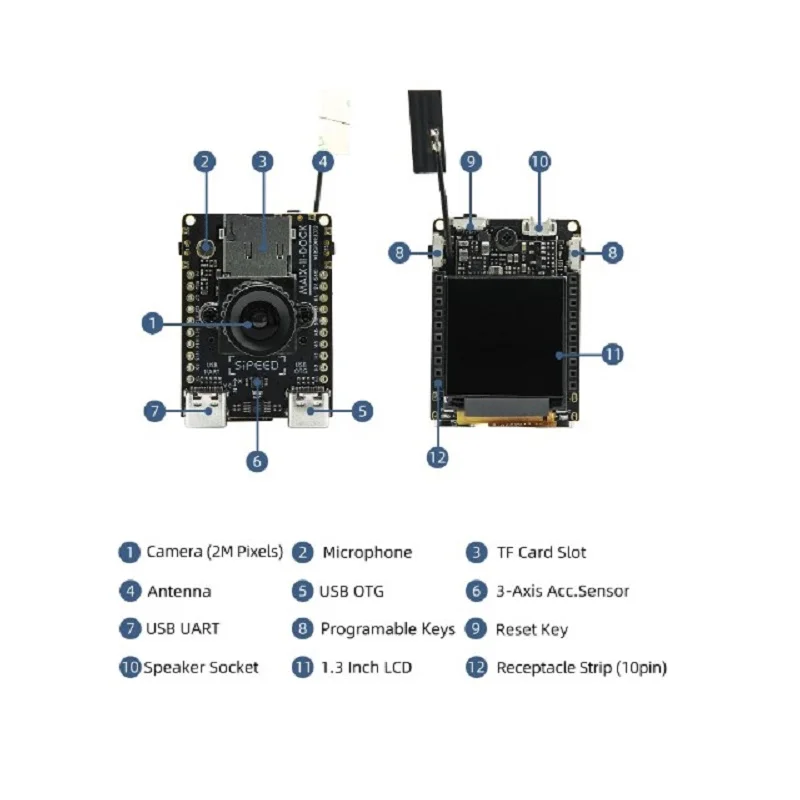
  • 1.3-inch IPS display (240×240) and SP2305 camera interface for standalone vision projects and model validation.
  • Modular core+ext-board design allows use as a complete dock or a compact core module for custom embedded systems.
  • Comprehensive software ecosystem with MaixPy3 Python SDK, libmaix C SDK, and online model training via MaixHub.

Out of stock

Description

The Sipeed Maix II M2 Dock is a cost-effective AIoT platform built around the Allwinner V831 system-on-chip. This single-core Cortex-A7 processor, clocked at 800MHz and paired with 64MB of integrated DDR2 memory, provides a capable foundation for running a full Linux distribution. Its key differentiator is the integrated neural processing unit (NPU), delivering 0.2 TOPS of dedicated hardware acceleration for AI tasks, enabling real-time object detection, image classification, and other vision algorithms without relying on cloud processing.

The board’s modular architecture consists of a core compute module and an extension dock. This design offers flexibility: developers can use the complete dock, which includes a 1.3-inch IPS touchscreen, Ethernet port, and camera interface, for rapid prototyping. Alternatively, the core board can be integrated into custom hardware for volume production. The platform is supported by Sipeed’s MaixPy3, a streamlined Python 3 environment optimized for the hardware, and the libmaix C SDK for lower-level control, making it accessible for both beginners and experienced embedded engineers working on edge AI vision solutions.

Key Features

  • Edge AI Acceleration: Dedicated NPU provides 0.2 TOPS of compute power for efficient, low-latency neural network inference directly on the device.
  • Linux-Capable SoC: The Allwinner V831 runs mainline Linux, allowing for the use of standard libraries, drivers, and networking protocols (TCP/IP, MQTT).
  • Integrated Display & Camera: On-board 1.3-inch IPS screen and support for the SP2305 camera sensor enable standalone vision applications without external peripherals.
  • Developer-Friendly Ecosystem: Supported by MaixPy3 for high-level Python scripting and libmaix for performance-critical C/C++ development, with model training tools on MaixHub.
  • Modular & Flexible Design: The core board can be separated from the dock for custom carrier board designs, facilitating productization and space-constrained deployments.
  • Rich I/O Interface: Includes 10/100M Ethernet (RMII), multiple SPI and I2C buses, audio in/out, and GPIOs for sensor and actuator integration.

Applications

  • Edge AI Vision Devices: Deploy for smart security cameras, facial recognition systems, and quality inspection in manufacturing.
  • Embedded Linux Gateways: Act as a local processing hub in IoT networks, running vision algorithms and forwarding data via Ethernet.
  • Educational AI & Robotics: Ideal platform for learning machine learning, computer vision, and embedded Linux development.
  • Prototyping Smart Appliances: Develop proof-of-concepts for vision-enabled home automation, retail analytics, and interactive kiosks.

Technical Specifications

Processor / SoCAllwinner V831 (Single-core Cortex-A7 @ 800MHz)
AI AcceleratorIntegrated NPU (0.2 TOPS)
Memory64MB SIP DDR2 (On-chip)
StorageExternal microSD Card
Display1.3-inch IPS Screen, 240 x 240 resolution
Camera InterfaceSupports SP2305 sensor
Video EncodingH.264, H.265, JPEG
Network Interface10/100 Mbit/s Ethernet (RMII)
Programming LanguagesPython3, C, C++
Key InterfacesSPI0, SPI1; TWI0-TWI3 (I2C); LINEOUTP; MICIN1P/N; LRADC
Power SupplyVia USB Type-C port
Dimensions (Dock)Approx. 70mm x 70mm x 50mm

Frequently Asked Questions

What software and SDKs are available for programming the Maix II M2 Dock?

Sipeed provides the MaixPy3 SDK, a Python 3 environment optimized for the board's hardware, ideal for rapid AI application development. For lower-level control, the libmaix C/C++ SDK offers direct access to the NPU and peripherals. You develop on a PC, cross-compile your code, and transfer it to the board via SD card or network. The board runs a lightweight Linux distribution, allowing you to also install standard Python packages via pip.

How do I connect a camera and start capturing images for AI processing?

The dock has a dedicated connector for the compatible SP2305 camera module. Physically attach the camera ribbon cable, ensuring proper orientation. In your MaixPy3 Python code, you initialize the camera sensor using the `sensor` module, set the resolution and frame rate, and capture frames. These image buffers can be passed directly to the loaded AI model (converted from ONNX or trained via MaixHub) for inference using the board's hardware NPU accelerator, returning detection or classification results.

Can I use only the core module without the extension dock for my own PCB design?

Yes, the board's design separates the Allwinner V831 core module from the extension dock. You can detach the core module, which contains the SoC, memory, and essential power circuitry. You would then design a custom carrier PCB that provides the necessary 3.3V power supply via the module's pin headers and routes the required interfaces like MIPI-CSI for camera, RGB for display, I2C, SPI, and GPIOs to your peripherals. This is intended for productization and space-constrained embedded vision applications.

What is the power requirement and how do I supply power to the board?

The board is powered via the onboard USB Type-C port. A standard 5V/2A USB power adapter or a capable USB port on a computer is sufficient. The Allwinner V831 SoC and its peripherals operate at low voltage, with on-board regulators providing the necessary core voltages. For battery-powered applications, you can provide a stable 5V input to the Type-C port from a battery management circuit. Monitor total system current, especially when the screen, camera, and NPU are active simultaneously.

Package Includes

  • 1 x Sipeed Maix II M2 Dock AI Vision Development Board
  • 1 x Type-C Data Cable

Additional Information

Weight 0.065 kg
Dimensions 7 × 7 × 5 cm