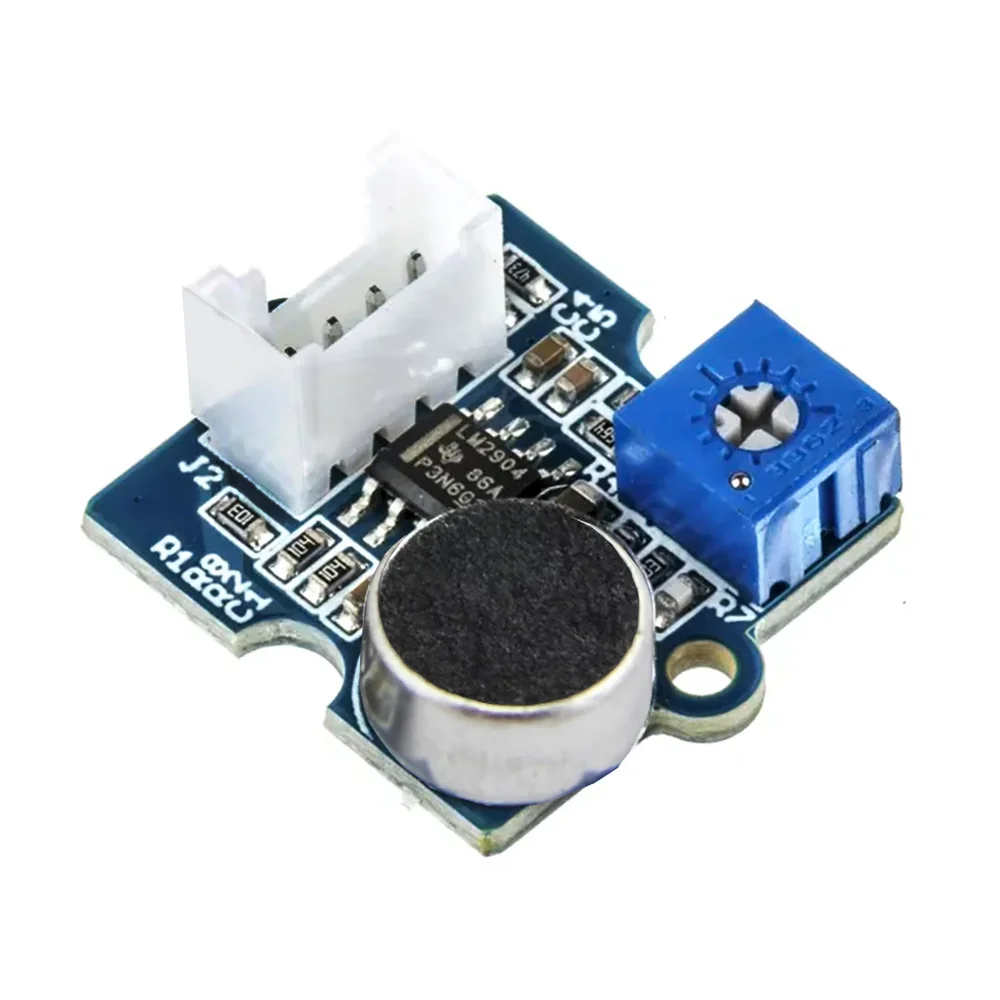
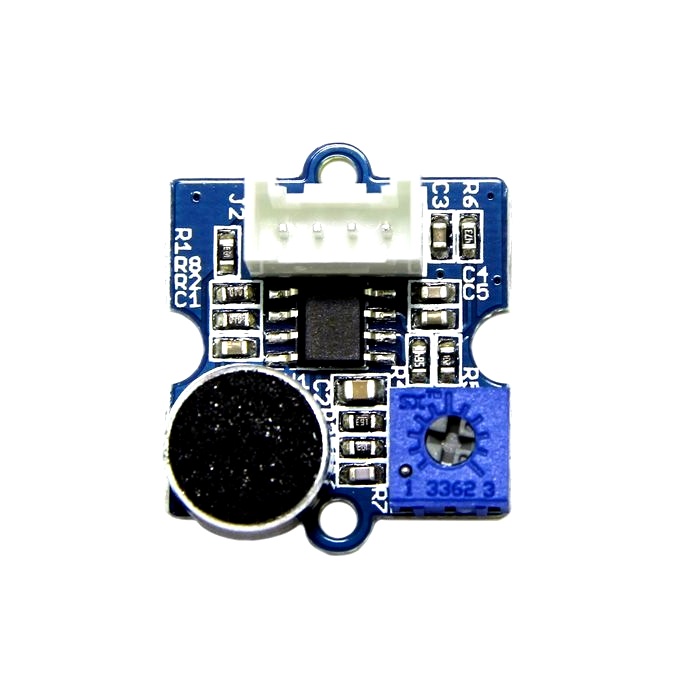
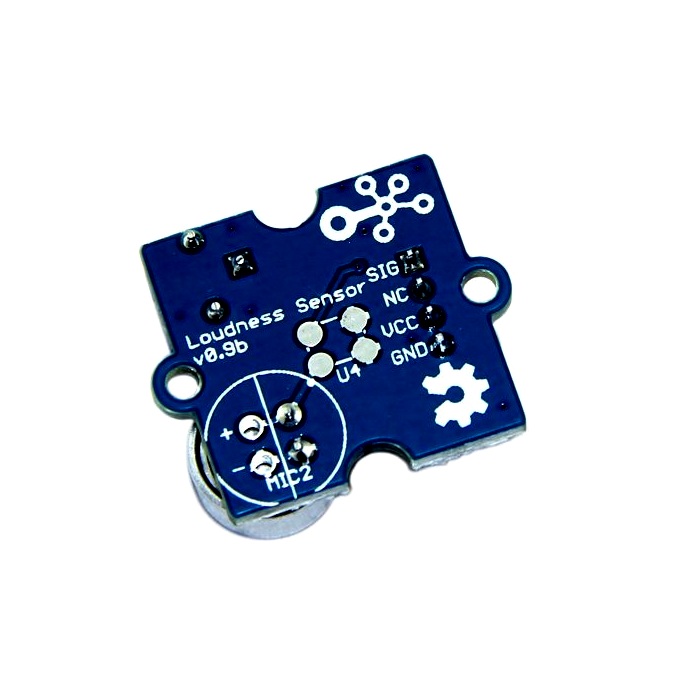
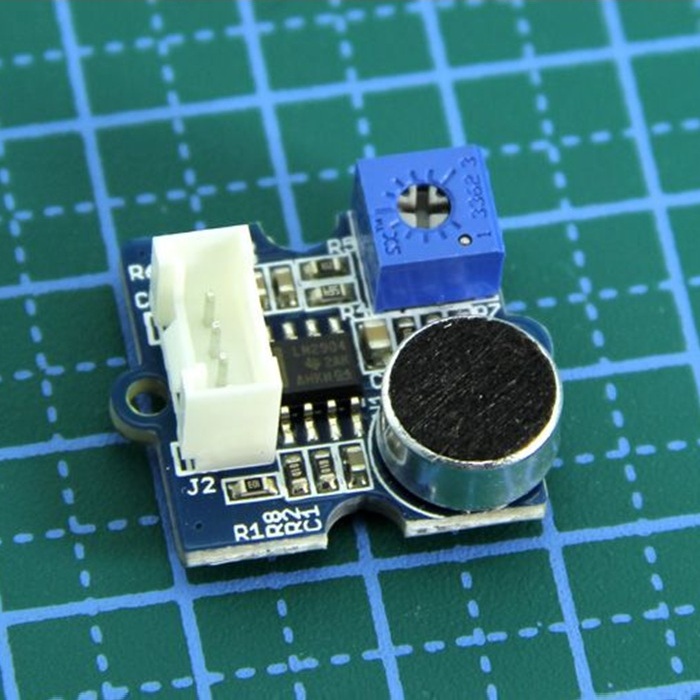
SKU: SENS-3150
📋 GST Invoice Available

Seeed Studio Studio Grove Loudness Sensor - Analog Output, Gain Adjustable

₹699.00 (Inclusive of all taxes)
Out of Stock

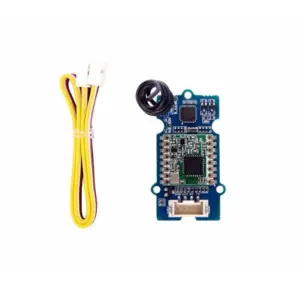
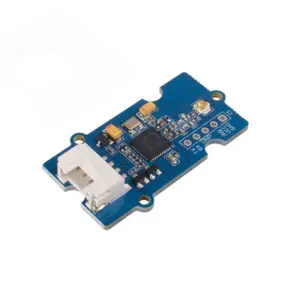
The Seeed Studio Studio Grove Loudness Sensor is an analog sound intensity module designed for Arduino, Raspberry Pi, and other Grove-compatible microcontroller platforms. It provides a 0-1023 analog output proportional to environmental sound pressure levels, featuring an adjustable gain potentiometer and built-in signal conditioning.

Features

  • Analog output signal range from 0 to 1023 for direct ADC reading.
  • Adjustable sensitivity via on-board screw potentiometer for gain control.
  • Wide operating voltage range from 3.5V to 10V DC, compatible with 3.3V and 5V logic systems.
  • Integrated two-stage high-pass filter based on LM2904 op-amp for stable signal conditioning.
  • Standard Grove 4-pin connector for plug-and-play integration with Seeed Studio Studio ecosystem boards.

Out of stock

Description

The Grove Loudness Sensor utilizes an electret microphone element coupled with a precision operational amplifier circuit to convert acoustic pressure waves into a measurable analog voltage. The core signal path employs an LM2904 op-amp configured in a two-stage, high-pass filter topology, which amplifies the microphone’s high-frequency signal and outputs a positive envelope waveform suitable for microcontroller analog-to-digital conversion.

This design effectively minimizes low-frequency noise and DC offset, providing a clean signal that corresponds directly to sound intensity. The module includes a manual trimmer potentiometer for precise adjustment of the amplifier gain, allowing calibration for different acoustic environments and sensitivity requirements from -48 dB to 66 dB. The built-in filtering ensures reliable performance in the 50 Hz to 2 kHz frequency band, which covers most typical environmental and machine noise signatures.

Key Features

  • Precision Signal Conditioning: Features a two-stage active high-pass filter using an LM2904 operational amplifier for clean envelope detection and output stability.
  • Field-Adjustable Gain: On-board screw potentiometer allows fine-tuning of sensitivity from -48 dB to 66 dB to match application-specific sound level ranges.
  • Broad Compatibility: Operates from 3.5V to 10V DC, making it suitable for 3.3V and 5V microcontroller platforms like Arduino, ESP32, and Raspberry Pi.
  • Optimized Frequency Response: Engineered for the 50 Hz to 2000 Hz range, effectively capturing common environmental and mechanical sound signatures.
  • High Signal Integrity: Boasts a signal-to-noise ratio (SNR) greater than 58 dB for accurate low-level sound detection amidst circuit noise.
  • Grove Ecosystem Integration: Equipped with a standardized 4-pin Grove connector for rapid prototyping without soldering or complex wiring.
  • Compact Form Factor: Measures just 24mm x 20mm with a lightweight, durable PCB construction for easy integration into enclosures and projects.

Applications

  • Environmental noise monitoring and sound level logging for smart city or workplace safety systems.
  • Voice activity detection and trigger mechanisms for energy-saving smart home automation.
  • Basic acoustic event detection in DIY robotics for sound-reactive behaviors or obstacle avoidance.
  • Educational demonstrations of analog signal conditioning, op-amp circuits, and ADC principles.
  • Simple machine condition monitoring via acoustic signature analysis for fans, motors, or pumps.

Technical Specifications

ParameterSpecification
Operating Voltage3.5 VDC to 10 VDC (Nominal 5V)
Output SignalAnalog (0 to 1023)
Frequency Range50 Hz to 2000 Hz
Sensitivity Range-48 dB to 66 dB
Signal-to-Noise Ratio (SNR)> 58 dB
Core Amplifier ICLM2904 Operational Amplifier
Transducer TypeElectret Condenser Microphone
Gain ControlAdjustable Screw Potentiometer
InterfaceGrove 4-pin (Analog Output)
Dimensions (L x W)24 mm x 20 mm
Mounting Hole Diameter2 mm
Weight4 g

Frequently Asked Questions

What is the output signal of this Grove Loudness Sensor?

The sensor provides a standard analog output signal ranging from 0 to 1023. This value corresponds to the envelope of the detected sound intensity and can be read directly by the analog input pin (ADC) of a microcontroller like Arduino or Raspberry Pi (with an ADC hat). The output increases with higher sound pressure levels.

How do I adjust the sensor's sensitivity?

Sensitivity is adjusted using the onboard blue screw potentiometer. Turning the screw changes the gain of the internal LM2904 op-amp circuit. Clockwise rotation typically increases gain (higher output for a given sound level), while counter-clockwise rotation decreases it. Calibrate it for your specific environment and desired trigger threshold.

What is the operating voltage range, and is it 3.3V compatible?

The module operates from 3.5V to 10V DC, with a nominal voltage of 5V. It is fully compatible with 3.3V logic systems, as the analog output will scale with the supply voltage. When powered with 3.3V, the maximum analog output will be approximately 3.3V, which is safe for 3.3V microcontroller ADC inputs.

Can this sensor measure decibel (dB) levels accurately?

This sensor measures relative sound intensity, not calibrated decibel (dB SPL) levels. It is ideal for detecting changes in noise level, triggering events, or comparing sound magnitudes. For precise dB SPL measurement, a sensor with factory calibration and a known reference is required. The onboard potentiometer allows you to set a threshold for a specific intensity in your environment.

How do I connect this sensor to an Arduino or Raspberry Pi?

Connect it using a Grove 4-pin cable. For Arduino, use a Grove Base Shield and plug the sensor into an analog port (labeled A0-A2). For Raspberry Pi, use a GrovePi+ or similar hat with ADC functionality, connecting to an analog Grove port. The sensor provides power (VCC, GND) and a single analog output signal (SIG).

Package Includes

  • 1 x Seeed Studio Studio Grove Loudness Sensor Module

Additional Information

Weight 0.004 kg
Dimensions 2.4 × 2 cm