SKU: IOWC-0984
📋 GST Invoice Available

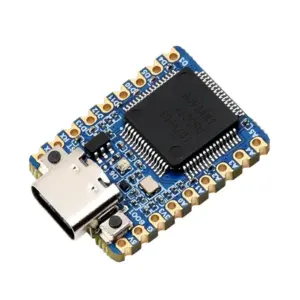
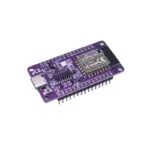
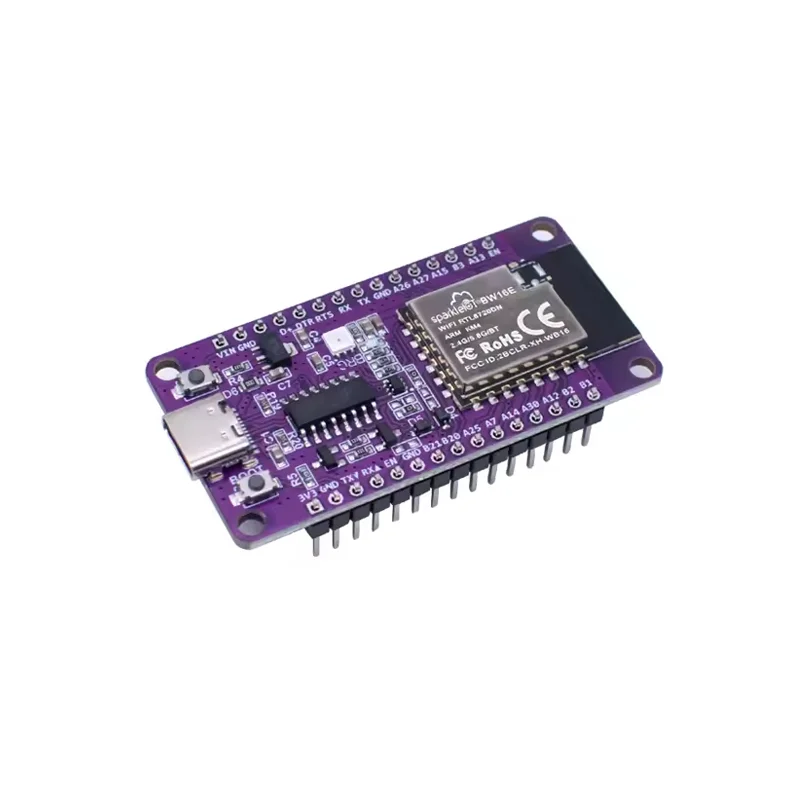
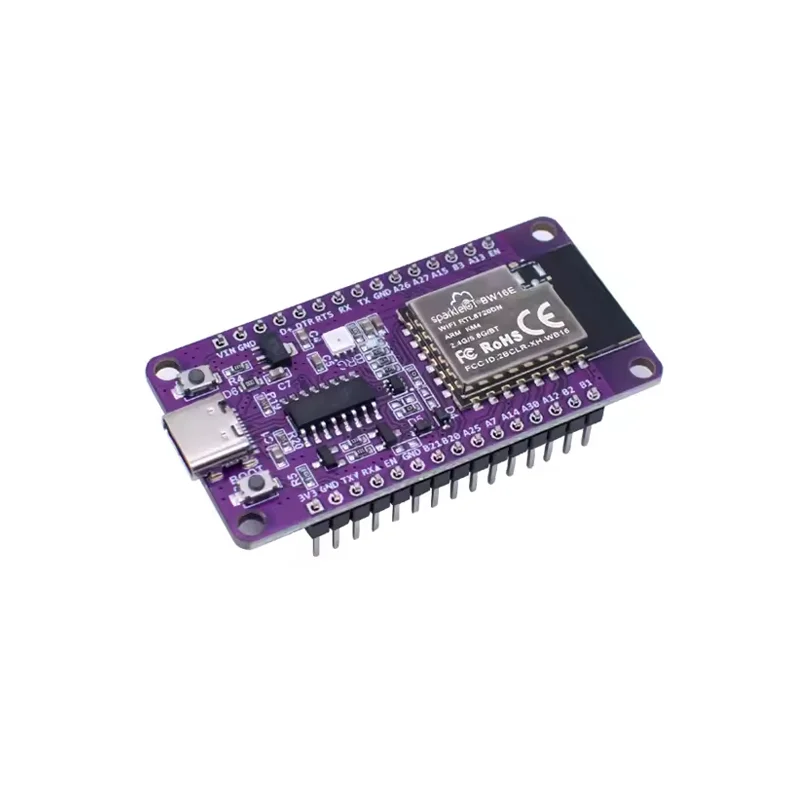
NICEMCU BW16 RTL8720DN Dual-Band WiFi & BLE 5.0 Development Board

₹669.00 (Inclusive of all taxes)
Out of Stock

The NICEMCU BW16 is a compact development board built around the Realtek RTL8720DN SoC, providing dual-band 2.4/5GHz WiFi and Bluetooth Low Energy 5.0 connectivity. It is powered by a 3.3V supply and is fully compatible with the Arduino IDE for rapid IoT prototyping and wireless applications.

Features

  • Dual-core ARM Cortex-M4 & M0 SoC with 512KB SRAM and 4MB Flash for robust IoT processing.
  • Dual-band WiFi (802.11 a/b/g/n) and Bluetooth BLE 5.0 for flexible, high-speed wireless connectivity.
  • Full Arduino IDE compatibility simplifies firmware development and prototyping for makers.
  • Pre-soldered antenna header ensures optimal RF performance and easy antenna attachment.
  • Low power consumption and wide -40°C to 85°C operating range suit battery-powered and industrial IoT nodes.

Out of stock

Description

The NICEMCU BW16 development board integrates the Realtek RTL8720DN wireless SoC, combining a dual-core ARM Cortex-M4 and Cortex-M0 architecture with integrated dual-band WiFi and Bluetooth 5.0 radios. This design provides a powerful, all-in-one wireless platform for IoT edge devices, supporting high-throughput data transmission on both 2.4GHz and 5GHz bands alongside low-energy Bluetooth communication.

Engineered for reliable operation, the board features stable 3.3V power regulation, a pre-soldered antenna connection point for optimal RF matching, and a compact PCB layout. Its 4MB flash memory and 512KB SRAM support complex application logic and Over-the-Air (OTA) firmware updates, making it suitable for deployable smart home, automation, and telemetry projects.

Key Features

  • Realtek RTL8720DN dual-core SoC with ARM Cortex-M4 (application) and Cortex-M0 (network) cores.
  • Integrated dual-band 2.4GHz & 5GHz IEEE 802.11 a/b/g/n WiFi transceiver.
  • Integrated Bluetooth Low Energy (BLE) 5.0 radio for peripheral and mesh networking.
  • Arduino IDE compatible via community board support packages for rapid prototyping.
  • Pre-soldered antenna pin header for easy connection of external 2.4/5GHz antennas.
  • Low-power operating modes extend battery life in sensor node deployments.
  • Compact form factor (55mm x 28mm) designed for integration into end-product enclosures.
  • Industrial-grade operating temperature range from -40°C to +85°C.

Applications

  • Smart home automation hubs and wireless sensor nodes.
  • IoT gateway devices bridging BLE sensors to WiFi networks.
  • Prototyping dual-band WiFi client devices for high-throughput data transfer.
  • Battery-powered Bluetooth beacons and asset tags with WiFi backhaul.
  • Industrial telemetry and monitoring systems requiring robust wireless connectivity.

Technical Specifications

Microcontroller/SoCRealtek RTL8720DN (ARM Cortex-M4 + Cortex-M0)
Wireless ProtocolsWiFi 802.11 a/b/g/n (2.4GHz & 5GHz), Bluetooth BLE 5.0
RAM512 KB SRAM
Flash Memory4 MB
Supply Voltage3.3V (Board regulated from 5V input)
Operating CurrentMax 500mA
Operating Temperature-40°C to 85°C
Antenna ConnectorPre-soldered pin header
Dimensions (L x W)55mm x 28mm
Weight9g

Frequently Asked Questions

How do I program the NICEMCU BW16 board using the Arduino IDE?

First, install the Arduino IDE and add the board support URL for the RTL8720DN platform via Preferences. Install the necessary package from the Boards Manager, then select 'NICEMCU BW16' as your target board. Connect the board via USB, choose the correct COM port, and you can upload sketches that utilize the WiFi and BLE libraries provided by the community package. Ensure your power supply provides a stable 5V input.

What type of antenna should I use with the pre-soldered header, and how is it connected?

Use a dual-band 2.4GHz/5GHz WiFi antenna with a pin header or solder a pigtail cable to the board's pre-soldered pads. The antenna impedance should be 50 ohms for optimal RF performance. Connect the antenna's center conductor to the signal pad and the shield to the ground pad adjacent to it. Proper antenna placement away from metal obstructions is crucial for achieving the advertised wireless range and data throughput.

What is the power supply requirement and typical current consumption for the BW16 board?

The board requires a 5V DC input, which is regulated down to 3.3V for the RTL8720DN core. The maximum current draw can reach 500mA during full RF transmission. For battery-operated projects, utilize the chip's deep sleep modes to reduce average current to microamps. Always use a stable, low-noise power source, as voltage ripple can affect wireless performance and system stability.

Package Includes

  • 1 x NICEMCU BW16 RTL8720DN Development Board (Antenna Header Welded)

Additional Information

Weight 0.009 kg
Dimensions 5.5 × 2.8 cm