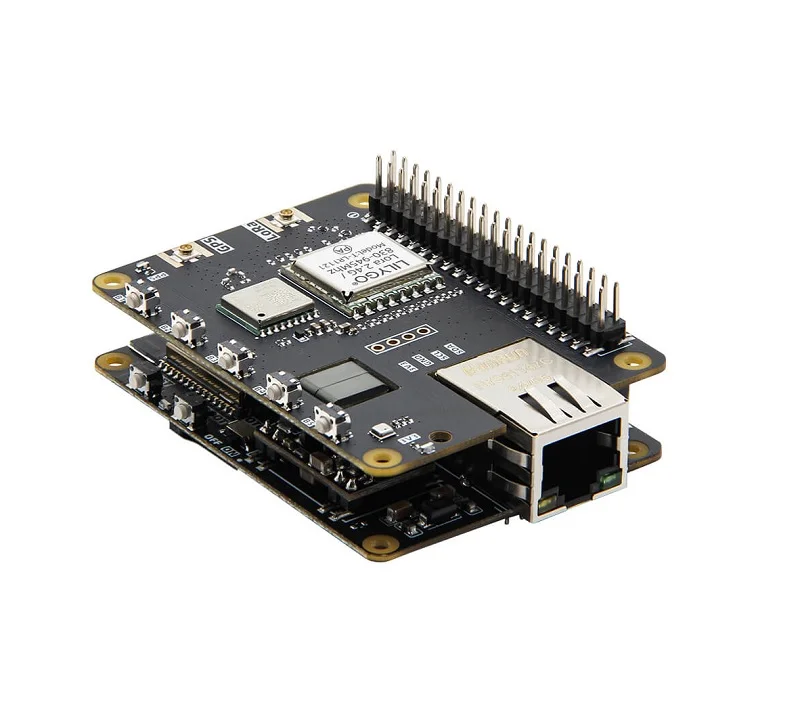
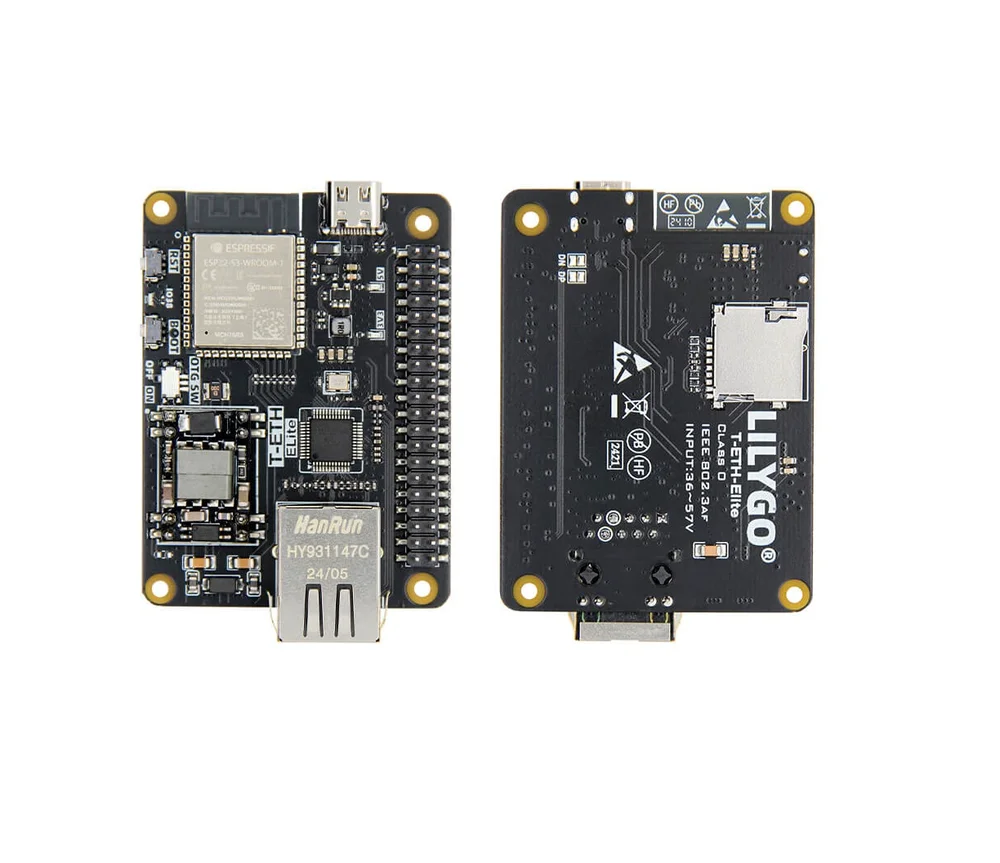
SKU: IOWC-1191
📋 GST Invoice Available

LilyGO T-ETH Lite ESP32-S3R8 Wi-Fi & BLE 5.0 Development Board

₹3,779.00 (Inclusive of all taxes)
Out of Stock

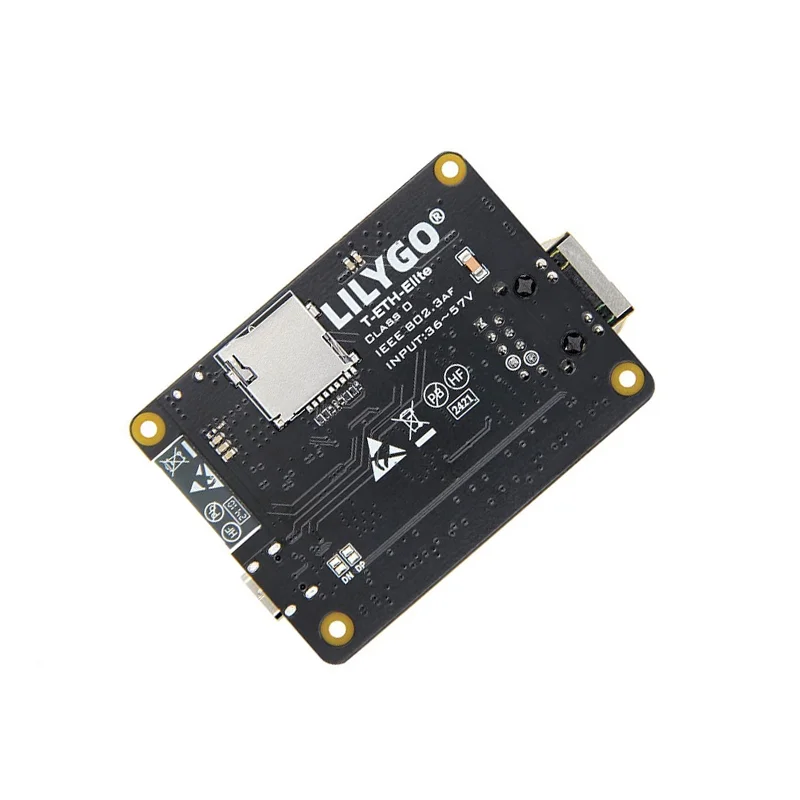
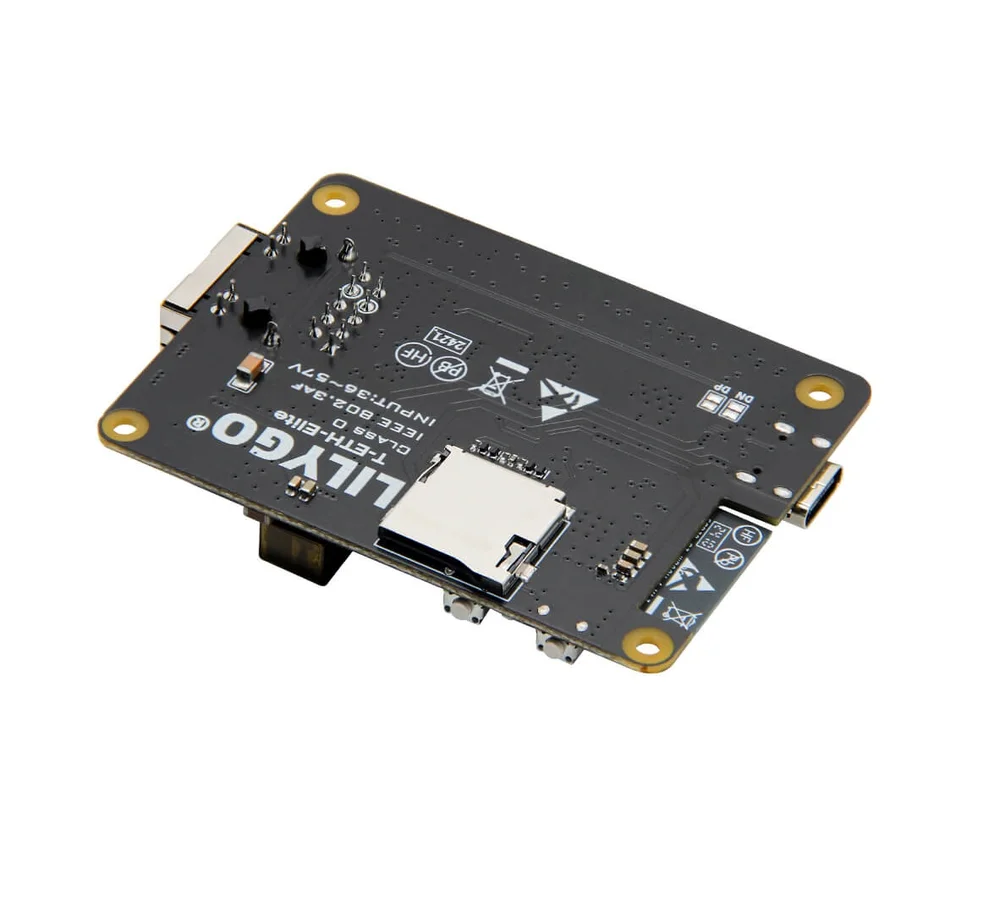
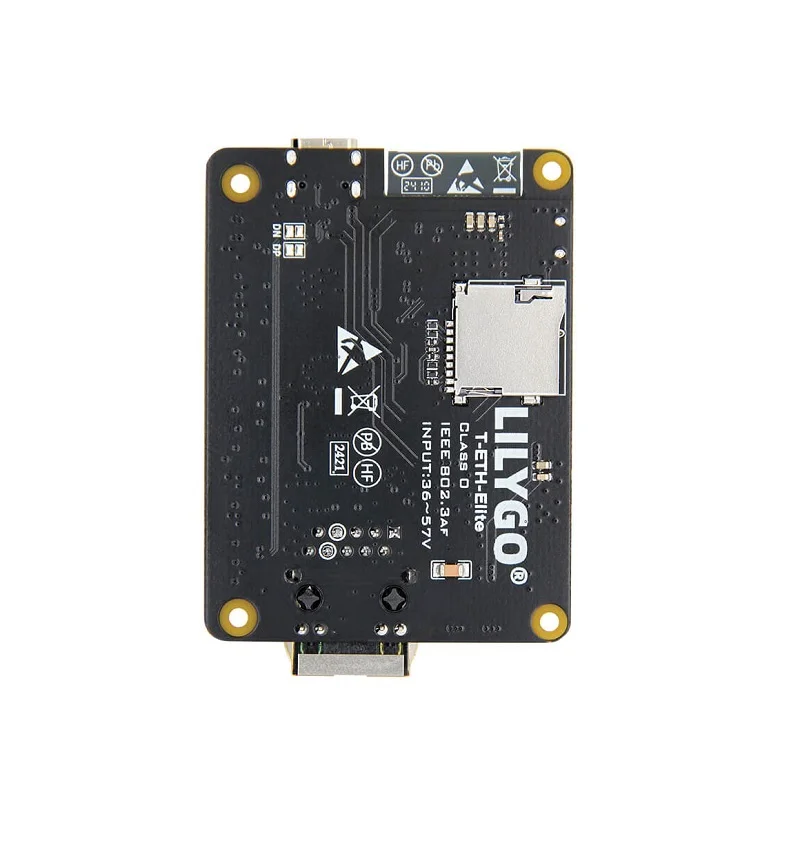
The LilyGO T-ETH Lite is an ESP32-S3R8 development board featuring a dual-core LX7 microprocessor, 2.4 GHz Wi-Fi, and Bluetooth 5.0 (LE) for robust IoT connectivity. It is programmable via Arduino IDE, PlatformIO, or ESP-IDF and includes 16 MB flash and 8 MB PSRAM for data-intensive applications.

Features

  • Powered by the ESP32-S3R8 dual-core LX7 microprocessor for high-performance IoT edge computing.
  • Integrated 2.4 GHz Wi-Fi and Bluetooth 5.0 (LE) for versatile wireless connectivity and mesh networking.
  • Supports Arduino, PlatformIO, and ESP-IDF development frameworks for flexible firmware programming.
  • Equipped with 16 MB flash memory and 8 MB PSRAM for handling complex applications and data buffering.
  • Compact 50 x 67 mm form factor with 5V USB charging capability for portable and embedded deployments.

Out of stock

Description

The LilyGO T-ETH Lite Development Board is engineered around the Espressif ESP32-S3R8 chipset, delivering a dual-core LX7 processor capable of running at up to 240 MHz. This architecture provides the computational headroom needed for advanced IoT tasks, real-time data processing, and secure Over-The-Air (OTA) updates. The integrated 2.4 GHz Wi-Fi radio supports various networking protocols, while Bluetooth 5.0 Low Energy enables efficient communication with peripherals and smartphones.

With 16 MB of external flash and 8 MB of PSRAM, the board offers significant memory for storing application code, file systems, and buffering sensor data streams. Its design includes a USB-C port for 5V/500mA power and programming, making it suitable for both prototyping and field deployment. The compact PCB layout and castellated edge pins allow for integration into custom enclosures or as a core wireless module in larger systems.

Key Features

  • High-performance dual-core LX7 MCU (ESP32-S3R8) for concurrent task execution.
  • Dual wireless radios: IEEE 802.11 b/g/n 2.4 GHz Wi-Fi and Bluetooth 5.0 with LE support.
  • Expanded memory configuration with 16 MB SPI flash and 8 MB PSRAM for data-intensive applications.
  • Broad development ecosystem compatibility with Arduino Core, ESP-IDF, and PlatformIO.
  • USB-C interface for stable 5V power delivery, programming, and serial communication.
  • Compact and robust PCB design suitable for integration into final product designs.

Applications

  • Smart home automation hubs and sensor gateways.
  • IoT edge computing nodes for data preprocessing.
  • Wireless sensor networks and environmental monitoring stations.
  • Prototyping for connected consumer electronics and wearables.
  • Educational platforms for embedded systems and wireless communication.

Technical Specifications

Microcontroller / SoCESP32-S3R8 (Dual-core LX7)
Wireless Protocols2.4 GHz Wi-Fi 802.11 b/g/n, Bluetooth 5.0 (LE)
Flash Memory16 MB
PSRAM8 MB
Supply Voltage5V via USB-C
USB Charging5V, 500 mA
Development FrameworksArduino, PlatformIO, ESP-IDF
Dimensions50 x 67 mm

Frequently Asked Questions

What development environments are supported for programming the LilyGO T-ETH Lite?

The board is fully compatible with the Arduino IDE using the ESP32-S3 Arduino core, Espressif's official ESP-IDF framework for native development, and PlatformIO within VS Code. You must install the correct board definitions and USB drivers. Initial setup involves selecting 'LilyGO T-ETH Lite' or 'ESP32-S3 Dev Module' as the target, configuring the flash size to 16MB, and PSRAM to 'OPI PSRAM' in the tools menu before uploading your sketch or project.

How do I power the T-ETH Lite board and what is its operating voltage?

The primary and recommended power source is the onboard USB-C port, which accepts a standard 5V supply. The board's internal regulators step this down to the required core voltages. The operating current varies significantly based on Wi-Fi/BLE radio activity and CPU load; expect an average of 100-250mA during active transmission. For low-power battery-operated scenarios, you can supply 5V directly to the VIN pin, but ensure the power source can handle current spikes during RF transmission.

What is the purpose of the 8MB PSRAM on this ESP32-S3 board?

The 8MB of external PSRAM (Pseudo Static RAM) provides additional volatile memory for data-intensive operations where the internal SRAM is insufficient. It is extremely useful for buffering images from camera modules, storing large data sets for sensor logging, handling complex graphics buffers for displays, or managing extensive web server content. In ESP-IDF, you can allocate memory from the PSRAM pool using specific functions, while in Arduino, it can be enabled for the 'malloc' heap to automatically use it for dynamic allocations.

Package Includes

  • 1 x LilyGO T-ETH Lite Development Board

Additional Information

Weight 0.045 kg
Dimensions 10 × 6 × 4 cm