SKU: IOWC-1249
📋 GST Invoice Available

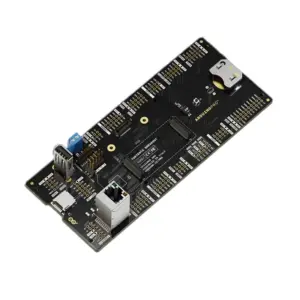
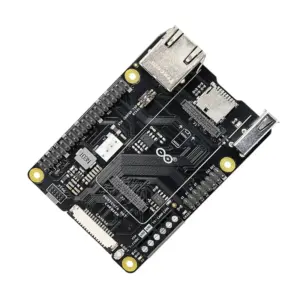
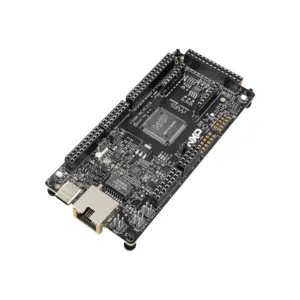
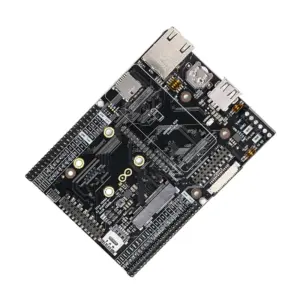
LilyGO T-ETH-Lite ESP32-S3 W5500 Ethernet Dev Board w/ TF Card & POE Shield

₹2,729.00 (Inclusive of all taxes)
Out of Stock

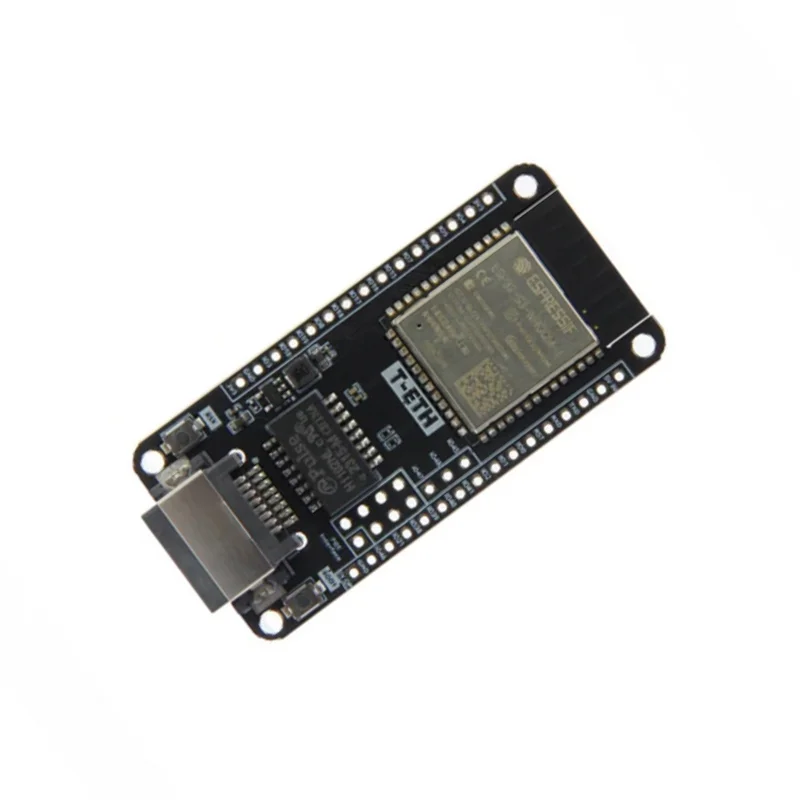
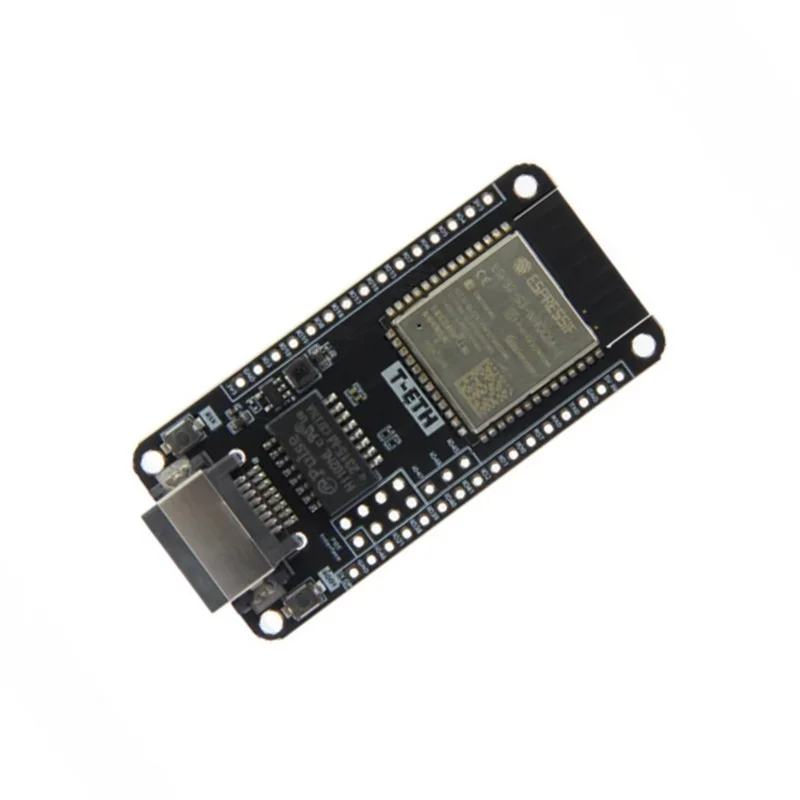
The LilyGO T-ETH-Lite is an ESP32-S3 development board integrating a W5500 Ethernet controller and microSD card slot, designed for robust IoT applications requiring wired network reliability and local data storage, with optional PoE power.

Features

  • Dual-core ESP32-S3-WROOM-1 MCU with 16MB Flash & 8MB PSRAM for high-performance IoT edge processing.
  • Integrated W5500 Ethernet controller provides stable, wired TCP/IP connectivity for industrial telemetry and control.
  • Onboard microSD (TF) card slot enables extensive local data logging and firmware storage.
  • Compatible with optional PoE (Power over Ethernet) shield for simplified, single-cable power and data delivery.
  • Compact form factor with accessible Reset/Boot buttons and extensive GPIO via pin headers for peripheral expansion.

Out of stock

Description

The LilyGO T-ETH-Lite development board merges the processing capabilities of the Espressif ESP32-S3 with the hardware-trusted W5500 Ethernet controller, creating a dedicated platform for wired IoT deployments. It is engineered for scenarios where Wi-Fi reliability is insufficient, offering a deterministic, low-latency network connection through its integrated 10/100 Mbps Ethernet PHY.

Power management is flexible, supporting standard USB 5V input or optional Power over Ethernet via a compatible shield, streamlining installation in enclosures. The inclusion of a microSD card slot provides essential local storage for sensor data, web server assets, or over-the-air (OTA) update packages, making it suitable for data-intensive edge applications without constant cloud dependency.

Key Features

  • High-performance dual-core Xtensa LX7 ESP32-S3 microcontroller with 240 MHz clock speed.
  • Hardware-based W5500 TCP/IP controller offloads network stack processing from the main MCU.
  • Dedicated SPI bus for the W5500 ensures fast and reliable Ethernet communication.
  • Onboard 3.3V regulator supports stable operation from a wide input voltage range.
  • Pre-flashed with bootloader for easy programming via USB-C and Arduino IDE or ESP-IDF.
  • Exposed UART, I2C, SPI, and GPIO pins facilitate connection to sensors, displays, and actuators.
  • Compact PCB design with mounting holes for secure installation in end-use enclosures.

Applications

  • Industrial IoT (IIoT) gateways for Modbus RTU/TCP conversion and machine monitoring.
  • Local network data loggers for environmental sensors (temperature, humidity, CO2).
  • Ethernet-connected smart home hubs and automation controllers.
  • Embedded web servers for device configuration and remote dashboard access.
  • Networked control systems for robotics, lighting, or access control.

Technical Specifications

Microcontroller / SoCESP32-S3-WROOM-1 (Dual-core Xtensa LX7, 240 MHz)
Wireless ProtocolsWi-Fi 4 (802.11 b/g/n), Bluetooth 5.0 (BLE)
Ethernet ControllerW5500 (Hardware TCP/IP)
Storage ExpansionmicroSD (TF) Card Slot
MemoryFlash: 16MB, PSRAM: 8MB
Supply Voltage5V via USB-C or PoE Shield
InterfacesUSB-C, Ethernet (RJ45), SPI (for W5500 & SD), I2C, UART, GPIO
ButtonsReset, Boot
Operating Temperature-40°C to +85°C (typical for ESP32-S3)
DimensionsApprox. 80mm x 50mm (Board size)

Frequently Asked Questions

How do I program the LilyGO T-ETH-Lite board using the Arduino IDE?

Install the ESP32 board package via the Arduino Boards Manager. Connect the board via USB-C, select 'ESP32S3 Dev Module' as the target, and choose the correct COM port. The board uses the standard GPIO0 (Boot) and EN (Reset) buttons for entering download mode. You can then upload sketches that utilize the Ethernet library configured for the W5500's SPI pins.

What are the correct SPI pin assignments for the W5500 Ethernet controller on this board?

The W5500 is connected via a dedicated SPI bus. Typically, the CS pin is GPIO5, SCK is GPIO36, MOSI is GPIO35, and MISO is GPIO37. You must initialize the Ethernet library with these specific pin definitions. Consult the board's schematic or example sketches from LilyGO for the definitive pin mapping to ensure proper driver configuration and network connectivity.

Can I power this board using Power over Ethernet (PoE), and what shield is required?

Yes, the board supports PoE with an optional PoE shield module that connects to the board's dedicated headers. The shield incorporates a PoE PD (Powered Device) controller that extracts power from the Ethernet cable, complying with IEEE 802.3af/at standards. You must source the compatible LilyGO PoE shield separately and attach it to the main board before connecting the Ethernet cable to an active PoE switch or injector.

How do I access the microSD card slot for data logging on this ESP32-S3 board?

The microSD card slot is connected via SPI. You need to use the SD library in Arduino or the sdmmc driver in ESP-IDF. The typical CS pin for the SD slot is GPIO21. Format your microSD card as FAT32, insert it into the slot, and initialize the SD card object in your code using the correct chip select pin. Ensure your power supply is stable, as SD card operations can draw significant current.

Package Includes

  • 1 x T-ETH-Lite ESP32-S3 Development Board
  • 1 x 16-pin Header Strip
  • 1 x 15-pin Header Strip
  • 1 x 2x4 Pin Header
  • 1 x 3-pin Header

Additional Information

Weight 0.015 kg
Dimensions 5 × 8 × 3 cm