SKU: IOWC-0174
📋 GST Invoice Available

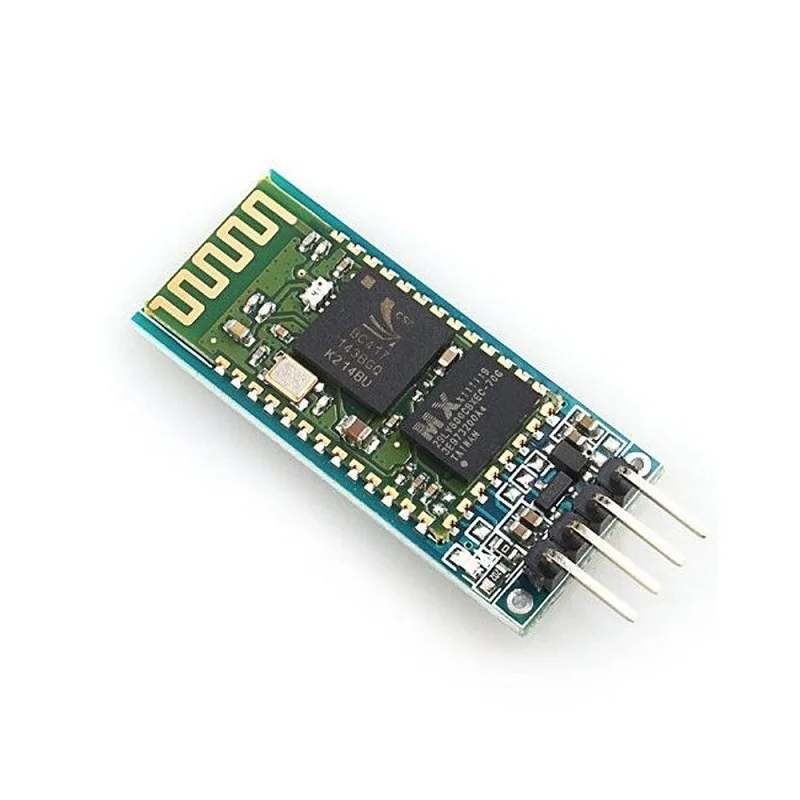
HC-06 6-Pin Bluetooth Module (V2.0, CSR Chip)

₹549.00 (Inclusive of all taxes)
Out of Stock

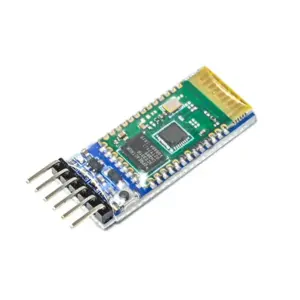
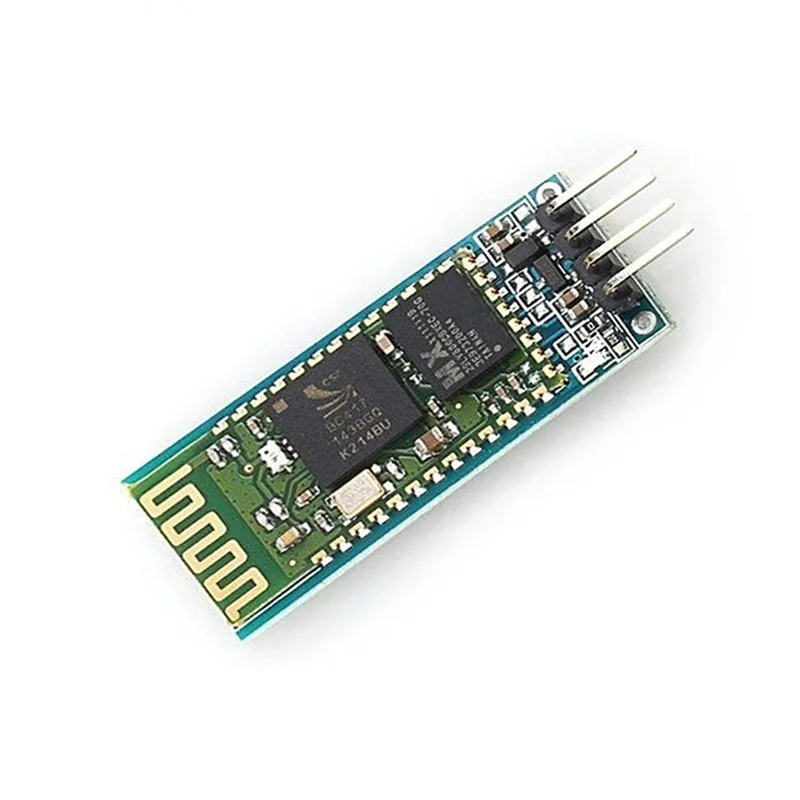
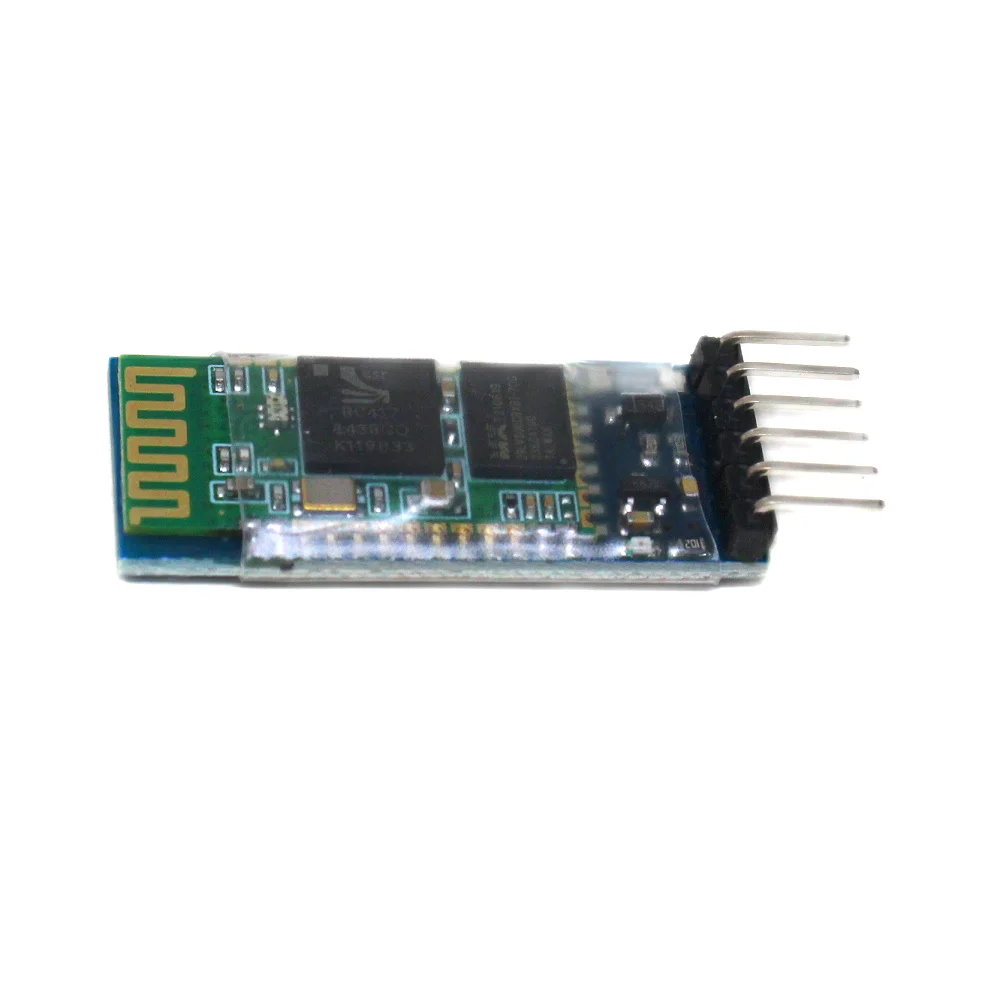
The HC-06 is a classic serial Bluetooth V2.0+EDR module based on a CSR chipset, providing a simple wireless serial port (UART) replacement for connecting microcontrollers like 51, AVR, PIC, ARM, and MSP430 to smartphones, PCs, or other Bluetooth devices.

Features

  • CSR-based Bluetooth V2.0+EDR module offering a transparent serial port profile for easy wireless UART communication.
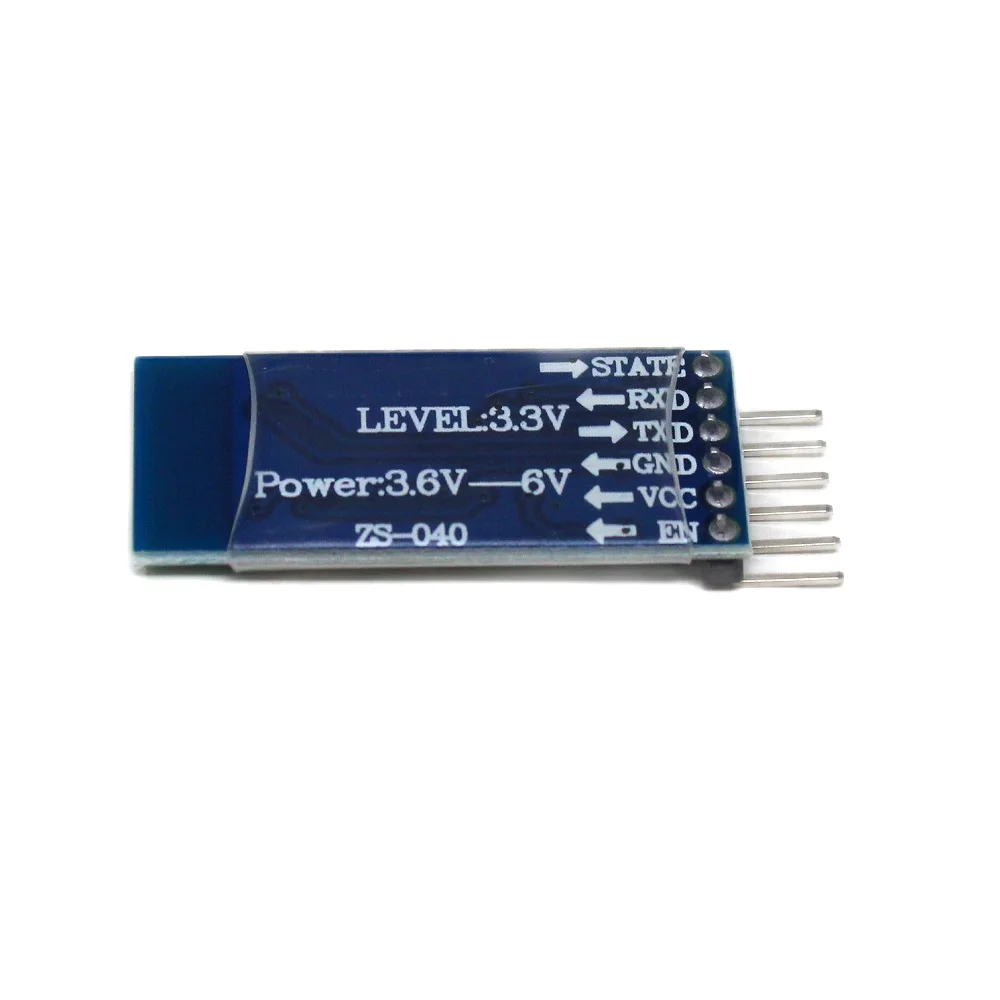
  • Operates on 3.3V logic with a wide 3.6V to 6V DC input range, compatible with both 3.3V and 5V microcontroller systems.
  • Features a default baud rate of 9600, configurable via AT commands for name, pairing PIN, and power-down settings.
  • Provides a practical 10-meter range with Class 2 (+4dBm) RF output power and -84dBm receiver sensitivity.
  • Includes a status LED pin for connection indication and consumes ~30mA unpaired and ~10mA when paired and communicating.

Out of stock

Description

The HC-06 Bluetooth Serial Port Profile (SPP) module is a foundational component for adding wireless serial communication to embedded projects. It utilizes a mainstream CSR Bluetooth chip implementing the Bluetooth 2.0+EDR specification, ensuring broad compatibility with legacy and modern host devices. The module operates as a slave-only device, waiting for connection from a master like a phone or PC, and features a built-in 3.3V LDO regulator for flexible power supply integration.

Once paired, the module enters a transparent data transmission mode, requiring no knowledge of Bluetooth protocols from the host microcontroller—data sent via its TXD pin is wirelessly forwarded, and received data appears on its RXD pin. It supports common 8N1 serial format and is configured via AT commands when unpaired. With its low operating current and simple 6-pin interface (VCC, GND, TXD, RXD, STATE, KEY), it is a staple for basic wireless telemetry, remote control, and data logging applications.

Key Features

  • Classic Bluetooth V2.0+EDR with Serial Port Profile (SPP) for transparent UART bridge functionality.
  • Integrated 3.3V LDO regulator accepts a wide 3.6V to 6V DC input, protecting the core Bluetooth radio.
  • Dedicated STATE pin outputs a logic signal indicating Bluetooth connection status for automated system control.
  • Configurable via AT commands for setting baud rate (default 9600), device name, pairing PIN, and power mode.
  • Compact form factor (43mm x 16.5mm x 7mm) with through-hole pins for easy integration into prototype boards.
  • Robust RF performance with GFSK modulation, +4dBm transmit power, and -84dBm receiver sensitivity for stable links.

Applications

  • Wireless serial communication for microcontroller projects (Arduino, Raspberry Pi, STM32).
  • Remote data logging from sensors to smartphones or PCs for meter reading systems.
  • Bluetooth-enabled GPS navigation data transfer and wireless peripherals.
  • Basic wireless control and telemetry for DIY robotics and home automation.
  • Educational tool for learning embedded Bluetooth communication and AT command sets.

Technical Specifications

Wireless ProtocolBluetooth V2.0+EDR, Serial Port Profile (SPP)
Chipset/SoCCSR Bluetooth IC
Frequency Range2.4GHz ISM Band
RF Transmit Power+4dBm (Class 2)
Receiver Sensitivity-84dBm @ 0.1% BER
Supply Voltage3.6V - 6V DC (3.3V LDO Regulated)
Operating Current~30mA (Unpaired), ~10mA (Paired & Communicating)
Data InterfaceUART (TXD, RXD), 8N1 Format
Control PinsSTATE (Connection Status), KEY (AT Mode, Slave Inactive)
Operating Temperature-20°C to +75°C
Dimensions43mm x 16.5mm x 7mm

Frequently Asked Questions

How do I configure the HC-06 module's baud rate or name?

Enter AT command mode before pairing by pulling the KEY pin high (to VCC) or ensuring the module is unpowered, then powering it while KEY is held high. Connect via a serial terminal at the default 9600 baud to send commands like AT+NAME=YourName to rename or AT+BAUDx to change baud rate (where x is a code, e.g., 4 for 9600). Remember to save settings and cycle power for changes to take effect. The KEY pin is typically inactive on slave-only modules like the HC-06.

Can I connect the HC-06 directly to a 5V Arduino like the Uno?

Yes, you can connect it directly. The module's logic pins (TXD, RXD) are 3.3V tolerant but can typically accept 5V signals from the Arduino's TX pin due to internal protection. For safety, a simple voltage divider or level shifter is recommended for the Arduino TX to module RXD line. Power the module via its VCC pin with a regulated 3.6V to 5V supply, as its onboard LDO will step it down to 3.3V for the radio. Always connect Arduino RX to module TX and Arduino TX to module RX.

What is the difference between the HC-05 and HC-06 Bluetooth modules?

The HC-05 can operate as both a master (initiates connections) and a slave, while the HC-06 is strictly a slave-only device, waiting for a master to connect. The HC-05 often includes a button for mode switching and supports more AT commands. The HC-06 is simpler, typically cheaper, and ideal for projects where the module only needs to accept incoming connections from a phone or PC. Both use similar CSR chips and offer Serial Port Profile functionality for transparent wireless UART communication.

Why is the status LED constantly blinking, and how do I know if it's connected?

A blinking LED indicates the HC-06 is powered on and in discoverable mode but not paired/connected. A solid LED confirms an active Bluetooth connection has been established. You can also use the dedicated STATE pin: it outputs a low logic level when disconnected and switches high when connected. This pin can be read by your microcontroller to automate processes based on connection status, eliminating the need to visually check the LED.

Package Includes

  • 1 x HC-06 6-Pin Bluetooth Module (Without Button)

Additional Information

Weight 0.005 kg
Dimensions 4.3 × 1.65 × 0.7 cm