SKU: SENS-3116
📋 GST Invoice Available

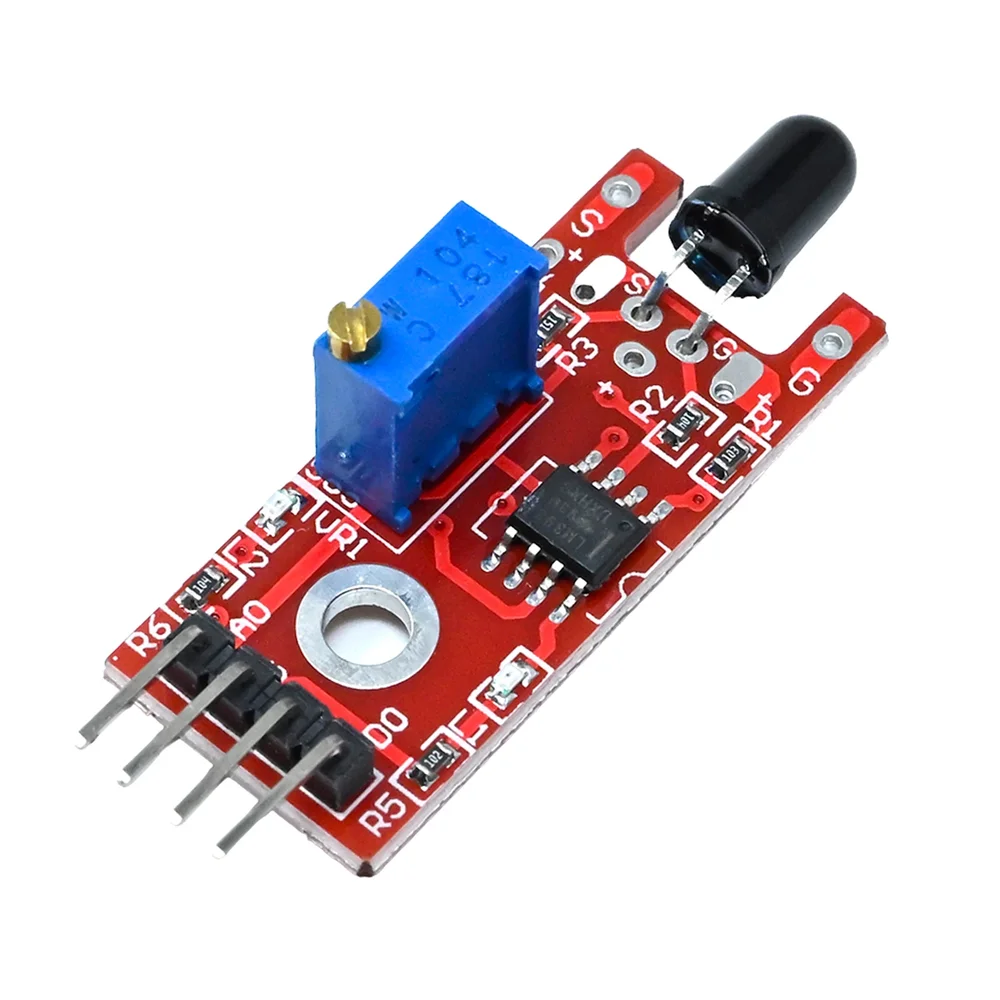
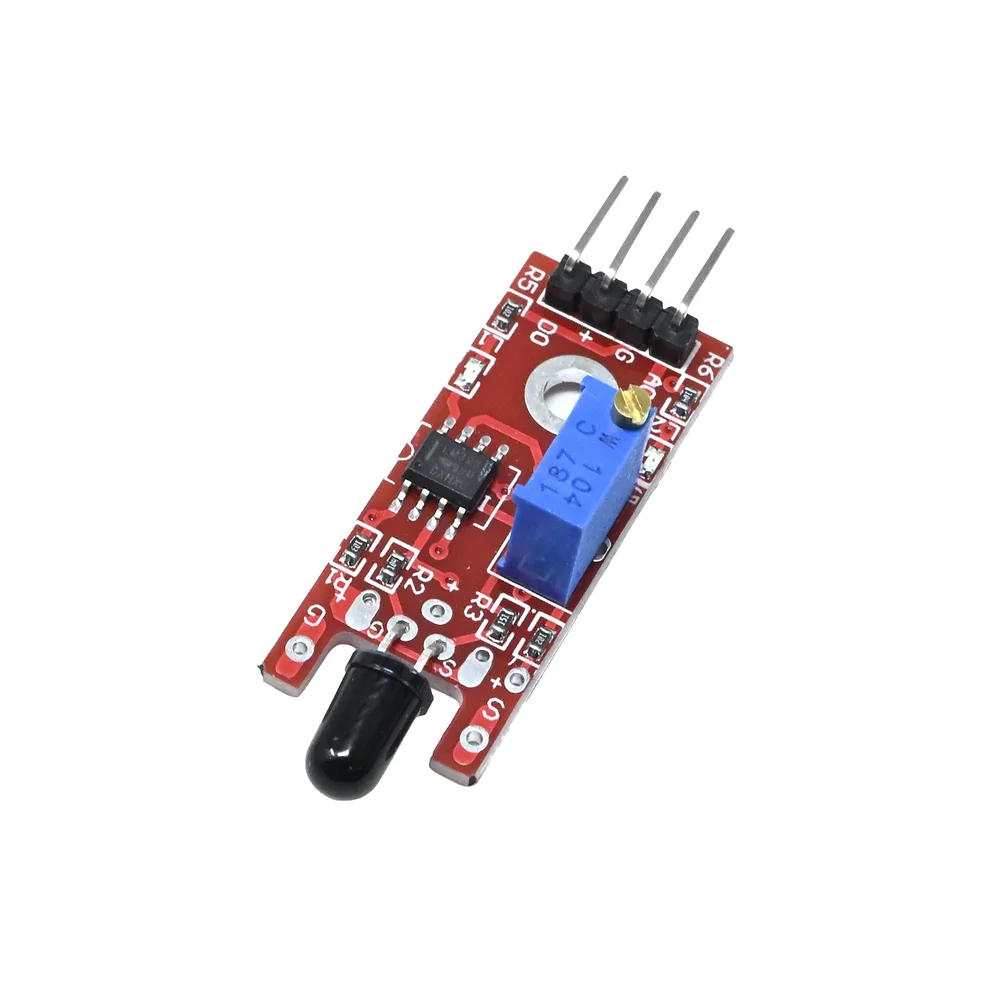
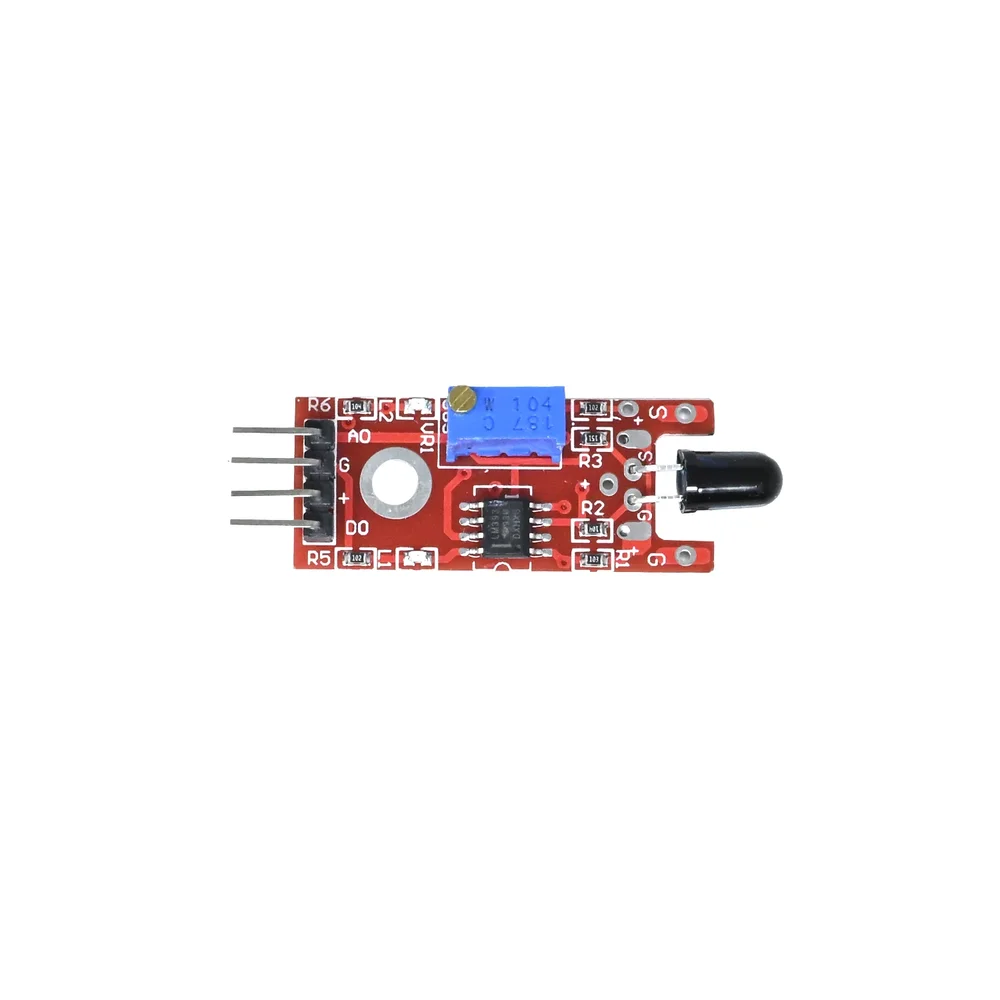
Generic Flame Sensor Module - LM393 Comparator, 760-1100nm IR, Digital/Analog Output

₹37.00 (Inclusive of all taxes)
Out of Stock

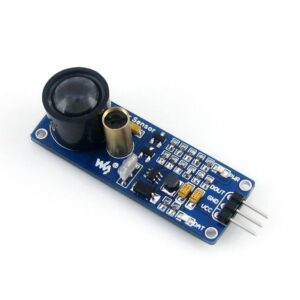
This flame sensor module integrates a high-sensitivity YG1006 NPN silicon phototransistor and an LM393 comparator to detect IR radiation in the 760-1100nm spectrum, compatible with 3.3V/5V systems like Arduino, Raspberry Pi, and ESP32 for fire detection applications.

Features

  • Detects flame & IR sources within 760nm to 1100nm wavelength spectrum.
  • Features adjustable sensitivity via onboard potentiometer for range tuning.
  • Provides both digital (TTL) and analog output signals for flexible interfacing.
  • Powered by 3.3V to 5V DC, compatible with most microcontroller development boards.
  • Offers a detection range up to 100 cm with a 60-degree cone angle.

Out of stock

Description

The Flame Sensor Module is engineered around the YG1006, a high-speed NPN silicon phototransistor with a black epoxy lens optimized for infrared sensitivity. This design allows it to reliably detect the specific spectral emission of flames, minimizing false triggers from ambient light. The integrated LM393 voltage comparator provides a stable digital output, triggering a logic-low signal when a flame is detected, while the analog output pin allows for intensity-based thresholding in more advanced monitoring systems.

Constructed for integration into safety and automation projects, the module operates across an industrial temperature range from -25°C to 85°C. Its compact PCB format includes power and signal status LEDs for immediate operational feedback. The module’s output is suitable for direct connection to digital I/O pins on platforms like Arduino, STM32, or industrial PLC digital input modules, forming a core component in automated fire detection and response systems.

Key Features

  • YG1006 High-Speed NPN Silicon Phototransistor for precise IR flame detection.
  • Onboard LM393 Comparator ensures stable, bounce-free digital signal output.
  • Dual Output Interface: TTL-level digital (D0) and analog (A0) for versatile system integration.
  • User-Adjustable Sensitivity potentiometer fine-tunes detection threshold and range.
  • Wide 3.3V to 5V DC operating voltage range for broad logic-level compatibility.
  • 60-Degree detection cone angle provides a balanced field of view.
  • Industrial-grade operating temperature range from -25°C to +85°C.
  • Clear status indication via separate Power and Digital Output signal LEDs.

Applications

  • Fire detection and alarm systems in DIY smart home setups.
  • Autonomous fire-fighting robot navigation and source identification.
  • Industrial safety monitoring for machinery and process areas.
  • Educational kits for demonstrating infrared sensing and comparator circuits.
  • IoT-based environmental monitoring stations for wildfire early warning.

Technical Specifications

Detection Spectrum760 nm to 1100 nm
Detection RangeUp to 100 cm (adjustable)
Detection AngleApprox. 60 degrees
Output SignalsDigital (TTL) & Analog
Onboard ICLM393 Voltage Comparator
Sensor ElementYG1006 NPN Silicon Phototransistor
Operating Voltage3.3 VDC to 5.0 VDC
Operating Temperature-25°C to +85°C
Module Dimensions (LxW)35.5 mm x 15.2 mm
Module Weight3 g

Frequently Asked Questions

What is the operating voltage range for this flame sensor module?

The module is designed to operate from 3.3 volts to 5.0 volts DC. This range makes it directly compatible with most 5V Arduino boards as well as 3.3V logic systems like the Raspberry Pi or ESP32, without requiring a level shifter.

How do the digital and analog outputs work?

The module provides two distinct outputs. The digital (D0) pin outputs a TTL-level signal, which goes LOW when a flame is detected above the set threshold. The analog (A0) pin outputs a variable voltage proportional to the infrared intensity, allowing for more nuanced flame presence or distance estimation in your code.

How do I adjust the sensor's sensitivity and detection range?

Sensitivity is adjusted via the blue potentiometer on the module. Turning it clockwise typically increases sensitivity, allowing detection of smaller or more distant flames. Calibrate it by observing the digital output LED or monitoring the analog value with a known flame source at your desired maximum range.

Can this sensor detect any light source, or only flames?

It is specifically sensitive to the infrared spectrum between 760nm and 1100nm, which is prominent in flame emissions. While it may trigger from other intense IR sources (like certain incandescent bulbs or sunlight), its black epoxy IR-filtered phototransistor (YG1006) is optimized to reduce response to visible light, improving flame specificity.

What is the purpose of the LM393 chip on the module?

The LM393 is a precision voltage comparator. It compares the analog signal from the YG1006 sensor against a reference voltage set by the sensitivity potentiometer. This provides a clean, debounced digital output signal, eliminating the need for software thresholding and ensuring a stable, immediate trigger for alarms or robotic responses.

Package Includes

  • 1 x Flame Sensor Module

Additional Information

Weight 0.003 kg
Dimensions 3.55 × 1.52 cm