SKU: IOWC-0719
📋 GST Invoice Available

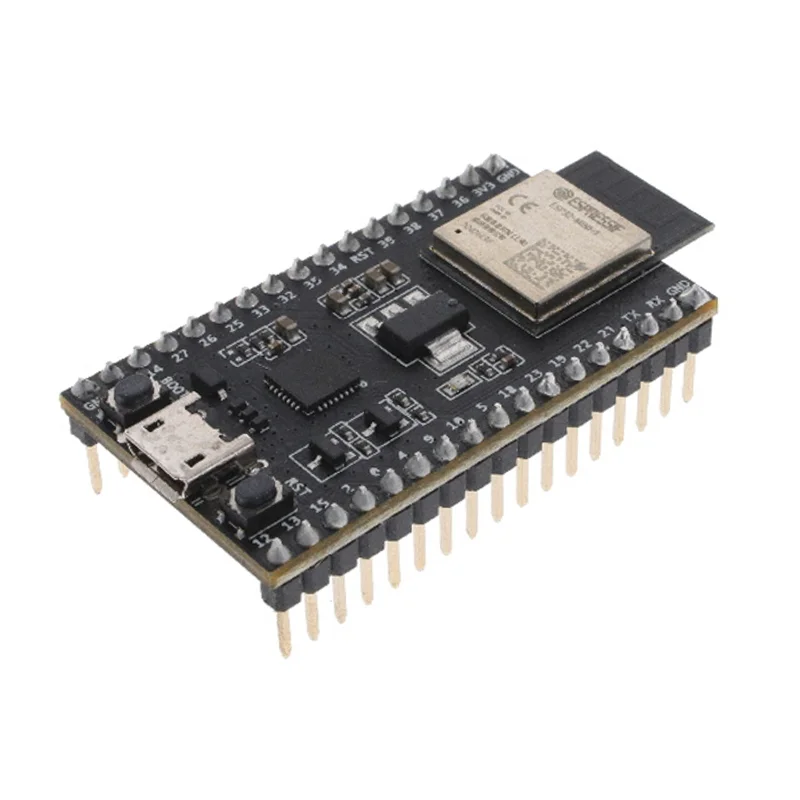
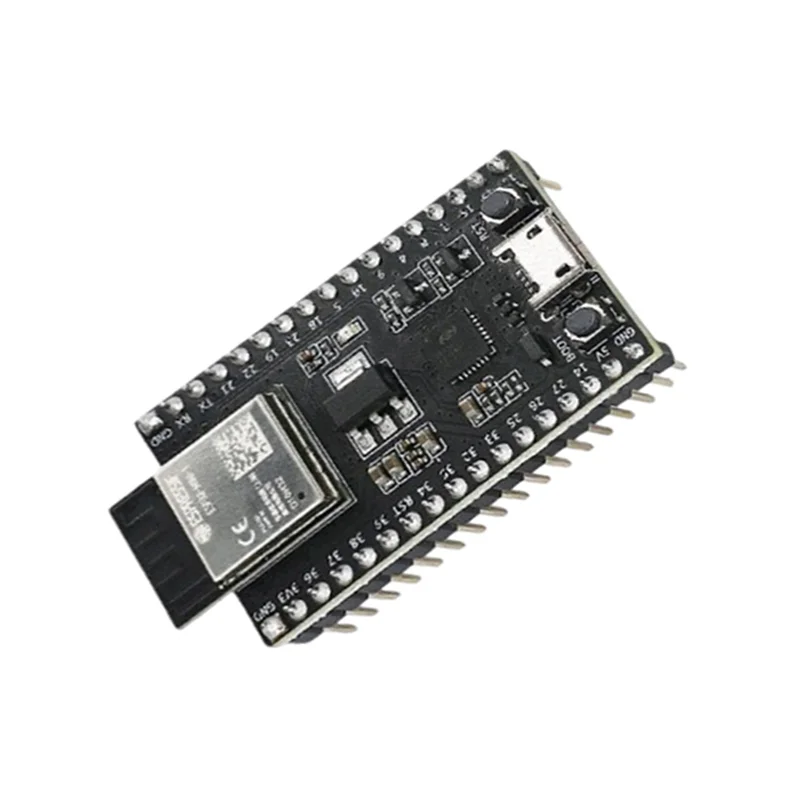
Espressif ESP32-DevKitM-1 Development Board

₹1,149.00 (Inclusive of all taxes)
Out of Stock

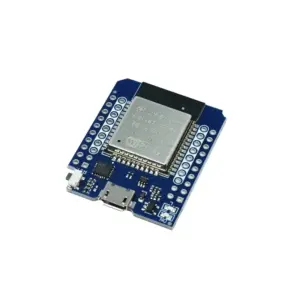
The Espressif ESP32-DevKitM-1 is a compact development board featuring the ESP32-MINI-1 module with integrated PCB antenna, dual-core Xtensa processor, and 4 MB flash. It provides a complete platform for developing IoT applications with Wi-Fi, Bluetooth 4.2, and extensive peripheral interfaces, powered via a single USB connection.

Features

  • Powered by the ESP32-MINI-1 module with integrated 2.4 GHz Wi-Fi (802.11 b/g/n) and Bluetooth 4.2 (BR/EDR/BLE).
  • Dual-core Xtensa LX6 processor running at 240 MHz for robust IoT application performance.
  • On-board PCB antenna simplifies RF design and saves space compared to external connectors.
  • Comprehensive I/O breakout with 34 GPIOs supporting SPI, UART, I2C, I2S, PWM, and SD/eMMC/SDIO host.
  • Integrated USB-UART bridge and 5V-to-3.3V power regulator for easy PC connectivity and power supply.

Out of stock

Description

The ESP32-DevKitM-1 is Espressif’s official development board built around the ESP32-MINI-1 system-in-package (SiP). It delivers the full ESP32 feature set—including dual-core processing, Wi-Fi, and Bluetooth—in a compact form factor with an on-board PCB antenna, making it ideal for space-constrained prototypes and final products. The board breaks out most I/O pins to standard headers for straightforward interfacing with sensors, displays, and other peripherals.

Power management is handled by an on-board regulator, accepting 5V from the micro-USB port to supply the 3.3V core voltage. The integrated USB-to-serial bridge facilitates rapid firmware uploads and serial debugging via the Arduino IDE, ESP-IDF, or MicroPython. With its 4 MB of embedded flash and 520 KB SRAM, the board supports complex wireless applications, from smart home automation to industrial sensor nodes.

Key Features

  • Official Espressif development board for the ESP32-MINI-1 SiP module.
  • Integrated PCB antenna for 2.4 GHz Wi-Fi and Bluetooth operation.
  • Single-chip USB-UART bridge supports data rates up to 3 Mbps for fast programming.
  • On-board 5V-to-3.3V LDO voltage regulator for stable power delivery.
  • All available GPIOs broken out to dual-row pin headers for easy prototyping.
  • Supports a wide range of development frameworks: Arduino Core, ESP-IDF, MicroPython.
  • Compact footprint designed for breadboard-friendly mounting and integration.
  • Includes 4 MB of flash memory within the ESP32-MINI-1 package for application storage.

Applications

  • Prototyping IoT devices for smart home automation and control.
  • Developing wireless sensor nodes for environmental monitoring (temperature, humidity).
  • Building connected consumer gadgets and wearable technology.
  • Creating industrial IoT (IIoT) gateways for data aggregation and wireless backhaul.
  • Educational platform for learning embedded systems, Wi-Fi, and Bluetooth connectivity.

Technical Specifications

Microcontroller/SoCESP32-MINI-1 (Xtensa Dual-Core LX6)
Clock Frequency240 MHz
Wireless ProtocolsWi-Fi 802.11 b/g/n, Bluetooth 4.2 BR/EDR/BLE
Frequency Range2.4 GHz
AntennaIntegrated PCB Antenna
Flash Memory4 MB
SRAM520 KB (16 KB in RTC)
ROM448 KB
GPIO & Interfaces34 GPIO, 4x SPI, 3x UART, 2x I2C, 2x I2S, RMT, LED PWM, SD/eMMC/SDIO Host
Supply Voltage5V via Micro-USB (regulated to 3.3V on-board)
Operating TemperatureNot Specified
DimensionsApprox. 11 x 5 x 3 cm (Shipping Dimensions)

Frequently Asked Questions

How do I program the ESP32-DevKitM-1 development board?

You can program the board using the Arduino IDE with the ESP32 board package installed, Espressif's official ESP-IDF framework, or MicroPython. Connect the board via the provided micro-USB cable to your computer. The on-board USB-UART bridge will be detected as a serial COM port. Select the correct board variant (e.g., ESP32 Dev Module) and COM port in your IDE to upload code. The board is powered through USB, so no external power supply is needed for development. (Word count: 50)

Does this board support an external antenna, or must I use the on-board one?

The ESP32-DevKitM-1 uses the ESP32-MINI-1 module, which has an integrated PCB antenna. The antenna connection is internal to the module's system-in-package (SiP) and is not user-accessible via a connector like IPEX or SMA. Therefore, you must use the provided on-board PCB antenna. This design simplifies your RF layout but does not allow for antenna upgrades or replacements without modifying the module itself. (Word count: 50)

What is the power supply requirement for the ESP32-DevKitM-1?

The board requires a 5V DC power supply, which is typically provided via the micro-USB port. An on-board voltage regulator converts this 5V input down to the 3.3V required by the ESP32-MINI-1 module. You should not apply 3.3V directly to the board's 5V input pins. During active Wi-Fi transmission, expect higher current draw; ensure your USB port or external 5V source can deliver at least 500mA for stable operation. (Word count: 50)

Can I use this board for battery-powered IoT projects?

Yes, the ESP32 chip supports multiple deep sleep modes with very low current consumption, making it suitable for battery-powered applications. However, the DevKitM-1 board includes power-regulating components that may draw a small quiescent current. For the lowest power consumption in a final product, you would design a custom PCB using the bare ESP32-MINI-1 module and implement precise power gating. For prototyping, you can still test sleep modes by measuring current at the 3.3V rail. (Word count: 50)

Package Includes

  • 1 x Espressif ESP32-DevKitM-1 Development Board

Additional Information

Weight 0.008 kg
Dimensions 11 × 5 × 3 cm