SKU: IOWC-0721
📋 GST Invoice Available

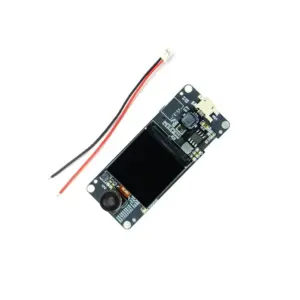
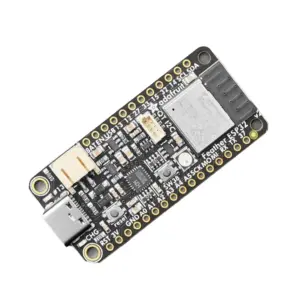
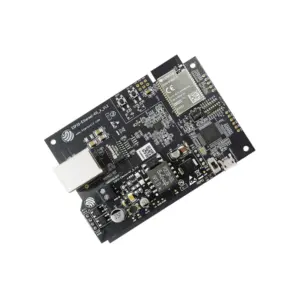
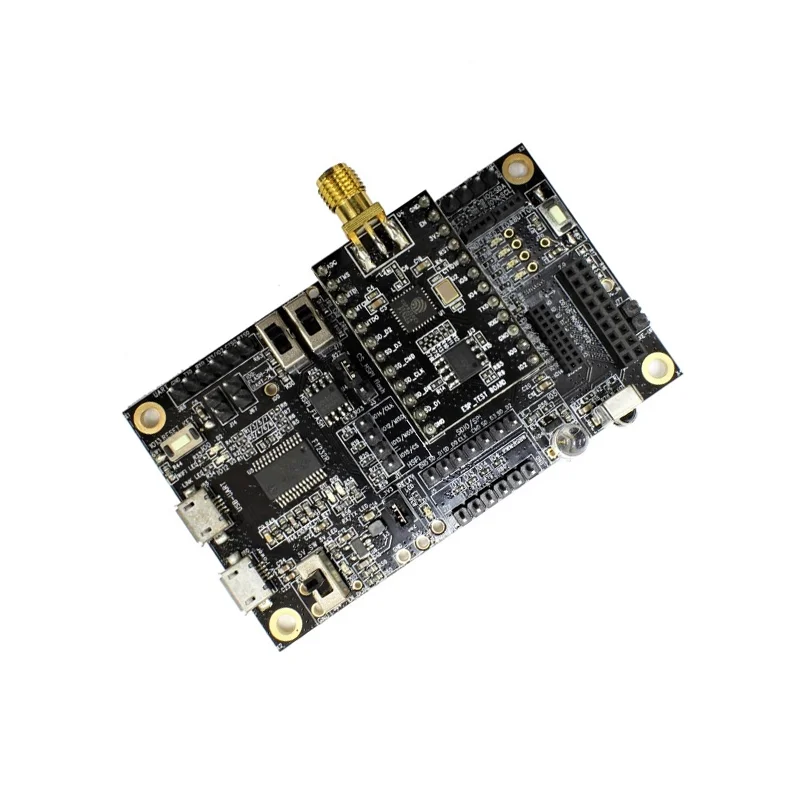
Espressif ESP-LAUNCHER ESP8266/ESP32 Development Board

₹1,859.00 (Inclusive of all taxes)
Out of Stock

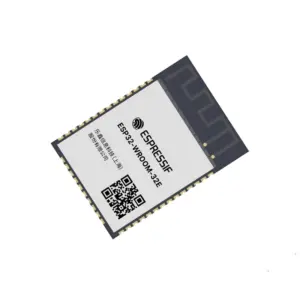
The Espressif ESP-LAUNCHER is a universal development board for rapid prototyping with ESP8266 and ESP32 Wi-Fi/BLE SoCs, featuring an integrated USB-to-serial converter and programmer for seamless firmware uploads via Arduino IDE or ESP-IDF.

Features

  • Universal compatibility with a wide range of Espressif ESP8266 and ESP32 wireless microcontroller modules.
  • Integrated USB-to-serial converter and onboard programmer simplifies firmware flashing and serial debugging.
  • Accelerates IoT application development, prototyping, and proof-of-concept projects.
  • Essential tool for developers of all skill levels working with Espressif’s ecosystem.

Out of stock

Description

The Espressif ESP-LAUNCHER Development Board serves as a foundational hardware platform for engineers and makers building IoT applications. It is engineered to host Espressif’s popular ESP8266 and ESP32 series SoCs, providing a stable base with essential power regulation and programming circuitry. The integrated USB-to-serial bridge allows for direct connection to a PC, enabling straightforward code uploads and real-time serial monitoring without external adapters.

This board is designed to streamline the development workflow, from initial breadboard prototyping to more integrated designs. By handling the core power and programming interfaces, it allows developers to focus on application-specific circuitry and firmware development using frameworks like Arduino Core for ESP8266/ESP32 or the native ESP-IDF. Its versatility makes it an indispensable tool for validating wireless connectivity, sensor integration, and cloud communication in smart home, industrial monitoring, and wearable tech projects.

Key Features

  • Universal development platform supporting both ESP8266 and ESP32 family modules.
  • Onboard USB-to-UART bridge (e.g., CP2102 or CH340) for programming and serial communication.
  • Integrated programmer circuitry for one-click firmware flashing.
  • Provides regulated 3.3V power to the target ESP module.
  • Breakout headers for accessing module GPIOs, power, and ground pins.
  • Designed for rapid prototyping and proof-of-concept development.
  • Compact form factor suitable for benchtop testing and integration.

Applications

  • Rapid prototyping of Wi-Fi and Bluetooth-enabled IoT devices.
  • Firmware development and testing for ESP8266/ESP32-based projects.
  • Educational tool for learning embedded systems and wireless connectivity.
  • Proof-of-concept platform for smart home automation, sensor nodes, and data loggers.

Technical Specifications

Compatible MicrocontrollersESP8266 series, ESP32 series
Primary FunctionDevelopment Board / Programmer Base
InterfaceUSB Type-C / Micro-B (varies)
Programming InterfaceIntegrated USB-to-Serial Converter
Supply Voltage5V via USB
Regulated Output3.3V for target module
Dimensions (Shipping)11 x 9 x 3 cm
Weight (Shipping)0.039 kg

Frequently Asked Questions

Which ESP modules are compatible with the ESP-LAUNCHER board?

The ESP-LAUNCHER is designed as a universal base for a wide range of Espressif's wireless modules. It is directly compatible with many popular ESP8266 (e.g., ESP-12E/F) and ESP32 (e.g., ESP32-WROOM, ESP32-S) series modules that use a standard pinout. You must check your specific module's pin alignment and voltage requirements before inserting it into the board's socket or headers.

How do I upload firmware to an ESP module using this board?

Connect the board to your computer via its USB port. The integrated USB-to-serial converter will create a COM port. In your development environment (Arduino IDE, ESP-IDF, PlatformIO), select this COM port and the correct board model (e.g., NodeMCU for ESP8266 or ESP32 Dev Module). Ensure the module is powered via the board. Place the module into bootloader mode (often by holding GPIO0 low during reset), then compile and upload your code. The onboard circuitry typically handles the necessary boot mode control.

What is the power supply specification for the ESP-LAUNCHER?

The board is powered solely through its USB connection, which provides 5V. An onboard voltage regulator steps this down to a stable 3.3V supply, which is then delivered to the socket/pins for the target ESP module. Do not apply external voltage to the 3.3V pins, as this could damage the regulator. Always verify your specific ESP module's operating voltage is 3.3V before use.

Package Includes

  • 1 x Espressif ESP-LAUNCHER Development Board

Additional Information

Weight 0.039 kg
Dimensions 9 × 11 × 3 cm