ESP8266 Burning Fixture Tool Downloader Programming Board
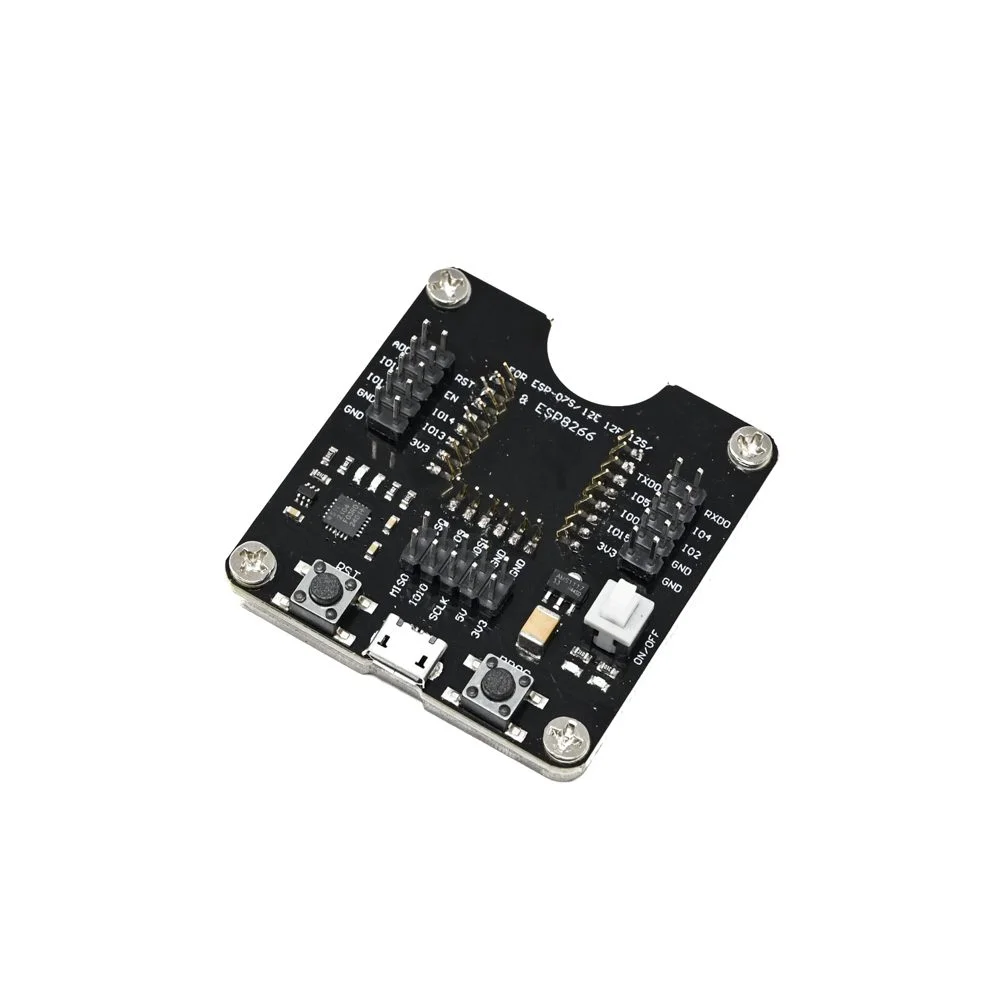
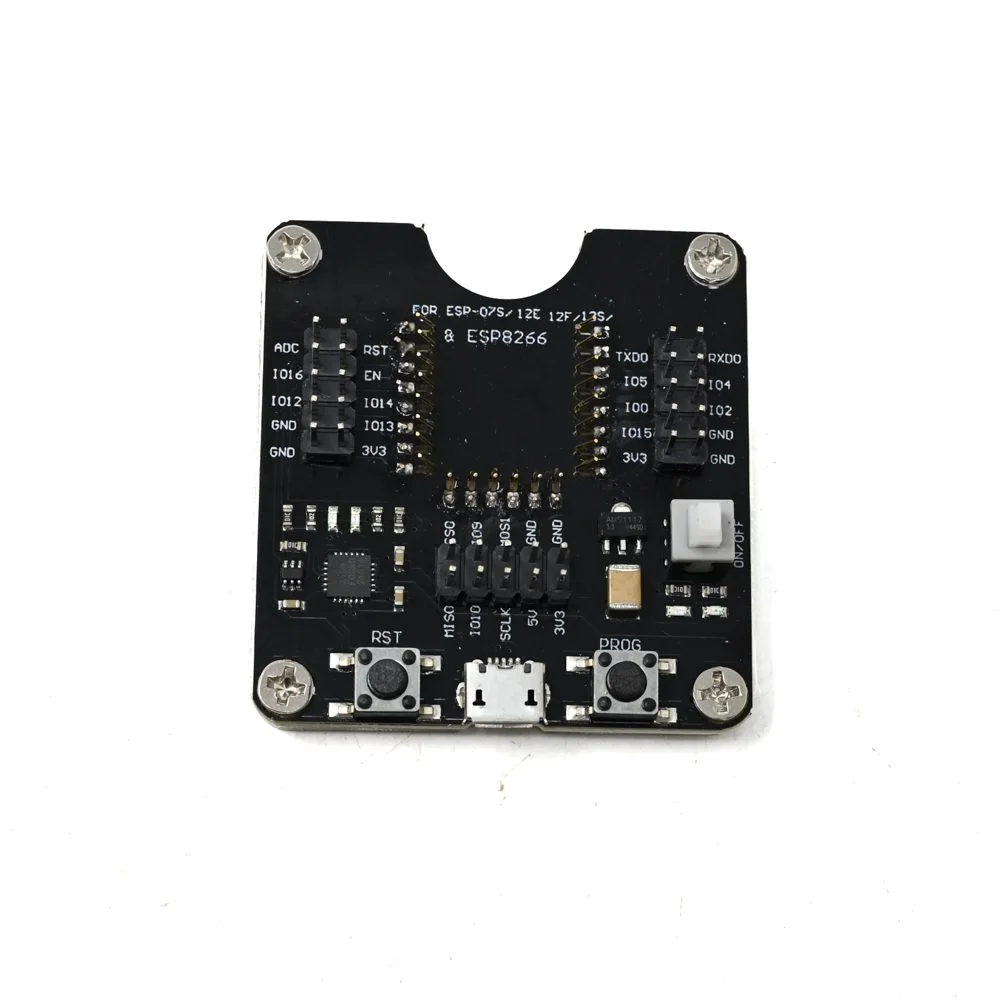
This ESP8266 programming fixture board integrates a CP2104 USB-to-UART bridge and AMS1117 3.3V regulator for rapid firmware flashing and testing of ESP-01S, ESP-07S, ESP-12E, and ESP-12S modules via a ZIF socket, ideal for development and small-batch production.
Features
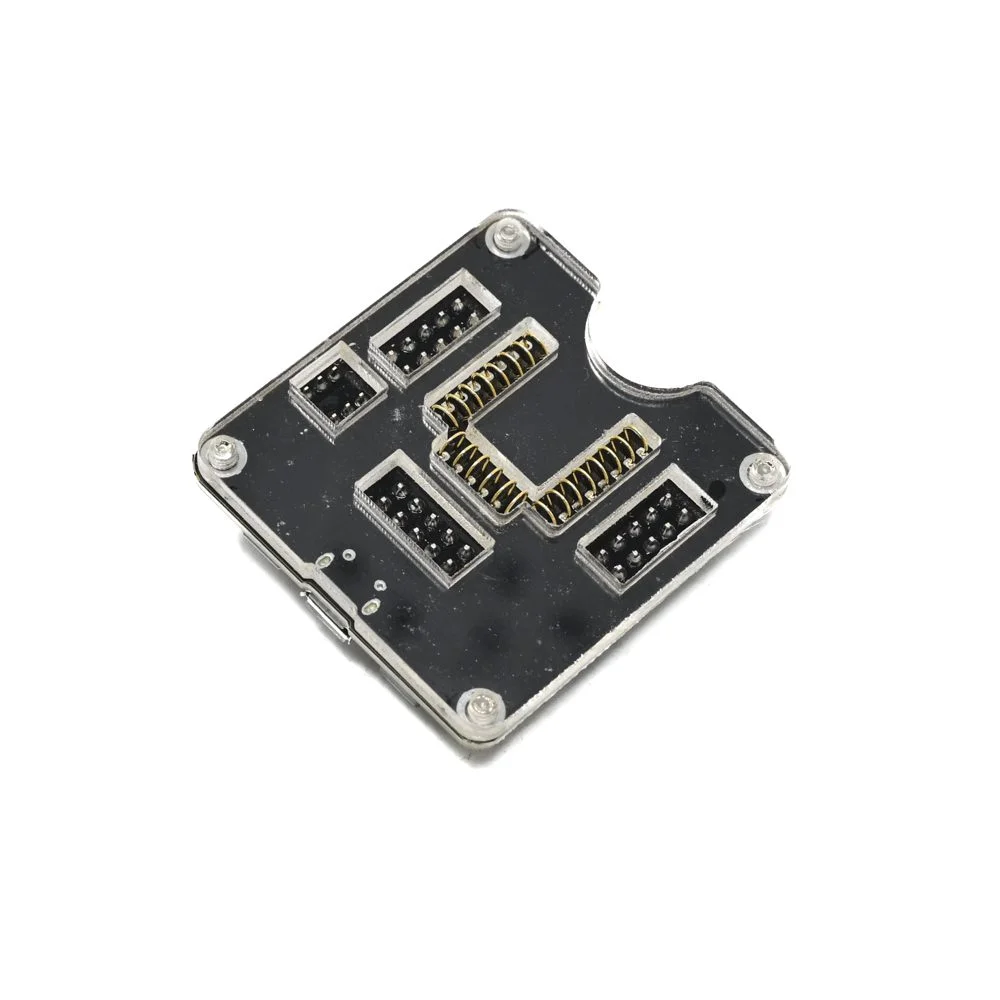
- ZIF socket fixture enables quick, solder-free insertion and removal of ESP8266 modules for efficient batch programming and testing.
- Integrated CP2104 USB-to-UART bridge and AMS1117 3.3V regulator provides stable power and direct USB-to-serial communication for firmware downloads.
- All GPIO pins are broken out to headers, allowing the board to double as a minimal development system for peripheral testing and debugging.
- Dedicated LED indicators for power, programming status, and serial communication provide clear visual feedback during operation.
- Compatible with popular ESP8266 module footprints including ESP-01S, ESP-07S, ESP-12E, ESP-12F, and ESP-12S for versatile application.
Out of stock
The ESP8266 Burning Fixture Tool is a dedicated programming and testing board designed to streamline the firmware development and production workflow for ESP8266-based IoT projects. It eliminates the need for manual soldering by utilizing a Zero Insertion Force (ZIF) socket, allowing for rapid cycling of ESP-07S, ESP-12S, and other compatible modules. The integrated CP2104 USB-to-UART bridge handles serial communication, while the onboard AMS1117 voltage regulator ensures a clean 3.3V supply, creating a complete and reliable programming environment directly from a USB port.
Beyond simple firmware burning, this fixture serves as a functional development platform. All module GPIOs are accessible via pin headers, enabling direct connection to sensors, displays, or relays for functional testing and debugging. The combination of status LEDs for power, programming, and serial data provides immediate operational feedback, making it an essential tool for developers, makers, and small-scale manufacturers looking to accelerate prototyping and ensure module integrity before deployment.
Additional Information
| Weight | 0.029 kg |
|---|---|
| Dimensions | 5 × 4.7 cm |