SKU: IOWC-1403
📋 GST Invoice Available

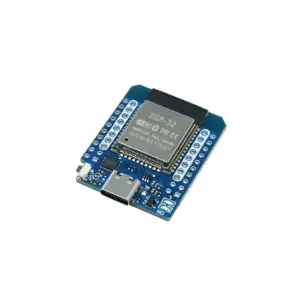
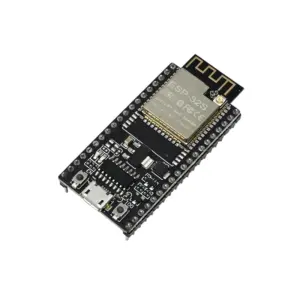
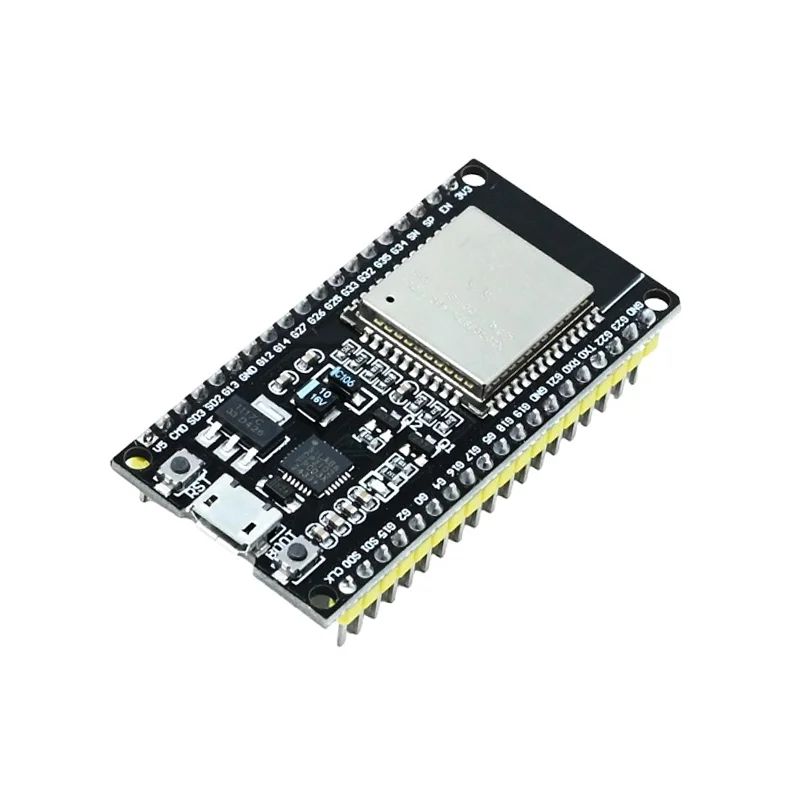
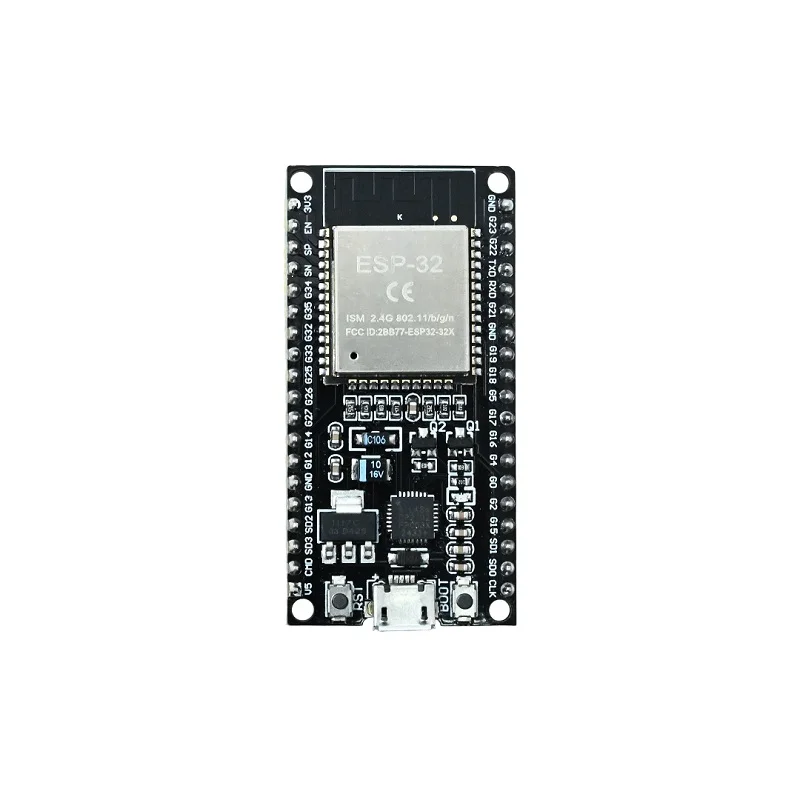
ESP32-WROOM-32 38-Pin Development Board

₹389.00 (Inclusive of all taxes)
Out of Stock

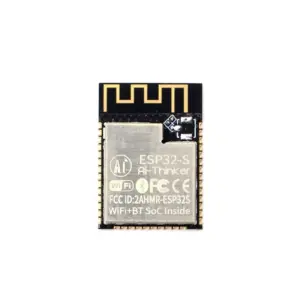
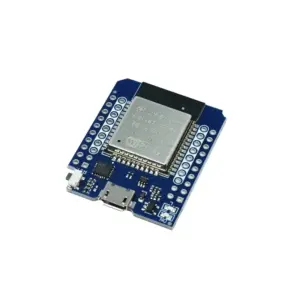
The ESP32-WROOM-32 38-pin development board is a dual-core microcontroller platform integrating 2.4GHz Wi-Fi and Bluetooth, designed for ultra-low-power IoT applications and compatible with Arduino IDE, ESP-IDF, and MicroPython.

Features

  • Dual-core ESP32 microcontroller with integrated 2.4GHz Wi-Fi and Bluetooth for robust wireless connectivity.
  • Ultra-low power consumption enabled by 40nm process technology, ideal for battery-powered IoT nodes.
  • Supports AP, STA, and AP+STA network modes with full LWIP and FreeRTOS protocol stacks.
  • 38-pin GPIO breakout provides extensive peripheral interfacing for sensors, displays, and actuators.
  • Onboard PCB antenna and pre-integrated RF components simplify design and reduce PCB footprint.

Out of stock

Description

The ESP32-WROOM-32 38-pin development board is a feature-rich platform built around Espressif’s dual-core Xtensa LX6 microcontroller. It integrates a complete 2.4GHz RF subsystem, including antenna switches, balun, power amplifier, and filter management, delivering a compact solution for wireless IoT prototyping and deployment.

Engineered with TSMC’s 40nm ultra-low-power technology, the board offers excellent power dissipation and RF performance, supporting deep sleep modes for extended battery life. Its comprehensive peripheral set and support for Arduino, ESP-IDF, and Lua scripting enable rapid development of connected applications, from smart home devices to industrial telemetry systems.

Key Features

  • High-performance dual-core processor with integrated Wi-Fi and Bluetooth connectivity.
  • Ultra-low-power design ideal for battery-operated and energy-harvesting IoT applications.
  • Compact form factor with onboard PCB antenna for easy embedding into end products.
  • Full protocol support including LWIP (TCP/IP stack) and FreeRTOS for real-time operation.
  • Flexible wireless modes: Access Point (AP), Station (STA), and concurrent AP+STA.
  • Extensive development ecosystem compatibility with Arduino IDE, ESP-IDF, and MicroPython.
  • Robust and scalable architecture suitable for secure and reliable commercial deployments.

Applications

  • Smart home automation hubs and sensor nodes.
  • Industrial IoT (IIoT) for wireless monitoring and control.
  • Wearable technology and personal area network devices.
  • Prototyping and educational platforms for embedded systems.
  • Wireless data gateways bridging serial or sensor data to the cloud.

Technical Specifications

Microcontroller/SoCESP32 Dual-Core (Xtensa LX6)
Wireless Protocols2.4GHz Wi-Fi 802.11 b/g/n, Bluetooth 4.2 BR/EDR and BLE
Frequency Range2.4GHz ISM Band
RF Transmit PowerUp to +20dBm (Chipset Typical)
Supply Voltage3.3V
Operating CurrentVaries with mode; Ultra-low power sleep modes supported
Interfaces38-pin GPIO (UART, SPI, I2C, I2S, ADC, DAC, PWM)
Antenna ConnectorIntegrated PCB Antenna
Operating Temperature-40°C to +85°C (Typical Chip Range)
DimensionsApprox. 55mm x 28mm (Board Specific)

Frequently Asked Questions

How do I program this ESP32-WROOM-32 development board?

You can program the board using the Arduino IDE with the ESP32 board package installed, Espressif's official ESP-IDF framework for advanced features, or MicroPython for scripting. Connect via a micro-USB cable, select the correct COM port and board model (e.g., ESP32 Dev Module), and upload your code. The 38 pins provide full access to GPIOs for peripherals.

What is the power supply requirement for this board?

The board requires a stable 3.3V DC power supply, which can be provided via the onboard micro-USB connector or through the 3.3V and GND pins. Ensure your power source can deliver sufficient current for active RF transmission, which can peak at several hundred milliamps. For battery operation, leverage the chip's deep sleep modes to achieve microamp-level current consumption.

Does this board support both Wi-Fi client and access point modes?

Yes, the ESP32-WROOM-32 supports all three standard network modes: Station (STA) to connect to an existing Wi-Fi network, Access Point (AP) to create its own network, and a concurrent AP+STA mode. This is configured within your firmware using the ESP-IDF or Arduino WiFi libraries, enabling flexible deployment as a sensor node, gateway, or standalone hub.

Can I connect an external antenna to improve the Wi-Fi range?

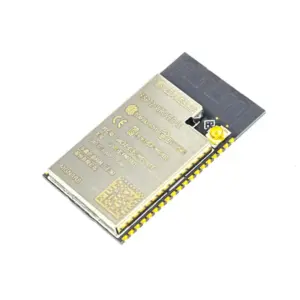
This specific 38-pin variant typically uses the integrated PCB antenna. For models with an IPEX connector, you can attach an external 2.4GHz antenna via a u.FL to SMA pigtail. Ensure impedance matching (50 ohms) and consider antenna gain. For the PCB antenna version, range is fixed but sufficient for most indoor applications up to tens of meters.

Package Includes

  • 1 x ESP32-WROOM-32 38-Pin Development Board

Additional Information

Weight 0.012 kg
Dimensions 10 × 6 × 2 cm