SKU: IOWC-1388
📋 GST Invoice Available

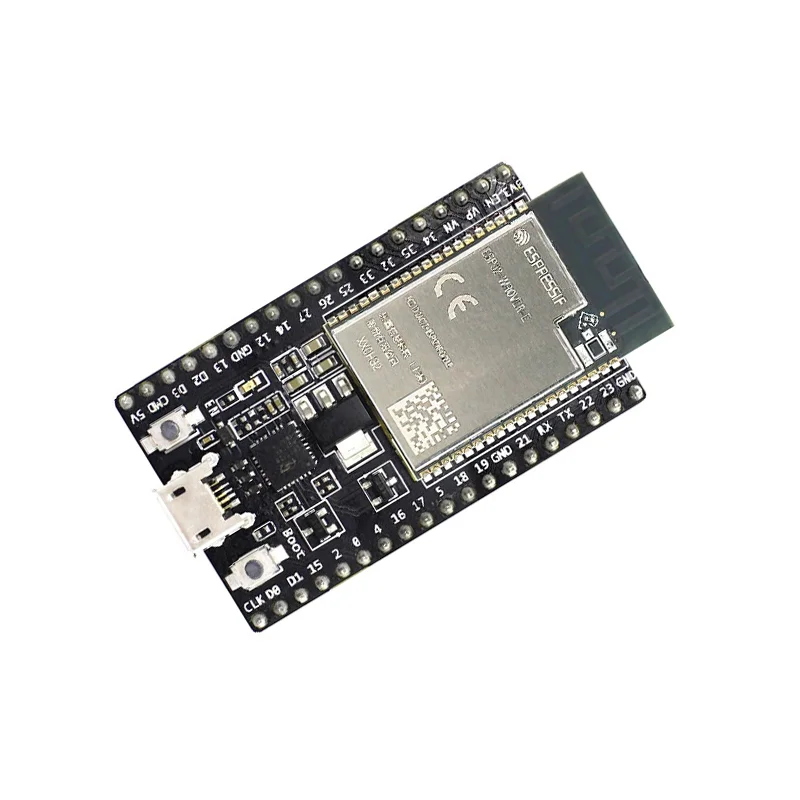
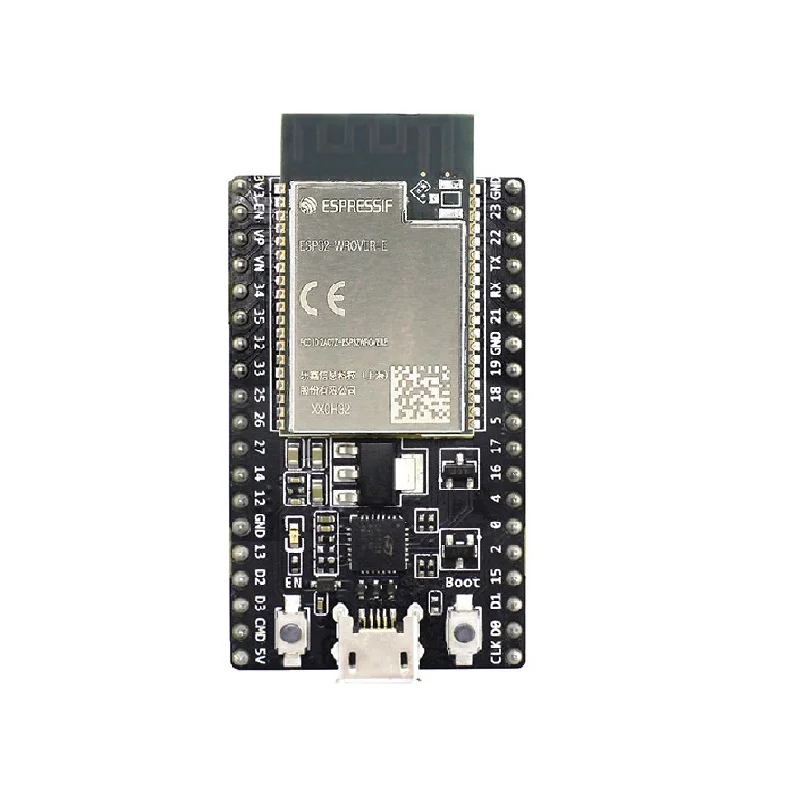
ESP32-DEVKITC Core Board w/ ESP32-WROOM-VE Module

₹2,038.00 (Inclusive of all taxes)
Out of Stock

The ESP32-DEVKITC Core Board integrates the ESP32-WROOM-VE module, providing a robust platform for IoT development with dual-core processing, Wi-Fi, and Bluetooth 4.2 connectivity, fully programmable via the Arduino IDE or ESP-IDF.

Features

  • Powered by the ESP32-WROOM-VE module with dual-core Xtensa LX6 processor for high-performance IoT applications.
  • Integrated 2.4 GHz Wi-Fi 802.11 b/g/n and Bluetooth 4.2 (BR/EDR/BLE) for versatile wireless connectivity.
  • Full Arduino IDE compatibility, leveraging a vast library ecosystem for rapid prototyping and firmware development.
  • Comprehensive peripheral set including GPIO, ADC, DAC, UART, I2C, SPI, and capacitive touch sensors.
  • Compact, breadboard-friendly form factor ideal for embedded systems, sensor networks, and DIY electronics projects.

Out of stock

Description

The ESP32-DEVKITC Core Board is a foundational development platform centered on the Espressif ESP32-WROOM-VE system-on-chip module. This board delivers a powerful combination of a 240 MHz dual-core processor, rich memory resources, and integrated 2.4 GHz RF for Wi-Fi and Bluetooth Classic/BLE communication. It is engineered for low-power operation with multiple sleep modes, making it suitable for battery-powered IoT edge nodes.

Designed for rapid hardware iteration, the board exposes all critical ESP32 pins via standard headers, supporting a wide range of sensors, displays, and actuators. Its robust power management accepts a 5V USB or 3.3V external supply, while the onboard USB-to-serial chip simplifies flashing and serial debugging. This board serves as an essential tool for developers building connected devices for smart home automation, industrial telemetry, wearable tech, and wireless mesh networks.

Key Features

  • Core development board for the ESP32-WROOM-VE module with pre-flashed AT command firmware.
  • Dual-core Xtensa LX6 microprocessor up to 240 MHz with 520 KB SRAM for demanding computational tasks.
  • Integrated 2.4 GHz Wi-Fi (802.11 b/g/n) and Bluetooth 4.2 with support for both Classic and Low Energy (BLE) profiles.
  • Extensive I/O capability: 36+ GPIO pins, 12-bit ADC, 8-bit DAC, UART, I2C, SPI, I2S, PWM, and capacitive touch.
  • Low-power design featuring Deep-sleep and Light-sleep modes for battery-operated sensor applications.
  • Convenient USB-C (or micro-USB) programming and power supply via onboard CP2102 (or similar) USB-to-UART bridge.
  • Open-source hardware design with full schematics and layout files available for customization.
  • Breadboard-compatible pin header layout for easy integration with prototyping shields and sensor modules.

Applications

  • Smart home automation hubs and wireless sensor nodes (temperature, humidity, motion).
  • IoT prototyping for industrial monitoring, data logging, and wireless control systems.
  • Bluetooth Low Energy (BLE) beacons, proximity sensing, and wearable device development.
  • Wi-Fi enabled gadgets, web servers, and MQTT clients for cloud connectivity.
  • Educational platforms for learning embedded systems, wireless networking, and Arduino programming.

Technical Specifications

Microcontroller / SoCESP32-WROOM-VE (Dual-core Xtensa LX6 @ up to 240 MHz)
Wireless ProtocolsWi-Fi 802.11 b/g/n (2.4 GHz), Bluetooth 4.2 BR/EDR/BLE
Operating Voltage3.3V (Onboard regulator accepts 5V USB input)
Digital I/O Pins36+ (Multiplexed with analog and communication interfaces)
Analog Input12-bit SAR ADC up to 18 channels
Communication InterfacesUART, I2C, SPI, I2S, SDIO, CAN (via software)
Programming EnvironmentArduino IDE, ESP-IDF, MicroPython, PlatformIO
AntennaIntegrated PCB antenna on WROOM-VE module
Dimensions (approx.)10 x 4 cm (Based on shipping data)

Frequently Asked Questions

How do I program the ESP32-DEVKITC board using the Arduino IDE?

First, install the ESP32 board support via the Arduino Boards Manager using the ESP32 GitHub URL. Connect the board via USB, select 'ESP32 Dev Module' as your board, choose the correct COM port, and set the upload speed to 921600 baud. You can then write, compile, and upload sketches that utilize the chip's Wi-Fi, Bluetooth, and GPIO libraries. The onboard USB-to-serial chip handles the flashing process automatically.

What is the power supply requirement and typical operating current?

The board is typically powered via its USB-C or micro-USB port at 5V, which is regulated down to 3.3V for the ESP32 core. During active Wi-Fi transmission, current draw can peak around 240mA. For battery operation, you can leverage the chip's deep sleep mode, which reduces consumption to approximately 10µA, significantly extending battery life in sensor applications. An external 3.3V supply can also be connected to the appropriate pin.

Can I use both Wi-Fi and Bluetooth simultaneously on this ESP32 board?

Yes, the ESP32 supports concurrent Wi-Fi and Bluetooth operation, managed by its dual-core processor and real-time OS. One core can handle network stack tasks (like maintaining a Wi-Fi connection and MQTT client) while the other manages BLE advertising or GATT server duties. However, shared use of the 2.4 GHz radio requires careful firmware design to avoid interference, often managed through Espressif's ESP-IDF or Arduino core libraries.

Package Includes

  • 1 x Black ESP32-DEVKITC Core Board with ESP32-WROOM-VE Module

Additional Information

Weight 0.01 kg
Dimensions 4 × 10 × 2 cm