SKU: IOWC-1838
📋 GST Invoice Available

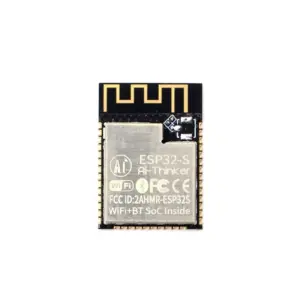
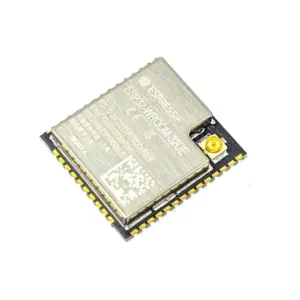
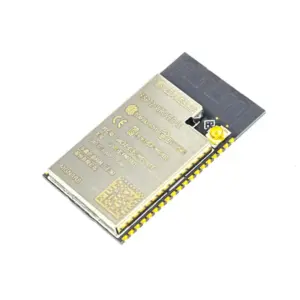
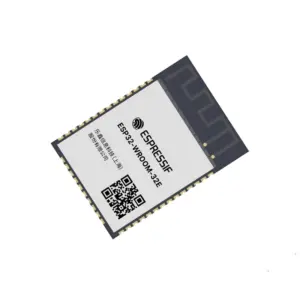
ESP-WROOM-32 Wi-Fi Module Development Board (No BLE)

₹349.00 (Inclusive of all taxes)
Out of Stock

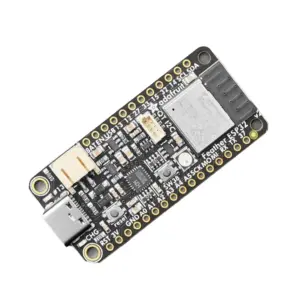
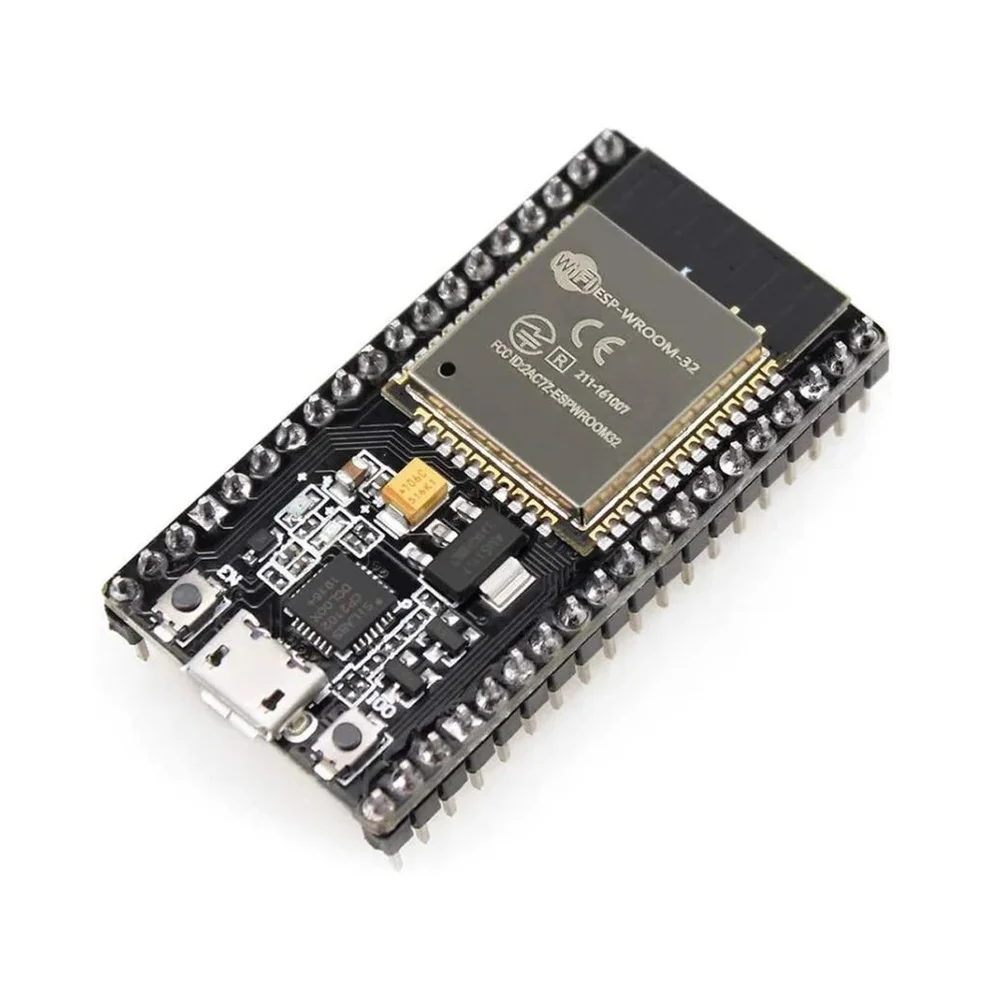
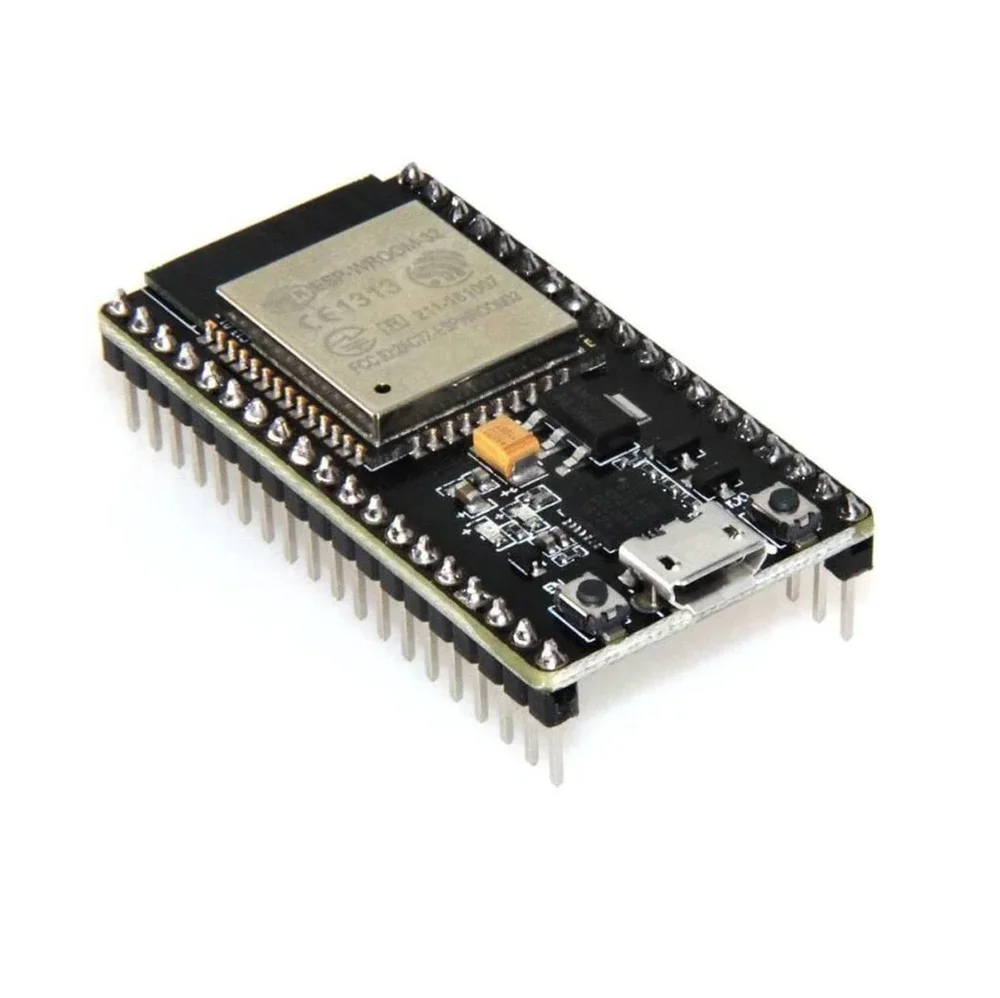
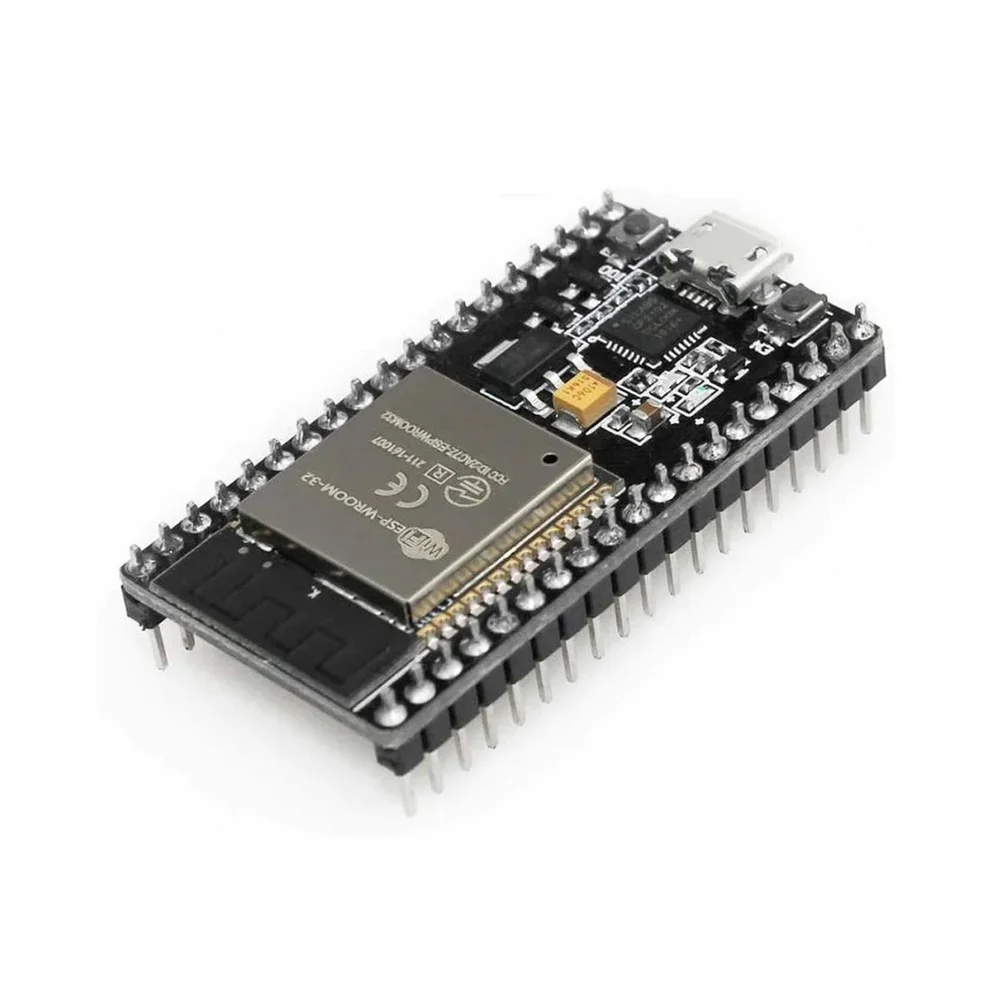
This ESP32 development board is a minimal system built around the ESP-WROOM-32 Wi-Fi module, featuring a CP2102 USB-UART bridge, boot/reset buttons, and an LDO regulator for easy breadboard prototyping and IoT sensor hub applications.

Features

  • Core ESP-WROOM-32 module with dual-core Xtensa LX6 processor and 4MB flash memory for robust IoT processing.
  • Integrated CP2102 USB-to-UART bridge simplifies firmware flashing and serial communication via micro-USB.
  • Supports AP, STA, and AP+STA Wi-Fi modes with full LWIP and FreeRTOS for networked applications.
  • Low operating voltage range (2.3V to 3.6V) and 80mA typical current enable power-sensitive designs.
  • Compact 5 x 2.5 x 1.5mm footprint with all critical GPIOs broken out for easy embedding into final products.

Out of stock

Description

This development board provides a streamlined hardware platform centered on the ESP-WROOM-32 module, a powerful Wi-Fi and Bluetooth SoC. It integrates essential support circuitry including a voltage regulator, USB-serial interface, and tactile buttons, creating a ready-to-program foundation for IoT prototypes. The board exposes all key GPIO pins, allowing direct connection to sensors, actuators, and peripherals.

Powered by Espressif’s dual-core Tensilica LX6 processor clockable up to 240 MHz, it handles complex tasks like video streaming, mesh networking, and real-time control. The module’s integrated 4MB flash provides ample storage for application code and file systems. Its design emphasizes low-power operation and a minimal bill of materials, making it suitable for transitioning from proof-of-concept to volume production.

Key Features

  • Minimal system design based on the ESP-WROOM-32 module for reduced development complexity.
  • Onboard CP2102 USB-UART bridge enables direct programming and debugging via a standard micro-USB cable.
  • Dedicated boot and reset buttons facilitate easy entry into firmware flashing mode.
  • Comprehensive GPIO breakout provides access to all essential signals for peripheral interfacing.
  • Built-in LDO regulator accepts a wide 2.3V to 3.6V input, simplifying power supply design.
  • Supports Lua programming and is fully compatible with Arduino IDE, ESP-IDF, and MicroPython frameworks.
  • Robust RF performance with support for 802.11 b/g/n protocols at up to 54 Mbps data rates.
  • Compact form factor is ideal for embedding into space-constrained final products or breadboard prototyping.

Applications

  • Universal low-power IoT sensor hubs and data loggers.
  • Home automation and smart device controllers.
  • Industrial wireless control and monitoring systems.
  • Wi-Fi mesh network nodes and repeaters.
  • Basic video streaming applications from camera peripherals.

Technical Specifications

Microcontroller/SoCEspressif ESP32 (Dual-core Xtensa LX6)
Wireless ProtocolsWi-Fi 802.11 b/g/n (No BLE)
Flash Memory4 MB
Operating Voltage2.3 VDC - 3.6 VDC
Operating Current80 mA (Typical)
Clock Frequency80 MHz - 240 MHz
Data RateUp to 54 Mbps
InterfacesGPIO, UART (via CP2102), SPI, I2C, I2S, ADC
USB BridgeCP2102
Operating Temperature-40°C to +85°C
Dimensions (Board)5 mm x 2.5 mm x 1.5 mm

Frequently Asked Questions

How do I program this ESP-WROOM-32 development board?

Connect the board via the micro-USB port to your computer. The onboard CP2102 USB-to-UART bridge will be recognized as a serial COM port. Install the ESP32 board package in the Arduino IDE or set up ESP-IDF, then select the correct COM port and board type (e.g., ESP32 Dev Module) to upload your compiled firmware. Press the boot button if needed to enter programming mode.

What is the power supply requirement for this module?

The board has an onboard LDO regulator accepting an input voltage range of 2.3V to 3.6V. You can power it directly via the micro-USB port (5V, which is regulated down) or through the VIN pin using a suitable DC source within the specified range. Ensure your power supply can deliver at least 80mA for typical operation, with higher current needed during RF transmission peaks.

Does this board support Bluetooth connectivity?

No, this specific variant is listed as 'ESP WROOM 32 MCU Module WITHOUT BLE'. The underlying ESP32 chip inherently supports Bluetooth, but this particular module or its firmware configuration may have Bluetooth functionality disabled or the radio not utilized. For BLE projects, consider an ESP32 module explicitly featuring Bluetooth support.

Can I use this board for battery-powered IoT projects?

Yes, its low operating voltage range (down to 2.3V) and typical current draw of 80mA make it suitable for battery power. For extended battery life, leverage the ESP32's deep sleep modes, which can reduce current consumption to microamps. You'll need to manage wake-up sources via GPIO, timers, or external interrupts to create an efficient duty-cycled sensor node.

Package Includes

  • 1 x ESP WROOM 32 MCU Module WITHOUT BLE Development Board

Additional Information

Weight 0.009 kg
Dimensions 0.5 × 0.25 × 0.15 cm