SKU: IOWC-1668
📋 GST Invoice Available

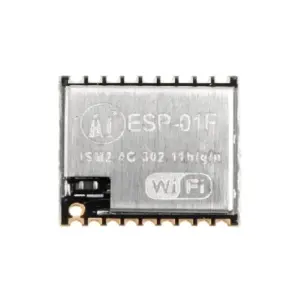
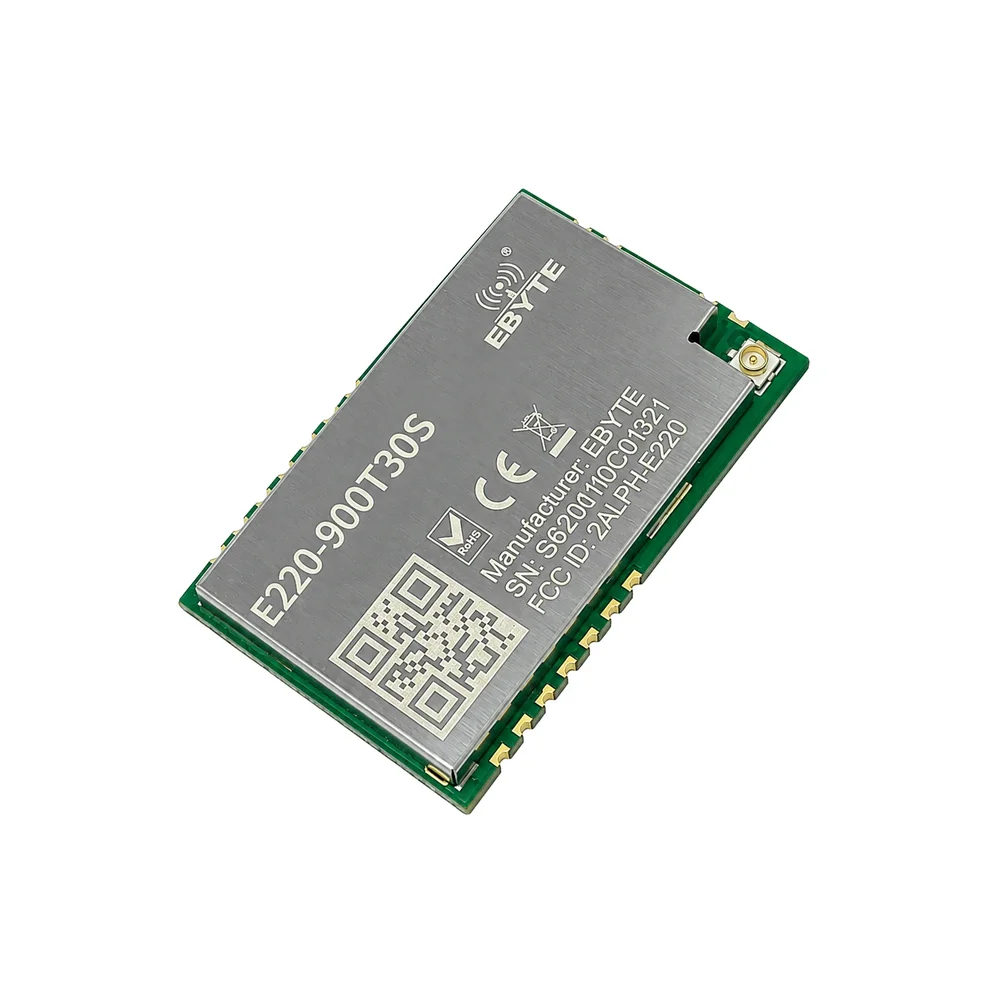
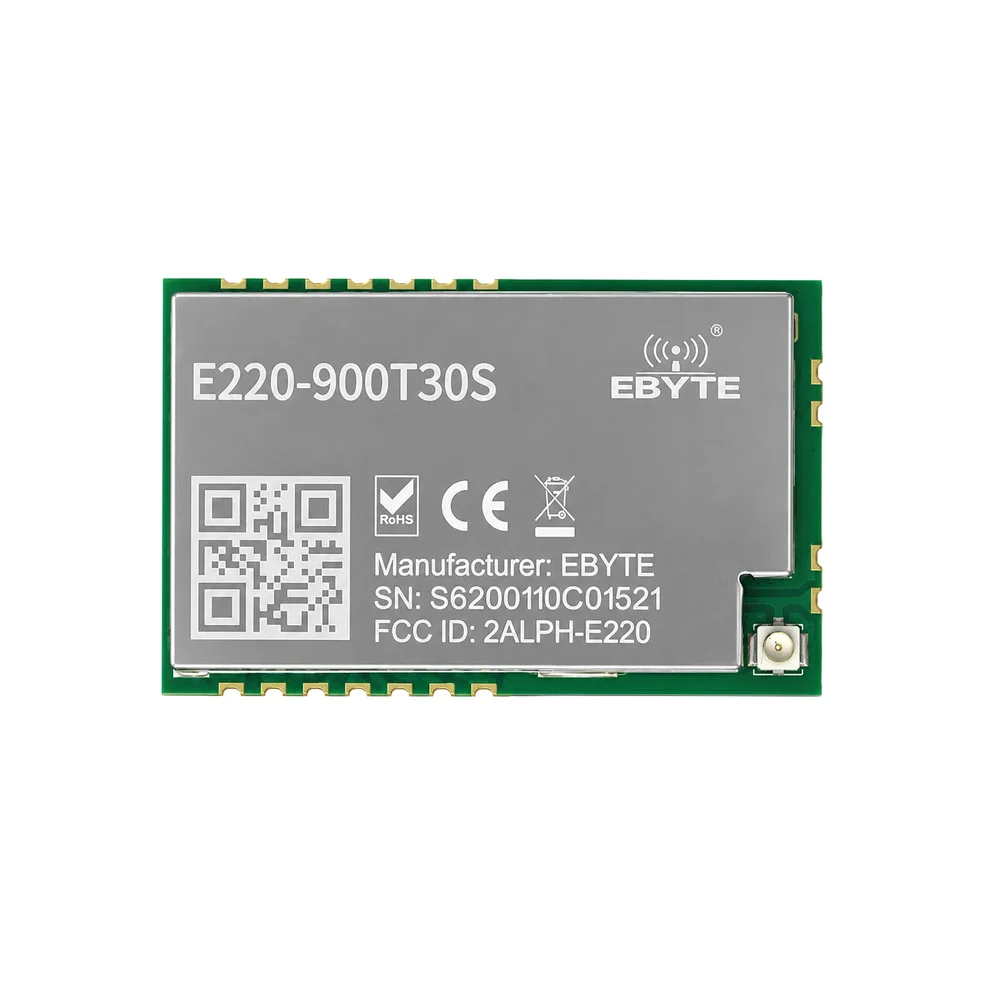
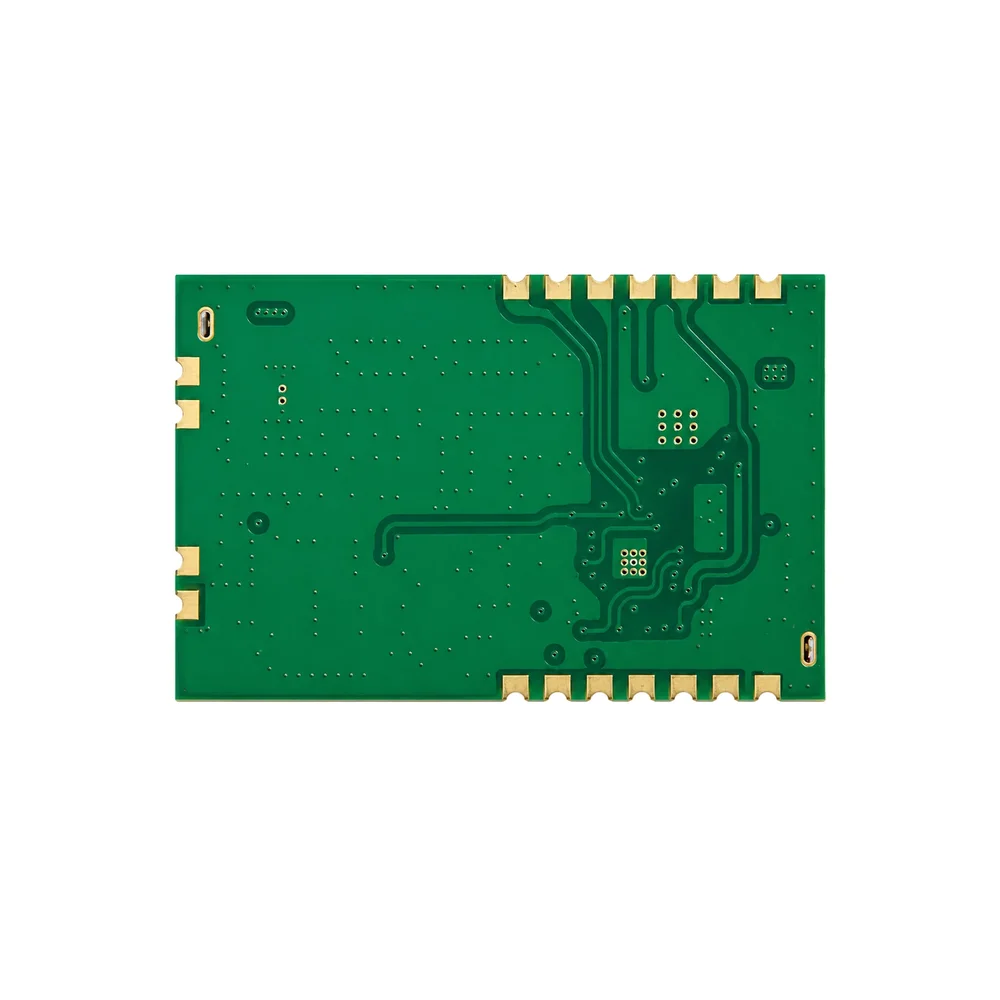
EByte E220-900T30S LLCC68 850-930MHz LoRa UART RF Module 30dBm

₹1,039.00 (Inclusive of all taxes)
Out of Stock

The EByte E220-900T30S is a high-power LoRa RF module based on the Semtech LLCC68 transceiver, operating in the 850-930MHz ISM band. It features a UART TTL interface for easy integration with microcontrollers like Arduino or ESP32, offering a configurable air data rate up to 62.5kbps and an ultra-low 3μA sleep current for long-range, battery-operated IoT applications.

Features

  • High-power 30dBm (1W) RF output for long-range communication up to 10km in open environments.
  • Based on the Semtech LLCC68 LoRa chipset, operating in the 850.125MHz to 930.125MHz frequency band.
  • UART TTL communication interface simplifies integration with Arduino, ESP32, Raspberry Pi, and other MCUs.
  • Ultra-low power consumption with a sleep current of just 3μA, ideal for battery-powered remote sensors.
  • Configurable LoRa spreading factors support air data rates from 2.4kbps to 62.5kbps for range/throughput trade-offs.

Out of stock

Description

The EByte E220-900T30S is a professional-grade LoRa RF module engineered for robust, long-distance wireless communication in industrial and IoT networks. Built around the Semtech LLCC68 transceiver, it operates in the 850-930MHz ISM band, providing a high 30dBm transmit power and a receiver sensitivity of -129dBm to achieve reliable links over several kilometers. The module communicates via a simple UART TTL interface, making it compatible with a vast ecosystem of microcontrollers and single-board computers without complex RF design.

Designed for harsh environments, the module incorporates an integrated RF shielding cover for enhanced electromagnetic interference (EMI) protection and stable operation. Its power management is optimized for field deployments, supporting a wide 3.3V to 5.5V supply range and featuring an ultra-low 3μA sleep mode, enabling multi-year battery life in periodic transmission scenarios. The combination of configurable LoRa parameters, watchdog protection, and an operating temperature range of -40°C to +85°C makes it a reliable solution for automating remote telemetry and monitoring systems.
Key Features

  • High-performance Semtech LLCC68 LoRa transceiver chip for reliable spread-spectrum communication.
  • Extended range capability with 30dBm output power and -129dBm receiver sensitivity.
  • Flexible UART TTL interface allows direct connection to microcontrollers (3.3V or 5V logic).
  • Ultra-low sleep current (3μA) enables multi-year operation in battery-powered sensor nodes.
  • Integrated metal RF shield provides excellent EMI immunity for stable operation in noisy industrial settings.
  • Configurable air data rate (2.4kbps to 62.5kbps) and frequency channel for network optimization.
  • Wide operating voltage range (3.3V to 5.5V) simplifies power supply design.
  • Robust SMD package with IPEX/stamp hole antenna options for flexible deployment.

Applications

  • Long-range telemetry and sensor data collection for smart agriculture (soil moisture, weather stations).
  • Industrial automation and wireless monitoring of remote equipment (tanks, pumps, valves).
  • Asset tracking and fleet management across large campuses or rural areas.
  • Building and home automation systems requiring reliable communication through walls.
  • IoT network gateways and node deployments for private LoRaWAN or point-to-point links.

Technical Specifications

ModelE220-900T30S
RF ChipSemtech LLCC68
Frequency Range850.125MHz – 930.125MHz
ModulationLoRa Spread Spectrum
RF Output Power30dBm (1W)
Receiver Sensitivity-129dBm
Air Data Rate2.4kbps – 62.5kbps
Communication InterfaceUART TTL
Supply Voltage3.3V – 5.5V DC
TX Current (Typical)610mA
RX Current (Typical)17mA
Sleep Current3μA
Antenna ConnectorIPEX / Stamp Hole
Operating Temperature-40°C to +85°C
Dimensions25 × 40.5 mm

Frequently Asked Questions

How do I configure the E220-900T30S module's parameters like frequency and data rate?

The module is configured via AT commands sent over its UART TTL interface. Connect the module's TX and RX pins to your microcontroller's UART pins. After powering on, send configuration commands (e.g., AT+CFG=...) at the default 9600 baud rate to set the frequency channel, output power, air data rate, and other LoRa parameters. Refer to the official EByte datasheet for the complete AT command set and syntax for the LLCC68 chip.

What antenna should I use with this module, and how is it connected?

Use a 50-ohm antenna tuned for the 850-930MHz band. The module provides an IPEX (U.FL) connector for a plug-in antenna and adjacent stamp holes for soldering a wire antenna or connector. For the IPEX port, use a compatible pigtail cable. Ensure antenna impedance is matched to 50 ohms for optimal RF performance and range. The antenna gain should be selected based on your deployment's regulatory limits and desired radiation pattern.

What is the power supply requirement, and why is the transmit current so high?

The module operates from 3.3V to 5.5V DC. The typical transmit current is 610mA when outputting the full 30dBm (1 Watt) of RF power. This high current is necessary to generate the strong radio signal for long-range links. Your power supply (battery or regulator) must be capable of delivering this peak current without significant voltage sag. For battery operation, use high-capacity lithium cells or consider reducing the transmit power via software to conserve energy.

Can I use this module with Arduino or ESP32 development boards?

Yes, integration is straightforward. Connect the module's VCC to 3.3V or 5V (within 3.3V-5.5V range), GND to ground, and its TX/RX pins to a hardware or software UART on your Arduino or ESP32. Use 3.3V logic level for ESP32. You will need to write firmware that initializes the serial port and sends the appropriate AT commands to configure the module before sending and receiving application data packets over the LoRa link.

How do I achieve the lowest power consumption for battery-powered sensor nodes?

To minimize power, place the module in sleep mode (3μA current) between transmissions using the AT+SLEEP command. Design your firmware to wake the microcontroller periodically, wake the LoRa module, transmit data quickly at the necessary power level, and then return both to sleep. Optimize the transmit power and data rate settings—higher power and slower spreading factors increase range but also increase transmit time and current draw, impacting battery life.

Package Includes

  • 1 x EByte E220-900T30S LLCC68 850-930MHz LoRa UART RF Module