SKU: IOWC-1597
📋 GST Invoice Available

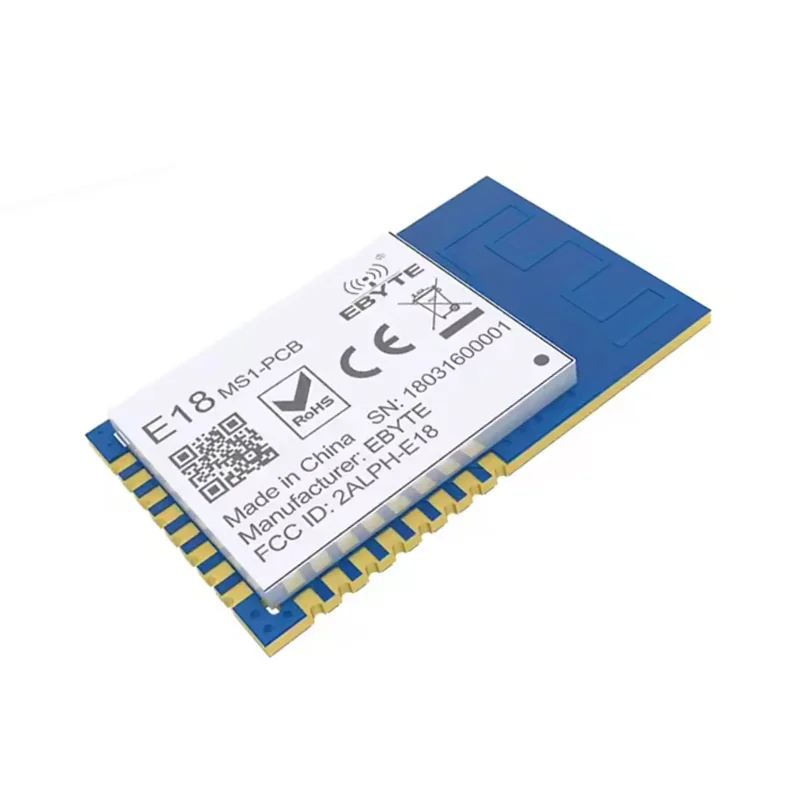
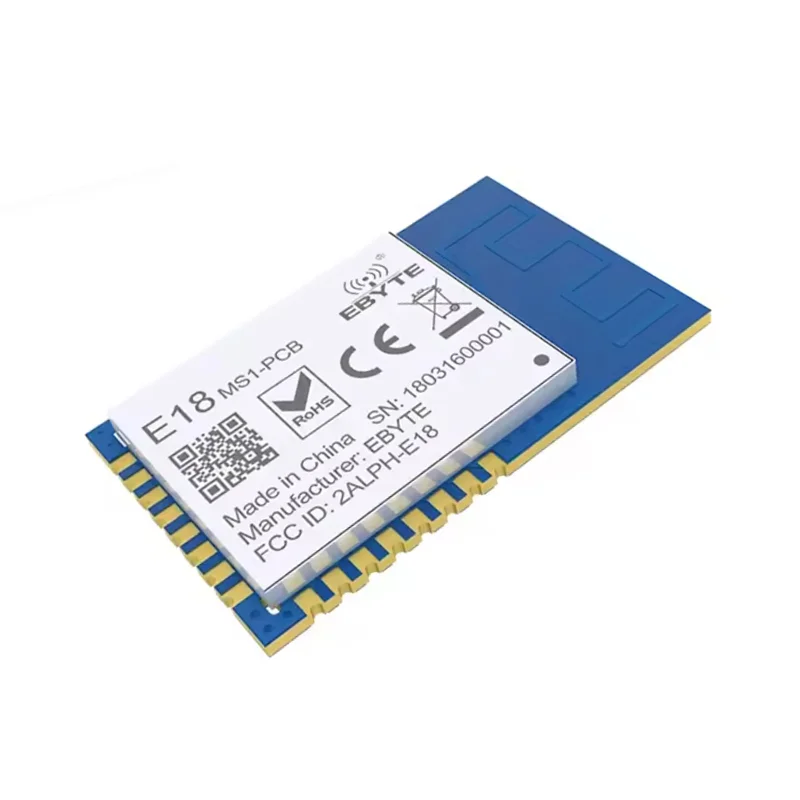
EByte E18-MS1-PCB CC2530 Zigbee 2.4GHz Wireless Module

₹429.00 (Inclusive of all taxes)
Out of Stock

The EByte E18-MS1-PCB is a compact Zigbee and IEEE 802.15.4 wireless module based on the CC2530 SoC, integrating an 8051 microcontroller core and 2.4GHz transceiver. It’s designed for easy integration via UART/IO interfaces into smart home automation, sensor networks, and IoT applications requiring reliable, low-power mesh connectivity.

Features

  • CC2530 SoC Core: Combines an 8051 microcontroller with a 2.4GHz RF transceiver, simplifying design and reducing BOM cost.
  • Zigbee & IEEE 802.15.4 Support: Enables robust, low-power wireless mesh networking for scalable IoT deployments.
  • 4dBm Transmit Power: Provides reliable communication with a line-of-sight range up to 200 meters when paired with a 5dBi antenna.
  • Integrated Memory: Features 256KB Flash and 8KB RAM for application firmware and network stack data storage.
  • Wide Operating Temperature: Rated for industrial environments from -40°C to +85°C, ensuring stable performance.

Out of stock

Description

The E18-MS1-PCB from EByte is a fully integrated wireless module centered on Texas Instruments’ CC2530 system-on-chip. This design merges a high-performance, low-power 8051 microcontroller with a robust RF front-end, creating a complete solution for Zigbee and IEEE 802.15.4 network nodes. It operates across the global 2.4GHz ISM band (2400-2480 MHz), facilitating standardized wireless communication.

With a configurable RF output power of up to 4dBm (2.5mW) and a receiver sensitivity optimized for the protocol, the module achieves substantial range, especially when coupled with an external antenna. Its onboard PCB antenna provides a compact footprint, while the UART and configurable GPIO interfaces allow for straightforward connection to sensors, actuators, or host controllers, minimizing development time for smart home and industrial telemetry systems.

Key Features

  • Complete RF Solution: Integrates MCU, memory, radio, and antenna in a single compact module, reducing design complexity.
  • Mesh Networking Ready: Hardware support for Zigbee PRO and IEEE 802.15.4 stacks enables self-healing, scalable networks.
  • Developer-Friendly Interfaces: UART and multiple programmable GPIOs facilitate easy communication and peripheral control.
  • Low Power Operation: CC2530 architecture supports multiple sleep modes, extending battery life in sensor node applications.
  • Robust Industrial Design: Operates across a wide -40°C to +85°C temperature range for harsh environment reliability.
  • Onboard PCB Antenna: Provides a cost-effective, integrated radiating element for space-constrained designs.

Applications

  • Smart Home Automation: For creating wireless light switches, smart plugs, sensors, and HVAC controllers within a Zigbee mesh.
  • Industrial Sensor Networks (IIoT): Deploying wireless telemetry for monitoring temperature, humidity, or equipment status in factories.
  • Asset Tracking & Beaconing: Implementing low-power location beacons or tags within constrained indoor environments.
  • Wireless Sensor Networks: Building scalable networks for environmental monitoring, agriculture, or building management systems.

Technical Specifications

Microcontroller/SoCTexas Instruments CC2530 (8051 core + RF transceiver)
Wireless ProtocolsZigbee, IEEE 802.15.4
Frequency Range2.4 GHz (2400 - 2480 MHz)
RF Transmit Power4 dBm (2.5 mW)
Maximum RangeUp to 200m (open space with 5dBi antenna)
Supply Voltage2.0V - 3.6V (Typical 3.3V)
Memory256 KB Flash, 8 KB RAM
InterfacesUART, Programmable GPIO
Antenna ConnectorIntegrated PCB Antenna
Operating Temperature-40°C to +85°C
DimensionsApprox. 18mm x 27.5mm (Module specific)

Frequently Asked Questions

What software or tools are needed to program the CC2530 on the E18-MS1-PCB module?

You typically use Texas Instruments' Z-Stack protocol suite and the IAR Embedded Workbench for 8051 to develop Zigbee applications. The module can be programmed via its debug interface using a CC Debugger. For basic testing, you can send AT commands or pre-configured firmware via the UART interface. The development process involves compiling the Z-Stack project, flashing the hex file, and configuring network parameters like PAN ID.

How do I connect an external antenna to this module, and what are the benefits?

The E18-MS1-PCB version comes with an integrated PCB antenna. For models requiring an external antenna, you would connect a 2.4GHz antenna with a 50-ohm impedance via a matched RF trace. Using an external directional or higher-gain antenna (like a 5dBi whip) can significantly increase the communication range beyond the standard 200 meters, reduce packet loss in noisy environments, and provide better placement flexibility by moving the antenna away from interference.

What is the typical power consumption and how can I optimize it for battery operation?

The CC2530 supports several low-power modes. Active receive current is around 24mA, while transmit at 4dBm is approximately 29mA. Deep sleep current can be as low as 1µA. To optimize battery life, design your firmware to maximize sleep time. Use interrupt-driven wake-ups from GPIOs or timers, transmit data in short bursts, and leverage the Zigbee network's low-duty-cycle capabilities. A careful power supply design with stable 3.3V regulation is also crucial for reliable operation.

Package Includes

  • 1 x EByte E18-MS1-PCB Zigbee Wireless Module

Additional Information

Weight 0.01 kg
Dimensions 5 × 8 × 2 cm