SKU: IOWC-0116
📋 GST Invoice Available

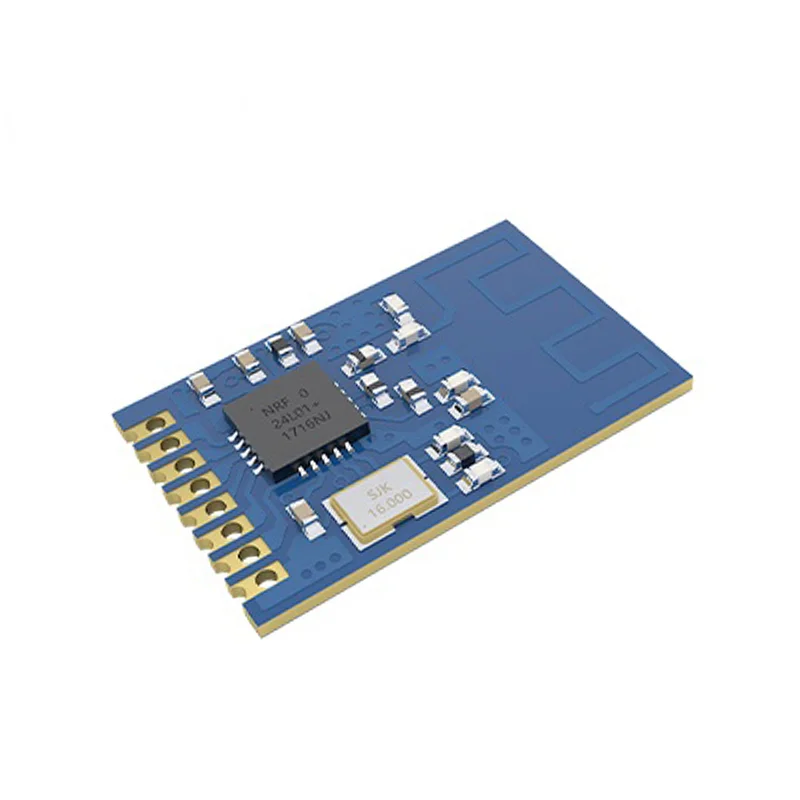
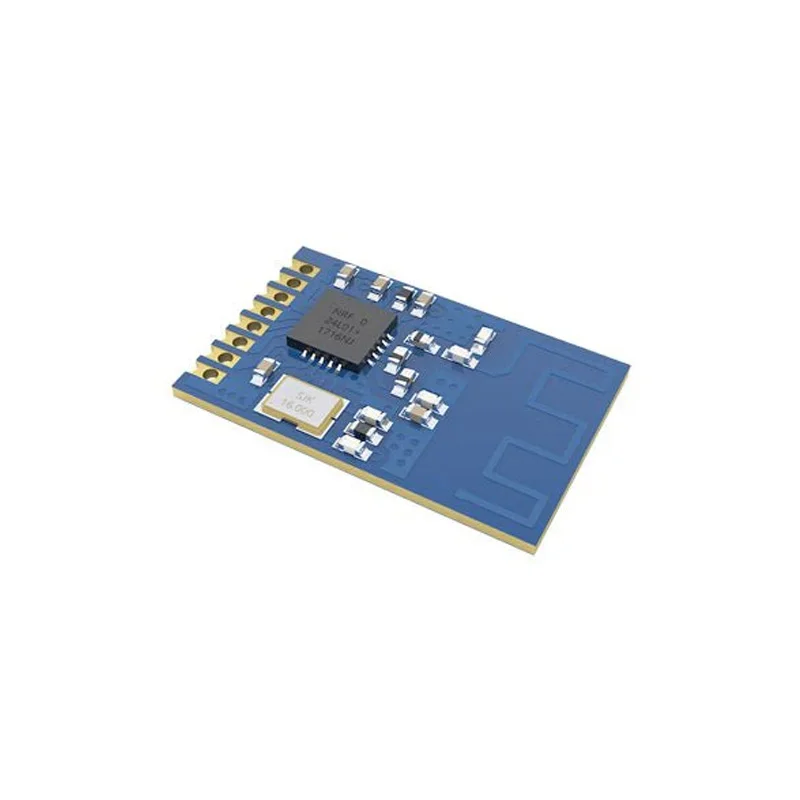
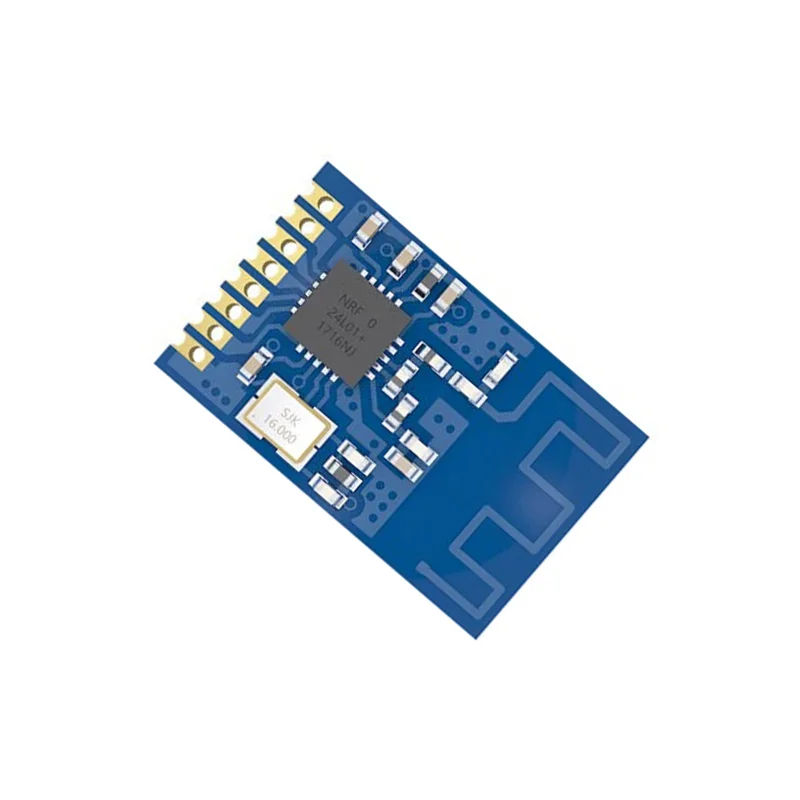
EByte E01-ML01S nRF24L01P 2.4GHz SPI Wireless Transceiver Module

₹269.00 (Inclusive of all taxes)
Out of Stock

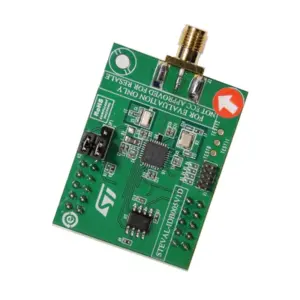
The EByte E01-ML01S is a compact 2.4GHz ISM band wireless transceiver module based on the Nordic Semiconductor nRF24L01P chip, offering SPI interface connectivity for easy integration with microcontrollers like Arduino, STM32, and Raspberry Pi for low-power IoT and sensor network projects.

Features

  • Powered by the Nordic Semiconductor nRF24L01P SoC for reliable 2.4GHz ISM band (2400-2525 MHz) communication.
  • Supports configurable data rates from 250 kbps to 2 Mbps, with 250 kbps as the default for robust links.
  • Features an integrated PCB antenna for a clear line-of-sight range of up to 100 meters.
  • Ultra-low power operation with a sleep current as low as 0.5 µA, ideal for battery-powered sensor nodes.
  • Simple SPI interface enables straightforward connection to most microcontrollers and development boards.

Out of stock

Description

The EByte E01-ML01S module is a dedicated wireless transceiver designed for embedded systems requiring robust, short-range communication. Built around the proven Nordic Semiconductor Semiconductor nRF24L01P IC, it operates in the globally available 2.4 GHz ISM band, providing a versatile foundation for creating personal area networks (PANs). Its architecture supports dynamic power management, allowing developers to balance transmission range against current draw.

Engineered for reliability, the module employs GFSK modulation and features an on-board PCB antenna, simplifying design-in and reducing BOM cost. The integrated power amplifier and low-noise amplifier (LNA) ensure stable communication links. Its SPI digital interface provides a direct, high-speed connection to host processors, making it a preferred choice for Arduino, ESP32, STM32, and Raspberry Pi-based IoT prototypes, remote controls, and telemetry systems.

Key Features

  • Core nRF24L01P IC ensures compatibility with a vast ecosystem of libraries and code examples.
  • Configurable output power up to 0 dBm (1mW) for an optimal balance of range and energy efficiency.
  • Six-channel data pipe hardware support enables the creation of simple star or multi-point networks.
  • Enhanced ShockBurstâ„¢ protocol with automatic packet assembly, CRC, and auto-acknowledgment reduces host MCU overhead.
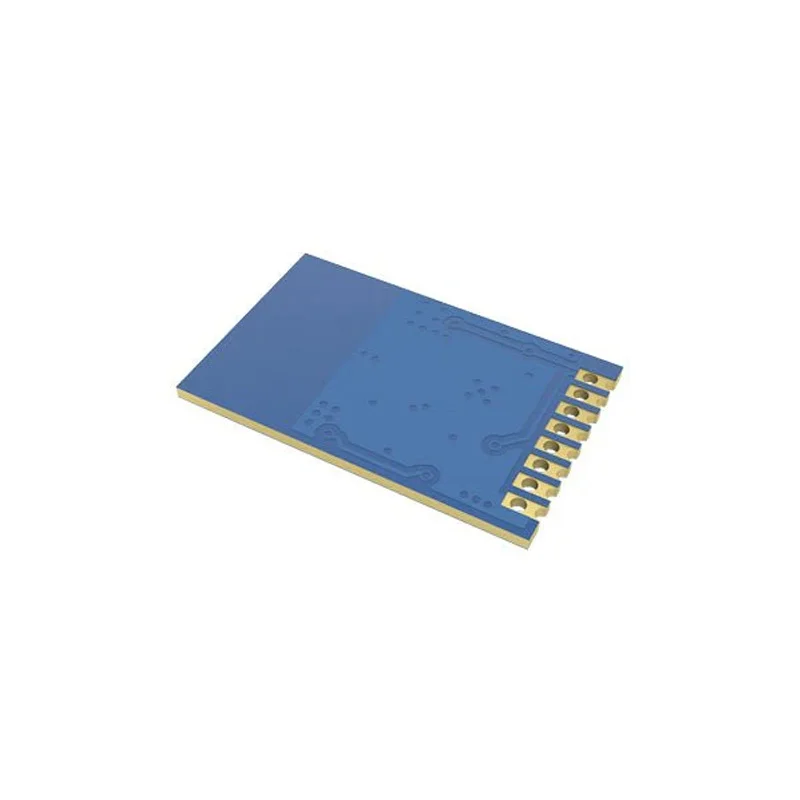
  • Compact form factor with a standard 2.54mm pitch pin header for easy integration into breadboards and PCBs.
  • Designed for global operation within the license-free 2.4 GHz band, avoiding regional frequency coordination.

Applications

  • Wireless Sensor Networks (WSN) for home automation, environmental monitoring, and industrial telemetry.
  • Remote control systems for robotics, drones, and DIY RC projects.
  • IoT device intercommunication and data logging in mesh or point-to-point topologies.
  • Game controllers, input devices, and interactive toys requiring low-latency wireless links.
  • Battery-powered asset trackers and personal wearable devices.

Technical Specifications

Wireless Transceiver ICNordic Semiconductor Semiconductor nRF24L01P
Frequency Range2.4 GHz ISM Band (2400 - 2525 MHz)
RF Transmit Power0 dBm (1 mW)
Maximum Data Rate2 Mbps (Configurable: 250 kbps, 1 Mbps, 2 Mbps)
Typical Open-Air RangeUp to 100 meters (with PCB antenna)
Antenna TypeIntegrated PCB Antenna
Host InterfaceSPI (Serial Peripheral Interface)
Operating Voltage1.9V to 3.6V
Operating Current (TX)~11 mA at 0 dBm
Sleep Current (Power Down)0.5 µA (Typical)
Dimensions (LxW)Approx. 11 x 7 mm

Frequently Asked Questions

How do I connect the E01-ML01S module to an Arduino Uno?

Connect the module's SPI pins to the Arduino: VCC to 3.3V, GND to GND, CSN to digital pin 10, CE to digital pin 9, SCK to pin 13, MOSI to pin 11, and MISO to pin 12. Ensure you use the 3.3V power supply, as the module is not 5V tolerant. Popular libraries like RF24 or Mirf can then be used for programming the wireless communication logic, handling packet transmission and network addressing.

What is the power supply requirement and how can I minimize current consumption?

The module requires a 1.9V to 3.6V DC supply. To minimize power, use the chip's power-down mode via the CE pin, which reduces current to ~0.5 µA. Configure the module for the lowest necessary data rate (250 kbps) and transmit power level. Implement periodic wake-up and sleep cycles in your firmware, keeping the radio active only during brief transmission or reception windows to dramatically extend battery life in field deployments.

Can I increase the communication range beyond 100 meters?

The 100-meter range is typical with the integrated PCB antenna in open, line-of-sight conditions. To extend range, you can solder a wire antenna or connect an external 2.4GHz antenna via a matching circuit, though this requires careful impedance matching. Using a lower data rate (250 kbps) improves receiver sensitivity and range. For significantly longer distances, consider using a module with an external PA/LNA or switching to a Sub-1GHz technology like LoRa.

What software libraries are compatible with this nRF24L01P-based module?

The module is fully compatible with the widely-used RF24 library for Arduino and PlatformIO, which supports advanced features like auto-acknowledgment and dynamic payloads. For Raspberry Pi, the python-RF24 library provides similar functionality. The SPI interface uses standard commands defined by Nordic Semiconductor Semiconductor, so any embedded platform with an SPI master can communicate with it using the nRF24L01+ datasheet as a reference for register configuration and packet formatting.

Package Includes

  • 1 x EByte E01-ML01S nRF24L01P 2.4GHz Wireless Transceiver Module

Additional Information

Weight 0.01 kg
Dimensions 11 × 7 × 1 cm