SKU: SBCD-0348
📋 GST Invoice Available

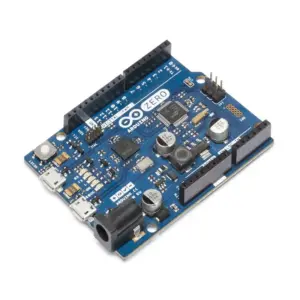
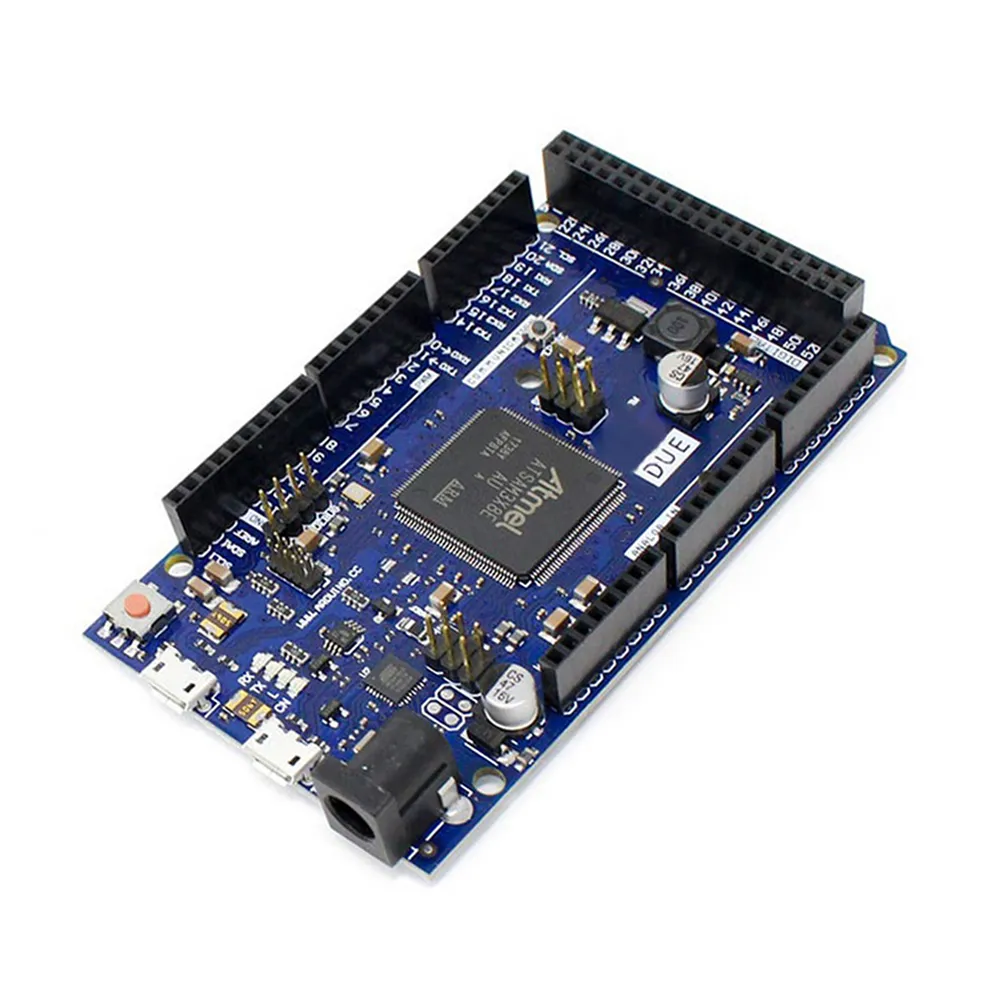
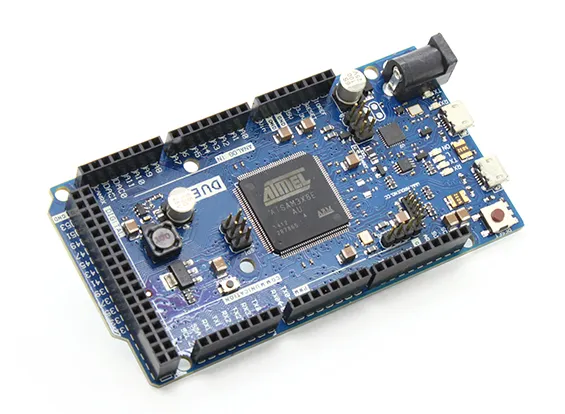
Due AT91SAM3X8E ARM Cortex-M3 Board for Arduino

₹1,309.00 (Inclusive of all taxes)
Out of Stock

The Due AT91SAM3X8E ARM Cortex-M3 Board provides a powerful 32-bit microcontroller experience, compatible with the Arduino ecosystem. Operating at 3.3V with an 84MHz CPU clock and 512KB Flash, it offers advanced processing capabilities for complex embedded projects.

Features

  • Features AT91SAM3X8E ARM Cortex-M3 microcontroller for 32-bit performance.
  • Operates at 84MHz with 512KB Flash and 96KB SRAM for robust embedded applications.
  • Equipped with 54 digital I/O pins (12 PWM) and 12 analog inputs.
  • Includes USB OTG, 4x UART, 2x TWI, and 2x DAC for comprehensive connectivity.
  • Designed with Arduino 1.0 pinout, ensuring compatibility with a wide range of shields.

Out of stock

Description

The Due board is built around the Atmel SAM3X8E ARM Cortex-M3 CPU, delivering a significant upgrade in processing power and memory capacity compared to traditional 8-bit Arduino boards. This board features a 32-bit core allowing for efficient operations, clocked at 84MHz. It comes equipped with 512KB of flash memory for program storage and 96KB of SRAM, providing ample space for complex code and data handling.

With 54 digital input/output pins, including 12 PWM outputs, and 12 analog inputs, the Due facilitates extensive interfacing with sensors and actuators. Connectivity options include four hardware serial ports (UARTs), an USB OTG capable connection, two Digital-to-Analog Converters (DAC), two Two-Wire Interface (TWI) buses, an SPI header, and a JTAG header for debugging. The board adheres to the Arduino 1.0 pinout, ensuring compatibility with a wide range of existing shields, with an IOREF pin for voltage adaptation.

Key Features

  • 32-bit ARM Cortex-M3 core for enhanced processing efficiency.
  • High-speed 84MHz CPU clock for demanding applications.
  • Generous 512KB Flash memory for extensive program code.
  • 96KB SRAM for robust data handling and real-time operations.
  • Integrated DMA controller to offload memory-intensive tasks from the CPU.
  • 54 Digital I/O pins, including 12 with PWM capabilities.
  • 12 Analog Input pins and 2 Analog Output (DAC) pins.
  • Multiple communication interfaces: 4x UART, 2x TWI, USB OTG, SPI, JTAG, CAN.
  • Arduino 1.0 pinout compatibility with IOREF for shield voltage adaptation.

Technical Specifications

MicrocontrollerAT91SAM3X8E (ARM Cortex-M3)
Operating Voltage3.3V
Input Voltage (recommended)7-12V
Input Voltage (limits)6-16V
CPU Clock84MHz
Flash Memory512KB
SRAM96KB
Digital I/O Pins54 (12 PWM)
Analog Input Pins12
Analog Output Pins2 (DAC)
UART Ports4
TWI (I2C) Ports2
USB1 (OTG capable)
CAN BusYes

Frequently Asked Questions

What are the key advantages of the Arduino Due's AT91SAM3X8E processor?

The AT91SAM3X8E features a 32-bit ARM Cortex-M3 core, operating at 84MHz. This provides significantly higher processing power and larger memory capacity (512KB Flash, 96KB SRAM) compared to traditional 8-bit Arduino boards, enabling more complex calculations and larger programs for advanced embedded applications.

What is the operating voltage of the Arduino Due board, and what are the input voltage requirements?

The board operates at 3.3V. The recommended input voltage via the power jack is 7-12V. The absolute input voltage limits are 6-16V. It's crucial to power the board within these ranges to ensure stable operation and prevent damage to components.

How does the Arduino Due maintain compatibility with existing Arduino shields, despite its 3.3V operating voltage?

The Arduino Due follows the 1.0 Arduino pinout standard and includes an IOREF pin. This pin allows properly designed shields to sense the board's operating voltage (3.3V) and adapt their voltage levels accordingly, ensuring compatibility with both 3.3V Due boards and 5V AVR-based boards.

What development environments and toolchains are supported for programming the Arduino Due?

The Arduino Due is primarily programmed using the Arduino IDE, which provides a familiar environment and extensive libraries. Additionally, developers can use more advanced ARM-based toolchains like Atmel Studio (now Microchip Technology Studio) or GCC ARM Embedded, offering greater control for professional embedded development.

What are the primary communication interfaces available on the Arduino Due for peripheral integration?

The Due board offers a wide array of communication interfaces including four UART (hardware serial) ports for serial communication, two TWI (I2C) buses for sensor and peripheral interaction, one SPI header, and an USB OTG (On-The-Go) capable port for host or device functionality. It also includes CAN bus support.

Package Includes

  • 1 x Due AT91SAM3X8E ARM Cortex-M3 Board 84MHz 512KB Board.

Additional Information

Weight 0.035 kg
Dimensions 10.4 × 5.3 × 1.5 cm