SKU: IOWC-1347
📋 GST Invoice Available

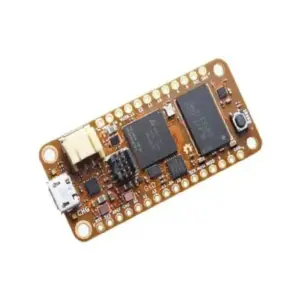
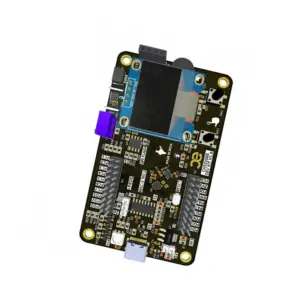
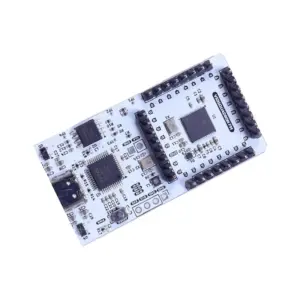
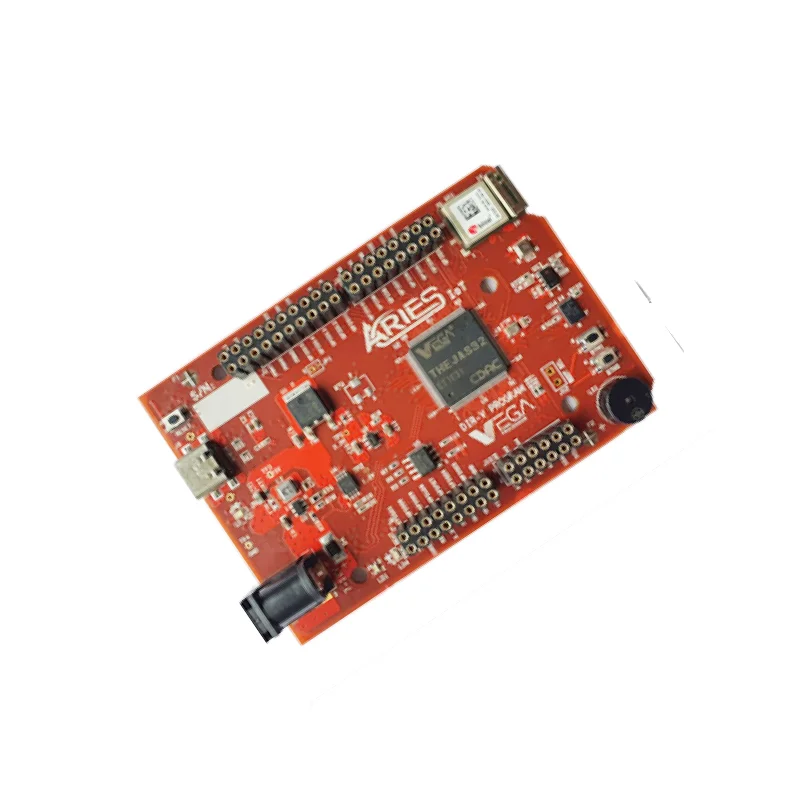
ARIES IoT v2.0 Development Board w/ VEGA ET1031 & NINA-W10

₹5,289.00 (Inclusive of all taxes)
Out of Stock

The ARIES IoT v2.0 Development Board is an indigenous hardware platform featuring the THEAJS32 SoC with a VEGA ET1031 100MHz microprocessor and integrated u-blox NINA-W10 module for dual Wi-Fi & Bluetooth connectivity, designed for IoT application development and cloud integration.

Features

  • Indigenous THEAJS32 SoC with VEGA ET1031 100MHz RISC-V microprocessor for efficient IoT edge processing.
  • Integrated u-blox NINA-W10 module provides 2.4GHz Wi-Fi and Bluetooth connectivity for wireless data transmission.
  • Comprehensive I/O set includes 25 GPIOs, 3 UARTs, 4 SPIs, 2 I2C interfaces, 8 PWM outputs, and 4 analog inputs.
  • Robust 7-12V DC input voltage range with 3.3V logic level I/O, suitable for industrial and home automation projects.
  • Developed by C-DAC under India’s DIR-V Programme, supporting an open ecosystem for IoT learning and development.

Out of stock

Description

The ARIES IoT v2.0 Development Board is a feature-rich, indigenous platform built around the THEAJS32 ASIC, which integrates the VEGA ET1031 RISC-V microprocessor core. This board is engineered as a dedicated hardware solution for developing and prototyping Internet of Things applications, providing a solid foundation for connecting physical devices to cloud services. Its integrated wireless communication is handled by the u-blox NINA-W10 module, a low-power chipset offering 2.4GHz Wi-Fi and Bluetooth connectivity, enabling remote control and automation from anywhere.

Architecturally, the board delivers substantial processing capability with a 100MHz clock frequency, 256KB of internal SRAM, and 16Mbit of external flash memory for program storage. This is complemented by an extensive peripheral set including three UARTs, four SPI buses, two I2C interfaces, eight PWM channels, and four analog input pins, providing ample connectivity for sensors, actuators, and displays. The board’s design, spearheaded by the Centre for Development of Advanced Computing (C-DAC), emphasizes reliability and ease of integration for educational, industrial, and smart home automation scenarios.

Key Features

  • Indigenous RISC-V based VEGA ET1031 microprocessor for efficient and open architecture computing.
  • Integrated u-blox NINA-W10 module delivers concurrent 2.4GHz Wi-Fi and Bluetooth wireless connectivity.
  • Comprehensive peripheral support with 3 UARTs, 4 SPIs, 2 I2Cs, 8 PWMs, and 4 analog inputs for versatile sensor and actuator integration.
  • 16Mbit external flash provides ample space for application firmware and Over-The-Air (OTA) updates.
  • Wide 7-12V DC input range with onboard voltage regulation, suitable for varied power sources.
  • 25 programmable GPIO pins operating at 3.3V logic levels for flexible hardware interfacing.
  • Designed and supported under India's DIR-V Programme, fostering a local ecosystem for IoT innovation.

Applications

  • Smart home and building automation for lighting, security, and climate control.
  • Industrial IoT (IIoT) telemetry for monitoring equipment status and environmental conditions.
  • Educational platform for learning embedded systems, RISC-V architecture, and IoT cloud integration.
  • Remote garden and agricultural automation systems for irrigation and sensor monitoring.
  • Prototyping wireless sensor nodes and gateways for data aggregation and cloud connectivity.

Technical Specifications

Microcontroller/SoCTHEAJS32 SoC with VEGA ET1031 RISC-V Core
Wireless ProtocolsWi-Fi 2.4GHz, Bluetooth via u-blox NINA-W10 Module
Core Clock Frequency100 MHz
SRAM256 KB
Flash Memory16 Mbit (External)
Supply Voltage7 - 12 V DC
I/O Voltage3.3 V
Digital I/O (GPIO)25
Analog Input Pins4
PWM Channels8
Serial Interfaces (UART)3
SPI Interfaces4
I2C Interfaces2
Dimensions (Shipping)9.5 x 6.8 x 2.6 cm
Weight (Shipping)0.046 kg

Frequently Asked Questions

What is the primary microcontroller on the ARIES IoT v2.0 board and how do I program it?

The board is based on the THEAJS32 SoC featuring the VEGA ET1031 RISC-V microprocessor core. You program it using a compatible toolchain and IDE supporting RISC-V architecture, such as the SDK provided by C-DAC or platform-specific GCC toolchains. Firmware is typically written in C/C++, compiled, and flashed to the board's 16Mbit external flash memory via a dedicated programming interface, enabling IoT application development.

How do I connect the ARIES board to Wi-Fi and configure it for my network?

Wireless connectivity is managed by the integrated u-blox NINA-W10 module. You interact with it via AT commands sent over a UART interface from the VEGA ET1031 core. In your firmware, you must initialize the serial port connected to the module, send AT commands to scan for networks (AT+WSCAN), join your SSID (AT+WJOIN), and configure the security settings (WPA/WPA2). The module handles the TCP/IP stack for cloud connectivity.

What is the power supply requirement and typical operating current for this development board?

The board requires a 7-12V DC input via its power connector. The exact operating current depends on the active peripherals and wireless module state. With the NINA-W10 Wi-Fi active, expect higher current draw; using deep sleep modes on the C-DAC can significantly reduce average power consumption for battery-operated IoT sensor nodes. Always ensure your power adapter or battery can supply sufficient current for peak loads.

Package Includes

  • 1 x ARIES IoT v2.0 Development Board

Additional Information

Weight 0.046 kg
Dimensions 6.8 × 9.5 × 2.6 cm