SKU: SBCD-0707
📋 GST Invoice Available

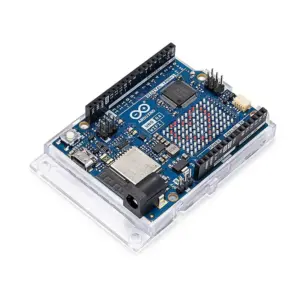
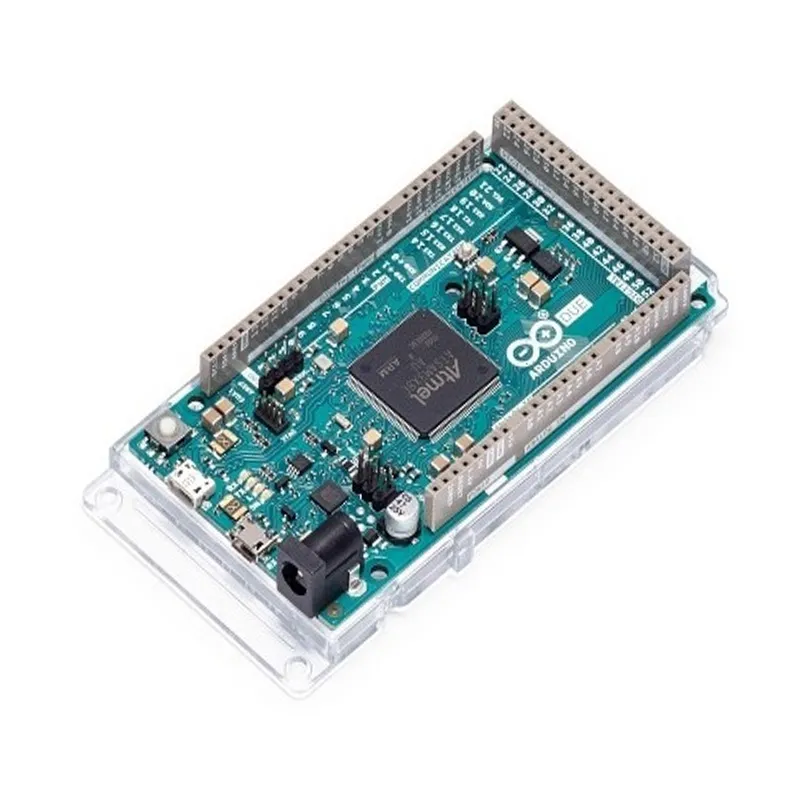
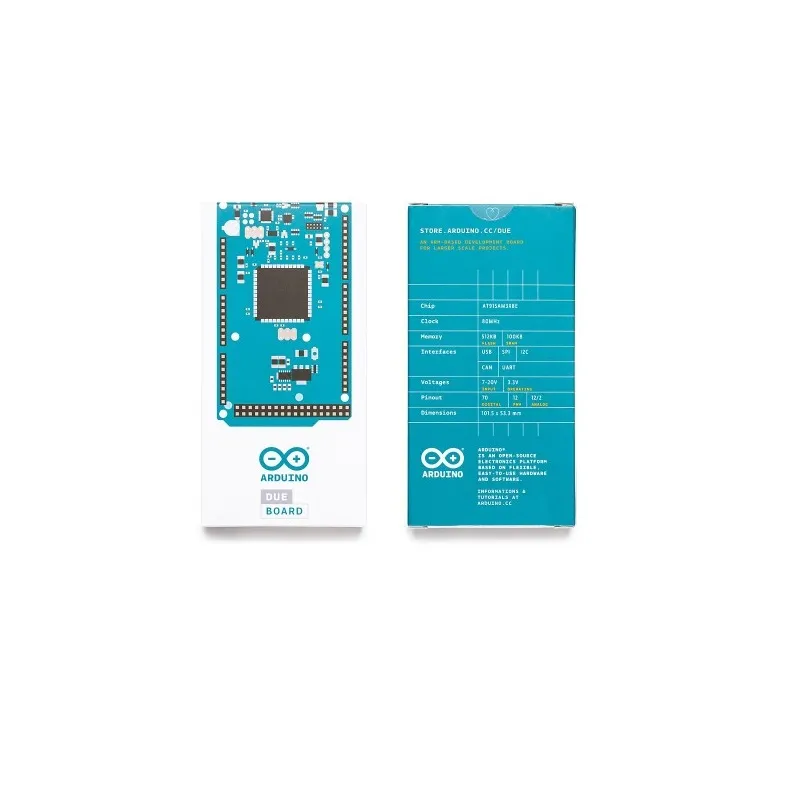
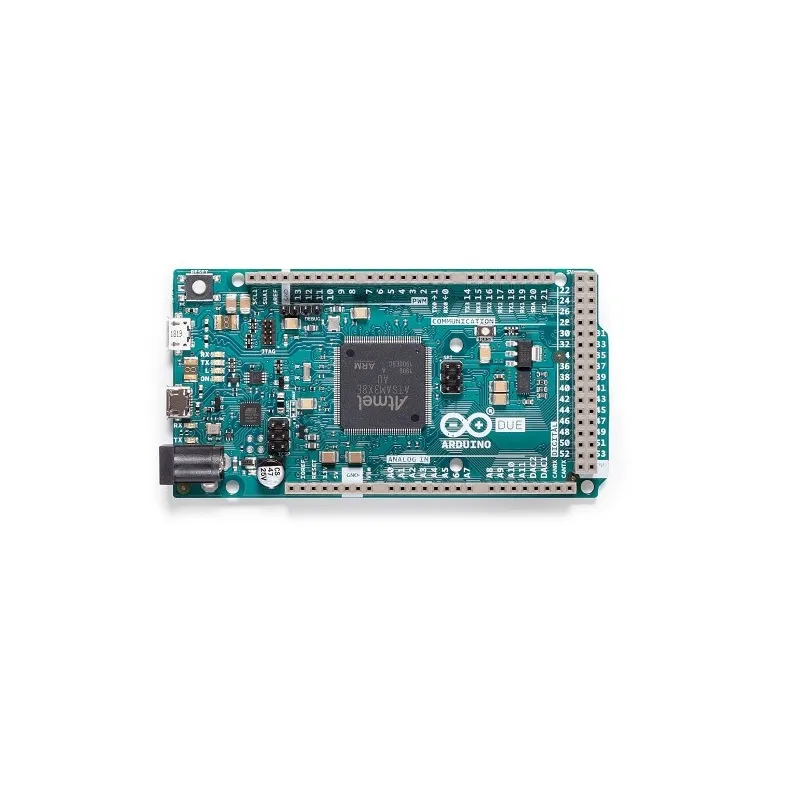
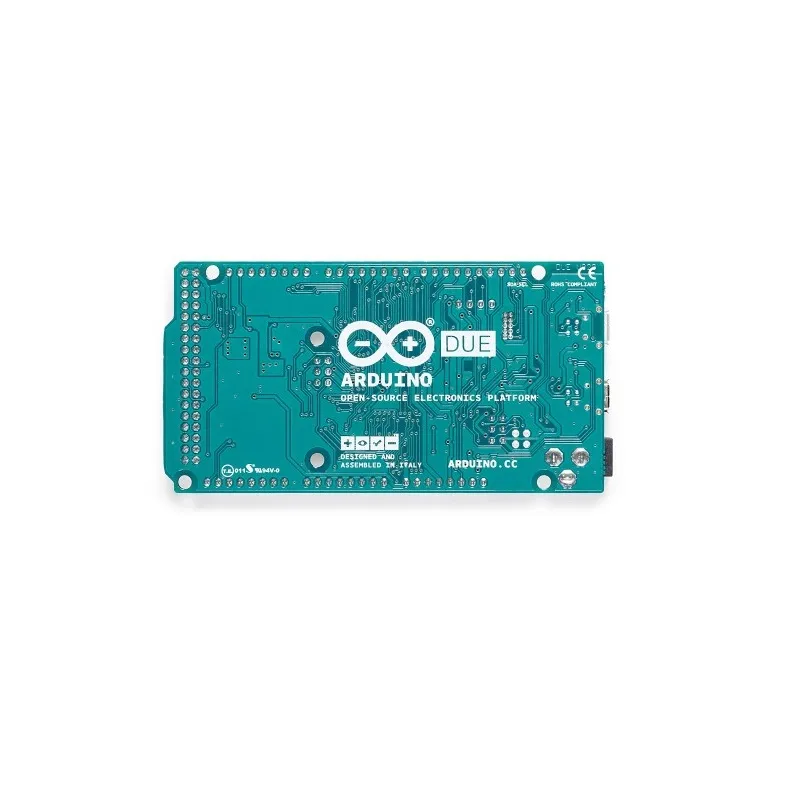
Arduino Due Development Board A000062

₹5,279.00 (Inclusive of all taxes)
Out of Stock

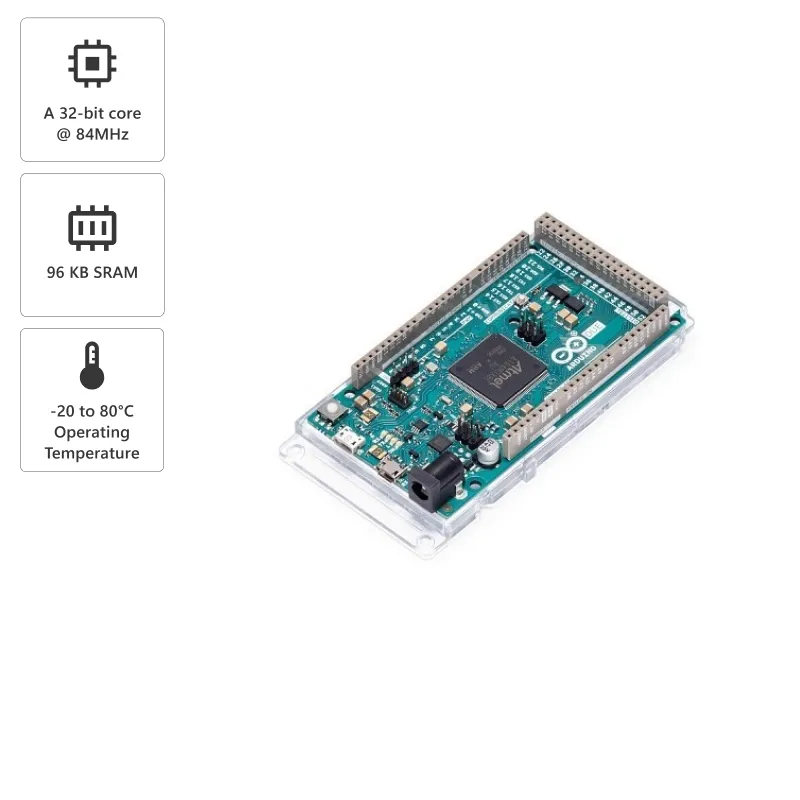
The Arduino Due is the first Arduino board featuring a 32-bit ARM Cortex-M3 microcontroller, offering enhanced processing power at 84MHz, 96KB SRAM, and 512KB flash memory. It provides extensive I/O with 54 digital and 12 analog pins, supporting advanced applications.

Features

  • First Arduino board with a powerful 32-bit ARM Cortex-M3 ATSAM3X8E microcontroller.
  • Operates at 84MHz with 512KB Flash memory and 96KB SRAM for robust application performance.
  • Features 54 digital I/O pins (12 with PWM), 12 analog inputs, 2 DACs, and 4 hardware UARTs.
  • Designed to run at 3.3V, compatible with 3.3V Arduino shields and the 1.0 Arduino pinout standard.
  • Includes USB OTG capabilities for versatile host and device connectivity options.

Out of stock

Description

The Arduino Due stands as the inaugural Arduino board to feature a powerful 32-bit ARM core microcontroller, specifically the AT91SAM3X8E. This board offers an extensive array of connectivity and processing capabilities, including 54 digital I/O pins (12 of which support PWM), 12 analog inputs, 4 hardware UARTs, and an 84 MHz clock speed. Further expanding its utility, it integrates USB OTG, dual Digital-to-Analog Converters (DAC), two Two-Wire Interfaces (TWI), an SPI header, and a JTAG header for advanced debugging and programming.

It is crucial to note that, unlike traditional 5V Arduino boards, the Arduino Due operates natively at 3.3V. All I/O pins are strictly 3.3V tolerant; applying higher voltages can result in irreversible damage to the board. Designed for ease of use, the Due can be powered via a micro-USB cable, AC-to-DC adapter, or battery. It maintains compatibility with a broad range of 3.3V Arduino shields that adhere to the 1.0 Arduino pinout standard.

The board’s 1.0 pinout enhances shield compatibility, featuring dedicated TWI SDA and SCL pins near the AREF for streamlined I2C communication. The innovative IOREF pin allows properly configured shields to adapt to the board’s operating voltage, facilitating seamless integration with both 3.3V Due and 5V AVR-based platforms. An additional unconnected pin is reserved for future expansions and functionalities.

Key Features

  • Utilizes the powerful 32-bit ATSAM3X8E ARM Cortex-M3 microcontroller for enhanced performance.
  • Operates at a high clock frequency of 84 MHz, enabling complex computations and rapid data processing.
  • Equipped with 512 KB of Flash memory for code storage and 96 KB of SRAM for dynamic data handling.
  • Offers 54 digital input/output pins, 12 of which support Pulse-Width Modulation (PWM) for motor control or lighting.
  • Features 12 analog input channels and 2 Digital-to-Analog Converters (DAC) for advanced signal generation.
  • Provides diverse communication options including 4 hardware UARTs, 2 TWI (I2C) interfaces, and an SPI header.
  • Integrated USB OTG (On-The-Go) port allows the board to function as both a USB host and a device.
  • Includes a JTAG header for professional-grade debugging and in-circuit programming.
  • Designed for 3.3V operation, ensuring compatibility with modern sensors and peripherals; I/O pins are 3.3V tolerant.
  • Adheres to the Arduino 1.0 pinout standard, ensuring compatibility with a wide range of 3.3V-compatible shields.

Technical Specifications

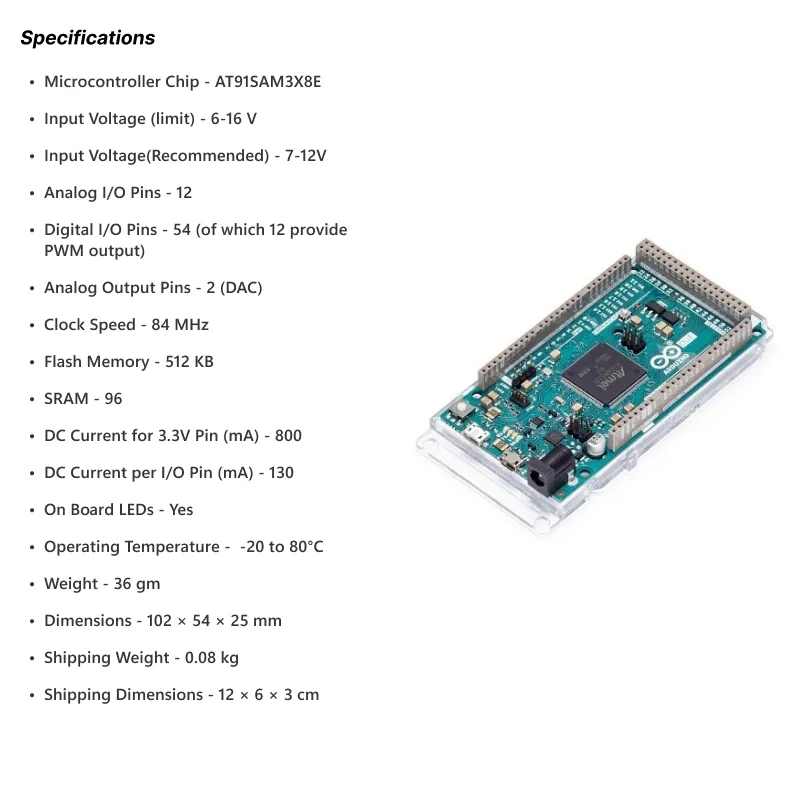
MicrocontrollerAT91SAM3X8E (32-bit ARM Cortex-M3)
Operating Voltage3.3V
Input Voltage (Recommended)7-12V
Digital I/O Pins54 (12 PWM outputs)
Analog Input Pins12
Analog Output Pins (DAC)2
DC Current per I/O Pin130 mA
DC Current for 3.3V Pin800 mA
Clock Speed84 MHz
Flash Memory512 KB
SRAM96 KB
UARTs4
TWI (I2C)2
SPI1 (via header)
USB1 (OTG capable)
JTAG1 (header)
Onboard LEDYes
Operating Temperature-20 to 80 °C
Dimensions (L x W)10.2 cm x 5.4 cm
Weight0.036 kg

Frequently Asked Questions

What is the primary difference between the Arduino Due and other traditional Arduino boards?

The Arduino Due is unique as it's the first Arduino board featuring a 32-bit ARM Cortex-M3 microcontroller (ATSAM3X8E) instead of the typical 8-bit AVR architecture. This provides significantly more processing power, larger memory, and additional peripherals like DACs and USB OTG, operating at 3.3V.

What are the voltage considerations when using the Arduino Due?

The Arduino Due operates at 3.3V. It is critical that all connected components and shields are also 3.3V compatible, as applying voltages higher than 3.3V to any I/O pin can permanently damage the microcontroller. Its recommended input voltage via the power jack ranges from 7-12V.

Is the Arduino Due compatible with existing Arduino shields?

The Arduino Due is compatible with Arduino shields that operate at 3.3V and adhere to the 1.0 Arduino pinout standard. Shields designed for 5V operation or with different pinouts may require voltage level shifting or may not be directly compatible without modification. The IOREF pin helps with compatibility.

What programming environments and tools are supported by the Arduino Due?

The Arduino Due is primarily programmed using the Arduino IDE, which supports its ARM architecture with specific board packages. Developers can leverage the standard Arduino programming syntax or delve into advanced features via direct register access. JTAG debugging is also available for complex projects.

What are the key memory specifications of the ATSAM3X8E on the Arduino Due?

The ATSAM3X8E microcontroller on the Arduino Due features 512 KB of Flash memory for storing program code, which is substantial for complex applications. It also includes 96 KB of SRAM (Static Random-Access Memory) for dynamic data and stack usage, enabling robust runtime performance.

Package Includes

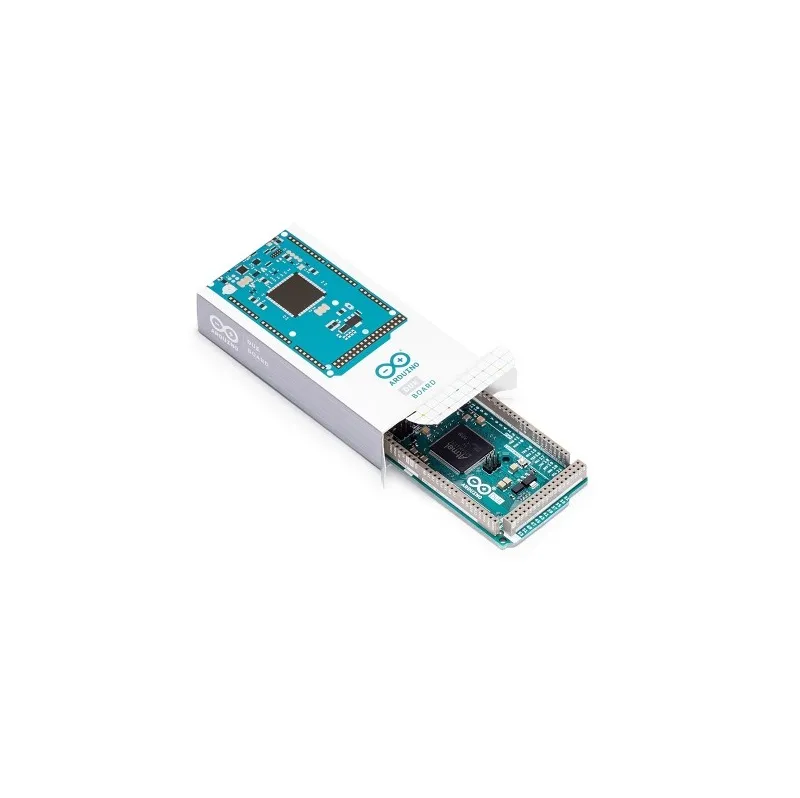
  • 1x Official Arduino Due Board A000062

Additional Information

Weight 0.036 kg
Dimensions 10.2 × 5.4 cm