SKU: IOWC-1377
📋 GST Invoice Available

Adafruit Feather HUZZAH ESP8266 WiFi Development Board

₹2,109.00 (Inclusive of all taxes)
Out of Stock

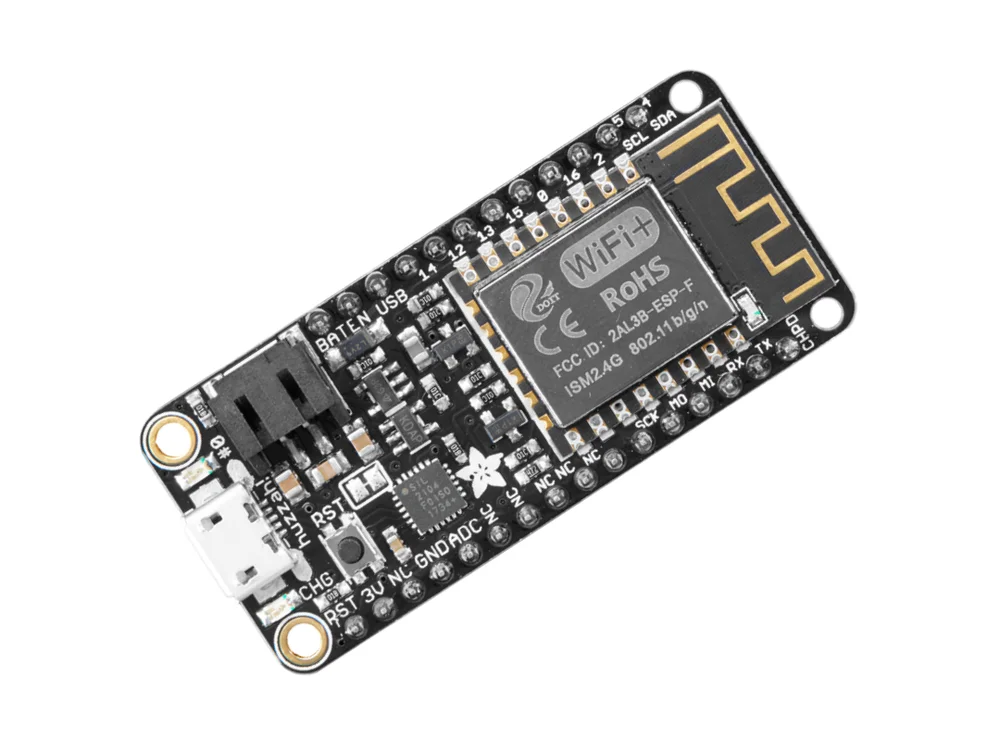
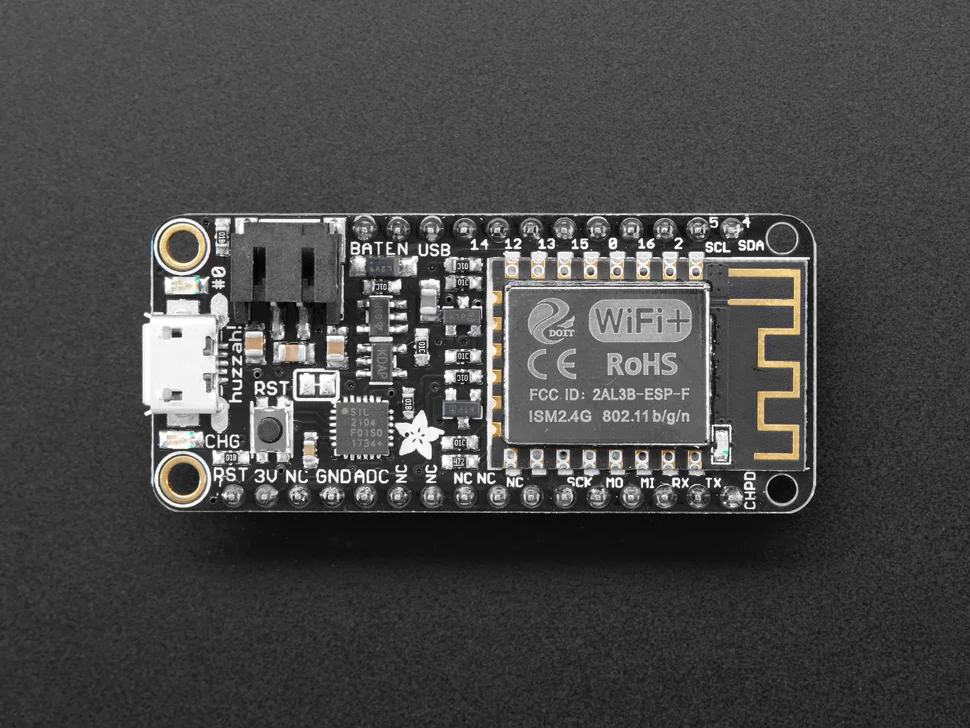
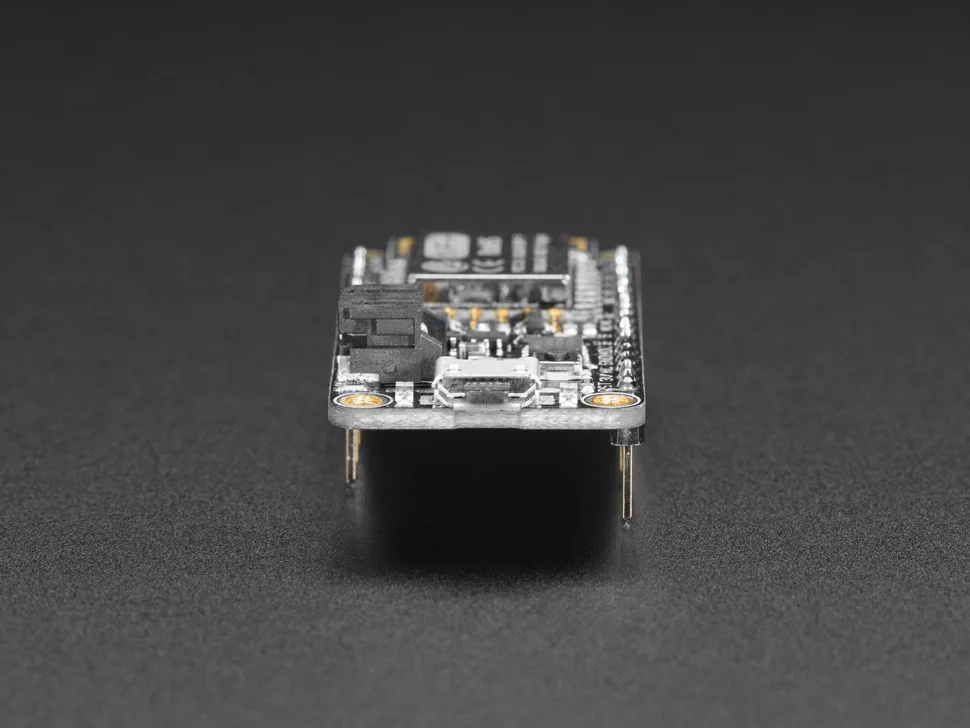
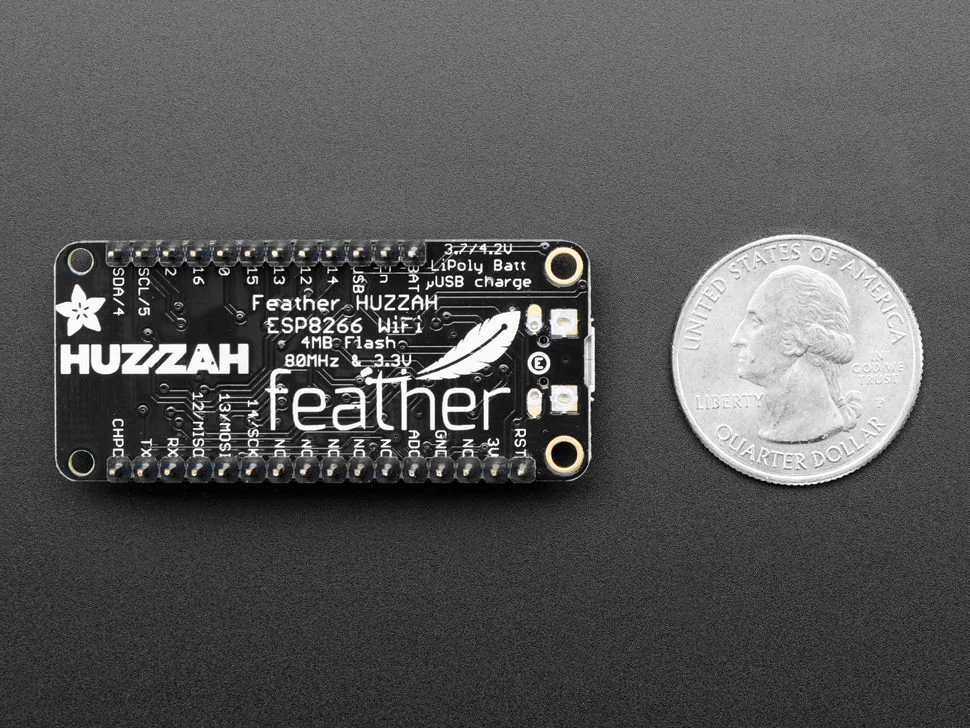
The Adafruit Feather HUZZAH is an all-in-one ESP8266 development board featuring built-in USB-to-serial conversion, LiPo battery charging, and 802.11 b/g/n Wi-Fi connectivity, ready for rapid IoT prototyping with the Arduino IDE.

Features

  • ESP8266 Core: Features an 80MHz Tensilica processor with 4MB Flash memory and integrated 802.11 b/g/n Wi-Fi stack for connected projects.
  • Integrated Power Management: Includes a 3.3V/500mA regulator and a built-in 100mA LiPo battery charger with status LED for portable applications.
  • Rapid Development: Onboard CP2104 USB-serial converter supports auto-reset and uploads at up to 921600 baud for fast firmware flashing.
  • Expansive I/O: Provides 9x GPIO pins configurable for I2C, SPI, and digital I/O, plus 1x 1.0V max analog input for sensor interfacing.
  • Feather-Compatible: Thin, lightweight form-factor designed for portability and compatibility with the Adafruit Feather accessory ecosystem.

Out of stock

Description

The Adafruit Feather HUZZAH ESP8266 is a flagship, fully-assembled development board that consolidates Wi-Fi connectivity, power management, and user I/O into a single portable platform. At its core is the ESP8266 Wi-Fi SoC, clocked at 80 MHz and operating at 3.3V logic, which combines a capable Tensilica processor with a full TCP/IP network stack, making it ideal for Arduino IDE-based Internet of Things applications.

Designed for both desktop and field deployment, the board integrates a CP2104 USB-to-serial bridge for high-speed (921600 baud) code uploads with auto-reset functionality, eliminating manual boot mode entry. Its built-in power architecture features a robust 500mA peak 3.3V regulator and a dedicated charging circuit for 3.7V Lithium polymer batteries, enabling seamless transitions between USB and battery power for mobile or remote sensing projects.

Key Features

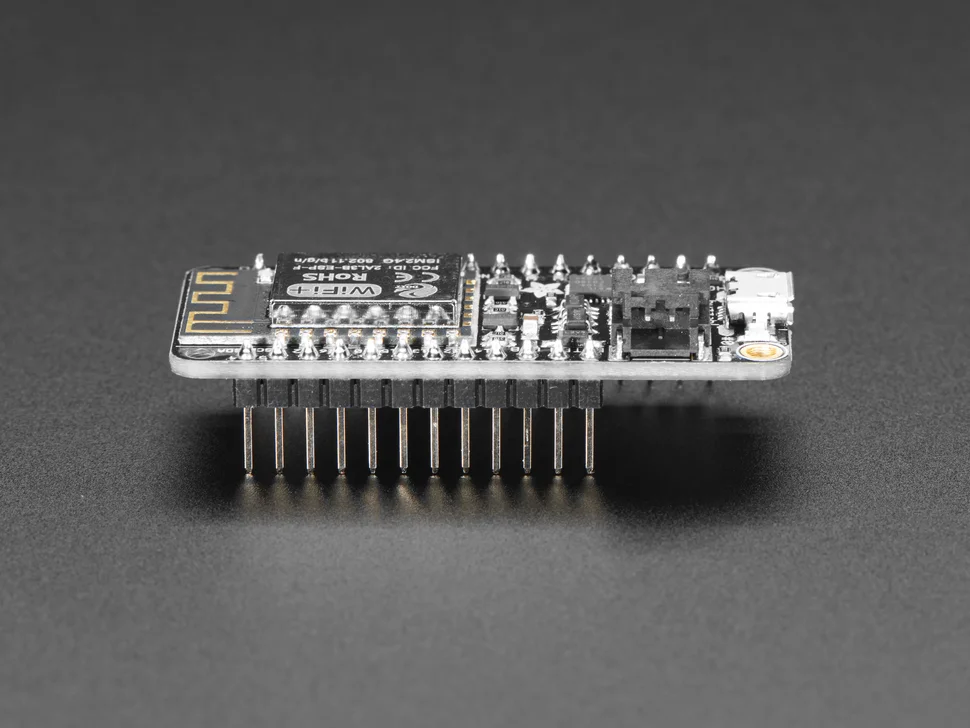
  • Complete ESP8266 development platform with pre-soldered headers for immediate use.
  • Integrated CP2104 USB-serial converter enables plug-and-play programming via the Arduino IDE.
  • Onboard LiPo battery charger with charge status LED and optional disable trace for custom power designs.
  • Dual-purpose user LEDs: a red LED on GPIO0 for general indication and a blue LED on GPIO2 for bootloader debugging.
  • Compact Feather form-factor (51mm x 23mm) designed for portability and stackability with other Feather wings.
  • Auto-reset circuit simplifies the firmware upload process without manual button presses.
  • Stable 3.3V power supply with ample current for driving sensors and peripherals.

Applications

  • Prototyping Wi-Fi enabled IoT devices and smart home sensors.
  • Building portable, battery-powered data loggers and environmental monitors.
  • Creating wireless sensor nodes for home automation systems (MQTT, HTTP).
  • Developing connected wearables or remote control interfaces.
  • Educational platform for learning embedded systems and wireless networking.

Technical Specifications

Microcontroller/SoCESP8266 v1.1 (Tensilica core)
Wireless Protocols802.11 b/g/n Wi-Fi
CPU Frequency80 MHz
Flash Memory4 MB (32 Mbit)
Supply Voltage3.7V LiPo or 5V USB
Regulator Output3.3V, 500mA peak
USB-Serial ConverterCP2104 (921600 baud max)
Digital I/O9x GPIO (support I2C, SPI)
Analog Input1x (1.0V max)
Battery ChargerIntegrated 100mA LiPo charger
Dimensions51mm x 23mm
Weight10g

Frequently Asked Questions

How do I upload my first sketch to the Feather HUZZAH using the Arduino IDE?

First, install the ESP8266 board support via the Arduino Boards Manager. Connect the board via USB, select 'Adafruit Feather HUZZAH ESP8266' as your board, and choose the correct COM port. The onboard CP2104 converter and auto-reset circuit handle boot mode entry automatically, so you can simply click Upload. The blue LED on GPIO2 will flash during the upload process, which runs at up to 921600 baud by default for fast transfers.

What is the proper way to power the board with a Lithium polymer battery?

Connect a 3.7V LiPo battery to the onboard JST PH connector. The integrated 100mA charger will activate when USB is also connected, indicated by a red charge status LED. The board's power management logic automatically switches to USB power when available and seamlessly reverts to battery when disconnected. For permanent installations, you can cut the charger enable trace to disable charging and use an external management circuit.

What are the available GPIO pins and their special functions on the Feather HUZZAH?

The board breaks out 9 GPIO pins (0, 2, 4, 5, 12, 13, 14, 15, 16) which can be used for digital I/O, PWM, I2C, and SPI. Note that GPIO16 can serve as a wake-up source from deep sleep. GPIO0 and GPIO2 have dedicated LEDs for debugging. The single analog input (ADC) is limited to a 1.0V maximum, so use a voltage divider for higher sensor readings. Always ensure signals are 3.3V logic level compatible.

Package Includes

  • 1 x Adafruit Assembled Feather HUZZAH ESP8266 Board with Headers

Additional Information

Weight 0.01 kg
Dimensions 5.1 × 2.3 cm