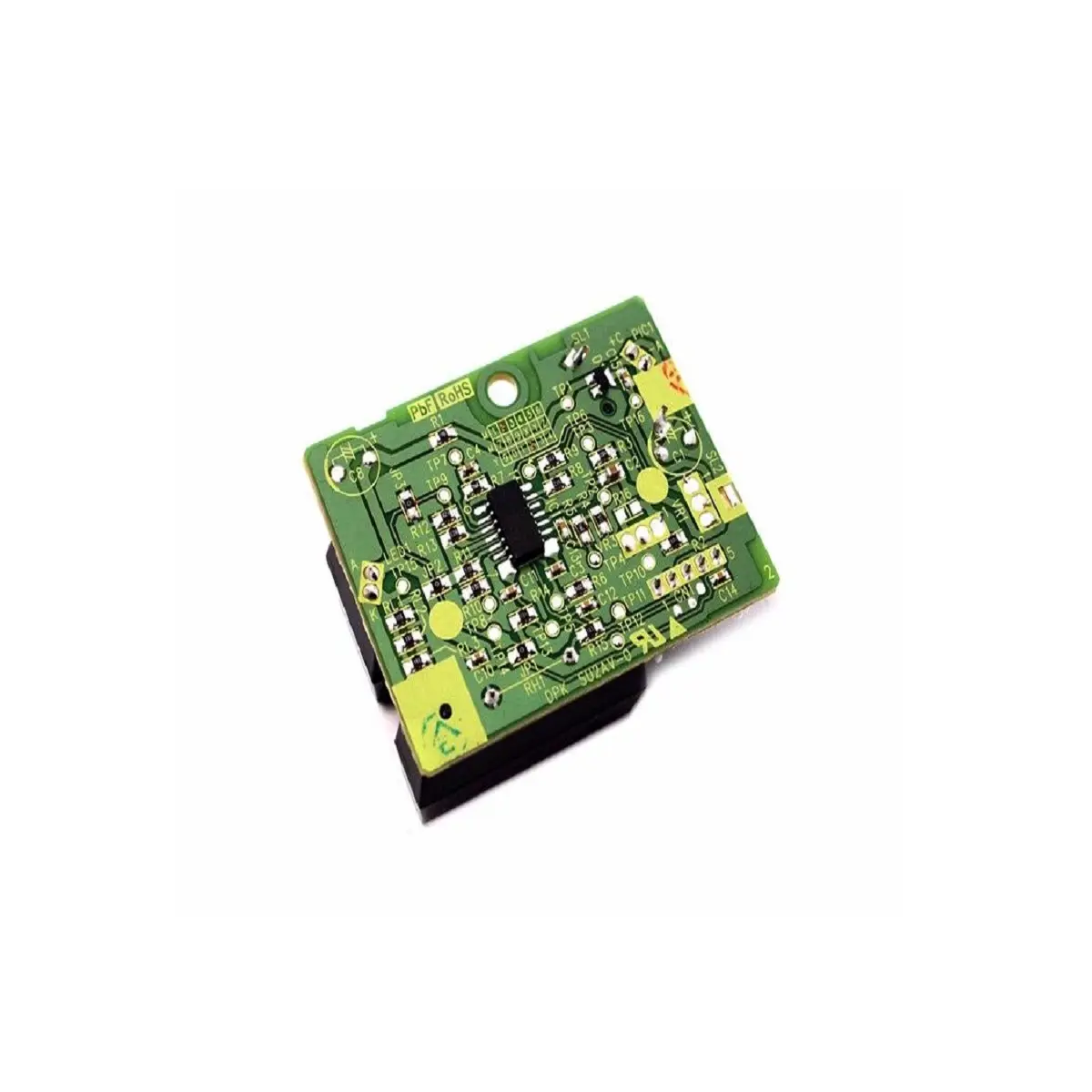
SKU: SENS-0299
📋 GST Invoice Available

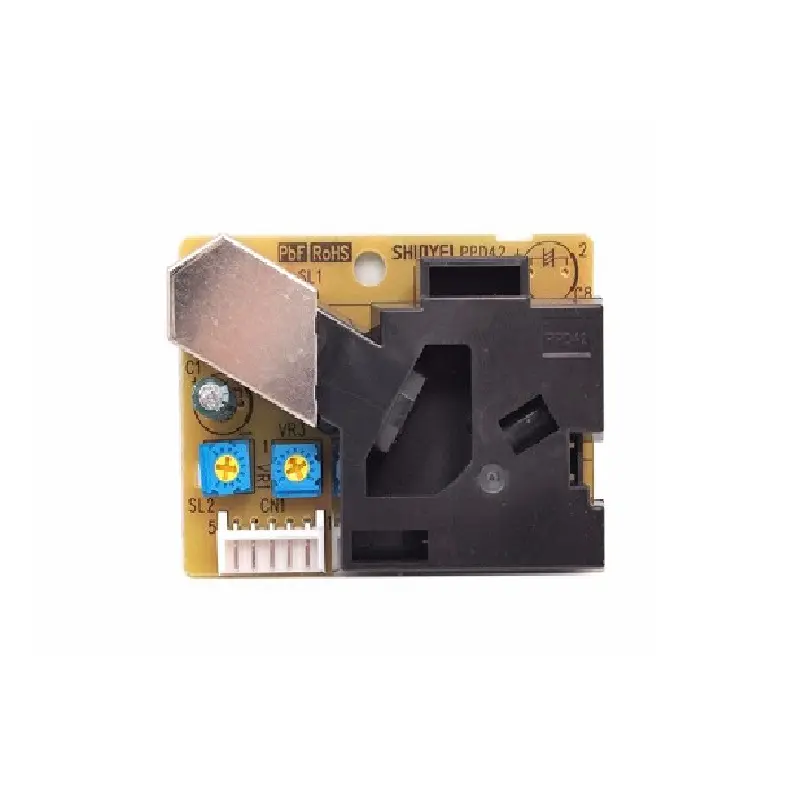
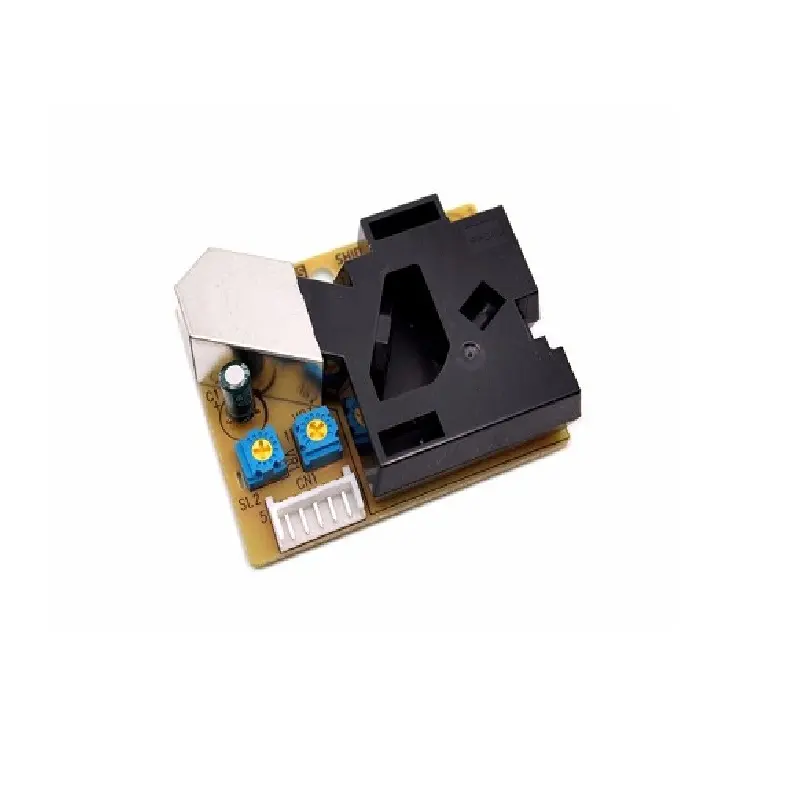
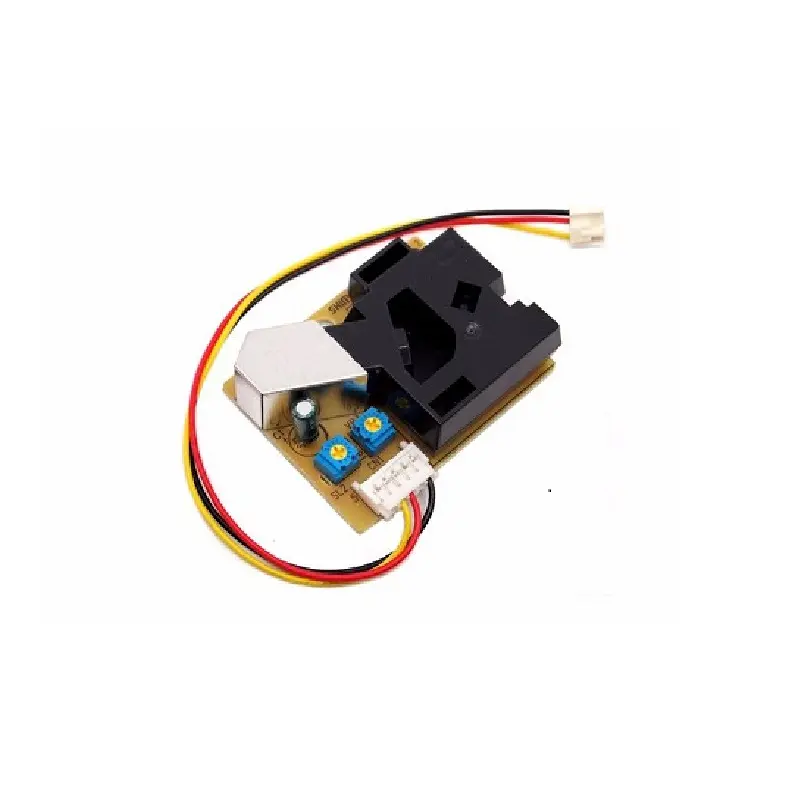
Seeed Studio Studio Grove Dust Sensor PPD42NS - PM2.5 & PM1.0 Dual PWM Output

₹1,159.00 (Inclusive of all taxes)
Out of Stock

The Seeed Studio Studio Grove Dust Sensor (PPD42NS) is a digital particulate matter sensor providing dual PWM outputs for PM1.0 and PM2.5 concentrations, designed for easy integration with Arduino, Raspberry Pi, and other 5V microcontrollers via the Grove connector system.

Features

  • Dual PWM output for Particle sizes >1μm and >2.5μm (approx).
  • Grove-compatible interface for plug-and-play connectivity with Seeed Studio’s ecosystem.
  • Operates on 5V DC supply with a standby current of 90mA.
  • Measures concentration via Low Pulse Occupancy (LPO) counting method (0-28,000 pcs/L).
  • Compact, self-aspirating design with a built-in heater for stable long-term operation.

Out of stock

Description

The PPD42NS dust sensor employs a light scattering principle to detect airborne particulate matter. An internal infrared LED and phototransistor measure the Low Pulse Occupancy (LPO) time of particles passing through the sensing chamber, which is directly proportional to Particle concentration. This digital counting method provides data in particles per liter (pcs/L) or per 0.01 Cubic Sensor feet.

Designed for indoor air quality monitoring, the sensor features a self-aspirating airflow mechanism driven by a built-in heater, eliminating the need for an external fan. Its Grove interface simplifies wiring, offering a negative logic digital output compatible with 5V microcontroller logic levels. The sensor is calibrated for reliable detection of common indoor pollutants like cigarette smoke and household dust.

Key Features

  • Dual-channel digital PWM output for simultaneous PM1.0 and PM2.5 measurement.
  • Grove standardized connector ensures quick, reliable connections to development boards.
  • Internal heater generates thermal convection for consistent, fan-less air sampling.
  • High sensitivity and long-term stability for continuous indoor air quality assessment.
  • Compact and lightweight form factor (59x45x22 mm) for easy integration into enclosures.
  • Wide operating humidity range up to 95% RH for robust performance in various environments.
  • Negative logic digital output with defined high (>4.0V) and low (<0.7V) voltage levels.

Applications

  • Indoor air quality monitors and data loggers for homes and offices.
  • Feedback control sensor for smart air purifier and ventilator systems.
  • Pollutant detection in HVAC and air conditioning units.
  • Environmental sensing nodes for IoT and smart building networks.
  • Educational projects for particulate matter measurement and environmental science.

Technical Specifications

Manufacturer Part NumberPPD42NS
BrandSeeed Studio Studio
Operating Voltage3.3V to 5.5V DC (Typical 5V)
Standby Current90mA
Output SignalDual PWM, Negative Logic Digital
Output High Level>4.0V
Output Low Level<0.7V
Detectable Particle Diameter>1μm
Measurement Range0 to 28,000 pcs/L (0 to 8,000 pcs/0.01cf)
Operating Temperature0°C to 45°C
Operating Humidity≤95% RH
InterfaceGrove (Digital)
Dimensions (L x W x H)59 mm x 45 mm x 22 mm
WeightApprox. 0.027 kg

Frequently Asked Questions

What is the operating voltage for the Grove Dust Sensor?

The sensor operates from 3.3V to 5.5V DC, with a typical supply voltage of 5V. The digital output logic levels are designed for 5V microcontroller systems, with a high level defined as above 4.0V and a low level below 0.7V.

How does the sensor output data and what do the two PWM signals represent?

The sensor provides two separate negative logic PWM output signals. One pin corresponds to particles larger than approximately 1 micron (PM1.0), and the other corresponds to particles larger than approximately 2.5 microns (PM2.5). The concentration is proportional to the Low Pulse Occupancy (LPO) time of these signals over a measurement period.

Can this sensor be used outdoors?

It is primarily designed for indoor air quality monitoring. Its operating temperature range is 0°C to 45°C, and it has no specified ingress protection (IP) rating. For outdoor use, it must be placed in a fully sealed and weatherproof enclosure to protect it from direct moisture, condensation, and temperatures outside its rated range.

How do I connect this sensor to an Arduino or Raspberry Pi?

Connect the sensor's Grove connector to a digital Grove port on a Seeed Studio Studio base shield (like the Grove Base Shield for Arduino) or a Grove-to-female Jumper cable. The sensor requires a 5V power pin and a digital input pin on your microcontroller to read the PWM signal. Code libraries are available to calculate concentration from the pulse width.

What is the difference between 'pcs/L' and µg/m³?

This sensor outputs concentration in particles per liter (pcs/L), a count-based unit. Many air quality standards use mass concentration (µg/m³). Conversion requires knowing the density and size distribution of the particles, which is complex. The pcs/L output is ideal for relative air quality trends and comparing pollution levels, not for direct regulatory compliance reporting.

Package Includes

  • 1 x Seeed Studio Studio Grove Dust Sensor (PPD42NS)

Additional Information

Weight 0.027 kg
Dimensions 5.9 × 4.5 × 2.2 cm