SKU: IOWC-1992
📋 GST Invoice Available

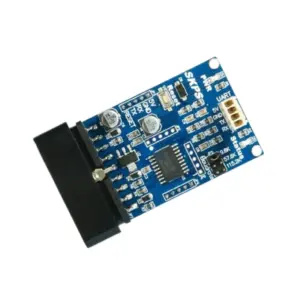
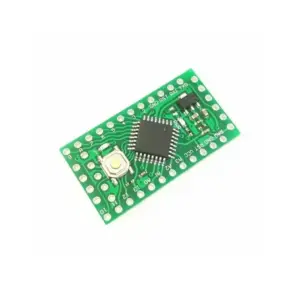
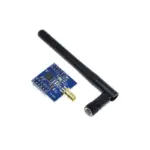
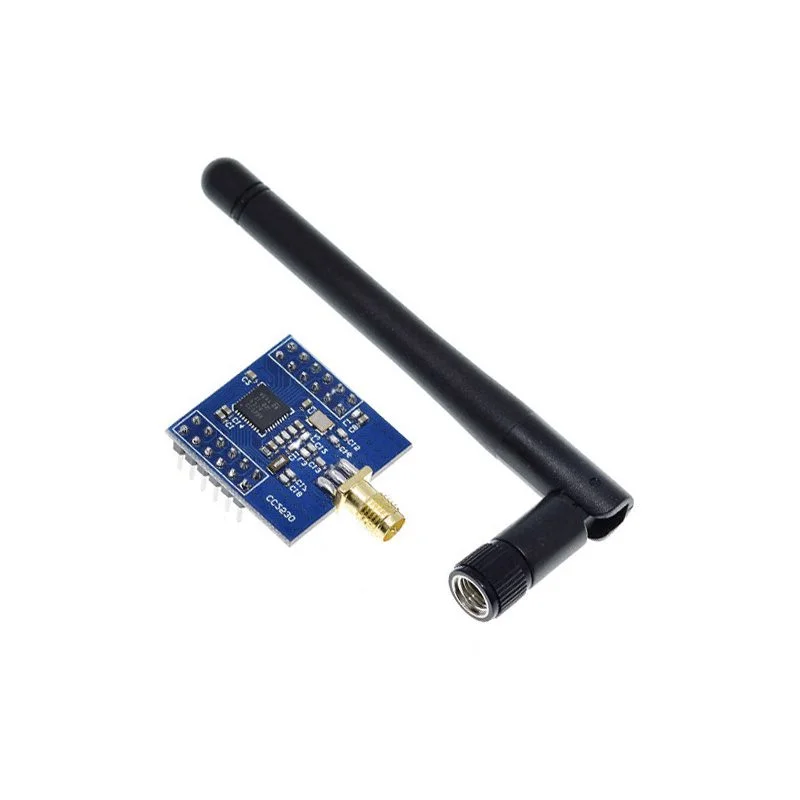
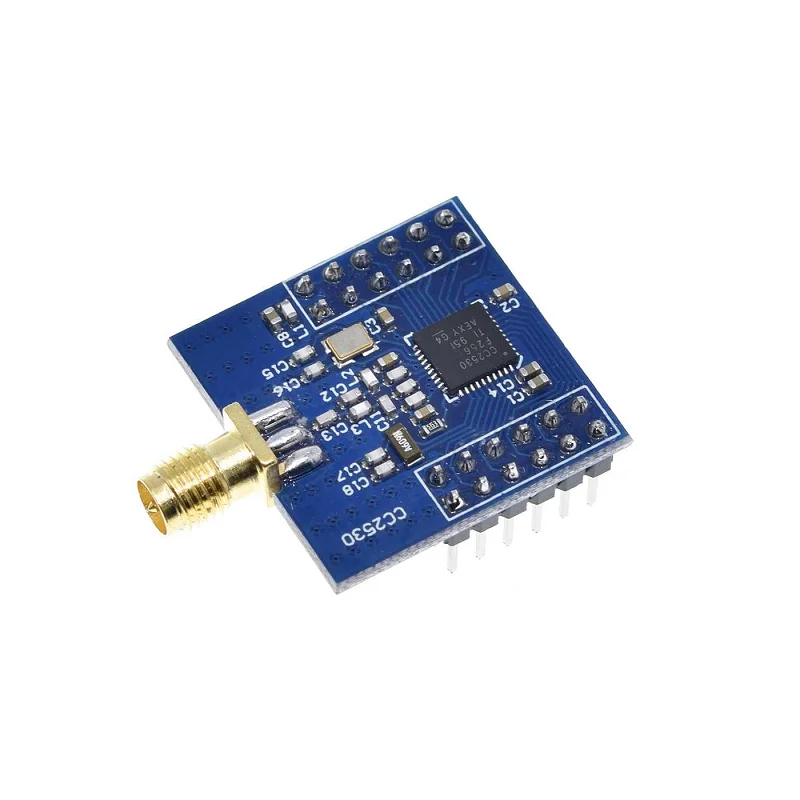
CC2530F256 Zigbee UART Wireless Core Development Board

₹649.00 (Inclusive of all taxes)
Out of Stock

This CC2530F256 Zigbee UART wireless core board integrates a 2.4GHz IEEE 802.15.4 RF transceiver and an 8051 microcontroller, providing a streamlined development platform for Zigbee mesh network applications via a simple serial interface.

Features

  • Features the CC2530F256 SoC with an integrated 2.4GHz IEEE 802.15.4 RF transceiver and 8051 MCU core for Zigbee protocol stacks.
  • Offers excellent receiver sensitivity and programmable RF output power up to +4.5 dBm for robust wireless links.
  • Includes a dedicated UART serial port (TX/RX) for easy AT command control and integration with host microcontrollers or PCs.
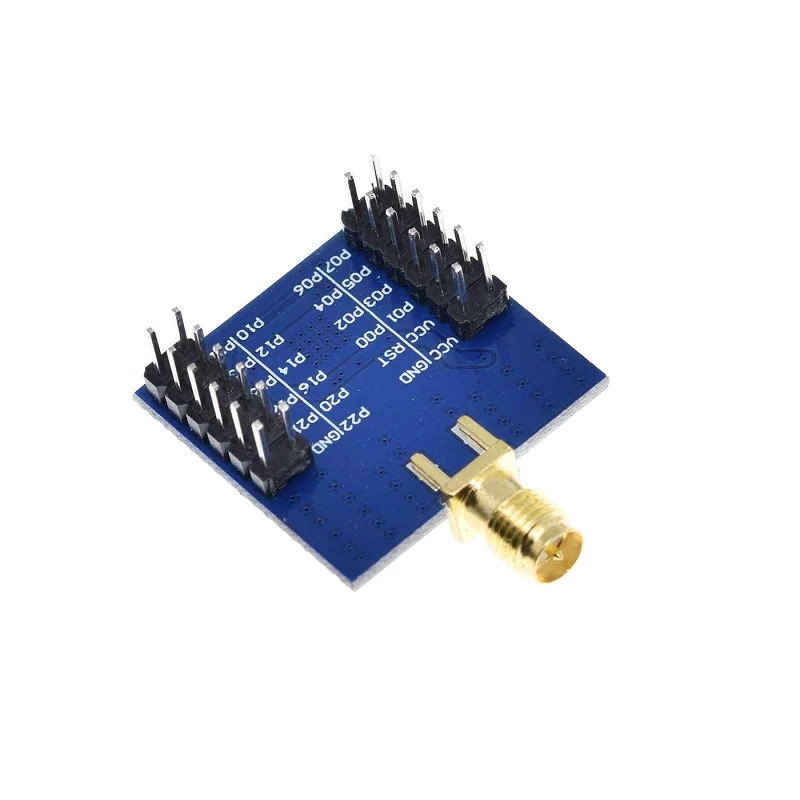
  • Provides 21 programmable GPIO pins for sensor interfacing and peripheral control within Zigbee sensor nodes.
  • Built with minimal external components for a compact footprint, suitable for embedded wireless designs.

Out of stock

Description

The CC2530F256 Zigbee UART Wireless Core Development Board is a fundamental building block for creating 2.4GHz Zigbee network nodes. It centers on the Texas Instruments CC2530 system-on-chip, which combines an RF transceiver, an 8051 microcontroller, and in-system programmable flash memory. This integration allows developers to implement full Zigbee PRO or Zigbee 3.0 protocol stacks for creating mesh networks.

The board’s design emphasizes ease of integration, exposing the core UART (P0.2 as RX, P0.3 as TX) for serial communication, alongside debug (P2.1, P2.2) and reset pins. It operates on a 3.3V supply and supports an industrial temperature range from -40°C to +125°C, making it suitable for demanding environments. The RF section requires an external antenna connected via a compatible connector, enabling flexible range optimization.

Key Features

  • Integrated 2.4GHz IEEE 802.4 compliant RF transceiver with excellent interference robustness.
  • Programmable RF output power up to +4.5 dBm for adjustable communication range.
  • Core 8051 microcontroller with 256 KB of in-system programmable flash for application and stack code.
  • Simple UART serial interface for AT command control and data exchange, simplifying host processor integration.
  • 21 available digital I/O pins for connecting sensors, actuators, and status LEDs.
  • Minimal external component count for a compact and cost-effective wireless node design.
  • Supports industrial operating temperature range for reliable performance in harsh conditions.
  • Compatible with standard Zigbee development tools and software stacks from Texas Instruments.

Applications

  • Home and building automation networks (lights, switches, sensors).
  • Industrial wireless control and monitoring systems (IIoT).
  • Low-power wireless sensor networks for environmental data collection.
  • Consumer electronics requiring mesh networking.
  • Healthcare monitoring devices with secure, low-data-rate links.

Technical Specifications

Microcontroller/SoCCC2530F256 (8051 core)
Wireless ProtocolIEEE 802.15.4 (Zigbee)
Frequency Range2.4 GHz (2.3 - 2.5 GHz)
RF Output PowerProgrammable up to +4.5 dBm
Supply Voltage3.3V
GPIO21
Debug InterfaceDebug Data (P2.1), Debug Clock (P2.2)
Primary InterfaceUART (TX/RX)
Antenna ConnectorExternal (type not specified)
Operating Temperature-40°C to +125°C
Dimensions (LxW)50 mm x 30 mm

Frequently Asked Questions

How do I communicate with this CC2530 board from an Arduino or Raspberry Pi?

Connect the board's TX pin to your host's RX and its RX pin to your host's TX, ensuring a common ground. Supply 3.3V power. Use a serial library (like SoftwareSerial on Arduino or pySerial on Raspberry Pi) to send and receive AT commands or custom data packets at the configured baud rate, typically 115200 or 9600, to control the Zigbee module and manage network joins or data transmission.

What software tools are needed to program the CC2530F256 microcontroller?

You need the IAR Embedded Workbench for 8051 or the Texas Instruments CC2530 SDK, which includes a compiler and debugger. Use a CC Debugger programming adapter connected to the board's Debug Data (P2.1) and Debug Clock (P2.2) pins. Flash the Zigbee protocol stack (Z-Stack) and your application firmware via this interface. For simple serial control, pre-loaded AT command firmware can be used without direct programming.

What type of antenna should I use, and how is it connected?

Use a 2.4GHz antenna with 50-ohm impedance, such as a whip or dipole, matching the connector type on the board (commonly SMA or IPEX). Ensure the antenna is connected securely before powering the module. For optimal range and to comply with regulatory standards, use an antenna with a gain appropriate for your application, keeping in mind the module's +4.5 dBm maximum output power limit.

What is the power consumption and how can I implement sleep modes?

Operating current depends on RF activity, typically tens of mA during transmission. The CC2530 supports several low-power sleep modes (PM1-PM3) to conserve energy. Configure these modes through firmware to shut down the radio and peripherals, waking via timer or GPIO interrupt. For battery-powered sensor nodes, design your firmware to transmit data briefly and then enter deep sleep, minimizing the average current draw to extend battery life significantly.

Package Includes

  • 1 x CC2530F256 Zigbee UART Wireless Core Development Board

Additional Information

Weight 0.05 kg
Dimensions 5 × 3 cm