SKU: IOWC-1897
📋 GST Invoice Available

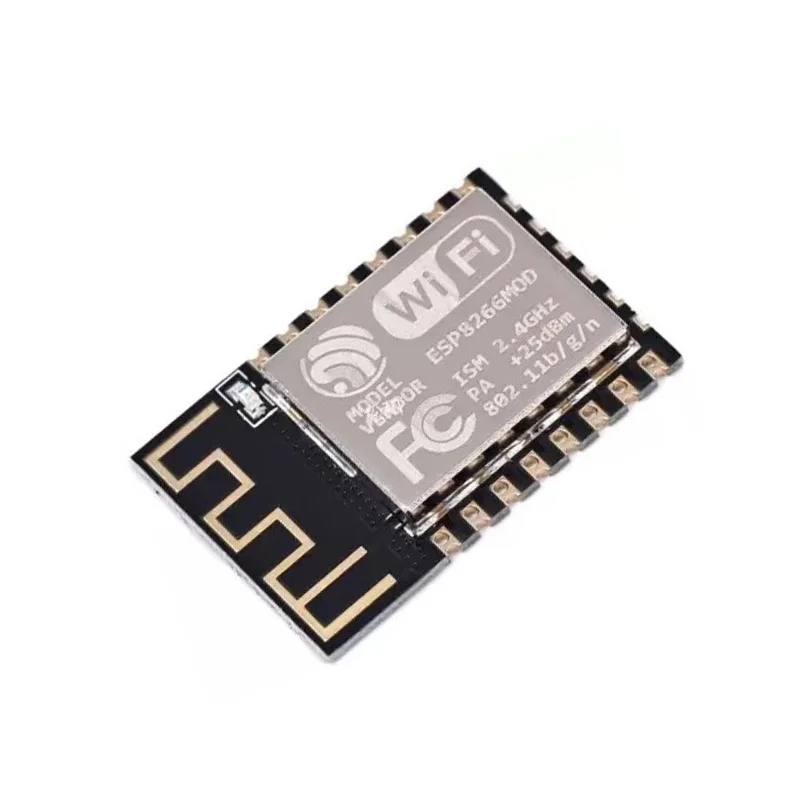
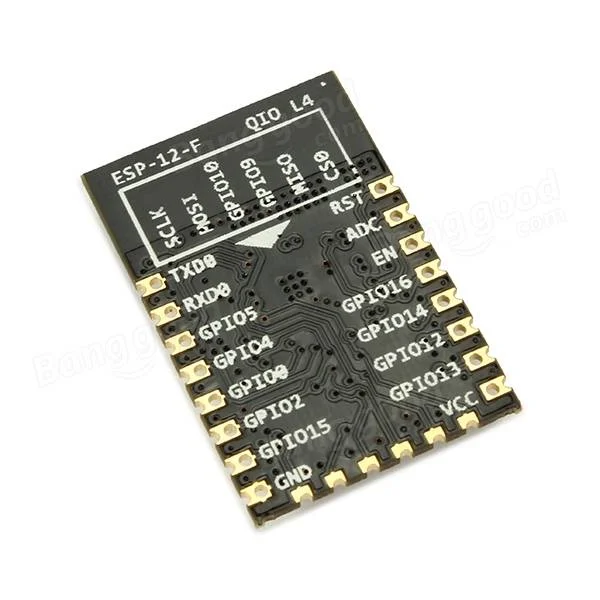
ESP-12F ESP8266 Wi-Fi Module w/ PCB Antenna

₹125.00 (Inclusive of all taxes)
Out of Stock

The ESP-12F ESP8266 Wi-Fi Module is a 3.3V IoT wireless transceiver with a built-in PCB antenna, pre-programmed AT command firmware, and full TCP/IP stack for Arduino IDE, ESP-IDF, or MicroPython development.

Features

  • ESP8266 SoC with integrated 32-bit RISC processor, Wi-Fi MAC/baseband, and full TCP/IP stack for standalone or host-controlled operation.
  • 2.4GHz 802.11 b/g/n Wi-Fi with +19.5dBm output power, WPA/WPA2 security, and station/softAP/SoftAP+station modes.
  • Pre-flashed AT command firmware for rapid UART serial integration; programmable via Arduino IDE, ESP-IDF, or MicroPython.
  • 3.3V communication interface with 240mA peak operating current; multiple GPIOs, SPI, I2C, and UART interfaces for sensor connectivity.
  • Enhanced ESP-12F design with improved PCB antenna, impedance matching, and RF front-end for stronger signal output and anti-jamming.

Out of stock

Description

The ESP-12F is a surface-mount Wi-Fi module based on Espressif’s ESP8266 system-on-chip, integrating a 32-bit Tensilica processor, RF front-end, balun, power amplifier, and PCB antenna into a compact 24mm x 16mm footprint. It operates on the 2.4GHz band supporting 802.11 b/g/n protocols with a peak RF output power of +19.5dBm, enabling robust wireless connectivity for IoT nodes, smart home devices, and remote sensor telemetry.

This module comes pre-programmed with AT command firmware, allowing immediate UART serial control for network configuration and data transmission. Developers can fully leverage the onboard MCU by flashing custom firmware via the Arduino IDE, ESP-IDF, or MicroPython, utilizing its GPIOs, SPI, I2S, and SDIO interfaces for embedded applications. The ESP-12F revision features enhanced peripheral circuitry, laminate process, and antenna matching for improved signal integrity and reduced interference.

Key Features

  • ESP8266-based SOC with integrated TCP/IP stack, Wi-Fi MAC/baseband, and 32-bit RISC processor.
  • 2.4GHz 802.11 b/g/n Wi-Fi with support for WPA/WPA2 security and Wi-Fi Direct (P2P).
  • +19.5dBm output power and integrated RF switch, balun, LNA, PA, and matching network.
  • Pre-programmed AT command set for out-of-box UART serial control and network configuration.
  • Multiple operating modes: Station, Soft Access Point (softAP), and SoftAP + Station.
  • Surface-mount package with 2mm pitch pads; built-in PCB antenna for compact designs.
  • Low-power management with integrated DCXO, PMU, and regulators; supports deep sleep modes.
  • Compatible with ESP-12/ESP-202 footprint; enhanced impedance matching and anti-jamming circuitry.

Applications

  • IoT sensor nodes for environmental monitoring (temperature, humidity, air quality).
  • Smart home automation devices (Wi-Fi switches, relays, lighting controllers).
  • Wireless data loggers and telemetry units for industrial or agricultural systems.
  • Embedded web servers and client devices for remote control and monitoring.
  • Prototyping and educational boards for learning wireless IoT and microcontroller programming.

Technical Specifications

Microcontroller/SoCESP8266 (Tensilica L106 32-bit RISC)
Wireless Protocols802.11 b/g/n Wi-Fi @ 2.4GHz
Frequency Range2.4GHz ISM Band
RF Transmit Power+19.5dBm (typical)
Supply Voltage3.3V DC
Operating Current240mA (max)
InterfacesUART, SPI, I2C, I2S, SDIO, GPIO
Antenna ConnectorIntegrated PCB Antenna
Operating Temperature-40°C to +125°C (typical)
Dimensions24mm x 16mm (LxW)

Frequently Asked Questions

How do I program the ESP-12F module using the Arduino IDE?

Install the ESP8266 board package via Arduino's Board Manager. Select 'Generic ESP8266 Module' as the board, set Flash Mode to 'DIO', Flash Size to '4MB (FS:2MB OTA:~1019KB)', and upload speed to 115200 baud. Connect the module's TX/RX to your USB-to-serial adapter, ensuring GPIO0 is pulled low during reset to enter flashing mode. Use the standard Arduino serial programming workflow to upload your sketches.

What is the default UART configuration for AT commands on the ESP-12F?

The module ships with AT firmware configured for 115200 baud, 8 data bits, no parity, and 1 stop bit (8N1). Connect the TX pin of your microcontroller to the module's RX and vice-versa. Send 'AT' followed by a carriage return to test communication. You can modify the baud rate using the 'AT+UART' command if needed for your specific application or power constraints.

Can I use the ESP-12F as a standalone microcontroller without an external host?

Yes, the ESP8266 integrates a 32-bit RISC processor, memory, and GPIOs, allowing it to run custom firmware independently. Flash your application using Arduino IDE, ESP-IDF, or MicroPython. You must provide a stable 3.3V power supply capable of supplying up to 240mA during RF transmission. Utilize deep sleep modes to minimize power consumption for battery-operated IoT sensor nodes.

Package Includes

  • 1 x ESP-12F ESP8266 Wi-Fi Module

Additional Information

Weight 0.002 kg
Dimensions 1.6 × 2.4 cm