SKU: IOWC-1887
📋 GST Invoice Available

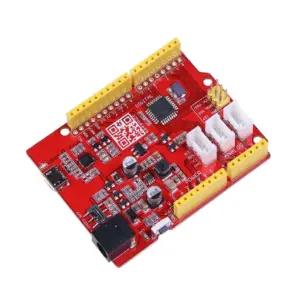
Wemos ESP8266 D1 R2 V2.1.0 WiFi Development Board

₹269.00 (Inclusive of all taxes)
Out of Stock

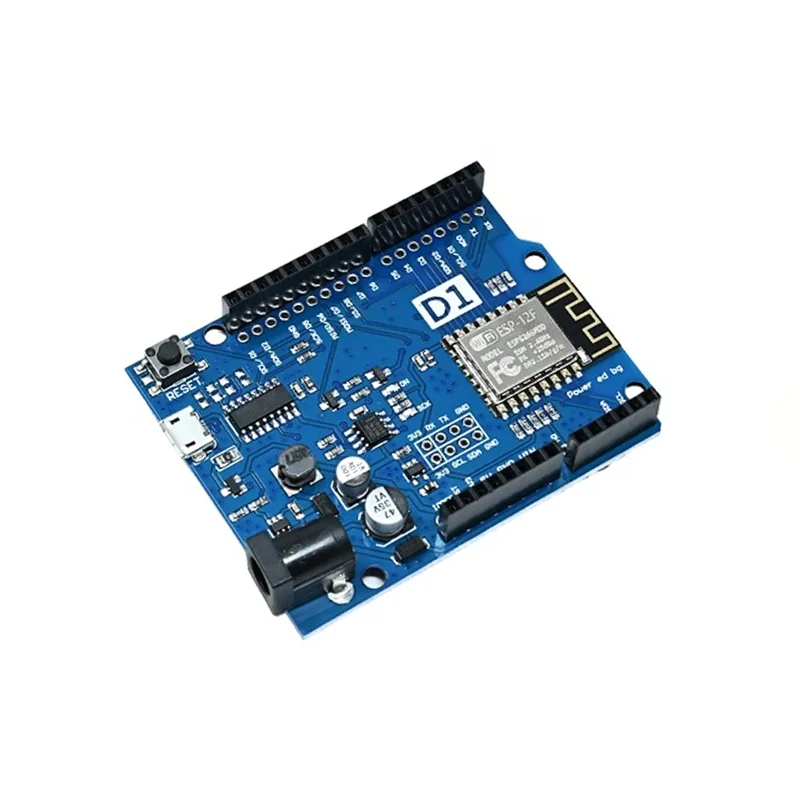
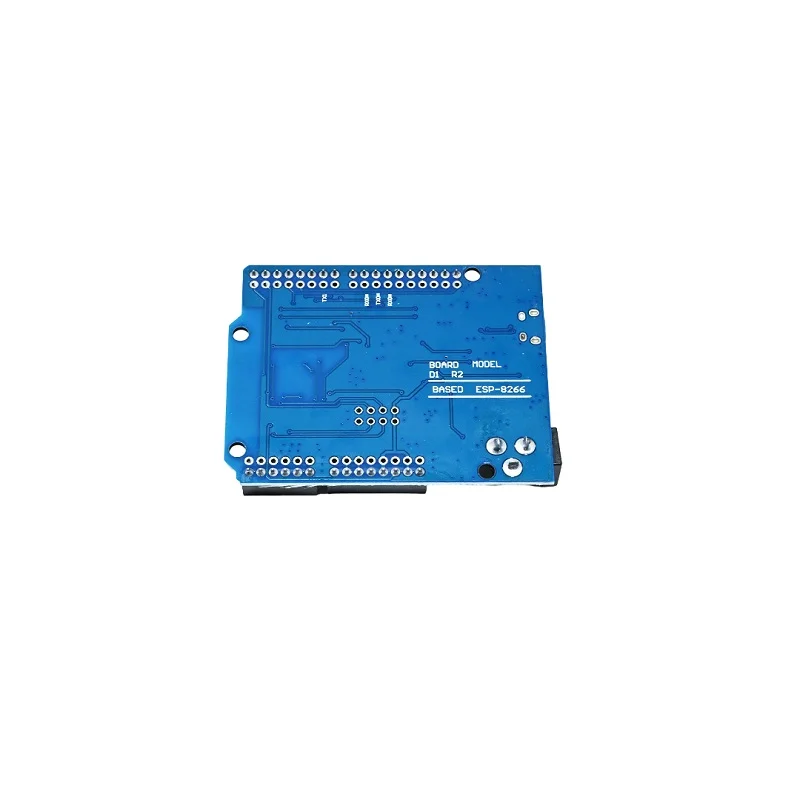
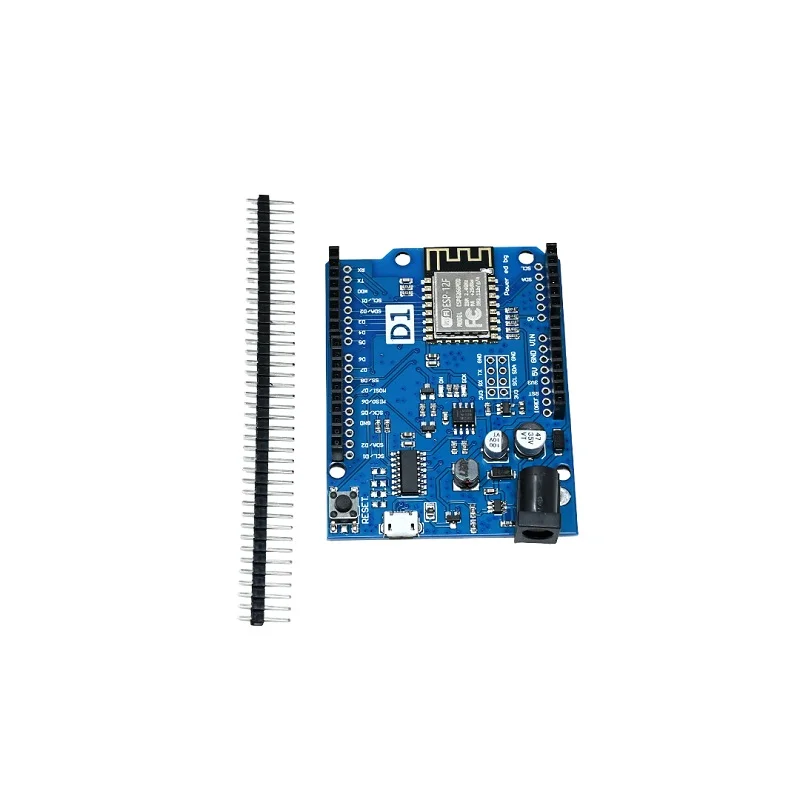
The Wemos D1 R2 V2.1.0 is an ESP8266EX-based development board compatible with the Arduino IDE and NodeMCU firmware. It features 11 digital I/O pins, a 3.3V operating voltage, and an onboard switching power supply for flexible 9-12V DC input.

Features

  • Powered by the ESP8266EX SoC with integrated Wi-Fi (802.11 b/g/n) and a 32-bit processor for IoT applications.
  • Arduino UNO R3 form factor and pinout compatibility, making it easy to use with existing shields and prototyping.
  • Onboard 4MB flash memory for storing application code, file systems, and OTA updates.
  • Integrated switching voltage regulator accepts 9-12V DC input, providing stable 5V/1A output for powering peripherals.
  • 11 digital I/O pins (with interrupt/PWM/I2C/1-Wire support) and 1 analog input pin for sensor integration.

Out of stock

Description

The Wemos D1 R2 V2.1.0 is a robust Wi-Fi development board built around the Espressif ESP8266EX system-on-chip. It combines the processing power and wireless connectivity of the ESP8266 with the familiar physical layout of the Arduino UNO, offering a seamless transition for makers and developers. The board’s integrated switching power supply enhances its utility in field deployments by allowing direct connection to higher-voltage battery packs or wall adapters.

Designed for rapid IoT prototyping, the board supports programming via the Arduino IDE using the ESP8266 core, as well as NodeMCU’s Lua-based firmware. Its 4MB of flash memory accommodates complex applications and Over-the-Air (OTA) update capabilities. The inclusion of a micro-USB port simplifies both power delivery and serial communication for debugging and firmware flashing.

Key Features

  • ESP8266EX-based Wi-Fi development board with full Arduino UNO R3 footprint compatibility.
  • Onboard 5V/1A switching regulator for wide 9V to 12V DC input range, eliminating the need for external regulators.
  • Direct programming and debugging via micro-USB connection using standard CH340G USB-to-serial bridge.
  • Supports Arduino IDE, NodeMCU firmware, and ESP8266 SDK for flexible firmware development.
  • All digital I/O pins (except D0) support interrupts, PWM, I2C, and 1-Wire protocols out-of-the-box.
  • Compact 68mm x 54mm form factor with standard 2.54mm pin spacing for easy integration into breadboards and shields.

Applications

  • Smart home automation hubs and Wi-Fi sensor nodes (temperature, humidity, motion).
  • Prototyping IoT devices with web server, MQTT client, or REST API connectivity.
  • Retrofitting existing Arduino UNO projects with wireless control and cloud data logging.
  • Educational platforms for learning embedded systems, wireless networking, and IoT protocols.
  • DIY network appliances like simple web-controlled relays, data loggers, or display controllers.

Technical Specifications

Microcontroller/SoCESP8266EX
Wireless ProtocolsWi-Fi 802.11 b/g/n
Operating Voltage3.3V
Input Voltage Range9V - 12V DC (via onboard regulator)
Digital I/O Pins11
Analog Input Pins1
Flash Memory4 MB
USB InterfaceMicro-B (via CH340G)
Dimensions (L x W)68 mm x 54 mm
Weight20 g

Frequently Asked Questions

How do I program the Wemos D1 R2 board using the Arduino IDE?

First, install the ESP8266 board package via the Arduino IDE Boards Manager. Select 'Wemos D1 R2' as your board. Connect the board via micro-USB, choose the correct COM port, and set upload speed to 115200 baud. You can then write, compile, and upload sketches as with any standard Arduino.

What is the purpose of the onboard switching power supply?

The integrated switching regulator allows you to power the board directly from a 9V to 12V DC source, such as a wall adapter or battery pack. It converts this higher voltage down to the stable 5V and 3.3V rails required by the board and its peripherals, providing up to 1A of current for external components.

Can I use Arduino shields designed for the UNO with this board?

Yes, the Wemos D1 R2 uses the same physical pinout and spacing as the Arduino UNO R3. Most 5V-tolerant shields will work, but note that the board's I/O logic level is 3.3V. You may need level shifters for certain 5V-only peripherals, and analog reference voltage differences should be considered.

What are the sleep modes and power consumption figures for the ESP8266 on this board?

The ESP8266EX supports deep sleep, modem sleep, and light sleep modes. In deep sleep, current can drop to around 20µA, making it suitable for battery-powered sensors. Active Wi-Fi transmission draws approximately 70mA. You can manage sleep cycles in firmware using the Arduino ESP8266 libraries or ESP-IDF to optimize battery life.

Package Includes

  • 1 x Wemos ESP8266 D1 R2 V2.1.0 WiFi Development Board

Additional Information

Weight 0.02 kg
Dimensions 6.8 × 5.4 × 1.2 cm