SKU: IOWC-1804
📋 GST Invoice Available

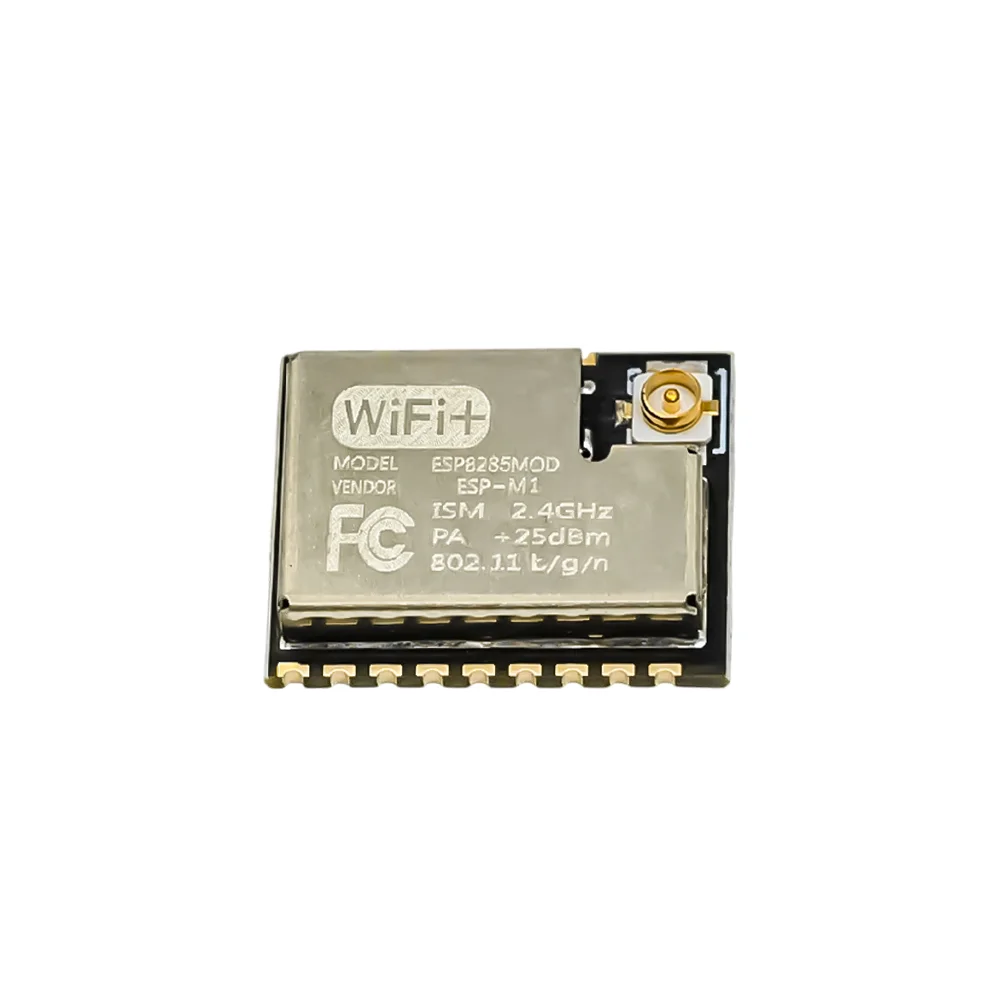
ESP-M1 ESP8285 Serial-to-WiFi Module (Replaces ESP-07/07S)

₹131.00 (Inclusive of all taxes)
Out of Stock

The ESP-M1 is a compact ESP8285-based serial-to-WiFi transparent transmission module designed for low-power IoT applications. It operates on 3.3V and communicates via UART AT commands, providing a direct replacement for ESP-07 and ESP-07S modules in smart home and industrial control systems.

Features

  • ESP8285 Core: Integrates a Tensilica L106 processor with built-in flash memory for standalone Wi-Fi connectivity and application logic.
  • Serial-to-WiFi Transparency: Enables seamless bidirectional data conversion between UART serial port and TCP/IP network for remote device control.
  • Low Power & Long Range: Engineered for ultra-low power consumption and enhanced wireless transmission distance for battery-operated IoT nodes.
  • Direct ESP-07/07S Replacement: Offers a pin-compatible upgrade path for existing designs using the popular ESP-07 series modules.
  • AT Command Interface: Simplifies configuration and network management via standard ESP8266/8285 AT command set over a serial connection.

Out of stock

Description

The ESP-M1 module is a dedicated serial-to-WiFi bridge built around the ESP8285 SoC, which combines a 32-bit microcontroller with integrated Wi-Fi (802.11 b/g/n) and 1MB of flash memory. This integration allows for compact designs that require minimal external components. The module facilitates transparent transmission, meaning data received on its UART pins is automatically packetized and sent over Wi-Fi to a specified server or client, and vice-versa.

Operating from a 3.0V to 3.6V supply, the ESP-M1 is optimized for low-power scenarios common in sensor networks and smart home devices. Its design supports stable long-distance communication and is fully programmable via the Arduino IDE or ESP8266 SDK for custom firmware, beyond the standard AT command mode. The built-in PCB antenna provides adequate coverage, while the module’s industrial temperature rating (-40°C to +125°C) ensures reliability in harsh environments.

Key Features

  • Transparent Serial-WiFi Bridge: Converts UART data streams to TCP/IP packets in real-time for seamless remote serial communication.
  • Integrated ESP8285 Solution: Combines processor, Wi-Fi RF, and memory on a single chip, reducing system footprint and BOM cost.
  • Power-Efficient Design: Supports deep sleep modes and low active current draw, extending battery life in field deployments.
  • Enhanced Wireless Performance: Engineered RF front-end and power amplifier improve link budget for reliable long-range connectivity.
  • Developer-Friendly Ecosystem: Compatible with the extensive ESP8266/8285 development tools, libraries, and community resources.
  • Robust Industrial Build: Rated for extended temperature operation, suitable for outdoor, automotive, and industrial control applications.

Applications

  • Smart Home Automation: Wireless control of relays, lights, and sensors via serial commands from a central hub.
  • Industrial IoT (IIoT) Telemetry: Connecting legacy serial-based industrial equipment (PLCs, meters) to cloud monitoring platforms.
  • Remote Sensor Nodes: Battery-powered environmental sensors transmitting data over Wi-Fi to a gateway or server.
  • Embedded Device Upgrades: Adding Wi-Fi connectivity to existing products using a simple UART interface.

Technical Specifications

Microcontroller/SoCESP8285 (Tensilica L106 32-bit RISC)
Wireless Protocol802.11 b/g/n Wi-Fi (2.4GHz)
Frequency Range2.412 - 2.484 GHz
RF Transmit PowerUp to +20 dBm (typical)
Supply Voltage3.0V - 3.6V DC
Operating Current~80 mA (average during RF transmission)
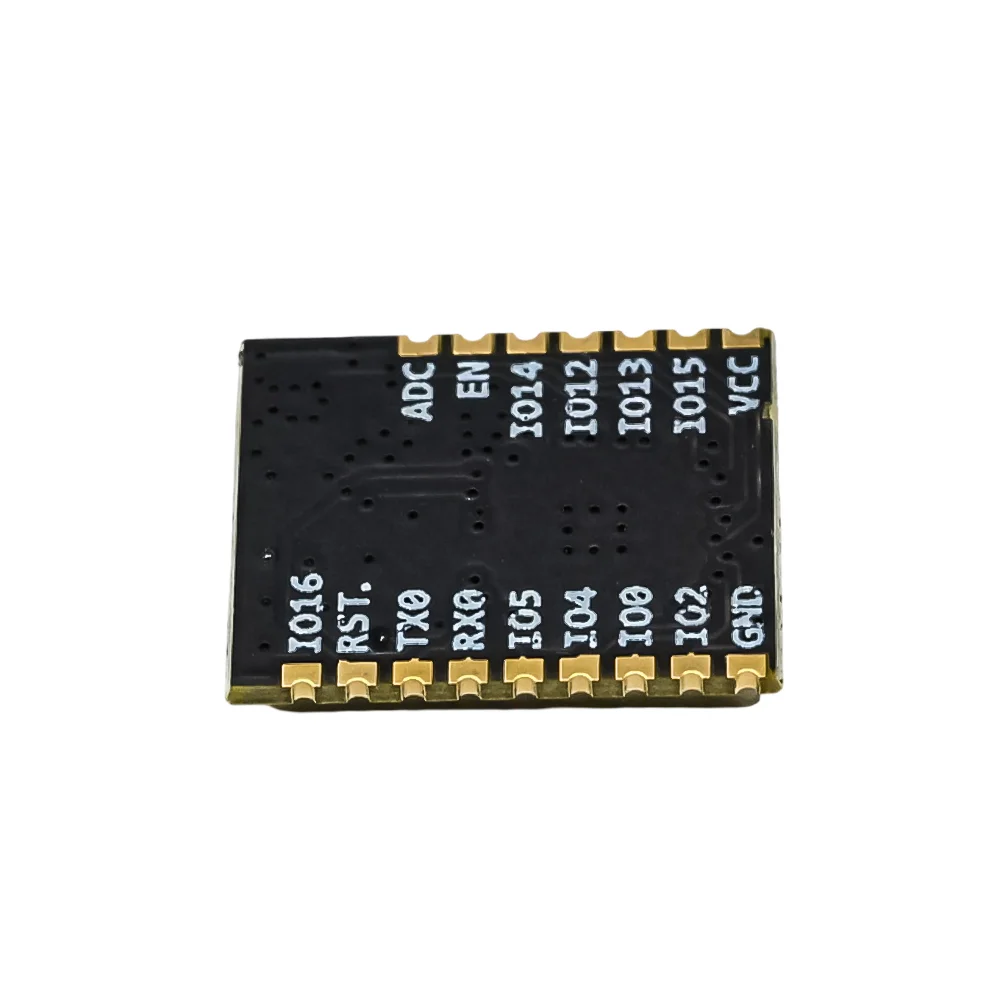
InterfacesUART (TX, RX, RST, GPIOs)
Antenna ConnectorIntegrated PCB Antenna
Operating Temperature-40°C to +125°C
Dimensions16 mm (W) x 30 mm (L)

Frequently Asked Questions

How do I configure the ESP-M1 module for basic serial-to-WiFi communication?

Connect the module's VCC (3.3V), GND, TX, and RX pins to a USB-to-serial adapter. Open a serial terminal at 115200 baud (default), send 'AT' to check responsiveness. Use AT+CWMODE to set station mode, AT+CWJAP to join your Wi-Fi network, and AT+CIPSTART to establish a TCP/UDP connection. The module will then transparently forward data between the serial port and the network socket. Ensure stable 3.3V power during configuration.

What is the power consumption profile, and how can I implement deep sleep?

The ESP-M1 draws approximately 80mA during active RF transmission and around 15mA during normal idle operation with Wi-Fi connected. To enable deep sleep for battery savings, connect GPIO16 to the RST pin. Then, use the AT command AT+GSLP=

Can I upload custom firmware to the ESP-M1 instead of using AT commands?

Yes, the ESP-M1 is fully programmable using the Arduino IDE or ESP8266/8285 SDK. Select 'Generic ESP8285 Module' as the board type. Connect GPIO0 to GND to enter flash mode, then power cycle the module. Use a USB-to-serial programmer (e.g., FTDI) connected to TX, RX, VCC, GND, and RST to upload your sketch. After programming, disconnect GPIO0 from GND and reset to run your application. The built-in 1MB flash accommodates both the firmware and a file system for data storage.

Package Includes

  • 1 x ESP-M1 ESP8285 Serial-to-WiFi Control Module

Additional Information

Weight 0.005 kg
Dimensions 3 × 1.6 cm