SKU: IOWC-1747
📋 GST Invoice Available

RFM98 LoRa Radio Node v1.0 ATmega328P 433MHz

₹1,289.00 (Inclusive of all taxes)
Out of Stock

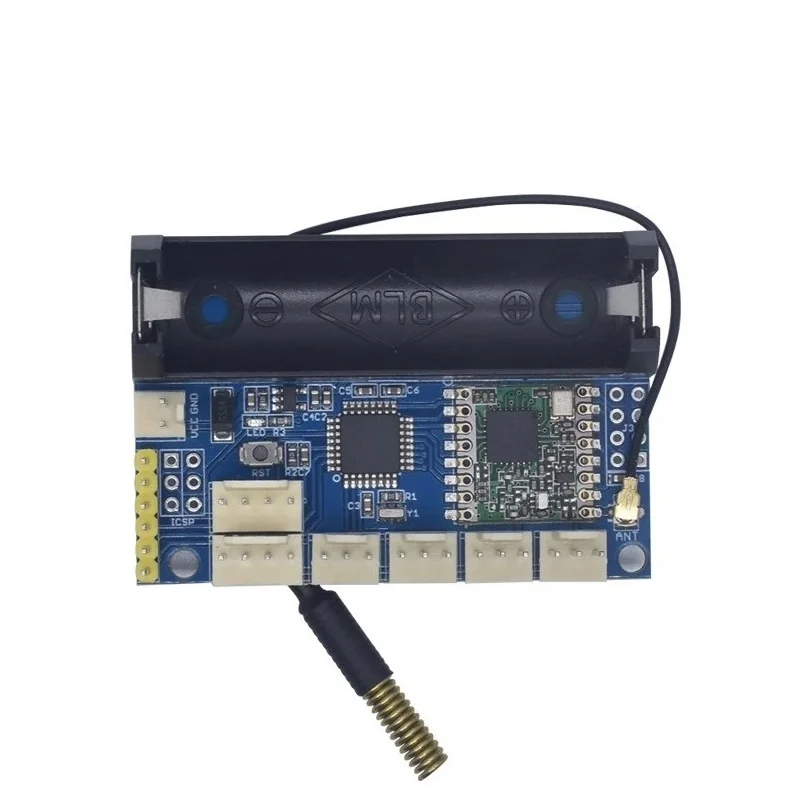
This LoRa Radio Node v1.0 integrates an ATmega328P microcontroller and an RFM95-based 433MHz LoRa transceiver, designed for long-range, low-power data transmission. Pre-loaded with an Arduino Pro Mini 8MHz 3.3V bootloader, it is programmable via the Arduino IDE for custom IoT sensor networks.

Features

  • Integrates ATmega328P MCU (8MHz, 3.3V) with RFM95-based 433MHz LoRa radio for long-range, sub-GHz packet transmission.
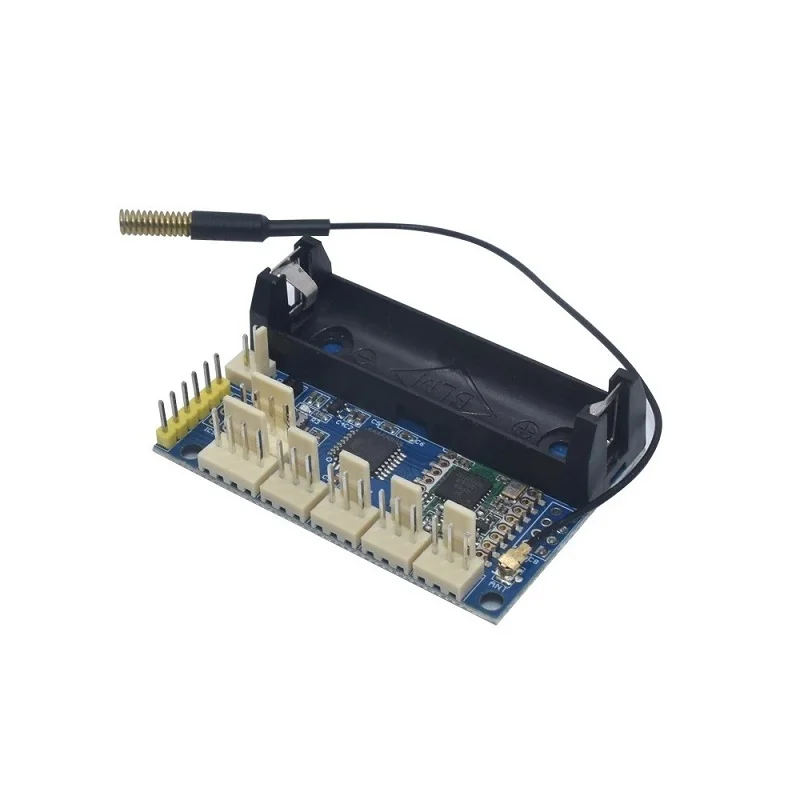
  • Onboard 14500 LiPo battery holder enables portable, off-grid deployment for remote sensing applications.
  • Features a 3.3V regulator with 500mA peak output to power the MCU, radio, and external sensors reliably.
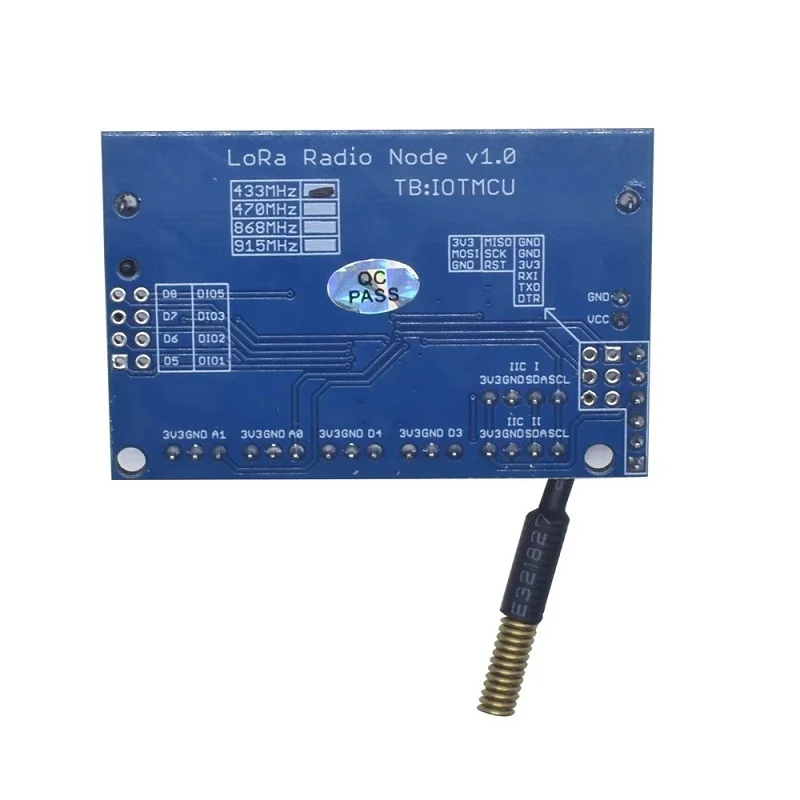
  • Breaks out key I/O: hardware I2C (x2), analog inputs (A0, A1), digital pins (D3, D4), and PWM (D3) via KK connectors.
  • Compact 40mm x 60mm form factor with mounting holes for easy integration into field enclosures or prototypes.

Out of stock

Description

The LoRa Radio Node v1.0 is a compact, integrated development platform built around the ATmega328P microcontroller and an RFM95-compatible 433MHz LoRa transceiver. The ATmega328P operates at 8MHz with 3.3V logic, pre-flashed with an Arduino Pro Mini bootloader for seamless compatibility with the Arduino IDE and vast library ecosystem. This combination provides a robust foundation for creating long-range, low-data-rate wireless sensor nodes that exceed the range limitations of 2.4GHz technologies like Wi-Fi or Bluetooth.

Power management is central to its design, featuring an onboard 3.7V 14500 LiPo battery holder and a capable 3.3V linear regulator delivering up to 500mA. This setup supports extended field operation and can power additional peripheral sensors. The board exposes critical interfaces through shell-type KK connectors, including two I2C ports, two analog inputs (A0, A1), and two digital pins (D3, D4), with D3 also supporting PWM. A blue LED on pin 13 and a reset button facilitate development and debugging.

Key Features

  • Integrated LoRa Transceiver & MCU: Combines an ATmega328P and a 433MHz RFM95-based radio on a single board for simplified wireless node design.
  • Arduino-Compatible Development: Pre-loaded with 8MHz 3.3V bootloader for direct programming and library use within the Arduino IDE.
  • Portable Power Solution: On-board 14500 LiPo battery holder enables truly wireless, mobile deployment in remote monitoring scenarios.
  • Expanded Peripheral Connectivity: Breaks out multiple hardware serial, I2C, SPI, analog, and digital pins via durable KK connectors for sensor integration.
  • Robust Power Regulation: Integrated 3.3V LDO regulator provides stable power for the core system and external components with 500mA peak current.
  • Designed for Range: Utilizes the 433MHz ISM band and LoRa modulation for significantly greater communication distance compared to standard 2.4GHz links.

Applications

  • Remote environmental sensor nodes for agriculture (soil moisture, temperature).
  • Long-range industrial telemetry and equipment status monitoring.
  • Asset tracking and wildlife monitoring in low-connectivity areas.
  • Building decentralized, peer-to-peer LoRa mesh networks for community IoT.
  • Portable data loggers and field research equipment.

Technical Specifications

Microcontroller/SoCATmega328P @ 8MHz, 3.3V logic
Wireless ProtocolLoRa (based on RFM95/98)
Frequency Range433 MHz
Supply Voltage3.7V (via 14500 LiPo)
Regulated Output3.3V, 500mA peak
InterfacesHardware UART, I2C (x2), SPI, Analog Inputs (A0, A1), Digital I/O (D3, D4), PWM (D3)
Antenna ConnectorIntegrated (for supplied wire antenna)
Dimensions40mm x 60mm
ProgrammingArduino Pro Mini 8MHz 3.3V bootloader

Frequently Asked Questions

How do I program this LoRa Radio Node?

The board comes pre-loaded with an Arduino Pro Mini 8MHz 3.3V bootloader. Connect an FTDI programmer to the 6-pin header, select 'Arduino Pro or Pro Mini' as the board in the Arduino IDE, choose 'ATmega328P (3.3V, 8MHz)' as the processor, and upload your sketch. Ensure your FTDI adapter is also set to 3.3V logic level to avoid damaging the board.

What is the typical range I can expect with the included antenna?

Range is highly dependent on environment. With the included wire antenna in an open rural area with clear line-of-sight, you can achieve several kilometers. In urban or dense suburban environments with obstacles, expect a range of a few hundred meters to 1-2 km. Using a higher-gain external antenna and optimizing LoRa spreading factor and bandwidth settings can significantly extend reliable communication distance.

Can I power this board directly via USB or an external power supply?

No, this board is designed specifically for battery operation via the onboard 14500 LiPo cell holder. Do not apply voltage directly to the battery terminals or other pins. The onboard 3.3V regulator generates all internal power from the 3.7V battery input. For development, you can use a 14500 battery or a bench power supply set to 3.7V connected to the battery holder terminals, observing correct polarity.

How do I connect sensors to the KK connectors?

The board uses 4-pin and 3-pin KK-style connectors. You will need matching female KK connector housings and crimp pins. The pinouts are labeled on the PCB silkscreen: the I2C ports provide SDA, SCL, 3.3V, and GND; the analog/digital ports provide the signal pin, 3.3V, and GND. Carefully crimp your sensor wires and insert them into the appropriate housing before plugging into the board.

Package Includes

  • 1 x LoRa Radio Node v1.0 Board with 14500 Battery Holder
  • 1 x 433 MHz LoRa Antenna

Additional Information

Weight 0.05 kg
Dimensions 8 × 6 × 3 cm