SKU: IOWC-1696
📋 GST Invoice Available

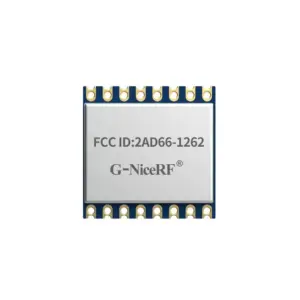
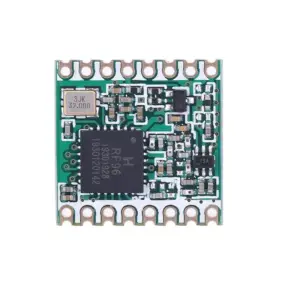
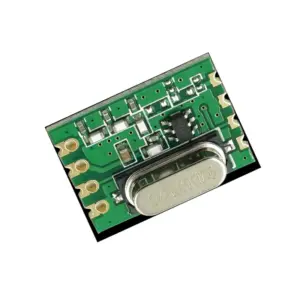
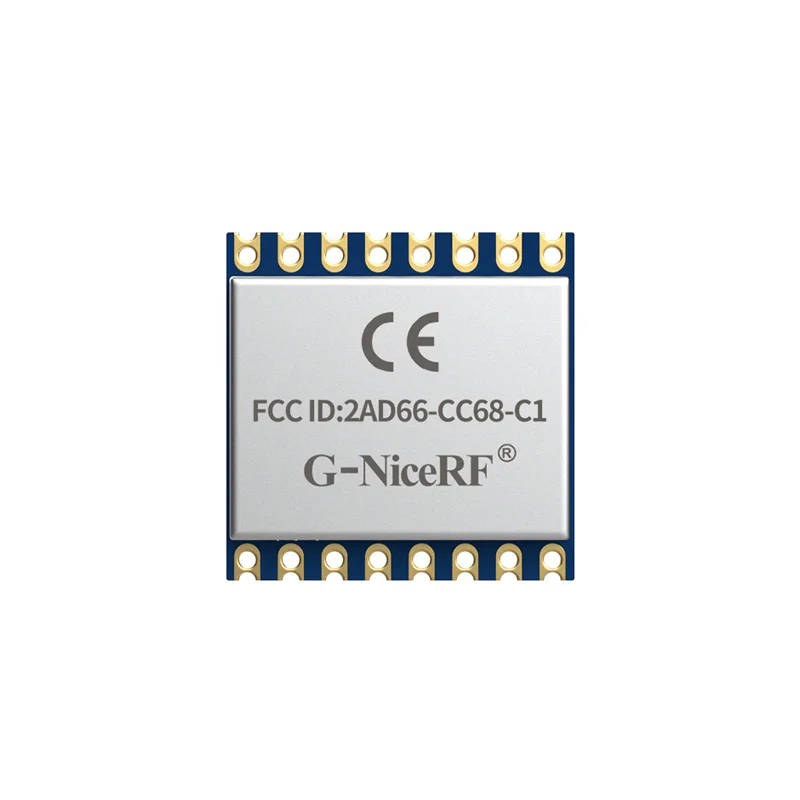
G-NiceRF CC68-C1-868/915 LLCC68 LoRa Module w/ SPI

₹419.00 (Inclusive of all taxes)
Out of Stock

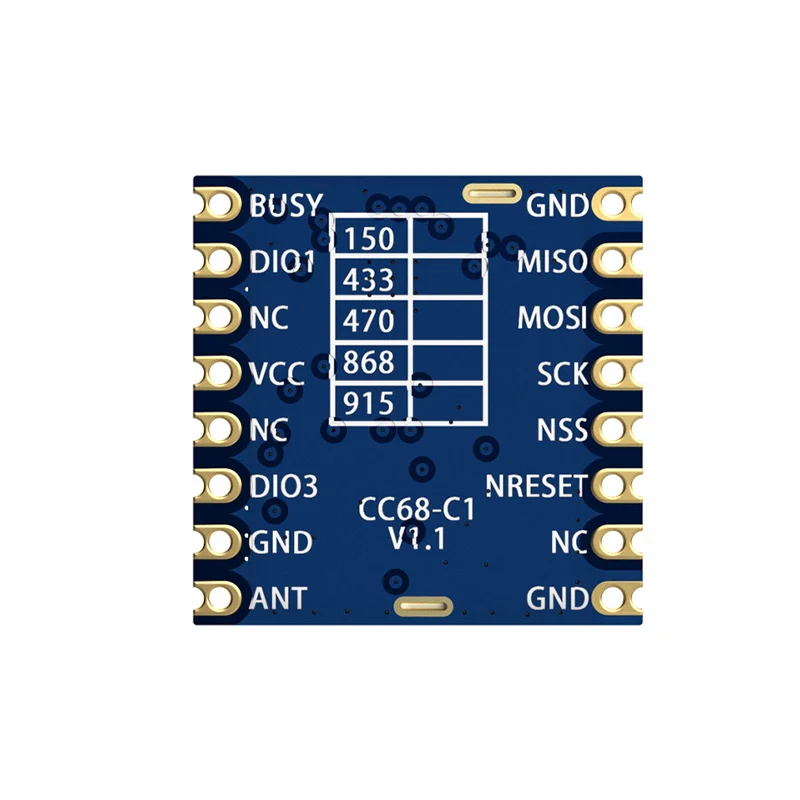
The G-NiceRF CC68-C1-868/915 is an FCC ID & CE-RED certified LoRa module based on Semtech’s LLCC68 chipset, offering configurable frequency bands (433/490/868/915 MHz) and an SPI interface for seamless integration into low-power, long-range IoT networks.

Features

  • Semtech LLCC68 Chipset: Powers reliable long-range LoRa and (G)FSK modulation for industrial IoT deployments.
  • Multi-Band Frequency Support: Configurable for 433, 490, 868, or 915 MHz operation, adaptable to regional ISM regulations.
  • High RF Performance: Delivers up to 22 dBm (160 mW) output power and -129 dBm sensitivity for robust links in challenging environments.
  • Ultra-Low Power Operation: Features ultra-low receiving and sleep currents, extending battery life for remote sensor nodes.
  • SPI Host Interface: Simple serial peripheral interface for easy connection to microcontrollers like STM32, ESP32, or Raspberry Pi.

Out of stock

Description

The G-NiceRF CC68-C1-868/915 LoRa Module is engineered for demanding industrial IoT applications requiring certified, long-range wireless connectivity. Built around the Semtech LLCC68 transceiver, it provides a robust physical layer supporting both LoRa and (G)FSK modulations, enabling flexible data rate selection from 1.76 to 62.5 Kbps (LoRa) or 0.6 to 300 Kbps (FSK) to balance range and throughput.

Its architecture prioritizes power efficiency, incorporating an industrial-grade crystal oscillator for stable frequency generation and an integrated antenna switch controlled directly by the RF chip. The module operates from a wide 1.8V to 3.7V supply, making it compatible with single-cell Li-ion batteries and various 3.3V MCU systems. FCC ID and CE-RED certifications ensure compliance for commercial deployments in smart metering, asset tracking, and agricultural telemetry systems.

Key Features

  • Certified for Global Markets: FCC ID and CE-RED certified, simplifying compliance for commercial product launches.
  • Flexible Modulation Schemes: Supports both LoRa for long-range, low-data-rate links and (G)FSK for higher-speed applications.
  • Industrial-Grade Stability: High-precision crystal oscillator ensures consistent RF performance across operating temperature ranges.
  • Integrated RF Front-End: Built-in antenna switch and matching network simplify PCB layout and antenna integration.
  • Built-in Wake-Up Timer: Integrated 64kHz oscillator can periodically wake an external microcontroller, enabling deep sleep strategies.
  • RoHS & REACH Compliant: Manufactured with lead-free processes adhering to environmental standards.

Applications

  • Industrial Metering & IIoT: Remote reading of water, gas, and electricity meters with long-range, low-power backhaul.
  • Smart Agriculture: Soil moisture, temperature, and humidity monitoring across large fields.
  • Asset Tracking & Logistics: Tracking the location and condition of pallets, containers, and vehicles.
  • Smart City Infrastructure: Monitoring street lighting, waste management bins, and environmental sensors.
  • Security & Alarm Systems: Wireless intrusion detection and perimeter monitoring sensors.

Technical Specifications

Wireless Chipset/SoCSemtech LLCC68
Wireless ProtocolsLoRa, (G)FSK
Frequency Range433, 490, 868, 915 MHz (Configurable 150-960 MHz)
RF Transmit PowerUp to 22 dBm (160 mW)
RF Sensitivity-129 dBm (LoRa)
Supply Voltage1.8V - 3.7V DC
Data RateLoRa: 1.76-62.5 Kbps; FSK: 0.6-300 Kbps
Host InterfaceSPI
FIFO Buffer255 bytes
CertificationsFCC ID, CE-RED, RoHS, REACH
Dimensions (LxWxH)Approx. 9 x 7 x 1 cm

Frequently Asked Questions

How do I interface the CC68-C1 module with my microcontroller?

The module connects via a standard 4-wire SPI interface (MOSI, MISO, SCK, CS). You must also connect the module's RESET, DIO0, and DIO1 pins to GPIOs on your host MCU (e.g., STM32, ESP32) for hardware reset and interrupt handling. Ensure your firmware uses a compatible LLCC68 driver library, such as those provided by Semtech or the Arduino LoRa library, configuring the correct CS and reset pins during initialization for reliable SPI communication.

What is the procedure for setting the module's frequency and output power?

Frequency and output power are configured via register writes over the SPI interface using the chip's API. You must initialize the transceiver, then write to the appropriate configuration registers (e.g., RegFrfMsb/Mid/Lsb for frequency, RegPaConfig for power). Typical steps include putting the chip in sleep mode, setting the operating mode to standby, writing the frequency (e.g., 868,100,000 Hz for 868.1 MHz), and setting the PaSelect and OutputPower bits for the desired 22 dBm maximum power. Always consult the Semtech LLCC68 datasheet for exact register maps and values.

What is the typical power consumption during receive and sleep modes?

The module features ultra-low power consumption critical for battery operation. In active receive mode (Rx), current draw is typically in the low tens of milliamps. In sleep mode, the current drops to the microamp range, significantly extending battery life. For precise current measurements, refer to the LLCC68 datasheet, as values depend on supply voltage and configuration. Implement deep sleep cycles on your host MCU, using the module's built-in 64kHz oscillator or external timers to wake the system periodically for data transmission.

Can I use this module with Arduino or Raspberry Pi platforms?

Yes, the module is compatible with both platforms. For Arduino, use the popular LoRa library, ensuring you define the correct pin mappings for CS, RESET, and DIO0 in your sketch. For Raspberry Pi, you can use an SPI-enabled GPIO header (e.g., Pi 4) with a 3.3V logic level converter if needed, and utilize a Python library like `pyLoRa` or a C/C++ driver. Remember to enable SPI in the Raspberry Pi OS configuration and connect the module's VCC to a 3.3V power source, not 5V, to avoid damage.

Package Includes

  • 1 x G-NiceRF CC68-C1-868/915 LoRa Module

Additional Information

Weight 0.005 kg
Dimensions 9 × 7 × 1 cm