SKU: IOWC-1667
📋 GST Invoice Available

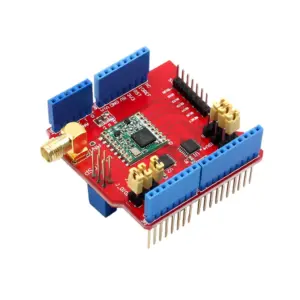
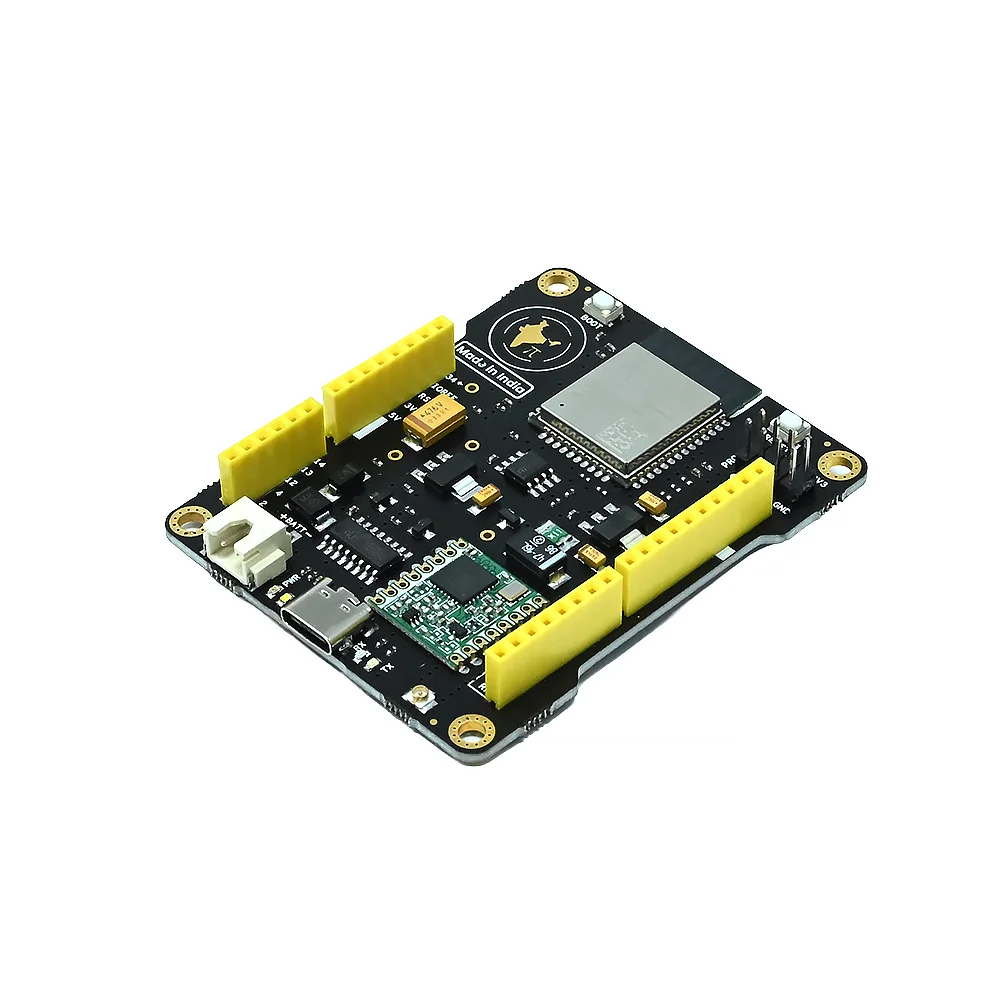
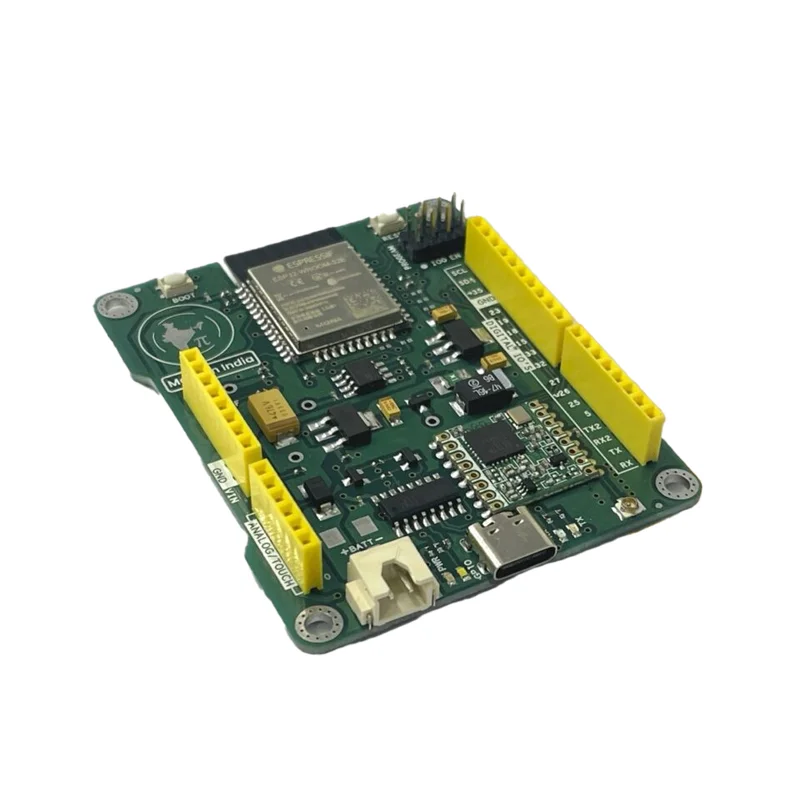
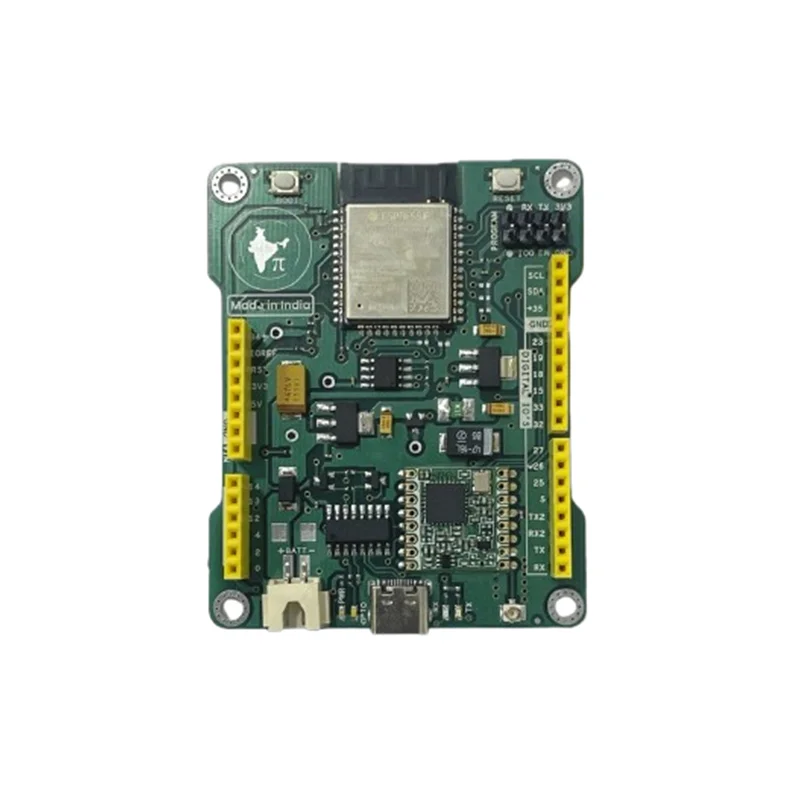
EdgeHax RFM95W-868S2R LoRa Transceiver Module with ESP32

₹2,539.00 (Inclusive of all taxes)
Out of Stock

The EdgeHax ESP32 LoRa Development Board integrates an RFM95W-868S2R transceiver for long-range, low-power IoT communication. It supports Arduino IDE, MicroPython, and ESP-IDF for rapid prototyping of LoRaWAN nodes or gateways, powered via USB-C or a 9V DC adapter.

Features

  • Integrated ESP32 microcontroller with RFM95W-868S2R 868MHz LoRa transceiver for dual Wi-Fi/Bluetooth and long-range sub-GHz connectivity.
  • Line-of-sight communication range up to 2 km enables robust deployments in remote monitoring, smart agriculture, and industrial telemetry.
  • Full firmware support for Arduino IDE, MicroPython, ESP-IDF, and PlatformIO accelerates development for makers and system integrators.
  • 15+ configurable GPIO pins (digital/analog) facilitate easy connection of sensors, actuators, and peripheral modules for complex IoT nodes.
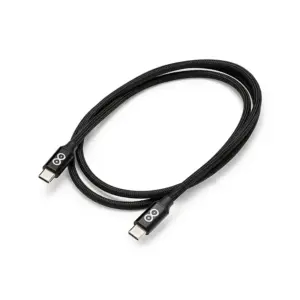
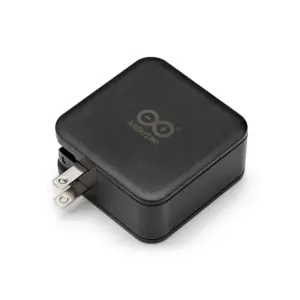
  • Flexible power input via USB Type-C or 9V DC adapter simplifies field deployment in both portable and fixed-installation scenarios.

Out of stock

Description

The EdgeHax ESP32 LoRa Development Board merges the processing power and dual-band wireless of the ESP32 with the long-range, low-power capabilities of the Semtech RFM95W LoRa transceiver. This combination creates a versatile IoT node capable of operating on both local Wi-Fi/Bluetooth networks and wide-area LoRaWAN or private LoRa networks, making it ideal for hybrid connectivity solutions.

Engineered for reliable performance in the 868 MHz ISM band, the module offers excellent receiver sensitivity and configurable transmit power, optimizing the link budget for deployments up to 2 kilometers line-of-sight. The board’s design provides direct access to the ESP32’s extensive I/O, allowing developers to interface a wide array of sensors for environmental monitoring, asset tracking, or smart metering without requiring additional signal conditioning circuitry.

Key Features

  • Hybrid Connectivity Node combines ESP32 (Wi-Fi/Bluetooth) and RFM95W (LoRa) for flexible network architecture.
  • Long-Range Sub-1GHz RF enables communication over several kilometers in open environments, perfect for rural or industrial sites.
  • Developer-Friendly Platform supports multiple programming environments including Arduino, MicroPython, and the native ESP-IDF framework.
  • Expansive GPIO Bank offers over 15 digital and analog pins for connecting sensors, displays, and control interfaces.
  • Dual Power Options allow operation from a standard USB Type-C port for development or a 9V DC supply for field installations.
  • Compact Form Factor is designed for integration into enclosures and prototypes, measuring 70mm x 58mm.

Applications

  • Remote Environmental Sensing: Deploy for soil moisture, weather station, or air quality monitoring in areas without cellular coverage.
  • Industrial IoT & Telemetry: Monitor tank levels, equipment status, or energy consumption in factories and remote facilities.
  • Smart Agriculture: Implement systems for irrigation control, livestock tracking, and crop health monitoring over vast farmlands.
  • Asset Tracking & Fleet Management: Build low-power trackers for vehicles, containers, or high-value equipment.
  • Smart City Solutions: Enable decentralized sensor networks for waste management, parking occupancy, or street lighting control.

Technical Specifications

Microcontroller/SoCESP32 (Dual-Core, Wi-Fi, Bluetooth)
LoRa TransceiverRFM95W-868S2R
Wireless ProtocolsLoRa, Wi-Fi 802.11 b/g/n, Bluetooth 4.2
Frequency Range868 MHz (ISM Band)
RF Transmit PowerUp to +20 dBm (typical for RFM95W)
Communication RangeUp to 2 km (Line of Sight)
Supply Voltage5V via USB Type-C or 9V via DC adapter
InterfacesUSB Type-C, GPIO (15+ digital/analog pins)
Antenna ConnectorIntegrated (for LoRa); Chip Antenna (for Wi-Fi/Bluetooth)
Development SupportArduino IDE, MicroPython, ESP-IDF, PlatformIO
Dimensions (L x W)70 mm x 58 mm
Weight20 g

Frequently Asked Questions

How do I program this EdgeHax ESP32 LoRa board?

You can program the board using the Arduino IDE with the ESP32 core installed, or via MicroPython/ESP-IDF. First, install the necessary board support package (e.g., ESP32 by Espressif Systems in Arduino Board Manager). For LoRa functionality, you'll need to install a compatible library like 'RadioLib' or 'LoRa' by Sandeep Mistry. Connect the board via USB Type-C, select the correct COM port and board model (e.g., ESP32 Dev Module), then upload your sketch. The board's GPIO pins are broken out for connecting sensors or peripherals as needed.

What is the power requirement and typical current consumption?

The board can be powered via the USB Type-C port (5V) or through a 9V DC adapter input. The total current draw depends on the ESP32's operational mode and LoRa radio activity. During active transmission at maximum LoRa power (+20 dBm), expect peaks above 120mA. Utilizing the ESP32's deep sleep modes and the RFM95W's sleep function can reduce average consumption to microamps for battery-powered sensor nodes. Always ensure your power supply can deliver at least 500mA for stable operation during Wi-Fi or high-power RF tasks.

Can this board act as a LoRaWAN gateway or just a node?

This board is primarily designed as a LoRa node or device endpoint. To function as a full LoRaWAN gateway, it would require a compatible concentrator module (like an SX1301) and gateway software (like ChirpStack Gateway Bridge). However, its built-in ESP32 with Wi-Fi allows it to act as a simple single-channel gateway or a packet forwarder by connecting to a network server via Wi-Fi. For most practical LoRaWAN deployments, you would use this as a battery-powered sensor node communicating with a dedicated multi-channel gateway.

Package Includes

  • 1 x EdgeHax ESP32 LoRa Development Board (RFM95W-868S2R)

Additional Information

Weight 0.02 kg
Dimensions 7 × 5.8 cm