SKU: IOWC-1611
📋 GST Invoice Available

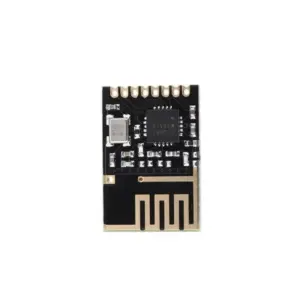
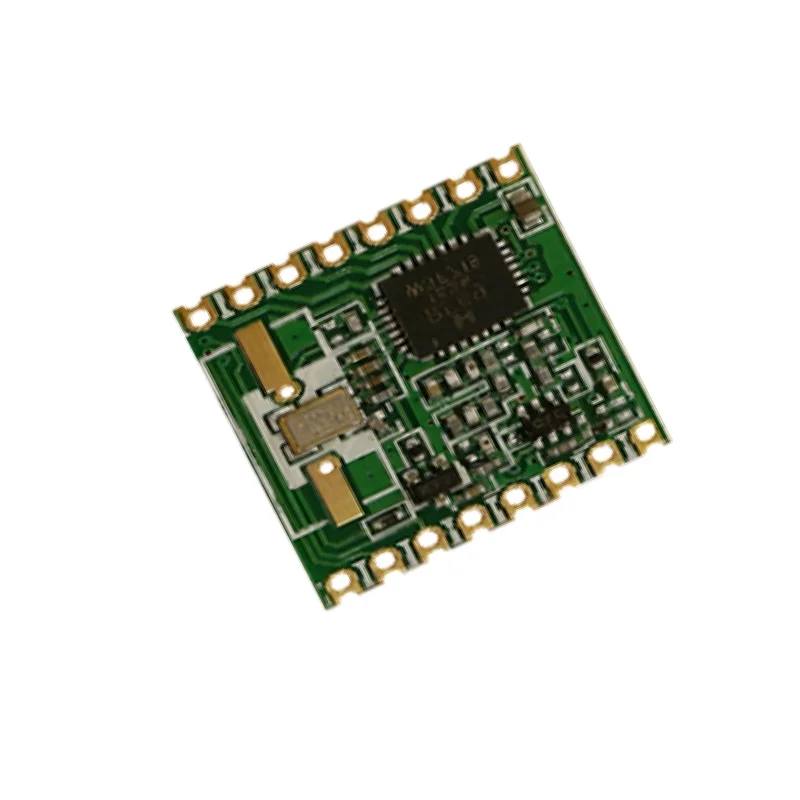
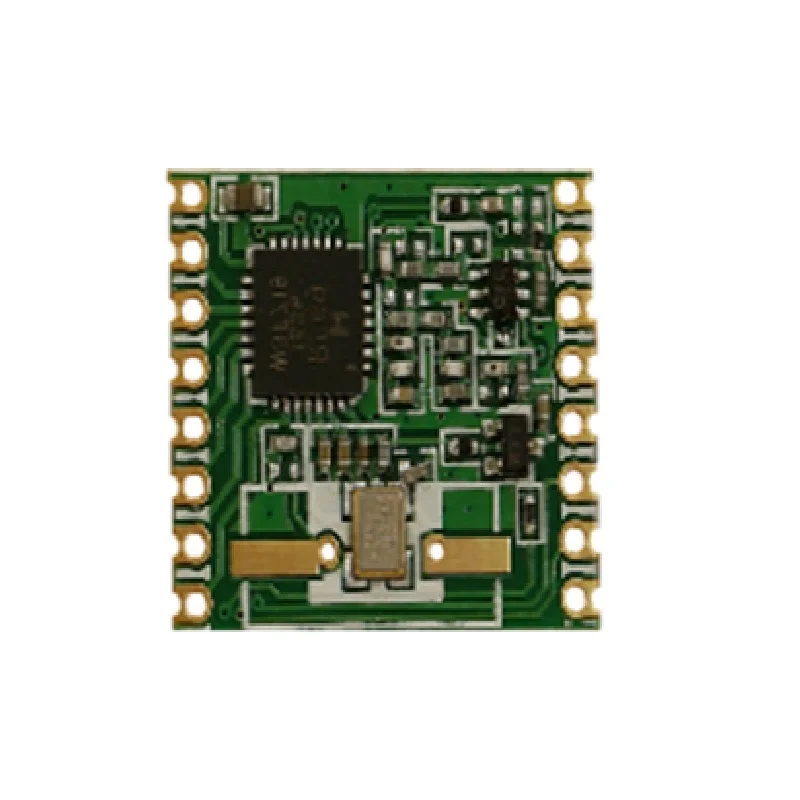
HopeRF RFM69HW-868S2R Sub-1GHz RF Transceiver Module

₹399.00 (Inclusive of all taxes)
Out of Stock

The HopeRF RFM69HW-868S2R is a high-power, programmable sub-1GHz RF transceiver module operating at 868MHz, designed for low-power wireless sensor networks and industrial telemetry with support for FSK, GFSK, MSK, GMSK, and OOK modulations.

Features

  • High-power programmable RF output from -18 to +20 dBm in 1dB steps for optimal range and link budget control.
  • Exceptional -120 dBm receiver sensitivity at 1.2 kbps for robust long-distance communication in noisy environments.
  • Ultra-low power consumption with 16 mA in receive mode and 100 nA register retention for battery-operated IoT nodes.
  • Fully integrated synthesizer with 61 Hz resolution and a bullet-proof front end with high blocking immunity for stable performance.
  • Wide 3.3V supply voltage tolerance and programmable narrow/wide-band modes for flexible network design.

Out of stock

Description

The HopeRF RFM69HW-868S2R is a versatile sub-1GHz ISM band RF transceiver module built around the RF69H core chip. It is engineered for reliable, long-range wireless communication in license-free 868MHz bands, offering developers full programmability over key RF parameters like data rate, output power, and modulation scheme. Its architecture is optimized for low current draw while delivering high RF output power, making it ideal for power-constrained remote sensing applications.

The module features a highly selective 16-tap FIR channel filter and robust front-end performance with an IIP3 of -18 dBm and 80 dB blocking immunity, ensuring stable operation even in the presence of strong interferers. Its integrated bit synchronizer handles clock recovery automatically, simplifying data packet processing. The constant RF performance across the operating voltage range and compliance with ETSI/FCC regulations provide a reliable foundation for commercial and industrial IoT deployments.

Key Features

  • High sensitivity down to -120 dBm at 1.2 kbps for maximum communication range.
  • Programmable RF output power from -18 to +20 dBm in fine 1dB steps.
  • Supports multiple modulations: FSK, GFSK, MSK, GMSK, and OOK.
  • Low current consumption: 16 mA in Rx mode and 100 nA for register retention.
  • Bullet-proof RF front end with high IIP2/IP3 and 80 dB blocking immunity.
  • Fully integrated frequency synthesizer with 61 Hz resolution.
  • Built-in bit synchronizer for automatic clock recovery.
  • Wide operating temperature range from -20°C to +70°C.

Applications

  • Automated Meter Reading (AMR) and smart utility networks.
  • Wireless Sensor Networks for environmental and industrial monitoring.
  • Home and Building Automation systems for lighting, HVAC, and security.
  • Wireless Alarm and Security Systems with long-range, low-power sensors.
  • Industrial Monitoring and Control (IIoT) for telemetry and machine data.
  • Wireless M-Bus and other industrial protocol implementations.

Technical Specifications

Model NumberRFM69HW-868S2R
Operating Frequency868 MHz
ModulationFSK, GFSK, MSK, GMSK, OOK
Max Data Rate300 kbps
RF Output Power-18 to +20 dBm (programmable)
Receiver Sensitivity-120 dBm @ 1.2 kbps
Supply Voltage3.3 VDC
Operating Current (Rx)16 mA
Sleep Current (Retention)100 nA
Operating Temperature-20°C to +70°C
Dimensions (Shipping)5 x 4 x 1 cm

Frequently Asked Questions

What is the default configuration and how do I communicate with the RFM69HW module?

The module requires an external microcontroller (e.g., Arduino, STM32) connected via SPI interface. You must initialize the SPI bus and use a library like RadioHead or LowPowerLab's RFM69 library to configure parameters like frequency (868MHz), data rate, output power, and modulation. The library handles the low-level register writes over SPI, setting up the module for packetized communication. Typical setup involves defining the network ID, node address, encryption key, and desired RF power level before beginning transmission or reception.

How do I achieve the maximum +20 dBm output power and what are the current requirements?

To achieve the maximum +20 dBm RF output, you must program the module's PA (Power Amplifier) control registers via SPI commands, setting the appropriate power level step. Ensure your 3.3V power supply can deliver sufficient current, as the module can draw over 100mA during high-power transmission bursts. Use a stable, low-noise LDO regulator and place bulk capacitance near the module's VCC pin to prevent voltage sag. Always verify the output with a spectrum analyzer or power meter and ensure compliance with local ETSI/FCC regulations for duty cycle and band occupancy.

Can I use this module with Arduino, and what libraries are recommended?

Yes, the RFM69HW is widely used with Arduino boards. The most popular and robust library is the RadioHead Packet Radio library, which supports reliable datagram transmission, acknowledgments, and retries. Alternatively, the LowPowerLab RFM69 library offers advanced features like encryption and low-power listening. Connect the module's SPI pins (MISO, MOSI, SCK) to the Arduino's SPI pins, and the interrupt and chip select pins to any digital I/O. Ensure your code configures the correct frequency band (868MHz) and matches the library's definitions for the HW (high-power) variant of the RFM69 chip.

Package Includes

  • 1 x HopeRF RFM69HW-868S2R RF Transceiver Module

Additional Information

Weight 0.01 kg
Dimensions 4 × 5 × 1 cm