SKU: IOWC-1434
📋 GST Invoice Available

Sipeed Maixduino Kit - RISC-V AI + IoT Dev Board w/ ESP32 & Camera

₹3,819.00 (Inclusive of all taxes)
Out of Stock

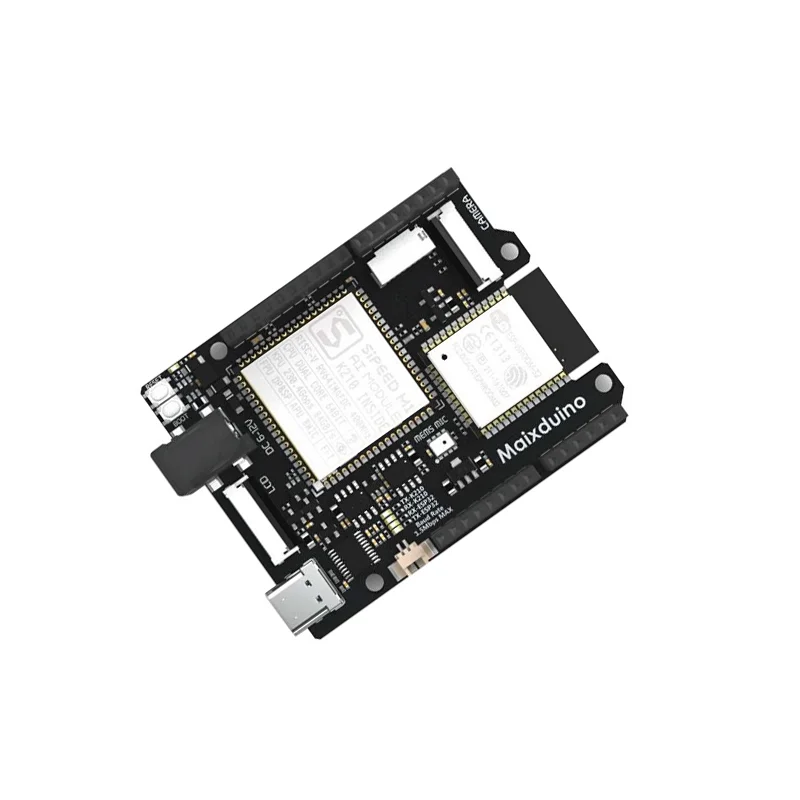
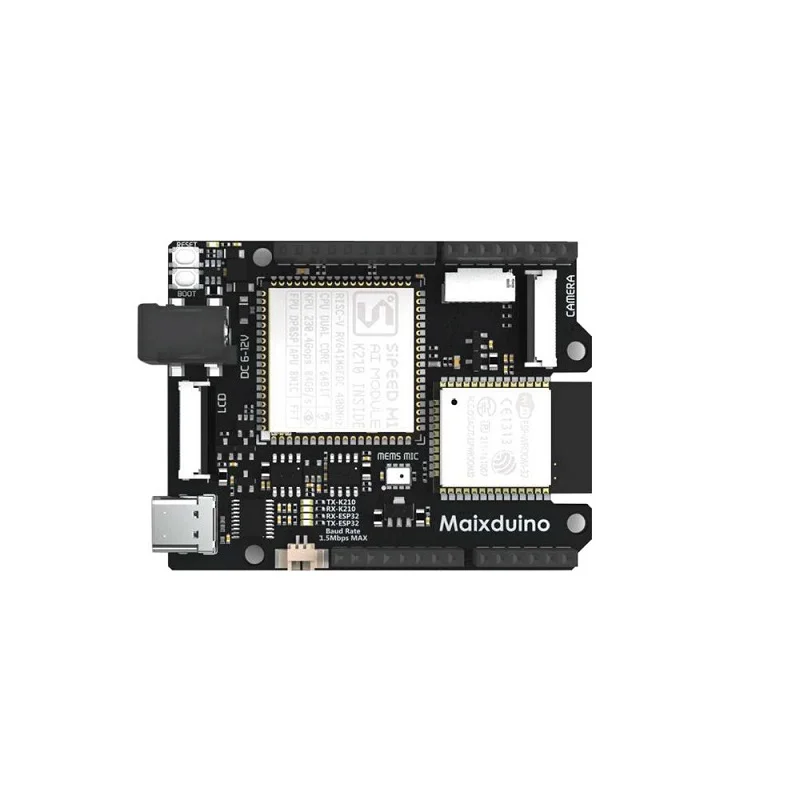
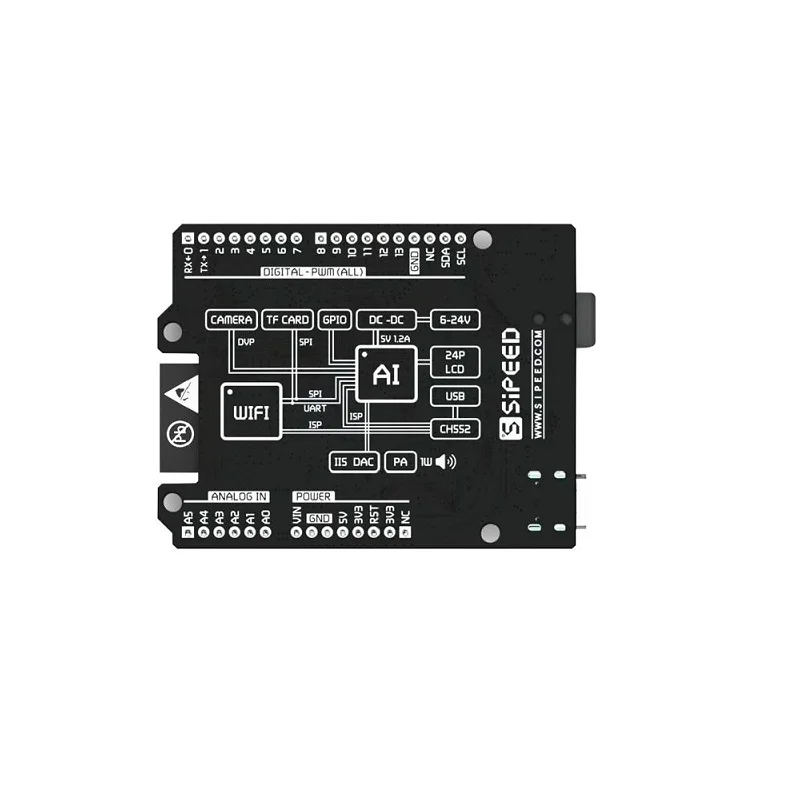
The Sipeed Maixduino Kit is an Arduino Uno form-factor development board integrating a dual-core RISC-V AI processor (K210), an ESP32 module for Wi-Fi/Bluetooth 4.2 connectivity, and a ZV-T01-GA4.4 camera module for edge AI and IoT applications. It is programmable via MaixPy, Arduino IDE, OpenMV, and PlatformIO.

Features

  • Dual-core 64-bit RISC-V CPU with 400MHz neural network processor for on-device AI inference (Tiny-Yolo, Mobilenet).
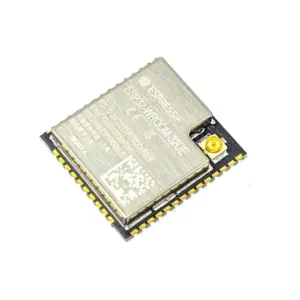
  • Integrated ESP32 module provides 2.4GHz 802.11 b/g/n Wi-Fi and Bluetooth 4.2 (BR/EDR & BLE) for IoT connectivity.
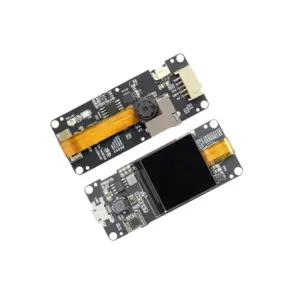
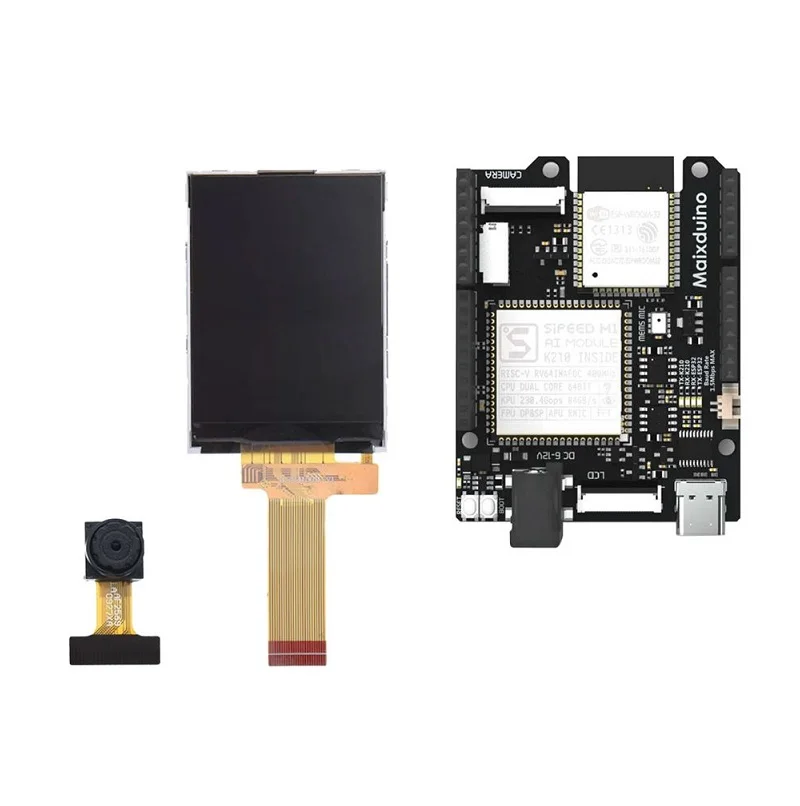
  • Includes ZV-T01-GA4.4 camera module and 2.4-inch TFT display for machine vision and real-time visual feedback.
  • Arduino Uno compatible pinout and form factor, with onboard I2S digital MEMS microphone and 3W audio output.
  • Supports multiple development environments: MaixPy IDE, Arduino IDE, OpenMV IDE, and PlatformIO.

Out of stock

Description

The Maixduino Kit from Sipeed merges high-performance edge AI processing with robust wireless connectivity in a familiar Arduino Uno footprint. Its core is the MAIX module featuring a dual-core 64-bit RISC-V processor with a dedicated neural network accelerator, capable of running convolutional neural networks for real-time image identification at QVGA@60FPS. An onboard ESP32 module handles all wireless communication, providing 2.4GHz Wi-Fi up to 150Mbps and dual-mode Bluetooth 4.2, enabling seamless integration into IoT networks and cloud services.

Power management is designed for flexibility, accepting 6-12V input via the onboard DC-DC converter to deliver a stable 5V/1.2A output. The kit is built for rapid prototyping with extensive I/O, including a DVP camera interface, MCU LCD connector, microSD card holder, and an omnidirectional I2S digital MEMS microphone. This combination of AI acceleration, wireless comms, and multimedia interfaces makes it an ideal single-board platform for developing advanced AIoT applications without external component sprawl.

Key Features

  • Edge AI Processor: Dual-core 64-bit RISC-V CPU with FPU and 400MHz neural network processor for on-device machine learning.
  • Dual Wireless Connectivity: Integrated ESP32 provides 2.4GHz 802.11 b/g/n Wi-Fi (up to 150Mbps) and Bluetooth 4.2 (BR/EDR & BLE).
  • Machine Vision Ready: Bundled ZV-T01-GA4.4 camera module enables image identification, object detection, and video streaming.
  • Arduino-Compatible Ecosystem: Uno form factor and pinout allows use of vast Arduino shields and libraries.
  • Rich Multimedia I/O: Onboard I2S digital MEMS microphone, 3W DAC+PA audio output, and support for 8-bit MCU LCD displays.
  • Multi-IDE Support: Programmable using MaixPy (MicroPython), Arduino IDE, OpenMV IDE, and PlatformIO for flexible development workflows.
  • Expandable Storage: Self-elastic microSD card holder for data logging, model storage, and media files.

Applications

  • Smart Home Devices: AI-powered robot cleaners, smart speakers with voice recognition, and intelligent security monitors.
  • Industrial IoT (IIoT): Visual inspection systems, intelligent sorting machines, and equipment monitoring with anomaly detection.
  • Educational AI & Robotics: Platforms for learning machine learning, computer vision, and building interactive educational robots.
  • Smart Agriculture: Automated pest detection, crop health monitoring via visual analysis, and environmental sensing stations.
  • Prototyping & Makers: Rapid development of AIoT prototypes combining vision, audio, and wireless connectivity.

Technical Specifications

AI ProcessorRISC-V Dual Core 64-bit with FPU, 400MHz NN Processor
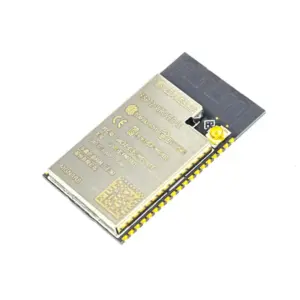
Wireless ModuleESP32 (Wi-Fi 802.11 b/g/n, Bluetooth 4.2 BR/EDR & BLE)
Frequency Range2400MHz – 2483.5MHz
Wi-Fi Tx Power802.11.b: +15dBm, 802.11.g/n: +10dBm
Antenna ConnectorIPEX 3.0x3.0mm
Supply Voltage4.8V ~ 5.2V (external), 6-12V input via onboard DC-DC
Operating Current>600mA (external supply)
Camera Interface24P 0.5mm FPC DVP connector (ZV-T01-GA4.4 included)
LCD Interface8-bit MCU LCD 24P 0.5mm FPC connector
Audio Output3W DAC+PA (T M8211 & N S4150)
MicrophoneMSM261S4030H0 I2S Digital MEMS Mic
Operating Temperature-30℃ to 85℃
DimensionsApprox. 10cm x 6cm x 3cm (Uno footprint)

Frequently Asked Questions

What development environments are supported for programming the Maixduino?

The Maixduino supports four primary development environments. You can use the MaixPy IDE for MicroPython scripting focused on AI functions. The Arduino IDE is supported with specific board manager packages for traditional embedded C/C++ development. For computer vision projects, the OpenMV IDE can be utilized. Lastly, PlatformIO offers a professional workflow within VS Code. Firmware is loaded via the onboard USB Type-C connector, which handles both power and programming.

How do I connect and use the included camera and display with the Maixduino?

Connect the included ZV-T01-GA4.4 camera module to the 24-pin 0.5mm FPC DVP camera connector on the board. The 2.4-inch TFT display connects to the separate 24-pin 0.5mm FPC LCD connector designated for 8-bit MCU interfaces. Ensure the board is powered via the USB Type-C or external 6-12V input. Use the MaixPy or OpenMV libraries to initialize the camera sensor and display driver. Example scripts are provided in the Sipeed documentation to capture images, run object detection models, and output results to the TFT screen.

What is the power requirement and how do I power the board for standalone operation?

The board requires a stable 4.8V to 5.2V supply at over 600mA current for full operation, especially when the AI core and wireless radio are active. You can power it via the USB Type-C port. For standalone deployment, use the onboard DC-DC input terminals which accept 6V to 12V DC, which is then stepped down to 5V. A 5V/2A power supply is recommended. Monitor the temperature rise, which is specified to be under 30K under normal operating conditions between -30°C and 85°C.

Can I use the ESP32 module independently for Wi-Fi and Bluetooth communication?

Yes, the integrated ESP32 module can be programmed independently for Wi-Fi (802.11 b/g/n) and Bluetooth 4.2 (including BLE) tasks. You can use the Arduino ESP32 core or ESP-IDF framework by selecting the appropriate board configuration for the Maixduino's ESP32. The module connects via a serial bridge to the main RISC-V CPU, allowing AT command communication or custom firmware where the K210 handles AI processing and the ESP32 manages network connectivity. The antenna is connected via an onboard IPEX 3.0x3.0mm connector.

Package Includes

  • 1 x Maixduino Development Board
  • 1 x ZV-T01-GA4.4 Camera Module
  • 1 x 2.4-inch TFT Display

Additional Information

Weight 0.15 kg
Dimensions 6 × 10 × 3 cm